Arms safety classes held for children
Often the buried devices look toylike, are shaped like a ball or have spikes on them. The young are curious and, as is the case globally, the most vulnerable to these hidden remnants of war.
When Hussein ruled with an iron fist over communities, school children were ordered to sing songs in his honour every morning and wear badges with his image. Today, classes include lifesaving advice with small arms safety and mine risk lessons.
“They know at age six or seven what a Kalashnikov is and that it also kills. They are as familiar with the gun as they are with drinking water,” says MAG mine risk instructor Berivan Sadiq.
She is about to give a mine risk and gun safety lesson to a packed classroom of seven-year-old olds in Tanaho school on the outskirts of Dohuk. The boys and girls will then go home to their fathers and tell them to put their guns away in safe places or not to leave them lying on the kitchen table, she explains
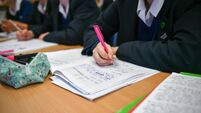
In the busy classroom, pupils hold MAG leaflets which depict red Xs over grenades, guns and landmines.
The streets around Tanaho school used to be a military base. Many pupils are returning refugees whose families fled to Iran during Hussein’s rule.
“We found [bomb] victims here, unexploded devices and children were playing with them so we focused on it being a risk area. The village was heavily mined,” says Sadiq.
A young boy lost an arm when he threw an unexploded device that he had found into a fire — used to keep pupils warm in winter — in the school yard. Unexploded tank shells and mortars were found near the school at a construction site.
Sadiq adds: “The basic information we give them is what to do if they see one, if children are playing with UXOs [unexploded ordinances] and how to get out of a mine field and recognise mine warning signs.
“Children tell us during lessons where they might have seen them. They previously have led us to find shells, mortars, RPG [rocket-propelled grenade] chargers, small arms and ammunition.”
Local families have also been known to store the landmines that they find in their houses.
“We try and tell them [otherwise]. Sometimes we have to beg them,” says Sadiq.
In the packed classroom of girls all in their winter coats, teachers ask “what is not good about a Kalashnikov?”. Girls enthusiastically reply that “it can kill” and simultaneously clap when correct answers are given.
Hadera, 7, explains: “I learnt not to touch a gun because it kills me.”
Korin, 7, on a neighbouring class bench adds: “We’re not to let anyone put a gun in the house. It’s not good. My father has one.”
With the help of Irish funds, the Mines Advisory Group run these programmes in schools throughout northern Iraq with the cooperation of local government. MAG teams also circulate messages of safety and prevent conflict with the help of local Islamic clergy or Mullahs.
It is after Friday prayers, or Khutbah as they are known localy, where a local cleric will tell villagers to avoid fields or streets because of landmine dangers or if there is violence in an area.
In Shekan, an eastern district of Dohuk, 25% of the population are refugees. There, Mullah Younis Ali Mosa, mixes with his customers in his carpet shop in the town.
Purple, brown, green and multicoloured heavy rolls of carpet hang on his wall behind him as he stands in his long robe and bright white turban chatting amicably.
“There was a lot of suffering as this town was on the frontline in fighting between the Peshmerga [armed Kurdish troops] and Iraqis.
“There were lots of military bases, [later] planted full of anti-personnel mines. And then cluster bomb strikes on the outside of town,” says the 50-year-old cleric.
Mosa fled from Mosul, further south, in 2004 after terrorists threatened him and his family.
After visiting his mosque, he shows me where Muslims come and listen to the advice he delivers about landmine threats to families. He adds: “A religious man’s job is not just to advise people how to go to paradise but also about how to live safely on earth.”
* This series was carried out with the help of the Simon Cumbers Media Challenge Fund, supported by Irish Aid


CONNECT WITH US TODAY



Be the first to know the latest news and updates