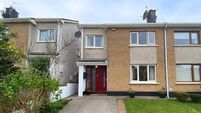
Home energy boost
RECENTLY a survey of 500 people was conducted by an independent research agency on behalf of Bord Gáis Energy Home Team services. The results provide a compelling snapshot of what householders know about the potential energy savings available through improvements to their property, and their real behaviour and motivations when using and economising with their utilities and appliances.
What men and women really want? 62% of male respondents said they were familiar with energy efficiency schemes compared to 46% of females. Curiously, despite this greater awareness, a larger proportion of women appear to be environmentally motivated, 50% declaring they would make improve-ments principally to reduce their ‘carbon footprint’ compared to 40% of men, who prioritise cost savings.
Women appear to be more sensitive to their immediate environment, with 54% of men having laid claim to making their home adequately insulated compared to 43% of women who tend to notice a draught or cold spot. Not to be outdone, a whopping 74% of men would champion having a home energy audit carried out to save costs in the long run. Knowledge really is power.
Aware, but ready to act? Our wisdom on grant-aided energy saving schemes seems to increase markedly with the cold, hard realities of a longer lifetime fighting utility bills, damp and the cruelty of a cold house. Those in the 18-34 age bracket are the least aware of the current schemes (42%) while the awareness level of 35-54-year-olds is 52%. An impressive 66% of over-55s are aware of current schemes.
Mark Prentice, head of retail at Bord Gáis Energy says that “two in every five people surveyed (43%) felt their homes were poorly insulated to deal with such harsh weather. Those living in urban areas were more concerned with every second respondent (54%) feeling their home did not have proper insulation, compared to rural areas where 31% were of the same opinion”.
The vast majority of respondents are ready to put their money where their concerns are. If the survey does reflect national attitudes, 24% of us are willing to stump up an extra €2,000 to top up a Government-aided grant and an additional 38% would spend between €500 and €1,000.
Mr Prentice goes on: “Poor roof and cavity wall insulation were cited as the main reason people believe their home to be poorly insulated and in fact these are two really simple and straight-forward improvements.”
The survey shows that 73% of people would consider home insulation if and when they could afford it. It also seems that now fully aware of what’s on offer, over half (56%) said they were likely to take part in energy efficiency schemes run through the Sustainable Energy Authority of Ireland website and their local councils.
Where to now? For everything you need to know about saving energy at home plus the application process for the SEAI grant-aided Better Energy Homes Schemes, log onto seai.ie or call 1850 927 000. Low-income households and those on the National Fuel Allowance may be eligible for Warmer Homes grant aid. Log onto www.seai.ie or call 1800 250 204. Well & Warm is also useful for those struggling with fuel bills. www.wellandwarm.ie.
The utility companies in Ireland are pro-active in providing customers with up-to-the-minute advice and even tailored financial products for energy saving investments. The Bord Gáis Energy Home Team can manage the SEAI grant approval process as part of the Better Home Bonus plan, which includes an attic and cavity wall insulation package with 0% interest-free payments up to 12 months. They also sort out your SEAI grant so you only pay the total cost less the grant and take off a special discount.
* www.bordgaisenergy.ie/hometeam
NOW, having wittered on like an aged fishwife for years in the pages of this paper, I found the energy-saving practise area of the Bord Gáis Home Team survey uplifting. It’s good to know, that whereas we might not always behave as well as we should, we do know how we should be behaving to knock those bills on the head and lighten the load on our struggling little planet.
The overall majority of respondents showed a strong awareness of the different ways to reduce energy consumption in their household.
* Switching off lights came top of the measures in terms of awareness (94%)
* Use of CFL bulbs (89%)
* Not leaving appliances on standby (86%)
* Keeping doors and windows closed (80%)
* Only boiling the required amount of water in the kettle (80%)
* Putting central heating on timer (76%)
* Turning down heating thermostat by one degree (75%)
* Buying A-rated appliances (75%)
* Closing curtains at night/opening during the day to let sunlight in (65%)
This is the theory and in some cases practise is a lot less impressive. Only 58% of those surveyed say they would actually buy an A-rated appliance (possibly due to the acknowledged extra expense); while 68% said they would not take the trouble to turn appliances off rather than leaving them on standby. Considering this last casual neglect can leave a 50% bleed of electricity for the small trouble of pushing a switch, we clearly have a way to go.


CONNECT WITH US TODAY



Be the first to know the latest news and updates