Drawing a line under water fiasco
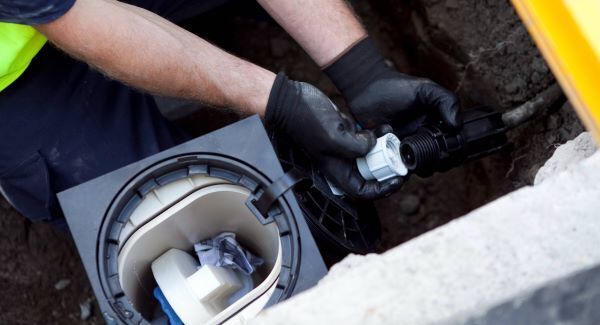
Let’s look at the finances. At a sectoral level it costs €1.2bn per annum to run the water system. Water needs to be harvested, treated, delivered; sewage needs to be collected, treated, discharged; the system needs to be operated and managed. Right now a large part of the problem is that the doing of all this is spread across literally dozens of local government bodies. This is inefficient. Water and sewage in a modern European society are, at least at the infrastructure level, a natural monopoly. There are likely to be significant benefits from operating the whole system as one. It needs therefore to be funded.
A second issue is upwards of 40% of water is believed lost in transit, through the disjointed infrastructu re.
At one level the creation of the Irish Water we have now is a consequence of the banking mess. The need to invest requires that money be spent. To borrow that money someone has to back it. That, in 2010, couldn’t have been the Irish State, broken on the wheel of the calamitous banking collapse. So, a commercial semi-state, like the ESB, which got more than 50% of its revenue from the sale of goods and services, that could borrow away on the strength of the income flow, and the debt be kept off balance sheet. In a nutshell that is why we have the structure we have.
It’s time for Alan Kelly to call a halt.
First, it is unlikely that in the short to medium term 50% of income will come from charges. I still haven’t received my forms, and I am not alone. Fewer than half the customer base has returned the consent to charge form. Unlike the household charge there is a very widespread civil disobedience combined with a massive failure to allow those like me who wish to be obedient to be so. So this year the €300m IW hoped to get is as unlikely as Carlow winning the Liam McCarthy cup.
Even at full tilt, were everyone to sign up and pay up, a minimum of €500 per household is likely to be the required take to ensure that over 50% of requirements are met ‘commercially’. Tha t is still a tenner a week, and so will have a disproportional impact on the lower paid. Revenue statistics suggest that upwards of 360,000 persons have income of less than €10k (as of 2011). If you are on €200 a week such as they are then €10 makes a difference; for a cabinet minister earning €3000 per week it is utterly irrelevant.
We are told we have as a nation turned the corner. Some modest domestic book-balancing combined with the realistic Draghi at the helm of the ECB has resulted in a collapse of yields on government debt. It is now ridiculously cheap to borrow. The Government should take advantage of that and borrow up to €5bn to properly, once and for all, fix the water system. After all, in an environment where gross national debt is hovering at €200bn it is farcical to think that a meaningful infrastructural borrowing of 2.5% more will attract any negative reaction.
Parallel with this being spent on fixing the system a complete and comprehensive rollout of metering should be undertaken. For a year or two tell people how much this WOULD have cost them. Inculcate a sense of water as a finite resource we use while fixing the system. Then start charging.
A survey by Amarach in 2013 showed that only 16% of people wanted to continue to pay for water via general taxation. So, provide and let people know well in advance, a sensible charging system. That will involve a small standing charge (of about €100 per annum to repay the interest on borrowings for infrastructure) and a modest per litre charge which doesn’t rise as usage falls. Meanwhile, put a proper, modest public service utility model in place for the management of the system.
Water costs. Infrastructure costs. Lets face that, spend the money, put in a system that is fit for purpose, and then roll out modest charges that amortize the capital cost , cover a large part of the running cost and incentivise sensible water use.
Brian Lucey


CONNECT WITH US TODAY



Be the first to know the latest news and updates