BoE rate hike unlikely despite ‘hawkish’ views
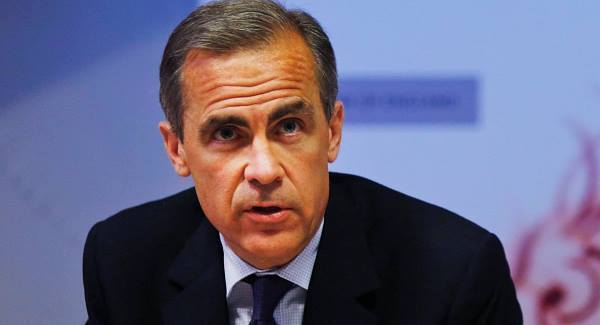
However, the text of the minutes from their last meeting in May suggests that there are some less ‘dovish’ views emerging within the committee.
Significantly, at the May meeting having left rates unchanged since 2009 “for some members the monetary policy decision was becoming more balanced”. In addition, it was noted that the more gradual the eventual rise in interest rates, the “earlier it might be necessary to start tightening policy”.
The less dovish tones from the minutes were somewhat in contrast to the bank’s most recent inflation report. This report and the subsequent press conference from Governor Carney suggested that the committee was in no hurry to hike interest rates.
Mr Carney stressed that a “sustained expansion is needed to meet the committee’s intention of absorbing spare capacity” in the economy and despite recent progress “significant slack remains in the labour market”.
He also noted that there has probably been only a “modest narrowing in the margin of spare capacity” over the last three months.
The focus on spare capacity in the labour market is due to the fact that it forms the basis of the committee’s new phase of forward guidance on interest rates, which came into effect after the unemployment rate dropped below 7%.
The bank is looking for the spare capacity in the economy to be ‘absorbed’ over the next two to three years. It is also of the view that there is scope to absorb this spare capacity further before raising interest rates, with the pace of rate hikes likely to be gradual and limited.
However, there are a wide range of views and considerable uncertainty within the committee on the degree of spare capacity.
The committee’s collective judgement estimates the current level of spare capacity to be in the region of 1-1.5% of GDP.
The bank has stated that the timing of when it will start to increase interest rates will depend on the evolution of the economy, particularly the degree of slack in the labour market, its absorption potential and the broader inflation outlook.
In this regard, the most recent macro data show that the economy is maintaining its strong performance.
GDP expanded by 0.8% in the first quarter of 2014, for a yearly gain of 3.1%, its strongest annual growth rate since 2007. There are also signs that the recovery is becoming more broad-based.
The improving economic picture is also reflected in various labour market metrics.
The economy added 283,000 jobs in the first quarter of the year, representing its best quarterly performance since records began in the early 1970s. The gains in employment have helped to push the unemployment rate down to 6.8%.
If the economy continues on its upward trajectory, it is anticipated that the less dovish tones within the committee could start to evolve into actual votes for a rate hike in the coming months.
The question is how widespread these ‘hawkish’ views become within the committee. The issue is complicated by the fact that three new people join the committee over the summer.
In terms of market expectations, futures contracts are pricing in the first rate hike for the first quarter of next year. We would not disagree with the market, especially given that the Bank of England holds the view that it is the role of the Financial Policy Committee, in the first instance, rather, than the committee and interest rates, to tackle any overheating in the housing market.
CONNECT WITH US TODAY



Be the first to know the latest news and updates