Obama tries to sway public opinion on Syria
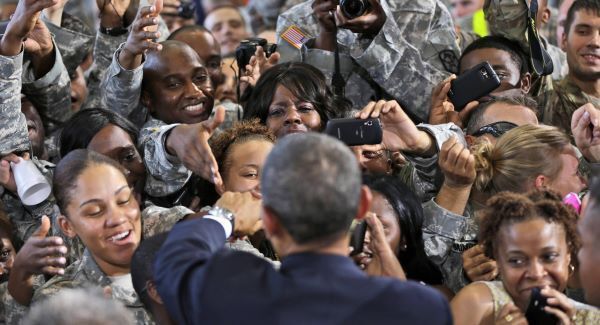
Barack Obama is going public to try to convince war-weary Americans that limited strikes against Syria are needed for the United States’ long-term safety.
Meanwhile his national security team is attempting to reassure sceptical lawmakers that the US is not heading toward another Iraq or Afghanistan.
The president today planned to make his case for punishing Syrian President Bashar Assad for turning chemical weapons against his own people – a charge Assad denies in a new interview.
Top administration officials are heading to Capitol Hill for more classified briefings, and White House national security adviser Susan Rice is scheduled for a speech at a Washington think tank as part of the public relations blitz.
Mr Obama will meet Senate Democrats tomorrow to seek support for US military action against the government of Syria.
The meeting at the Capitol is just hours before the president addresses the nation in a prime-time speech on Syria from the White House.
With Congress set to have its first votes authorising limited strikes into Syria as soon as Wednesday, Mr Obama and his allies were arguing that the US needs to remind hostile nations such as Iran and North Korea of American military might.
They were also working to reassure the nation that the lessons of the last decade were fresh in their minds.
“It is not Iraq, Afghanistan or Libya,” White House chief of staff Denis McDonough said yesterday during one of his five network television interviews.
“This is a very concerned, concentrated, limited effort that we can carry out and that can underscore and secure our interests.”
But he conceded the administration lacks “irrefutable, beyond-a-reasonable-doubt evidence” that sceptical Americans, including politicians who will start voting on military action this week, are seeking.
“It’s an uphill slog,” said Mike Rogers, the Republican chairman of the House Intelligence Committee, who supports strikes on Assad.
“I think it’s very clear he’s lost support in the last week,” he added, speaking of the president.
A survey by The Associated Press shows House members who are staking out positions are either opposed to or leaning against Mr Obama’s plan for a military strike by more than a 6-1 margin.
“Lobbing a few Tomahawk missiles will not restore our credibility overseas,” said Mike McCaul, the Texas Republican who chairs the House Homeland Security Committee.
Despite public backing from leaders of both parties to strike, almost half of the 433 current members in the House and a third of the 100-member Senate remain undecided, the AP survey found.
They will be the subject of intense lobbying from the administration – as well as outside groups that have formed coalitions that defy the traditional left-right divide.
The US, citing intelligence reports, says the lethal nerve agent sarin was used in an August 21 attack outside Damascus, and that 1,429 people died, including 426 children.
In an interview yesterday in Damascus, Assad told American TV journalist Charlie Rose there is no conclusive evidence about who is to blame for the chemical weapons attacks and again suggested the rebels were responsible.
Mr Rose said Assad also warned him previous US military efforts in the region have proved disastrous.
Excerpts of Rose’s interview are to be released today on the CBS morning programme that he hosts.
Even before the interview was aired, the White House criticised it.
“It doesn’t surprise us that someone who would kill thousands of his own people, including hundreds of children with poison gas, would also lie about it,” spokeswoman Bernadette Meehan said.
Key administration officials, including Secretary of State John Kerry and Defence Secretary Chuck Hagel plan to brief politicians ahead of the Wednesday vote on a resolution to allow “limited and specified use” of armed forces against Syria for no more than 90 days.
The measure bars American ground troops from combat.