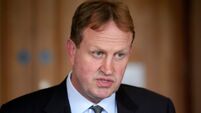
Austerity vital but states should also reform for growth, says ECB member
In a panel debate on the eurozone in Brussels, Mr Coene was challenged by economist Paul De Grauwe, of the London School of Economics, who said that policymakers should be foremost in promoting growth not reining it in.
“To think that austerity could be avoided is naive... The interest rates would have risen even more than they did,” said Mr Coene, who is also governor of Belgium’s central bank.
He said that governments in the eurozone region, which has been mired in a debt crisis for almost three years, should have enacted structural reforms at the same time as pushing through austerity measures.
“We should have done that earlier. It could have countered the negative effect of saving,” Mr Coene said.
While a number of eurozone nations were keen to pass responsibility for solving the crisis to the ECB, the central bank was not involved in budget setting and had to rely on commitments of member states in return for help, Mr Coene said.
Asked how he saw the situation developing in Spain, which is in deep recession and plagued by high borrowing costs, Mr Coene said that it would have to decide whether to request aid from the EU bailout fund, the European Stability Mechanism. However, this would not necessarily trigger bond buying, he noted.
“We would do an evaluation. There is no automatic link between the one and the other,” he said.
Spain is expected to request a bailout in the next few weeks.
The ECB agreed last month that it was prepared for a potentially unlimited purchase of bonds of struggling eurozone countries with a maturity of up to three years .
If the bond-buying programme, dubbed outright monetary transactions was triggered, it would ease pressure on the country’s borrowing costs and should limit risks of contagion to other eurozone members.
The prospect of it happening has already calmed financial markets.


CONNECT WITH US TODAY



Be the first to know the latest news and updates