REPS worth €1.3bn and counting to farms
THE Rural Environment Protection Scheme has provided many farmers with a welcome and secure boost to their income. About 33% of Ireland's utilisable agricultural area is now being farmed under REPS guidelines evidence of the popularity of the scheme.
The 45,500 farmers who participated in REPS 1 were paid more than €972 million, and a similar number joined REPS 2.
In REPS 3, a number of improvements have been made to the scheme which are expected to result in greater numbers of farmers qualifying.
The objectives of the scheme are to establish farming practices and production methods which reflect the increasing concern for conservation, landscape protection and wider environmental problems. Farmers are required to protect wildlife habitats and endangered species of flora and fauna, and to produce quality food in an extensive and environmentally friendly manner.
The scheme runs for a period of five years. In return for adopting environmental measures, farmers in REPS 3 will be paid €200 per hectare for the first 20 hectares, €175 per hectare for the next 20 hectares, €70 per hectare for the next 15 hectares and €10 per hectare for the remaining hectares.
The rules on commonage which prevented some farmers from joining the earlier REPS schemes have been relaxed; for eligible commonage land, farmers can receive €242 per hectare.
Annual income can be further boosted by opting for supplementary measures, such as Organic Farming, Linnet, Rare Breeds, Traditional Orchards, Riparian Setaside, and Corncrake.
To join the scheme, farmers need to have a plan drawn up by a planner who is approved by the Department of Agriculture and Food. Choosing a good planner who can identify the specific measures that suit your farm is the most important aspect of the application process.
The arrival of decoupling is expected to result in many farmers operating less intensively.
Carrying reduced stock numbers while participating in REPS 3 is now an attractive option to protect the financial viability of the farm.
There are 11 basic measures in REPS 3.
Farmers must have a nutrient management plan, which is designed to set defined limits on their usage of chemical fertiliser and to ensure the proper guidelines are followed for the storing and spreading of slurry and farmyard manure.
Water courses and wells must be fenced off from cattle, and no chemical applications are allowed within 1.5m of the water's edge.
A grassland management plan is also required. This is designed to avoid over-grazing and poaching.
A strict grassland management plan is the central features of REPS. The aim is to increase bio-diversity, because many grassland areas have come under threat since we joined the EU from fertiliser application, drainage and reseeding. Intensively managed fields have a lower numbers of species, being mostly dominated by perennial ryegrass and clover.
Reducing fertiliser applications will lead to pastures dominated by meadow grasses, bentgrasses, fescues, and broadleaved herbs. Wild grass seeds that have laid dormant for years germinate once the aggressive, nutrient hungry grass species begin to decline.
All existing wildlife habitats on the farm must be maintained and, reseeding drainage, ploughing, or afforestation on these habitats is banned. Farmers are also required to make their farm fully stock proof by the end of Year One in REPS 3.
If you have any archaeological site or area of historical interest, this must be protected, and stock must be kept off the area during the winter months.
In REPS 3, you are expected to keep your farm looking well. Silage plastic has to be stored properly, and cannot be left out on the land or flying like flags on your fencing. Your sheds are also meant to be kept in a tidy condition, and will require a lick of paint if looking run down.
Tillage farmers in REPS have to leave an area of 1.5m around the boundary of every ploughed field uncultivated. They are also not allowed to burn their straw stubble fields.
For many farmers, the biggest and often the most difficult drawback in REPS is the necessary paperwork involved in the scheme. Monthly record sheets have to be kept up to date and be available for inspection if required. However, given the current level of REPS planners' fees, it is not unreasonable to expect some assistance from them in this regard.
Supplementary Measures: The six Supplementary Measures offer a chance to increase your REPS payments.
They are optional. A farmer can receive payment on two measures, one from each group of three. Options must be undertaken from the start of a new five year REPS plan.
These options include the Linnet option, where farmers can receive an extra €1,300 annually, where 2.5 hectares of land is set aside to grow crops for wild bird cover. However, no harvesting or grazing of the area is allowed during the five years of the plan. A payment of more than €1,800 annually is also available, where 2.5 hectares is set aside from farming, alongside salmonid rivers.
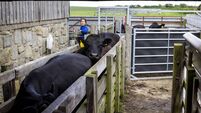
Farmers who keep rare breeds are catered for in REPS 3. An annual payment of €200 per livestock unit is available for the designated breeds. These are Kerry, Irish Maol (Moiled) and Dexter cattle; Irish Draught horses and Connemara ponies; and Galway sheep.
The extra payment for organic farming is the only one that hasn't been increased since REPS 2. Payment for full organic status remains at €91 per hectare, but it is now payable for up to 55 hectares.
Farmers considering the organic option would be advised to undertake a careful study of the market before opting for this measure. The considerable uncertainty in the organic livestock trade has made this a less attractive option for some farmers and, to date, only 900 farmers have taken the organic REPS option. Numbers have remained static, as new entrants to the organic sector are cancelled out by those farmers who leave.
But changes in the rules in REPS 3, and the new farming climate created by decoupling, should encourage more farmers to consider going organic. For example, in previous REPS schemes, going organic was a matter of coverting all your land in one go. Now, in REPS 3, farmers have the option of converting part of their holding. And with the inclusion of commonage in REPS 3, another barrier to organic conversion has been removed.
One obstacle that has prevented some farmers from joining REPS is the belief that financial penalties are regularly applied and that payments received have had to be returned for the slightest non-compliance.
However, figures from the Department of Agriculture show that penalties are the exception rather than the rule. Since the inception of REPS, €1.3 billion has been paid out and only a small percentage, €2 million, has been taken back. Provided the farmer fully understands the implications of his individual plan and exactly what is required of him, there should be no difficulties with the REPS inspections.
REPS value for money: Last June there were 38,000 farmers in REPS, who had been paid a total of €420m, 75% of it coming from the EU. Studies of the effect of REPS on the rural environment show that, in terms of environmental protection and enhancement, the scheme provides value for public money.
A farm landscape quality assessment indicates that the REPS farms were of higher quality than non-REPS farms. The REPS farms were distinguished by overall tidiness, hedgerow management, grassland care and safeguarding of watercourses.
Many farmers who decided in the past that REPS was not for them should look again at the new scheme.
Now that the Single Payment is not dependent on livestock numbers, many farmers will be reducing stock numbers, and would be in a better position to consider the environmental scheme. With decoupling in place, REPS is one of the few ways left of increasing farm income without expanding output. It could help you to keep more of the Single Payment in your pocket as profit.
Perhaps the best aspect of REPS is the recognition it gives farmers as custodians of the environment. It's only right that farmers should be paid for non-profitable environmental work.
If you're not in REPS already, it's worth giving the scheme a second look.
Further information regarding REPS may be obtained from your local Agricultural and Environment Structures Office (AES), or by contacting the REPS Section, Department of Agriculture and Food, Johnstown Castle Estate, Co. Wexford. Telephone 053 63400 or Lo-call 1890 200 509.