A saint for our times — the doctor who died to save her unborn child
She laid down her life for her child.
Last Sunday, Pope John Paul II declared her a saint.
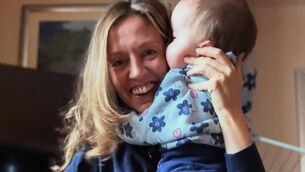
Among those present in St Peter's were Pietro, her husband of almost seven years when she died, and their four children, including Gianna Emanuela, 41, the child she died to save.
What happened was this: Beretta Molla became pregnant for the fourth time in the summer of 1961. Two months into the pregnancy the doctors discovered that she'd developed a painful life-threatening uterine tumour.
She had three choices. The safest option would be to remove the tumour in an operation. This would have led to the death of her baby and end all hope of future pregnancies.
A second possibility was to remove the tumour, again leading to the death of her baby, but leaving open the possibility of future pregnancies. The third solution was to remove the tumour but not interrupt the pregnancy. Doctors warned that this last option could put the mother's life in grave danger.
She chose this option. After the operation she recovered, went back to work and the pregnancy continued normally. Yet she was always concerned for the baby's health, and told the doctors repeatedly: "If you must choose between me and the baby, no hesitation: choose and I demand it the baby."
Her labour began on Good Friday, April 20, 1962. The medical examination revealed a large, healthy baby but also a life-threatening septic peritonitis. She gave birth the next day, but then suffered tremendous pain as the peritonitis took hold. As a doctor she knew what was happening. She was going to die.
Reaction to her canonisation has varied. Pro-choice campaigners accuse the Catholic Church of valuing the life of an unborn child over the health and safety of its mother. Other commentators grudgingly accept the heroism of what Beretta Molla did, but can't help thinking that she was a bit mad, a well-meaning fanatic perhaps, even irresponsible for leaving her husband and three children behind. The fact is, Dr Beretta Molla could have been an exemplary Catholic even if she had undergone the surgery that would have saved her, but threatened her baby. It is precisely the fact that she chose to do something which was not her duty to do, to bear witness to the life that was within her and her love for that life, which made her special.
Gianna didn't want to die. She had too much to live for. Her husband, her family, her work as a busy doctor and her charity work with the St Vincent de Paul Society.
The abortion issue, to borrow Gerry Adams' words, has not gone away, you know. And it won't.
British television viewers finally saw images of an aborted child a few weeks ago when Channel 4 screened the film 'My Foetus' made by pro-choice film-maker Julia Black who wanted to challenge her own instinctive support for abortion. "Aborted foetuses from 10 weeks on look like tiny babies," she says. "Rationally, we know abortion ends the life of a potential human being, but why, when we see what they look like, are we so shocked?"
This week, the British media have been discussing the case of 14-year-old Melissa Smith who had an abortion arranged for her, without her mother's knowledge, by a 21-year-old 'outreach worker' at her school.
The mother knew nothing because British Department of Health rules forbade the doctors who sanctioned and carried out the abortion from informing her. Despite the fact that Melissa was under the age of consent, grounds of 'patient confidentiality' prevailed.
Yet Maureen Smith had to sign two consent forms last year when Melissa had her appendix removed. Something somewhere doesn't make sense.
In America, too, people are asking questions. The May 1 edition of The Economist says "the pro-life movement has repeatedly outmanoeuvred the other side," and has managed to limit abortion rights in various ways.
There is a long way to go, but a 2003 survey of first-year college students by the University of California showed that only 55% of them thought abortion should be legal, down from 67% in 1992.
In Ireland, some people are slow to catch on. Last week the Irish College of General Practitioners (ICGP) and the Crisis Pregnancy Agency launched 'Primary Care Guidelines for the Prevention and Management of Crisis Pregnancy.'
This booklet warns doctors with a conscientious objection to abortion that they must not use "unprofessional means," moral arguments or "spurious information" about methods (of abortion), side effects, future fertility or psychiatric illness to discourage a woman from having an abortion.
A few points are worth noting. Firstly, there is no research evidence to suggest that family doctors are acting in an unethical manner in the way they treat women considering an abortion. Secondly, the booklet does not appear to remind doctors that, under the Irish constitution, they have two patients to protect here. Thirdly, putting pressure on vulnerable women, or using "spurious information" would indeed be wrong, but the doctors' booklet should also have acknowledged the need to give genuine information aimed at dissuading women from having abortions.
The Crisis Pregnancy Agency's mandate is to reduce the number of women with crisis pregnancy who opt for abortion "by offering services and supports which make other options more attractive." To that end, it spent 32,000 of taxpayers' money on this booklet (12,000 to the ICGP and around 20,000 on printing costs).
If this money was spent without ensuring the mention of acceptable ways for medical practitioners to discourage abortion, how could this be consistent with the CPA's official aim and agenda?
'The Obstetrical and Gynecological Survey 2003 Long-term Physical and Psychological Health Consequences of Induced Abortion: Review of the Evidence' concludes that "informed consent before induced abortion should include information about the subsequent risk of pre-term delivery and depression." Doctors should therefore help women to get the full facts relating to their personal welfare.
They might also recommend ultrasound. The Channel 4 documentary, My Foetus, featured the new 4D ultrasound technique, which provides compelling and undeniable footage of the developing unborn in all its movement and vitality, and at a very early stage of pregnancy. It will revolutionise the abortion debate.
Dr Gianna Beretta Molla didn't need ultrasound to appreciate the life within her. But she would find it comforting to know that, today, women in confusing and traumatic circumstances different from hers can be helped by science to make the right decision.


CONNECT WITH US TODAY



Be the first to know the latest news and updates