Pope sends strong message in naming 12 new cardinals
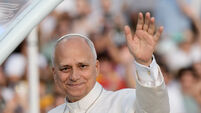
Benedict named 15 new "princes" of the Church during his weekly general audience, 12 of whom are under the age of 80 and thus eligible to vote in a conclave to elect the next Pope.
He said the prelates, who also include Archbishop Stanislaw Dziwisz, Pope John Paul II's longtime private secretary, would receive their red hats on March 24.
The cardinals come from 11 countries on five continents and include the archbishops of Boston; Krakow, Poland; Seoul, South Korea; Bordeaux, France; Bologna, Italy; Manila, Philippines and Toledo, Spain.
Key among them is Hong Kong Bishop Joseph Zen, an outspoken China critic and supporter of the underground Catholic Church on the mainland.
Benedict has sought to restore diplomatic relations with China and Zen's nomination could be seen as an affront to Beijing.
However, China experts said Benedict's selection was also practical, because Zen is an expert on the Chinese church and, as cardinal, will serve as a papal adviser.
Benedict also nominated Caracas Archbishop Jorge Urosa Sabino, who has sought to defuse recent tensions between the Catholic Church in Venezuela and President Hugo Chavez.
Venezuela's only other cardinal, Rosalio Castillo Lara, a retired Vatican official, has accused Chavez of acting despotically and endangering Venezuela's democracy.
Urosa Sabino, who took over the diocese in November, has tried to tone down the rhetoric, saying priests should refrain from voicing political opinions during religious functions. As a result, his nomination as cardinal could be seen as something of a balancing element in the Venezuelan church.
Two Americans were added to the list, both of whom have deep experience with the sex abuse scandal that has roiled the American Catholic Church.
At the Vatican, Archbishop William Levada is in charge of reviewing all sex abuse cases - a job that has embittered some sex abuse victims who faulted him for the way he handled the crisis in his US dioceses.
By naming 12 voting -age cardinals, Benedict assured that by the March 24 consistory there would be 120 cardinal electors - the limit set by Pope Paul VI in 1973.


CONNECT WITH US TODAY



Be the first to know the latest news and updates