The evolution of Google
IN 1998, a search engine from an obscure startup launched. It featured a logo, a text field, and buttons for search and “I’m Feeling Lucky” — and not much else. Its name was Google, and it changed the way that the world interacted with information.
It’s tempting to think of Google search as something that hasn’t evolved radically over the years, in part because the Google.com homepage hasn’t changed much. Under the surface, however, Google has changed plenty, in increasingly profound ways and if the company’s ambitious plans pay off, the Google of just a few years from now could be a new kind of search engine.
Amit Singhal, a 22-year veteran of the search field and the company’s senior vice president in charge of search, talked at the company’s I/O conference about where Google thinks its search should go, and the steps it’s taking to get there.
As Singhal stresses, Google is just continuing a journey it’s already on. “Over the 12 years I’ve been here, we have changed Google every two to four years,” he says. “There have been four or five huge milestones... Google’s beauty is what hides behind that simple interface: Incredibly complex mathematics.”
The first rough draft of Google’s vision of conversational, anticipatory search already exists. It’s Google’s search apps featuring Google Now, a feature Google introduced in 2012 with Android 4.1 Jelly Bean and brought to Apple’s iOS this April.
The apps let you pull up information by talking to your phone, and thanks to Google Now, they also figure out what you might want to know, sometimes without you even explicitly asking for it.
It is now able to deliver reminders to pick up the milk when a person is in a supermarket or call certain friends when visiting certain cities. Google Now also has been programmed to understand more spoken questions.
The technology is being expanded to work on the company’s Chrome web browser, extending its reach beyond smartphones and tablets. With the wider availability, the Google Now technology is likely to be used more frequently, enabling Google’s engineers to gain an even better understanding of human behaviour.
Google’s mobile search uses voice recognition, natural-language technology, and voice synthesis to create an interface that’s spoken as well as visual. It’s the start of the conversational Star Trek interface, and it’s critical to Google, particularly as it puts its services on new types of mobile gadgets.
With conversations between two or more people, the parties involved convey information to each other in an ongoing sequence that’s rich in context. Every statement reflects the discussion up until that point. But search engines have never worked that way. Historically, as Huffman says, “Google assumes that every single thing I type stands alone”.
That’s already begun to change. Singhal demonstrated it by talking to his Android phone:
“How tall is Justin Bieber?”
“Justin Bieber is 5ft 7in tall.”
“How old is he?”
“Justin Bieber is 19 years old.”
Google understands that the subject of the first query is “Justin Bieber”, and correctly assumes Bieber is also the “he” in the second query. If it were human, you’d expect nothing less. But for a search engine, it’s a genuine back-and-forth discussion.
“Imagine this taken to the limit,” says Singhal. “You’re having a natural conversation with the machine.”
Even the simple fact Google can tell that Justin Bieber is the subject of a query shows that the search engine has a more sophisticated understanding of the world than it once did.
Thanks to the Knowledge Graph, the search engine has a much better handle on just what “Justin Bieber” is. Search for Bieber’s name at Google.com, and the right-hand side of the results are dedicated to a summary box that contains: A brief biography; his birth date and place of birth; his height; movies and TV shows he’s appeared in; his parents; his upcoming concerts; his songs and albums.
Superficially, the Knowledge Graph is cool, but not epoch-shifting: Just-the-facts summaries complement conventional search results, but don’t supplant them. “The less people notice, the better — you want it to feel natural enough that they think it was always part of the Google search page,” says Knowledge Graph product manager Emily Moxley.
But Google couldn’t create the summary unless it knew Justin Bieber was a person. And that understanding is why Google Now is able to hold up its end of a conversation about him. “Our Knowledge Graph, from a back- end perspective, is as big a change to search as the original algorithms and [original Google algorithm] PageRank are,” says Singhal.
To Google, Justin Bieber is an entity — one of millions it knows about. “Entities are pretty fundamental,” says Moxley. “The better we understand them, the better we understand search queries that come in, and the better results we can give to you.”
The more you peruse the summary boxes, the clearer it is that the Knowledge Graph helps Google understand not only what entities are, but what aspects of them matter. Even for people within the same profession, the Knowledge Graph emphasises different facts. Search for “Barack Obama”, and it doesn’t tell you his political party. It assumes you already know. For “Michael Bloomberg”, however, it specifies his affiliation.
If the Knowledge Graph were compiled by human editors, you’d just assume that they were making judgement calls about which facts to stress. But “it’s all algorithms saying, ‘this is what the world searches for’,” says Singhal. Real people ask about Bieber’s height, but not his non-existent space-time. They know the US president’s party, but are understandably unsure of serial party-switcher Bloomberg’s. As they request specific pieces of information, the Knowledge Graph is paying attention.
Still, there’s plenty of information in the world that no algorithm can grind down into a concise, canonical form. Huffman says “did Natalie Portman do her own dancing in Black Swan?” is one. “You might think Google should say yes or no, but really there are huge arguments between Natalie Portman and her body double.” If human beings can’t untangle them, Google probably can’t either.
The Knowledge Graph is so powerful because it helps Google understand what the world cares about. That’s only part of the future-search puzzle, though. The other one is at least as important, and more controversial: What does every individual Google user care about?
Some of the highlights from Google’s annual showcase:
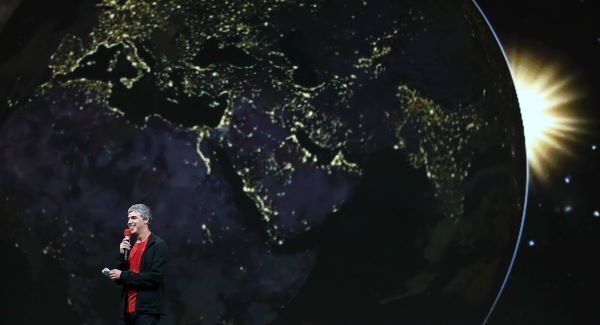
* Google is making images from its Google Earth service available via web browsers. Before, you had to install separate software to use the program. Google also demonstrates the ability to see a view of earth from space and rotate it around.
* Google is to introduce new features for its mapping apps on Android devices and iPhones. When you search for restaurants in a city or neighbourhood, you’ll get the names of the restaurants along with their ratings at the bottom of the screen. You can swipe through the results horizontally. The mapping app will also include Google Offers — deals akin to those from Groupon and LivingSocial.
* Google unveiled several tools for sharing photos on its Google Plus social network.
One feature will pick out the best shots from a wide assortment of photos. Just upload a selection, and Google’s machines will reject ones that are blurry or don’t have people smiling. Another factor is Google’s knowledge of who’s important to you — so family members or close friends are more likely to make the cut.
If the photos don’t look quite right, Google is promising to enhance them, taking over a job that typically requires people to use special photo-editing software such as Adobe’s Photoshop, Apple’s iPhoto, or Google’s Picasa.
* Google is introducing 41 new features to Google Plus, which the company is positioning as an alternative to Facebook.
Among them is a newly designed stream of content — one designed to be dynamic, rather than a long list seen on Facebook.
Google Plus will start to display automatic hash tags to identify the main topic being discussed in a post or featured in a photo. You’ll have the option to turn it off or remove it for a specific post. Google will also help you discover content by pulling up other posts with that hash tag. Facebook doesn’t use hash tags.
* Google’s new phone will still run on the Android version called Jelly Bean, rather than Key Lime Pie, the next in a series of dessert-themed code names.
It will be unlocked, meaning it will work with any carrier.
Google says the new phone is a variant of Samsung’s Galaxy S4 phone but without the modifications to the Android operating system that Samsung has included. .
* It also unveiled a music service called All Access.
The streaming service will allow Android users to listen to their favourite songs and artists for a monthly fee.
You can choose one of 22 music genres and see key albums that define the genre along with recommendations from Google’s curators. You can listen to any track right away, or switch to a “radio station” format featuring songs you’ll likely want to hear. You can adjust the playlist as you go.
* Android has grown from being on 100m devices in 2011 and 400m in 2012 to 900m now.
CONNECT WITH US TODAY



Be the first to know the latest news and updates