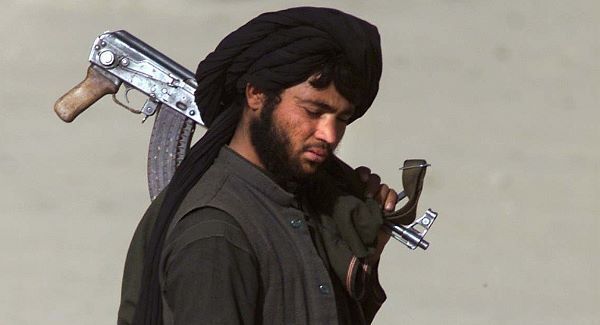
Taliban’s new victims
Modest cement-block and mud-brick, one and two-storey homes sit cheek by jowl along narrow, unpaved streets and open sewers. Graffiti such as “Long Live Mullah Omar” and “Long Live the Jihad” are scrawled on walls; the flag of a pro-Taliban political party flies over many homes.
Living in towns such as Pashtunabad had advantages for the Afghan Taliban’s leadership: It allowed them to fly under the radar and cultivate an image as average Joes, even as they were directing an insurgency against US troops across the border.
But in recent years, some Taliban commanders have begun moving out of places such as Pashtunabad, and into new neighbourhoods that could not be more different.
They have transformed rural districts of mud-brick homes in places such as Kuchlak — a stretch of poor, arid land on the road from Quetta to the Afghan border populated largely by fruit and vegetable farmers — into little boomtowns.
Farther to the south, they have abandoned Karachi’s poor Sohrab Goth neighbourhood for wealthier developments such as Clifton, where they live in the vicinity of Pakistan’s elite, including businessmen, entertainers, artists, and politicians. (The Bhutto family has a compound in the area, and Benazir Bhutto’s widower, Pakistani president Ali Asif Zardari, often stays there.)
Many Clifton residents live in such a heavy security bubble, they probably don’t know the Taliban are in town.
In these wealthier neighbourhoods, Taliban members are building and buying flashy mansions featuring faux Grecian columns, silver-tinted blastproof windows, and 3m-high walls topped with concertina wire.
Once, the stereotype of a Taliban leader was that he drove a second-hand, beaten-up Toyota Corolla; these men, by contrast, drive new Toyota Land Cruisers or other luxury cars.
Taliban leaders, in other words, are a lot richer than they used to be — and the source of their sudden influx of wealth is no secret.
“The Taliban are more involved than ever in systematically promoting, financing, organising, and protecting the drug trade,” says Ghulam Muhammad Woror, the director of narcotics control in Helmand province.
“Drugs are ultimately providing the money, food, weapons, and suicide bombers to the insurgency and the good life to Taliban leaders in Quetta, Karachi, and across Afghanistan.”
The drug trade, of course, has been an important part of Afghanistan’s economy for a long time — exploited by former Northern Alliance warlords, corrupt government officials, and other major traffickers.
Local Taliban chiefs benefited as well. But now the Taliban’s central leadership has decided it wants in. And drug-trafficking has become such a pervasive part of the organisation’s mission that it raises an alarming prospect: If the Taliban’s influence grow following the US withdrawal, is Afghanistan in danger of becoming the world’s first true narcostate?
HISTORICALLY, the Taliban had a complicated relationship with the drug trade. In some respects, the deep involvement of Taliban commanders in drug-trafficking is nothing new, says Muhammad Abdali, head of the Afghan government’s anti-drug task force in Helmand province. (Helmand is the country’s largest opium producer; according to the UN Office on Drugs and Crime, farmers are expected this year to sow more than the 185,000 acres of opium poppies they planted in 2012.)
Abdali notes that Akhtar Mohammad Mansoor, who today is arguably the Taliban’s most powerful commander, and the late brutal Taliban commander Mullah Dadullah Akhund were already thriving drug-dealers back in 1994, just as the Taliban movement was launching. They joined the Taliban soon after it gained traction in the mid-1990s.
Mullah Mohammed Omar — who led the Taliban and ruled Afghanistan from 1996 to 2001 before going into hiding following the US invasion — outlawed opium production and trafficking in the late 1990s as being haram, against Islam.
Yet many local Taliban commanders in opium-producing areas, particularly in Helmand and Kandahar, have been using the opium industry to fund their local insurgent operations since the early 2000s, and the Taliban has long collected a 10% Islamic tax, usher, on farmers’ opium crops. According to a 2009 UNODC report on opium production, this tax is believed to have netted the insurgency $22m to $44m a year (€16.5m to €33m) — and the Taliban may have earned another $70m by providing protection to drug-laden convoys travelling through their territory.
But something changed in the last two years: Taliban central leadership now seems to be playing a much more pivotal role in the Afghan narcotics industry.
They appear to be increasingly engrossed in both the upstream and downstream sides of the heroin and opium trade — encouraging farmers to plant poppies, lending them seed money, buying the crop of sticky opium paste in the field, refining it into exportable opium and heroin, and transporting it to Pakistan and Iran.
Today the insurgency is earning upward of $200m or more annually from the drug trade, according to the UNODC.
Why the shift? For years, the Taliban relied partly on donations from sympathetic citizens in the Gulf states to fund their military operations. Recently, a lot of that Gulf money has dried up, as rich residents have turned their attention to other Sunni Islamic causes such as Palestine, Egypt, and Syria. The Taliban had to look for other sources of funding.
But the biggest factor in the Taliban’s involvement may simply be that the group’s central leadership decided it wanted a slice of what its local commanders had. Already most of the country’s opium was being produced in the largely Taliban-controlled areas of the south and southwest — 98 %, according to a 2008 UNODC report.
“The insurgency would be weaker without the drug money that has helped to fund the movement at the local level for years,” says a senior Taliban officer who declined to be named. “The leadership realised that since it couldn’t stop it, then why not get involved and seize control of the trade systematically.”
AS WITH property, it’s all about location. Consider the case of Akhtar Mohammad Mansoor and Abdul Qayyum Zakir. When Mullah Omar’s deputy and brother-in-law was arrested by US and Pakistani forces in Karachi in 2010, his two top deputies, Mansoor and Zakir, began vying for power.
They come from competing southern tribes — the Ishaqzai and Alizai, respectively — in the most fertile opium-producing areas of Helmand and Kandahar provinces.
Both live in luxurious new homes. According to Abdali and other sources, both are heavily involved in the drug trade. “Mansoor is the top Taliban leader because of his and his tribe’s drug connections and the money,” says Abdali. “He controls the major drug and transit zones.”
The Taliban’s concentration on their drug interests begins each year during the autumn planting season.
At that time, commanders often provide seeds, fertilisers, and advance payments and are always ready with promises of protection. “In most districts, the Taliban are encouraging villagers to plant as many poppy seeds as possible and are assuring the farmers that the insurgency will shield their cultivation from government eradication efforts,” says Abdali.
Despite a big push, government eradication efforts have been largely ineffective, with just 6% of the some 380,000 acres of poppies planted last year having been destroyed, according to the UNODC.
Most of the insurgency’s heroin labs are in the remote, Taliban-controlled areas of Nowzad and Baghran districts in northern Helmand province.
“Neither we nor US forces can access those areas,” says Abdali. “Only US Special Operations Forces could go in. But drug control is not their priority.”
Indeed, there is a long debate as to whether the US should devote more resources to drug control. But the overstretched US forces have had their hands full simply trying to secure the country and train the Afghan army.
In fact, part of the Taliban’s success has been fuelled by a rapprochement with their longtime mortal enemies, former members of the Northern Alliance. This militia was the big winner in the US invasion of late 2001.
With US support on the ground and in the air, the Northern Alliance steamrolled the Taliban and became the core of Hamid Karzai’s new government, especially in its police and security forces. Today, while some of these former Northern Alliance officials are fighting the drug trade, others are abetting and profiting from it.
Over the past few years, the Taliban and former Northern Alliance members have realised that if they put aside their political differences and work together, they can dramatically ramp up their drug profits.
Leading members of the alliance had long produced opium and refined heroin in northern provinces such as Badakhshan — exporting both products via Uzbekistan, Tajikistan, and Turkmenistan and then on to Russia and Europe.
Now they are also able to ship this harvest through Taliban-controlled areas in the south and into Iran and Pakistan. “The northern warlords, government officials, the police, and the Taliban are in an unwritten economic understanding that they are both part of one cooperative drug chain,” says an unnamed Taliban subcommander in Helmand. “Before the drugs reach Taliban areas, the shipments have been escorted from the north by the warlords, Karzai government officials, and Afghan police.”
Both sides share the profits when Taliban couriers deliver the top-grade northern shipments to buyers across the border in Iran and Pakistan.
“Today there is more of the highest quality heroin coming from the north and being exported by our forces,” says the subcommander.
AN ALLIANCE with their onetime enemies wasn’t the only big change for the Taliban in the last few years. Given the newfound drug wealth and seemingly endless possibilities to make even more money, the Quetta Shura — the Taliban’s governing body — set up a monitoring mechanism to ensure that the windfall of narcotics revenues is shared from top to bottom.
As a result, the council established an economic commission last year to scrutinise the surge of wealth. According to several Taliban leaders, 70% of the drug profits are now supposed to be given to the commission to spend on food, weapons, explosives, and medical care for the insurgency, while 30% is supposed to go directly to commanders and fighters in the field.
To many Taliban in the field, that does not seem like a fair split, as the frontline guerrillas are doing most of the work, taking the biggest risks, and bearing the brunt of casualties and suffering. Not surprisingly, local commanders complain that they are being short-changed.
“Top leaders collect and pocket about 80% of the drug revenues from five southern provinces,” gripes the Helmand subcommander.
Predictably, given the movement is supposedly based on ultra-orthodox Islam, some Taliban supporters freely express doubts about the insurgency’s heavy involvement in narcotics.
“It is a great pity the Taliban are dealing with drugs that are expressly prohibited in Islam,” says pro-Taliban cleric Maulvi Jan Mohammad Haqqani. “Fighting the enemy with drug and kidnapping money is the same as fighting with infidel American money.”
But his is a rather lonely voice. The Taliban now seem more focused on the drug trade than on the enemy.
“The Taliban’s new definition of jihad is making money from the drug trade,” says Abdali. The Helmand subcommander puts it this way: “We are using all of our energy protecting poppy fields, our drug interests, and convoys from government forces.”
Woror says he has never seen the Taliban fight so hard to protect their turf. “This year more than ever, the Taliban are constantly fighting our poppy-eradication teams,” he says. “And when not fighting us, they are spending most of their time supervising and protecting their drug business.”
What this means for Afghanistan is grim. With corrupt government officials, police, former Northern Alliance warlords, and now the Taliban all co-ordinating their efforts, the country could, after the US withdrawal, end up being effectively ruled by a drug mafia.
If that happens, the world will be even more deeply awash in opium and heroin. While that will be good news for the nouveaux riches drug lords of Quetta and Karachi, it will be terrible news for just about everyone else.
* Ron Moreau is Newsweek and The Daily Beast’s Afghanistan and Pakistan correspondent.(c) 2013 Newsweek/Daily Beast.
CONNECT WITH US TODAY



Be the first to know the latest news and updates