Sinister ideology must be defeated
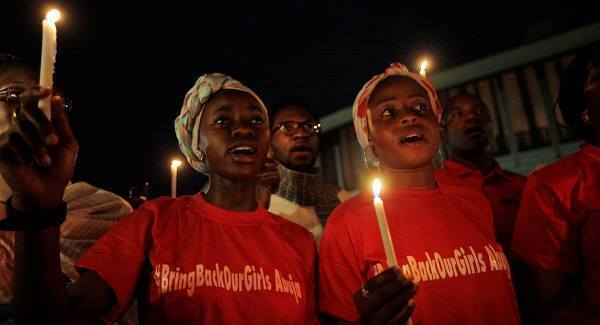
THE abduction of more than 240 Nigerian girls has shocked the world. But, unfortunately, their case is not an isolated one in Nigeria. Indeed, Nigeria’s torment is shared by many African countries, and the motivation derives from an ideology that is global.
That ideology is based on a warped and false view of religion. Of course, the hideous and crazed words of the leader of Boko Haram, the group that kidnapped the girls, are representative of the most extreme fringe. But, until we clean the soil in which this poisonous plant takes root, it will continue to blight the life chances of millions of young people around the world — and jeopardise our security.
This problem is now vast. Mali, Chad, Niger, the Central African Republic, Somalia, Kenya, and even Ethiopia have all suffered or face acute anxieties about the spread of extremism.
Governments are often confronting the challenge with courage and determination. But the problem is growing.
This is not by accident. When I became prime minister of the United Kingdom in 1997, Nigeria served as an example of productive co-operation between Christians and Muslims. The destructive ideology represented by Boko Haram is not part of Nigeria’s traditions; it has been imported.
As the population grows, so will the problem. Nigeria has around 168m people today, with some estimates putting the population at 300m by 2030, split roughly equally between Christian and Muslim.
Poverty and lack of development play a huge part in creating the circumstances in which extremism incubates. But poverty alone does not explain the problem. And a major factor now holding back development is terrorism. How can local economies thrive in such an atmosphere?
This challenge is not confined to Africa. The Middle East, as we know, is immersed in a process of revolution and upheaval complicated by Islamism and its extremist offshoots. In Pakistan, more than 50,000 people have lost their lives in the terror attacks of the last decade. Violence linked to the same ideology has taken lives in India, Russia, Central Asia, and the Far East.
What is that ideology? Let me state some things very clearly. This ideology does not represent Islam. The majority of Muslims do not agree with it. They are repulsed by it.
What might loosely be called Islamism is based on a politicisation of religion that is fundamentally incompatible with the modern world, for it assumes that there is one true religion, only one interpretation of that religion, and that this interpretation should prevail and dominate all countries’ politics, government institutions, and social life. Those who do not share this view must be overcome.
This Islamist ideology is a spectrum. At one extreme are groups such as Boko Haram. Other groups may not advocate violence but still preach a view of the world that is dangerous and hostile to those who disagree — for example, the Muslim Brotherhood’s statement in 2013 denouncing the UN women’s declaration for, among other things, defending women’s right to travel or work without their husbands’ permission.
It is the ideology, not just the acts of extremism, that must be confronted.
My foundation has been active in Nigeria for several years, bringing together Christian and Muslim clerics to foster mutual understanding. In more than 20 countries, our schools programmes connect children of different faiths to learn about each other.
The results are clear and powerful. In Sierra Leone, where we are part of the campaign against malaria, we mobilise churches and mosques to work in their communities and help families use nets to ward off a disease that still kills 750,000 pregnant women and children each year in Africa.
So the battle is not lost. But it has to be seen for what it is. Every year, the West spends billions of dollars on defence relationships and on fighting terrorism. Yet the very thing we are fighting is given license to grow in the education systems of many of the countries with which we are engaged.
Education today is a security issue. The G20 should agree that open-minded education that promotes religious tolerance should be a responsibility of all countries.
Nigeria’s kidnapped girls are victims not just of an act of violence but of a way of thinking. If we can defeat that ideology, we will begin to make progress toward a more secure world.
* Tony Blair, British prime minister from 1997 to 2007, is special envoy for the Middle East Quartet.
Copyright: Project Syndicate, 2014.
www.project-syndicate.org

CONNECT WITH US TODAY



Be the first to know the latest news and updates