Let’s take steps to end child poverty

It is now more important than ever that our political leaders refocus on that commitment and close a poverty gap which is leaving many of our children behind. Official CSO figures confirm the one in five is now at serious risk of poverty, while one in 10 is living in consistent poverty.
These are children growing up in homes where the choice has to be made between education, clothing, fuel costs as well as property taxes and household charges, while balanced with the very basic need of food on the table.
It is easy for our decision makers to hide behind phrases such as the “Poverty Line” rather than come face to face with the stark realities.
Estimates by Social Justice Ireland say a single adult needs earnings of €203 a week to avoid poverty, for an adult and two children it is €345, and for a family of two adults and two children it is €482 a week.
Compare this to the €360 a week this family would receive in jobseeker’s assistance if the main bread winner is out of work; add child benefit of €65 per week and you can see the difficulties facing people across the country.
Even with any additional benefits such as rent allowance, the family is in poverty. Their income is well below the €810 average household income as calculated by the CSO, showing that the gap between our poorest and our richest is wider than ever.
For many households the situation is getting worse with rising bills, the universal social charge, property tax, and soon water meters. It is a shocking indictment that 1,800 homes a month have their electricity cut off, literally leaving families with the lights and the heat turned off. Fuel bills have jumped 15% over the past two years.
As new costs are announced our political leaders are keen to play down the impact of asking families to pay up €100 here or €100 there, they need to wake up to the fact that for many of us €100 is a lot of money.
About 200,000 of our children wake up each morning at risk of poverty — of which just over half are living in consistent poverty, a figure which has increased by 35,000 in the past five years.
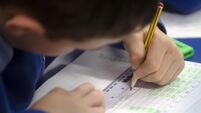
Poverty impacts on every aspect of a child’s development. Children do not get to socialise or go on school outings and are excluded, isolated, forced to withdraw from activities being undertaken by their friends. At the same time, a lack of books, school supplies and even hunger are barriers to education. The seeds are then sown for a life of disadvantage.
We know that the longer a child spends in poverty, the more it will impact on their future development and the more it will hinder their opportunity to break free.
The example I have picked today is not unique. Where once homes may have saved for an annual holiday, the convenience of the internet, or the enjoyment of satellite TV, now the needs are far more basic and far more pressing.
For children the family home which should be a place of nourishment and growth is instead a source of stress, pressure and a struggle to make ends meet.
While we hear a lot about the new poor. People who have found their fortunes reversed because of the current economic circumstances, we must not forget there are also those who were marginalised and excluded even during the boom times and are still expected to pick up the tab.
It is these, the most vulnerable in society, who bear the real pain of extreme poverty.
We know from the last census that 531 children were homeless, with a further 249 families with children living in accommodation for people who are homeless.
Census night is of course just a snapshot — and while the figures themselves are shocking as someone who is involved in frontline work, I fear the true picture is worse.
It is also important to highlight that the scale of housing need for children is much greater. While many of our apartment complexes and housing estates lie empty, it is morally unacceptable that 100,000 households are in need of social housing, some 44,000 of these include children, or to put it another way 72,000 children in search of a place to really call home.
Ireland needs a seismic shift in attitude to children if equality and social justice is to be achieved. The OECD in 2011 (Doing Better for Families) found Ireland continues to spend well below average on family and in-kind services, this cannot continue.
I already mentioned the gap between those who have and those who have not.
On the face of it, claims that everyone is being treated equally and that the burden is being shared fairly do not stand up to scrutiny.
Ahead of Budget 2013, I wrote on the urgent need to ensure we are all sharing the burden of the economic collapse equally.
Not only do we still have rich individuals in Ireland — we have some of the richest in Europe.
We can bring between €3bn and €3.5bn into the national coffers with a set of measures to bring the top 10% of our society into line with those across Europe. This is an area which the Government has still not explored.
I will finish by reminding ministers of another commitment, the commitment in the National Action Plan for Social Inclusion 2007-2016. Its aim is to eliminate poverty within the next three years, a goal still attainable: Not to do so is a betrayal, not only of the values read from the steps of the GPO almost a century ago but also of a generation of children.
* Sr Stanislaus Kennedy is a social campaigner and founder of Focus Ireland
CONNECT WITH US TODAY



Be the first to know the latest news and updates