A journey that doesn’t stop at the border
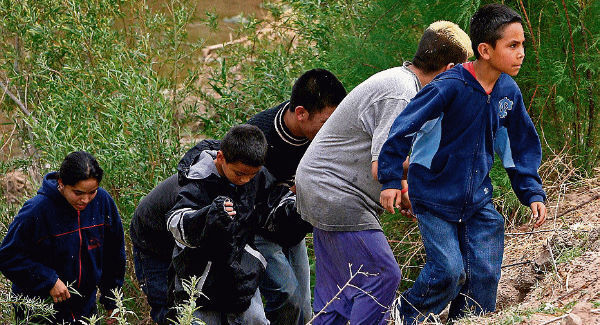
However, only about half of these children are represented by a lawyer in court.
Around 48% of unaccompanied children who had immigration cases decided between 2005 and June 2014 went through their hearings without legal representation, according to Syracuse University’s Transactional Records Access Clearinghouse Immigration Project.
TRAC’s data also estimates that only 31% of children with pending immigration cases have secured attorneys. Meanwhile, a prosecutor from the Immigration and Customs Enforcement agency is always present at hearings to represent the government.
Because US immigration courts are civil courts, not criminal, defendants are not offered a government-appointed lawyer to help argue their cases. And because so many undocumented immigrants — particularly in this latest wave of Central American children — cannot afford a private lawyer, pro bono legal services often step in to provide counselling and representation.
However, Beth Werlin, deputy director at the American Immigration Council, says the demand for these pro bono services has stretched the resources of available lawyers. “There’s a whole network of service providers who do intakes with these kids,” said Ms Werlin.
“A lot of these kids, through these networks, are able to find volunteer lawyers who come in and try to help. It’s great for the kids if that works out for them.
“But the need is just so overwhelming that the volunteers haven’t been able to keep up.”
Furthermore, Ms Werlin added, location makes a difference in getting access to pro bono services — which leaves the probability of securing a lawyer up to chance.
“Certain parts of the country have less developed networks,” she said. “And putting detention facilities in remote areas means there’s not a network of lawyers available for the children.”
TRAC’s numbers suggest that having an immigration attorney makes a stark difference in the outcome of a case: Between 2005 and June 2014, 66% of unaccompanied children who were represented by a lawyer in court were able to stay in the US, as opposed to just 10% of those who did not have an attorney.
Without an immigration lawyer, children face two choices: Represent themselves in court or skip the hearing. The former case is at the heart of a class action suit filed last week by the American Immigration Council, the American Civil Liberties Union, and a handful of other legal organisations.
The lawsuit argues children do not have the capacity to understand the full range of legal options and requirements needed to win their case, and deserve the right to due process when their lives may be at stake if returned to their countries.
Claire Thomas, a lawyer with the New York-based Safe Passage Project, recalled an instance where an 11-year-old boy, when questioned in an initial meeting with volunteer lawyers, said he came to the US from El Salvador in order to reunite with his father.
However, the boy later revealed that his sister’s ex-boyfriend, a gang member in El Salvador, had threatened him and fired a gun right above the boy’s ear. The sister then arranged money to send the boy with a people smuggler to take him through Mexico and into the US, where he could reunite with their father.
“And so this boy came here and told us: ‘I’m coming here to reunite with my father,’ which is true,” said Ms Thomas. “But at that first initial meeting he didn’t tell us the other details. He didn’t have the words or wherewithal to express that and realise that’s actually important.”
The boy was eventually granted asylum. “But without a lawyer or an advocate to meet with him and understand him and give him the time he needed, I’m not sure what would have happened,” she said.
If a child simply does not show up to court, the judge can issue an order of removal in absentia. The question of how often children fail to appear in court is at the front of another brewing debate over how the Obama administration should handle the influx of Central American child migrants.
While estimates vary on what proportion of children fail to appear in court, Republican lawmakers have argued that skipping their hearings is an easy way for child migrants to circumvent the law and stay in the US. Immigrant rights advocates say the children sometimes do not even understand that they have to go to court, further emphasising the need for more comprehensive legal support.
l(c) 2014, Newsweek. All rights reserved.

CONNECT WITH US TODAY



Be the first to know the latest news and updates