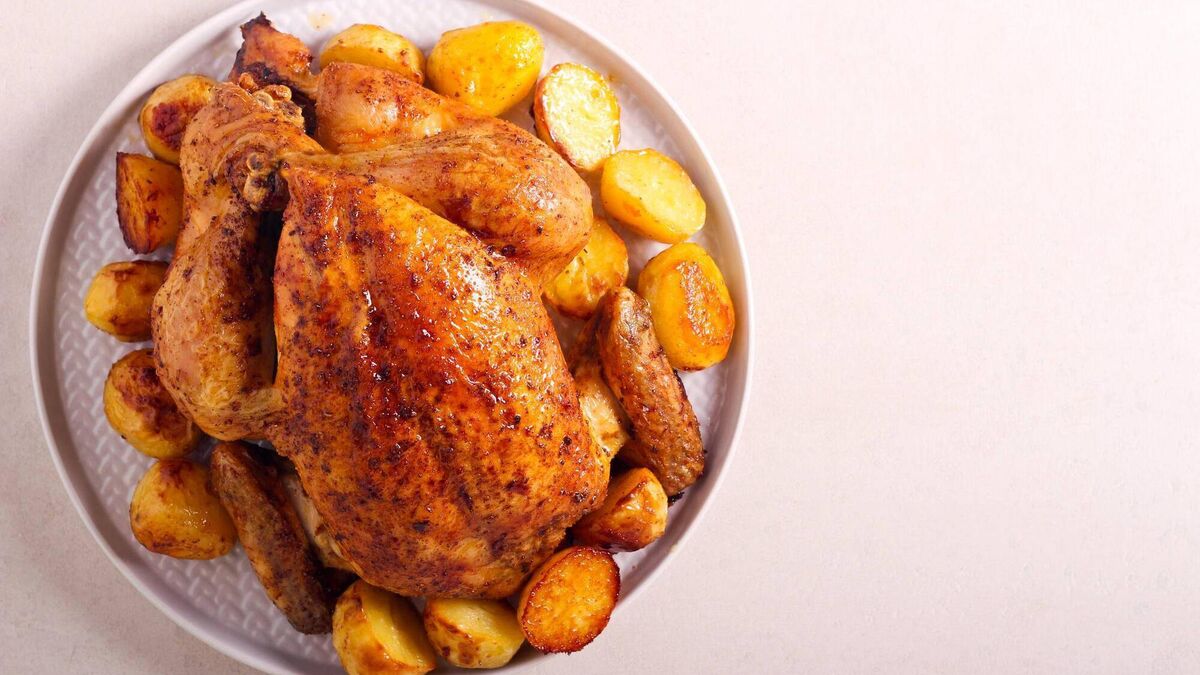
Roast Chicken Dinner with Gravy and Roasties
The best place for the stuffing is inside the bird where it absorbs lots of delicious juices as it cooks. Do not overfill the bird — otherwise the heat may not penetrate fully. This is particularly important if you are using an intensively reared bird whi
Ingredients
1.5 - 2.3kg free-range chicken, preferably organic
Giblet Stock (optional):
giblets (keep the liver for a chicken liver pâté), and wishbone
1 thickly-sliced carrot
1 thickly-sliced onion
1 stick celery, sliced
a few parsley stalks and a sprig of thyme
Stuffing:
45g butter
75g chopped onion
75-100g soft white breadcrumbs
2 tbsp finely-chopped fresh herbs e.g., parsley, thyme, chives and annual marjoram
salt and freshly-ground pepper
a little soft butter
Gravy:
600-900ml of stock from giblets or chicken stock
Garnish
sprigs of flat parsley
Julia's Roasties:
8 potatoes, unwashed Golden Wonders or Kerr’s Pinks
Method
First, sprinkle the chicken lightly all over with pure dairy salt (2 rounded teaspoons) for 20 minutes approx.
This seasons the meat, enhances the flavour and firms the texture of the flesh.
Next, prepare the chicken:
Remove the wishbone from the neck end of the chicken: this is easily done by lifting back the loose neck skin and cutting around the wishbone with a small knife — tug to remove, this isn't at all essential, but it does make carving much easier later on. Tuck the wing tips underneath the chicken to make a neat shape. Put the wishbone, giblets, carrot, onions, celery, and herbs into a saucepan. Cover with cold water, bring to the boil, skim, and simmer gently while the chicken is roasting. This is the basis of the gravy. Alternatively, use homemade chicken stock.
To make the stuffing:
Sweat the onions gently in the butter in a covered saucepan until soft, 10 minutes approx. then stir in the white breadcrumbs, the freshly-chopped herbs, a little salt and pepper to taste. Allow it to get quite cold unless you are going to cook the chicken immediately. Fill the cavity with stuffing but not too tightly. Dry the chicken with kitchen paper. Smear the breast and legs with a little soft butter.
Preheat the oven to 180°C/Gas Mark 4.
Weigh the chicken and allow about 20 minutes to 450g (1lb) and 20 minutes over — put on middle shelf in oven. Baste a couple of times during the cooking with the buttery juices. The chicken is done when the juices are running clear.
To test, prick the thickest part at the base of the thigh, hold a spoon underneath to collect the liquid, examine the juices — they should be clear.
Remove the chicken to a carving dish, keep it warm and allow to rest while you make the gravy.
To make the gravy:
Tilt the roasting tin to one corner and spoon off the surplus fat from the juices and return the roasting pan to the stove. Alternatively, use a maigre to degrease**. Deglaze the pan juices with the fat free stock from the giblets and bones (you will need 600 – 900ml) depending on the size of the chicken). Using a whisk, stir and scrape well to dissolve the caramelised meat juices in the roasting pan. Boil it up well, season and thicken with a little roux if you like (the gravy should not be thick). Taste and correct seasoning, serve in a hot gravy boat.
If possible, serve the chicken on a nice carving dish surrounded by crispy roast potatoes and some sprigs of flat parsley then arm yourself with a sharp knife and bring it to the table. Carve as best you can and ignore rude remarks if you are still practicing but do try to organise it so that each person gets some brown and some white meat.
To make Julia's roasties:
Choose medium to large potatoes of even size. Scrub and peel. Put into a saucepan, cover with cold salted water and bring to the boil. Drain thoroughly. Lightly scratch the surface with a fork and season with salt.
Put the potatoes into smoking hot fat or olive oil. Baste occasionally. Cook until soft in a hot oven 230°C/Gas Mark 8 for 30-45 minutes depending on the size. Drain well on kitchen paper. Serve immediately.
Alternatively, put the potatoes into smoking hot fat in the same tin as the meat, 40-45 minutes before the meat is fully cooked and baste well. Cook until soft. (Baste the potatoes when you baste the meat and turn them over after 25 minutes). Drain on kitchen paper and serve immediately.
Serve with gravy and Julia’s roasties.
* Use the cooked carcass for stock.