Mick Clifford: Why Ireland faces difficult choices over investment, jobs and global conflicts
From Aughinish to data centres, Ireland faces growing questions about the true cost of protecting jobs
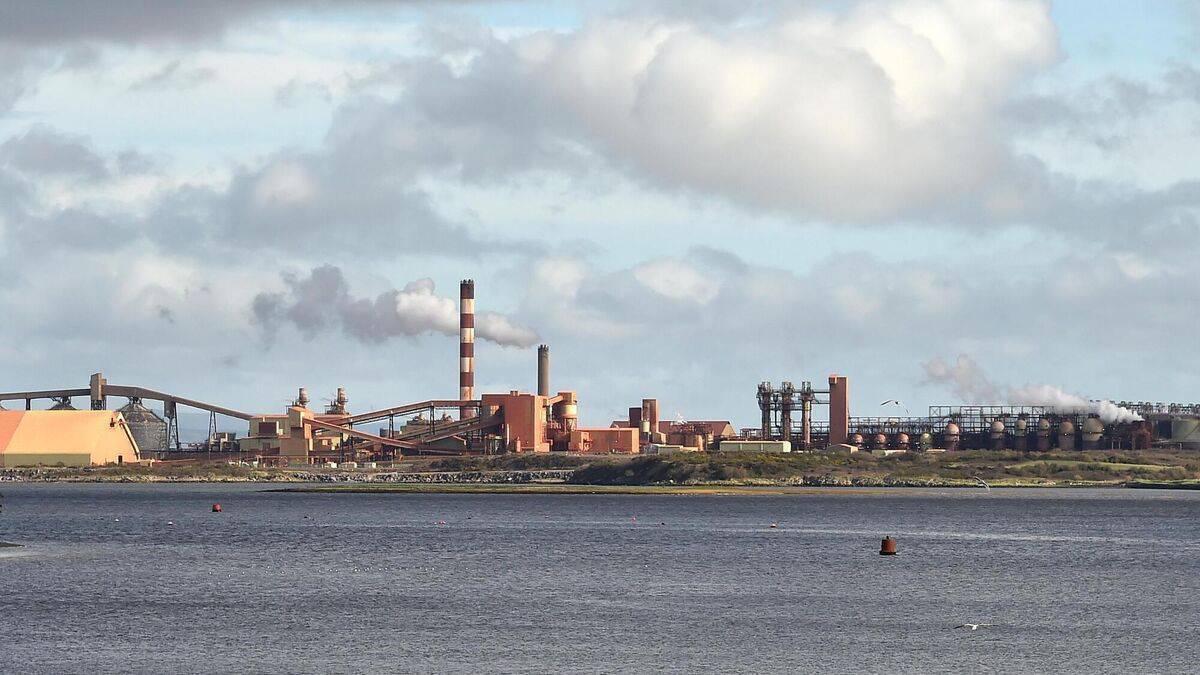
It was reported six weeks ago that Aughinish Alumina in Limerick may be sending product to Russia that enters the weapons supply chain. File picture: Dan Linehan
Mick Clifford is an award-winning investigative journalist and author of seven books.
What price jobs? The Government is facing a very sticky situation with the growing evidence that a company in this state is contributing to Russia’s war effort.
Another dilemma to be faced is the upcoming Occupied Territories Bill (OTB). Will it, in whatever guise it sees the light of day, represent a threat to jobs?
Then there are the data centres, gobbling electricity, cranking up bills for householders and free to do as they please because the government regards big tech with the obsequiousness usually reserved for crazed dictators or Donald Trump.
Six weeks ago, the Irish Times and an international conglomerate of media outlets reported that the Limerick-based Aughinish Alumina may be sending product to Russia which enters the weapons supply chain.
Such a possibility would render this country complicit in constructing weapons that are daily killing innocent men, women and children in Ukraine as part of Vladimir Putin’s imperial designs. Thirty-nine MEPs are convinced that the alumina is being used in weapons and have requested that Ireland stop its export.
There are 475 people directly employed at the Limerick plant, and apparently up to 300 others reliant on it for work. The beneficial owner of the plant is an oligarch with close ties to Putin. The government doesn’t appear to want to know the full facts of what is going down.
On Morning Ireland last Tuesday, enterprise minister Peter Burke disputed the media reports that exports of alumina from Limerick have increased to 80% in recent years. The CSO has similar figures, but Burke claimed that this is not accurate.
He says the exports to Russia may be about 45% of the factory’s output, as if this is a central issue.
When pushed by presenter Justin McCarthy, Burke pushed back: “Bear in mind when you’re talking that there are 800 livelihoods at Aughanish at this time.”
Did he want to shut down any talk because delving too deep might unearth some basic moral questions?
Six weeks after this was definitively brought to the Government’s attention, Burke says it is being investigated and he can’t say when that investigation might conclude. Quite obviously the government fears that any intervention could see the closure of the plant.
What the issue demonstrates more than anything is that in an economy precariously balanced atop foreign direct investment, the Government is scared stiff of anything, anything at all, that might begin to bring down the house of cards. So it goes with the OTB. American commercial interests that the enactment of the bill will impact on Ireland as a favoured destination for investment.
It is also the case that the bill would provide further ballast to a growing belief in some boardrooms that this country is antisemitic, a charge that has very little basis in fact, but perception is what matters.
On the other hand, there is a slowly awakening realisation in places such as the US and Germany that Israel’s conduct is so morally corrupt that firm action is required.
Will the OTB cost this country jobs? Who knows? The opposition parties, which are pushing for the fullest version of the bill, haven’t even done an analysis of the possible fall-out from enactment.
They are either convinced that this is a cost-free exercise or they don’t want to know the projected fall-out as it might give pause for thought.
It would be interesting to observe the positioning of all political parties if it could be definitively stated that jobs would be lost and where those foregone jobs might be located.
In such a scenario, would everybody declare that the moral imperative in passing a bill that will have symbolic rather than material impact is worth the regrettably lost livelihoods?
In the case of Aughinish, we know that what is at issue is actual material possibly making its way into the supply chain for the manufacture of actual weapons. All we know about the OTB is that it will have a symbolic effect, which may well be important but is very difficult to quantify.
Data centres
Data centres don’t occupy the same space as weapon-making or war-waging, but their proliferation in this state does raise further questions about the price of jobs.
This week a UN report cited Ireland as a “cautionary tale” on what happens when data centres are expanded at a ferocious rate. The report stated that more fossil fuel-based electricity will be required as the demands of artificial intelligence will hugely add to the centres’ capacity to gobble up energy.
This in the same week that a Government-commissioned report said data centres are contributing billions and lots of jobs to the economy.
On that Morning Ireland interview, Burke said they employ about 19,500 people with a 60-40 split — “in terms of 60% of that employment is in relation to construction, 40% is in relation to direct jobs at the data centres”.
Last month, Friends of the Earth calculated that the proliferation of the centres is adding an extra €90 to yearly household electricity bills. What price are we paying for the jobs, the cost of electricity and our efforts to reduce fossil fuels?
The Government claims that the big tech companies operating here require the data centres in close proximity. There is precious little evidence to suggest that contention has any real basis in fact.
But once again the issue is the power dynamic between a sovereign government and the foreign-owned companies which are fuelling our economy.
Is there a Pavlovian response every time big tech tells the government to jump? How real is the prospect of FDI drying up if this small state does not accommodate the companies in whatever way they deem necessary in order to continue investing?
Is it time that the Government, in this respect, sought to rebalance the power dynamic? Anybody telling you there are easy answers to these questions should be taken as seriously as a rambling Donald Trump press conference.
One of the reasons this state hasn’t — so far anyway — succumbed to the kind of right-wing populism prevalent abroad is that globalisation has had a hugely positive impact here.
The mobility of jobs rendered this state a winner. Equally, despite a devastating impact of the 2008 economic collapse, this country bounced back quickly in terms of employment. Much of that was down the foreign direct investment.
There have been repeated warnings that we are way too overreliant on FDI, and that precious little is being done to rebalance the economy.
But in a political culture so focused on the short term, nobody wants to break any eggs to make an omelette that won’t get served before the next election.
So it is that the country, and society at large, finds itself at the sharp end of questions about morality and power dynamics in a globalised world.
It’s an uncomfortable place to be, but pretending it doesn’t exist won’t make it go away.