Jennifer Horgan: From playdates to policies, fair systems are crucial for genuine sharing
People can’t be moralised into goodness, as much as we try such tactics with our kids. They must be shown the system is just and fair
Tents being removed along the Grand Canal on Thursday. A study by Amárach Research found a fervent desire for Ireland to take a tougher approach to immigration — 74% believing we are too soft. Picture: Sam Boal/Collins Photos
Jennifer Horgan is a teacher, poet and columnist living in Cork City. Her areas of interest include justice, arts and culture, gender equality and care.
When I had my third child, I knew there was one thing I would never force her to do, at least not for a while — share everything.
I had suffered through one too many ill-fated playdates with my first two, where some snot-faced toddler thrashed and wailed until they got my child’s favourite toy. Or the other way around, where my child squealed for some poor unfortunate’s object of affection. I had suctioned toys from pudgy little hands a-plenty, desperate to look like a good parent, and maybe more importantly, a good person.
By my third, I knew to stop. I had figured out that most people, toddlers, and adults alike, will guard their privileges and possessions with the wrath of a ferocious dog, unless they feel secure, unless they understand the system. For babies that takes time. According to psychologists, they generally don’t get there until about the age of five or so, child depending.
Us adults are better at sharing, again adult depending, but only if we understand the context, and are offered a reliable, predictable system in which to share. That’s when we become our full selves, good people. It takes time, but with supports most of us have the potential to be endlessly good.
Within a fair, predictable, ordered system, we can exceed expectations.
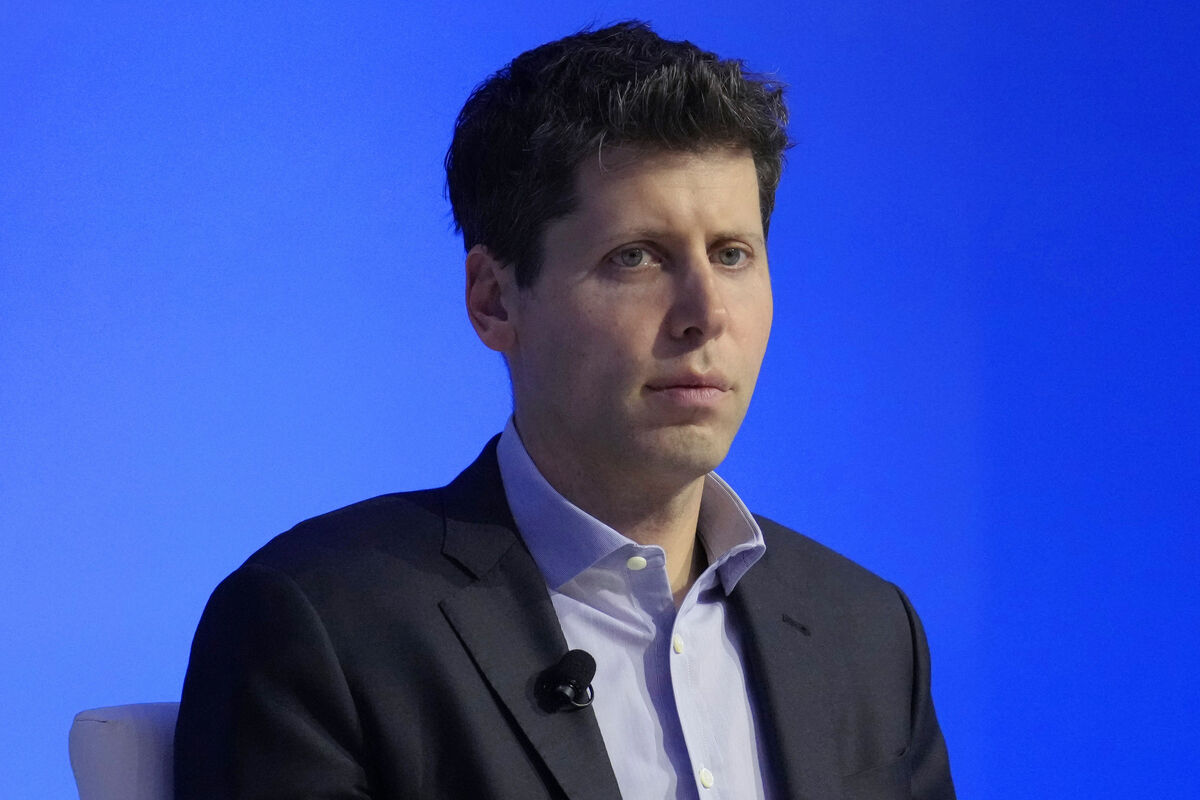
The Giving Pledge announced OpenAI chief executive Sam Altman has joined its list of wealthy philanthropists committed to donating more than half of their fortunes.
It’s an example of human nature at scale. We all realise, eventually, that we are better off investing in systems, in authority, better off being kind and giving, than enduring the alternative — a life philosopher Thomas Hobbes describes as “solitary, poor, nasty, brutish and short”.
But people can’t be moralised or shouted into goodness, as much as we might try such tactics with our kids. They must be shown that the system is just and fair.
I get it though, our adult frenzy. It’s nice to pretend that the world is simple and good, and that we are all entirely selfless, to the point of being self-sacrificing.
I cringe thinking back at myself as a new mum.
“No, darling. Jimmy wants it. Jimmy is our guest. You know we all must share.” Yank.
But if we look at it from a child’s perspective, it’s unjust to demand they share when we don’t. The toy our chubby-handed toddler brings to a friend’s house, a friend often chosen by their parent, is not just a toy. It’s important. It’s something they’ve chosen with whatever deliberation they can muster. And then we go and brazenly snatch it from them in the name of decency and good manners.
By that logic, next time I arrive at my neighbour’s house, and she says, “You look lovely; I love your bracelet,” I should whip it off there and then. Hand it over. Or maybe I should bring a little timer device in my handbag, so we can take turns wearing it.
And don’t get me started on little girls’ clothing, the poor souls who get the worst of our adult hypocrisy, loaded with giant dollops of gendered expectation.
If I see one more T-shirt or pair of knickers with ‘Be Kind’ on it, I’m going to lose it.
Immigration
But my point is bigger than how we parent our children; it is about how we behave at a social level towards one another. As a country, we are struggling with immigration, and it is largely because a workable system isn’t yet in place to help us share.
The system isn’t allowing us to behave like good people, who value human life and dignity. Or at least, if there is some system, the public is not privy to it.
A study by Amárach Research found a fervent desire for Ireland to take a tougher approach to immigration — 74% believing we are too soft. What does tougher mean? Refusing people without documentation asylum, even though they might just be the most vulnerable people on the planet? Is that tough, or is it inhumane?
In the absence of a system, we’re imploding, crashing into one another like toddlers in a playroom. And instead of being set an example of goodness and decency by our government, it feels like they are carrying on making rash decisions.
“There are rules in this country, I expect them to be enforced; the Irish people expect me to ensure that the rules are enforced and that’s what you’re seeing happen,” said Taoiseach Simon Harris recently. He described Garda checkpoints, to detect people entering the State illegally, as a “practical measure” to enforce rules, after 50 people were stopped at the border with Northern Ireland last weekend. Is this what a system looks like? Who made these decisions and why? The public needs guidance and support and transparency on all of it. We need to understand the system itself. Otherwise, it’s much harder for us to share.
We are so tragically behind in our physical and administrative infrastructure. Of course, people in Ireland, who have been sitting on waiting lists for years to get a home, are upset that other people coming into the country are getting support first. The system must be robust and fair. For people lacking the basics, it feels like anything but.
And the same is felt by people seeking asylum. Close to seventy contracts for Ukrainian refugee accommodation are set to expire “shortly,” and hotel and community facilities will soon be made available again for local use. How can that happen so quickly? Mr Harris has said that the State needs to move “beyond this emergency response” to migration. But this feels rushed — a reaction more than an action.
The war in Ukraine is ongoing. Why are we rolling the welcome mat back up? Are we echoing the smacks of populism already rumbling Europe and America?
We need our government to decide who we are as a nation and then lead. We need a system that allows us to be who we want to be. Good. Better than good maybe. Maybe even great. We need a system.
And the same goes for climate, where we are also floundering. Even if we follow through with all our policies, by 2030 we will manage a reduction of 29% in our emissions since 2018, behind our target of 51%. Ireland is busy making promises and targets. As citizens we are being shouted at to be better, do better.
The toys are being yanked from our hands. Without guidance, without a sound, government-led system, it won’t work. Our government must create a system that forces us to reduce carbon emissions; they must help us mature into full, independent adulthood. They must cut speed limits to thirty, vastly improve public transport infrastructure and introduce congestion charges. People are not going to give up their private cars until our government changes our car culture through legislation and policing.
This week we’re all shaking our heads at the poor passengers who got flung up into the air on a flight — perhaps another direct result of climate change. But we’re not going to stop flying, are we? We will only fly less when the government imposes further taxes on air travel. It is us grown-ups who need to learn to share with one another and with our planet. And we need to be facilitated to do so safely, with guidance, reassurance, and support. Screaming at babies to share doesn’t work. Screaming at adults to share doesn’t work either.