Pádraic Fogarty: Ecosystem collapse is real and is happening here now
![The International Union for the Conservation of Nature says that “an ecosystem is collapsed when it is virtually certain that its defining biotic [living] or abiotic [non-living] features are lost from all occurrences, and the characteristic native biota are no longer sustained”.](https://www.irishexaminer.com/cms_media/module_img/9930/4965053_13_org_iStock-1405109268.jpg "Pádraic Fogarty: Ecosystem collapse is real and is happening here now")
The International Union for the Conservation of Nature says that “an ecosystem is collapsed when it is virtually certain that its defining biotic [living] or abiotic [non-living] features are lost from all occurrences, and the characteristic native biota are no longer sustained”.
What is the first thing you think of when you read the term ‘ecosystem collapse'?
I think for many people it conjures images of science fiction films like or Disney’s , or books like Cormack McCarthy’s .
But ecosystem collapse is real and is recognised by scientists.
In a similar way to a species going extinct an ecosystem too can be wiped out. The International Union for the Conservation of Nature says that “an ecosystem is collapsed when it is virtually certain that its defining biotic [living] or abiotic [non-living] features are lost from all occurrences, and the characteristic native biota are no longer sustained”.
Chopping down a forest to make way for a farm or to build a city means the collapse of the forest. Damming a river and polluting the water so that what remains is a shadow of what was there before means the collapse of the river ecosystem. Draining a bog and mining away the peat means the collapse of the bog ecosystem… and so on.
Ecosystem collapse does not mean the death of everything like in science fiction but is a transformation into something radically different. It is typically a transition from a complex state to something much simpler.
Think of the Ireland of 5,000 years ago with wolves, bears, dense oak forests, vast intact bogs, and free-flowing rivers full of salmon. This has given way to an Ireland that is mostly grass and livestock and people. Ecosystems in Ireland have been collapsing for a long time; there is nothing left that would approach a healthy ecosystem today (in December last, the National Parks and Wildlife Service reported that a whopping 90% of ‘protected’ habitats are in bad or inadequate condition).
Yet, human life doesn’t just go on but is immeasurably better for most people than at any time in the past. It is a critical paradox that makes the risks of biodiversity loss hard to communicate.
Ireland can breeze through the collapse of our own ecosystems because of the stabilising effect of much larger ecosystems elsewhere: the ocean currents, the vast forests of the tropics and the boreal regions, glaciers and coral reefs.
Now those ecosystems too are at risk of collapse due principally to livestock farming and industrial fishing but supercharged by the burning of fossil fuels and the pollution of waterways.
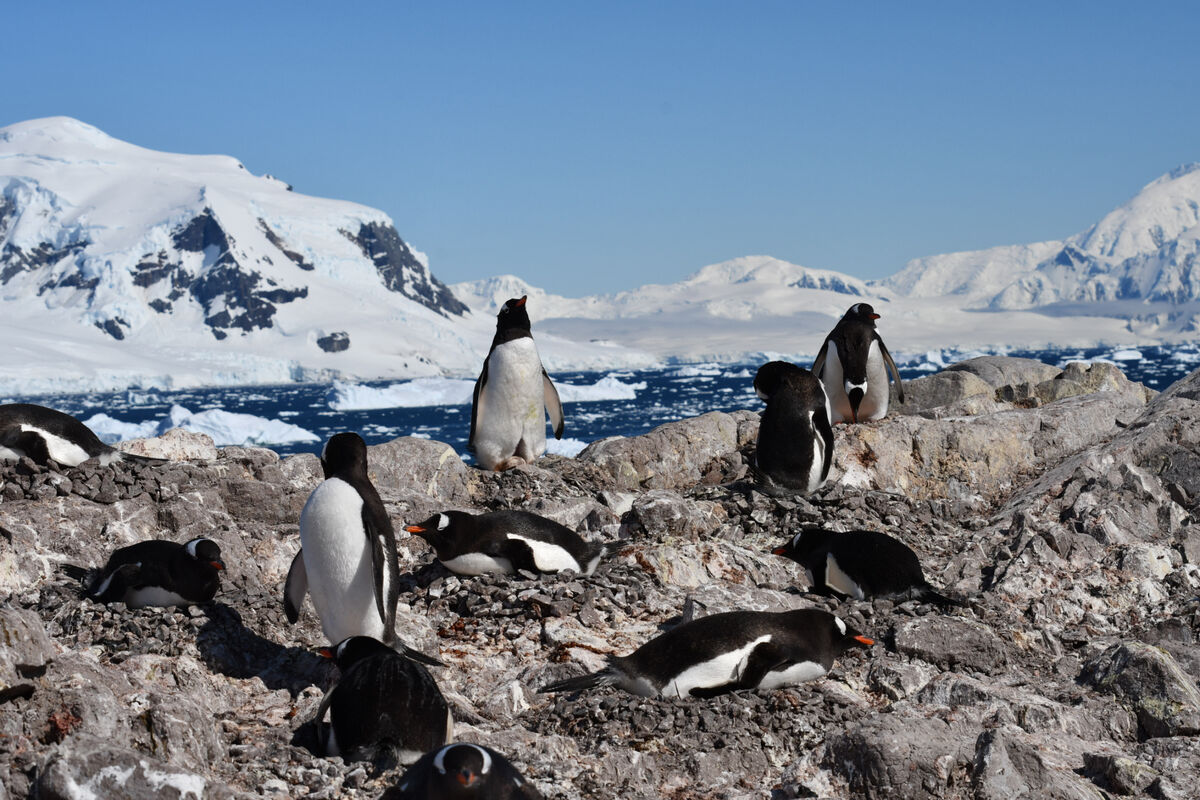
Such a global collapse of ecosystems would be catastrophic for all life on earth, not leading to a dead planet, but a much simpler one... and one in which human civilisation as we know it could not continue.
Warnings to this effect go back a long time and for at least 50 years there has been a growing mountain of scientific data to back it up. Nevertheless, they have been mostly dismissed as histrionics.
Now, finally, the warnings are coming from a new quarter. Last month the UK government released a ‘national security assessment’ on the risk to that country from biodiversity loss and ecosystem collapse. The language is incredible, not because of what it says but because of who is saying it (the UK intelligence community). It says, with high confidence, that “global ecosystem degradation and collapse threaten UK national security and prosperity”, that the risks include “geopolitical instability, economic insecurity, conflict, migration and increased inter-state competition for resources” and that “it is unlikely the UK would be able to maintain food security if ecosystem collapse drives geopolitical competition for food”.
It says that “the Amazon rainforest, Congo rainforest, boreal forests, the Himalayas and South East Asia’s coral reefs and mangroves are particularly significant for the UK” because their collapse would drive changes to water security, climate, diseases and the availability of arable land.
Opinion 'The UK government didn’t want you to see this report on ecosystem collapse. I’m not surprised' George Monbiot www.theguardian.com/commentisfre...
— Rajan Naidu 📎 Ⓥ (@rajannaidu.bsky.social) 2026-02-07T21:40:34.039Z
A particularly stunning assertion is that “ecosystem degradation is occurring across all regions. Every critical ecosystem is on a pathway to collapse”. The impacts of biodiversity loss, it adds, “range from crop failures, intensified natural disasters and infectious disease outbreaks to conflict within and between states, political instability, and erosion of global economic prosperity”.
Clearly these conclusions apply beyond the borders of the UK and are just as valid here in Ireland. Particularly noteworthy is the observation that “the UK relies on imports for a proportion of both food and fertiliser and cannot currently produce enough food to feed its population based on current diets. Countries best placed to adapt are those that invest in ecosystem protection and restoration, and resilient and efficient food systems”.
The problems with our food system are well documented and were most recently highlighted by the Citizens’ Assembly on biodiversity loss in 2023, which recommended a move to plant-based diets. Yet our food system and the use of our land and sea is dictated not by the need for food security and resilient ecosystems but by the demands of farm lobbies and the livestock industry.
Such are the sensitivities that the Government has still not published its long-awaited Land Use Plan or set a sectoral target for greenhouse gas emissions from land. It has delayed for more than 15 years the passing of legislation to create Marine Protected Areas.
Indeed, the UK government only released this national security assessment under a freedom of information request. Its reticence was, apparently, because it found the conclusions to be too negative while drawing attention to the lack of action on ecosystem restoration.
In Ireland, it draws further attention to appalling state of our natural environment, the dominance of meat and dairy products in our food production, as well as how we have allowed sectoral interests — such as agriculture, forestry and fishing — to dictate policy on food and land use.
It seems only a global collapse of ecosystems will shift this position.
CLIMATE & SUSTAINABILITY HUB
CONNECT WITH US TODAY



Be the first to know the latest news and updates