New study on indiscriminate death traps known as tangle nets
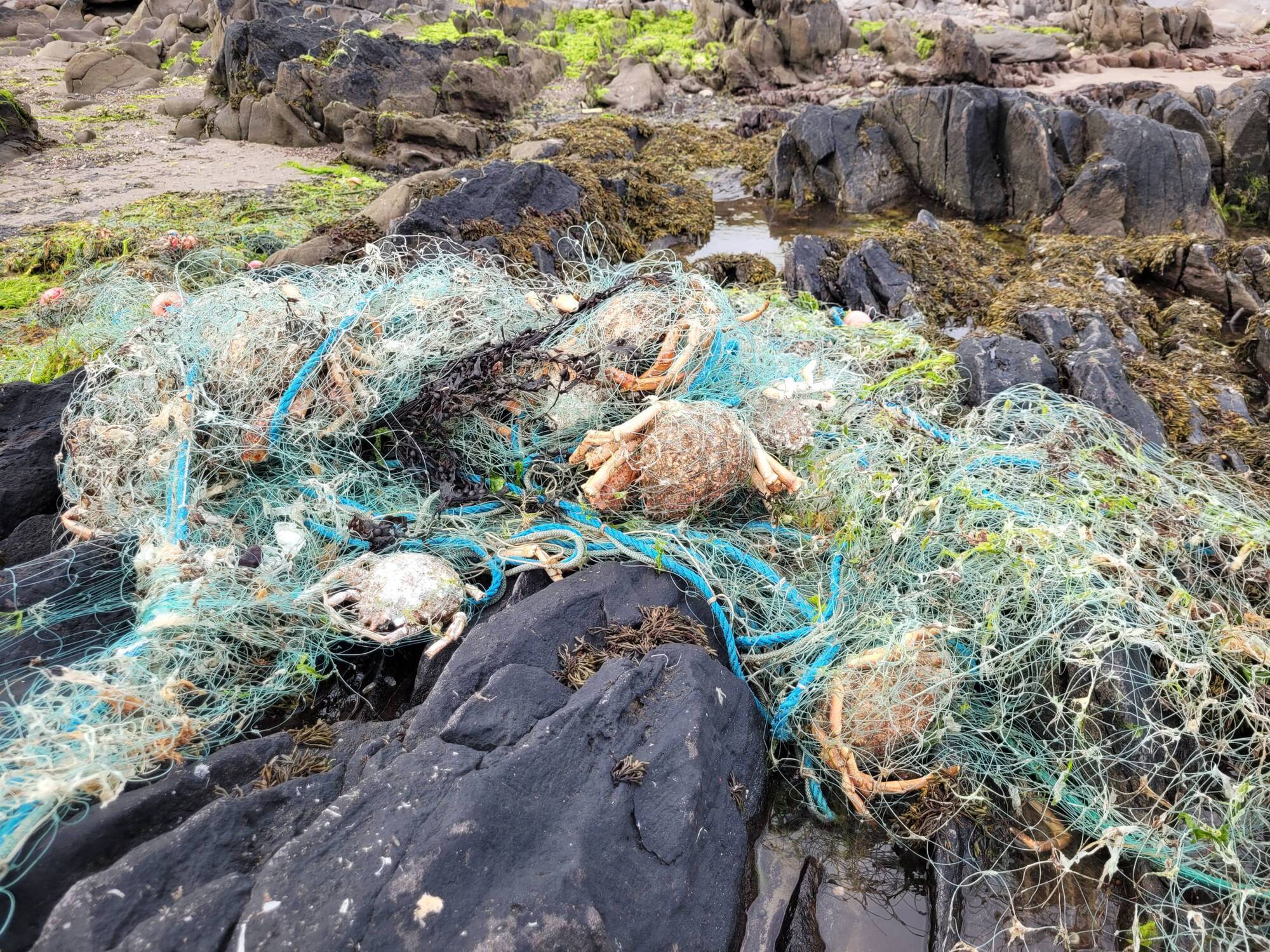
Washed-up tangle netting on the Kerry coast. Picture: Pádraic Fogarty
It is nearly two years since Ireland’s first National Park in the marine environment was announced. Páirc Náisiúnta na Mara, Ciarraí includes the seas around the Dingle Peninsula and the Blasket Islands — but a new report from the Marine Institute highlights some of the serious problems facing wildlife in this area.
The report looks at the practice of tangle netting... basically a lose ball of monofilament net that is weighted onto the sea floor and left to soak for anything up to a week and a half. Fishermen use the gear to target crayfish (sometimes called crawfish) which look very much like a lobster but without the pincers.
Crayfish are valuable, earning up to €50 per kilo and, with the overfishing of brown crabs adding to the general lack of anything to fish, the pressure on the crustacean has increased enormously.
Between 2017 and 2024 the annual landings went from 10 tonnes to 83 tonnes. There are no limits to the number of crayfish that can be taken from the water and no limit on the amount of netting that can be used — thousands of kilometres of which are spread out across the seafloor at any given time.
Traditionally, the use of tangle nets focused on the Kerry coast but according to the Marine Institute this has now spread north to Galway and Mayo as well as to the south-east coasts of Waterford and Wexford.
CLIMATE & SUSTAINABILITY HUB
This is very bad news for the crayfish, which cannot withstand this level of fishing. But the impacts go much further...
The nets are effectively an indiscriminate death trap for anything that swims into one. A struggling fish will attract the attention of predators and so lure other creatures to their demise.
A lost tangle net becomes a ‘ghost net’, going on to kill countless animals, effectively forever. Although this is not news, the new study, which tallied what is referred to as ‘by catch’ (unwanted catch) in tangle nets in the south-west between 2021 and 2024, is a catalogue of destruction.
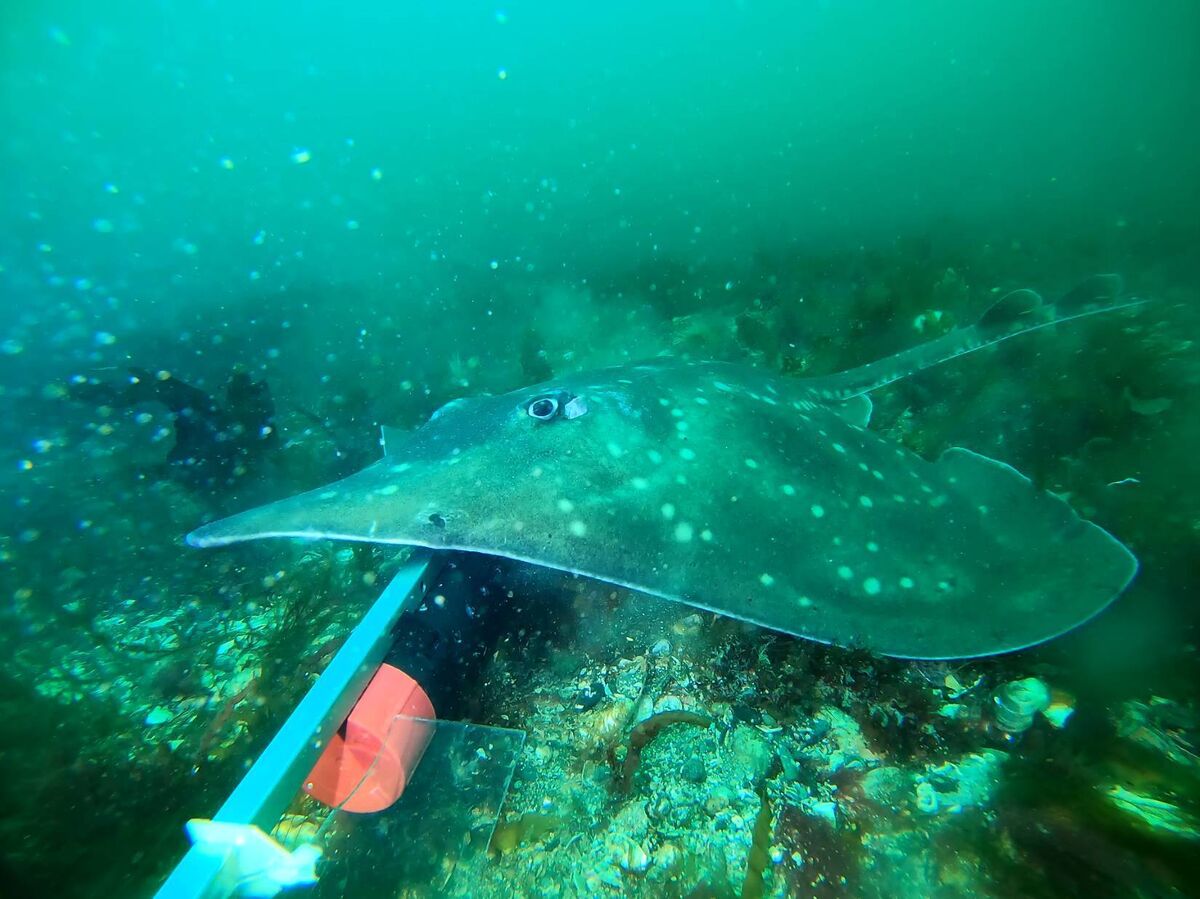
The death toll includes:
- 1,161 drowned grey seals
- 81 critically endangered angel sharks
- 1,712 critically endangered flapper skates
- more than 500 tope sharks and more than 80 sting rays, both of which are threatened with extinction
- as well as low numbers of critically endangered white skate, endangered undulate ray and dolphins.
- It includes nearly 8,000 spurdog — a type of shark that gestates its young for two years and is listed as endangered by the National Parks and Wildlife Service.
- The unwanted catch also includes thousands of fish, rays, crabs and lobsters which, although not threatened with extinction, should nevertheless not be subjected to such wasteful loss.
The Marine Institute is unusually forthright in its language in this report, perhaps reflecting an exasperation with the Department of Agriculture, Food and the Marine (DAFM) that its research and science-based recommendations have gone ignored for too long.
It notes that “the seal population in the Blasket Island, Special Area of Conservation (SAC), could not sustain this level of mortality unless it was sub-vented by inward migration”.
This area around the Blasket Islands is not only in the new National Park but has been an SAC for the conservation of the seals (among other things) since the late 1990s. Allowing such a high level of mortality is not compatible with the legally binding targets which are afforded the SAC.
At least the seals have legal protection — something that does not extend to the sharks and rays that are on the verge of extinction. The Marine Institute says that the impact to angel sharks “represents a significant threat to the survival of the species in this area.
As Tralee Bay is one of the last refuges for this species globally, this level of bycatch increases the risk of extinction of the species” adding that “there are probably no safe bycatch limits at this point for this species given that it is already critically endangered.”
The flapper skates meanwhile “cannot sustain significant fishing mortality at local level”.
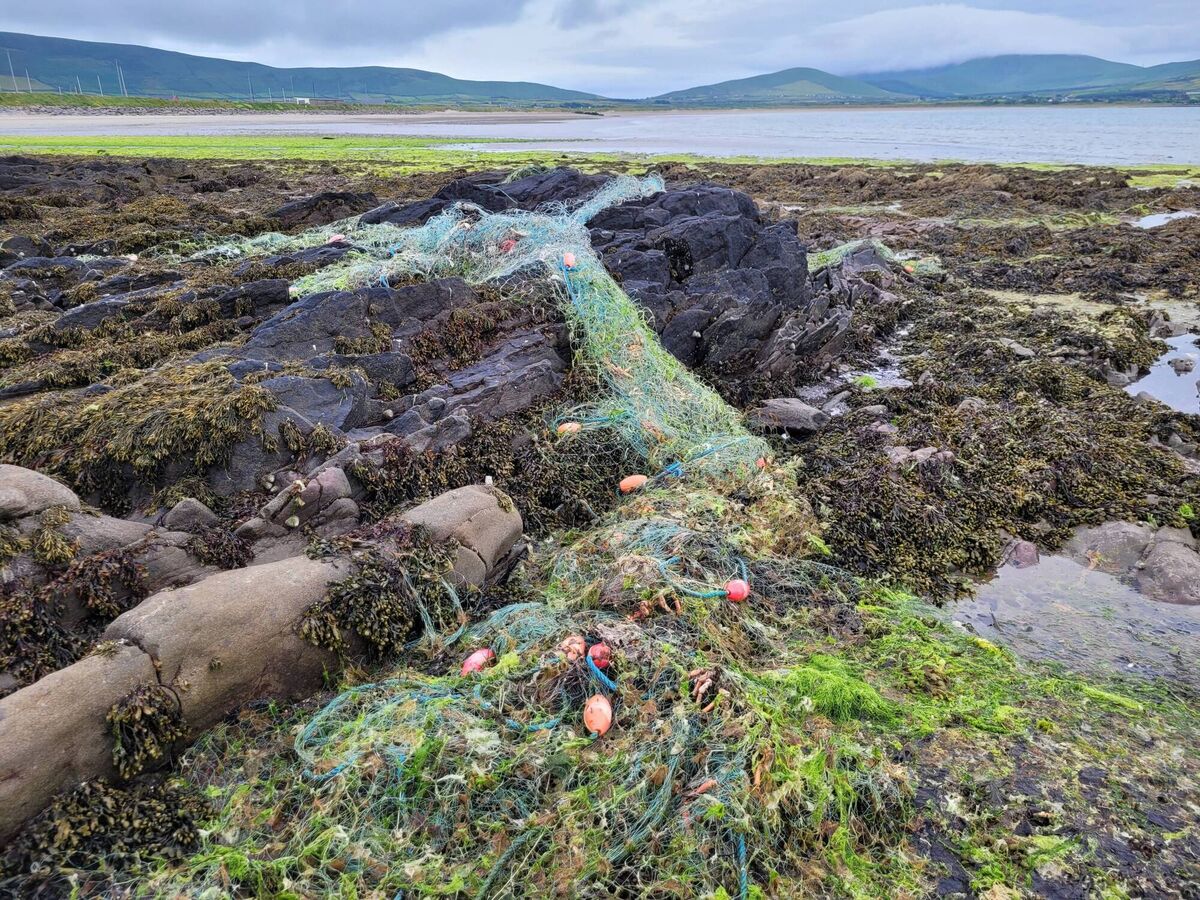
Fishermen, it should be noted, do not want seals and endangered sharks and skates in their nets. Many gave their time to participate in the study and no doubt acknowledge that there is a problem.
However, the issue has lingered since the 1980s when the use of tangle nets first became widespread. Until then, the crayfish were caught with pots — a much lower impact gear that doesn’t result in high levels of by-catch.
Only DAFM, and specifically the minister, Martin Heydon, can introduce marine bylaws that would restrict the use of nets.
In fact, in 2011 the use of tangle nets was prohibited in two areas, one in Tralee Bay and the other stretching in a narrow band from the Connemara coast out to the edge of the continental shelf. However, not only are these areas too small but the Marine Institute says they are “ineffective” as “compliance with the closures is not monitored”.
What’s needed is a general prohibition on the use of tangle netting, something that would not only bring an end to the carnage of threatened and protected species but would put the fishery of the crawfish on a more sustainable footing.
Such an approach was proposed by DAFM itself in 2021 following a previous data gathering exercise by the Marine Institute but no action followed, even in the wake of National Park declaration for the waters around the Blasket Islands in 2024.
Fishermen, dwindling in number, face increasingly empty seas and would welcome better management but the long wait for action from the State goes on.
CONNECT WITH US TODAY



Be the first to know the latest news and updates