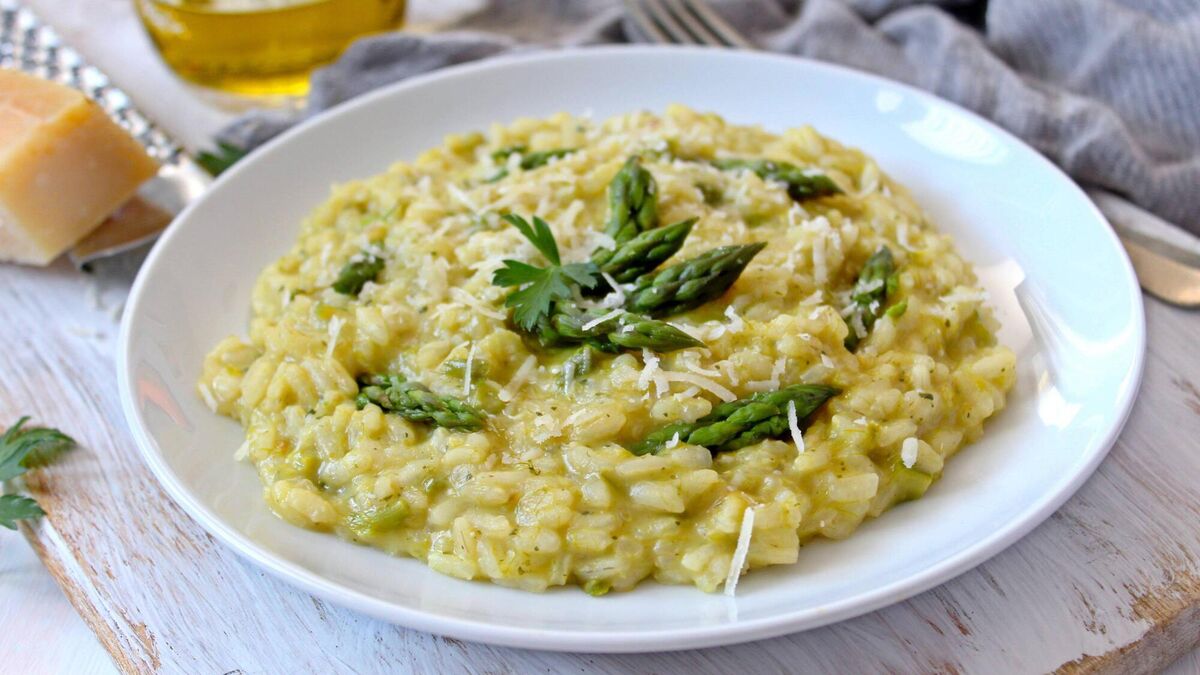
Ballymaloe Asparagus Risotto
Everyone needs to be able to whip up a risotto, comfort food at its best and a base for so many good things, from crispy pork lardons or kale to foraged nettles.
SERVES
6
PEOPLE
PREP TIME
20
MINUTES
COOKING TIME
31
MINUTES
Ingredients
225g Irish asparagus
1 - 1.3 litres chicken or vegetable stock made from the asparagus ends
50g butter
2 tbsp extra virgin olive oil
1 onion, finely chopped
400g risotto rice, such as arborio, carnaroli, or Vialone Nano
50g freshly grated Parmesan cheese or a mixture of Parmesan and Pecorino
sea salt
Method
Cook the asparagus in boiling salted water for 2-3 minutes until al dente. Cut into 5mm (1/4 inch) thick slices at an angle.
Bring the stock to the boil, reduce the heat and keep it at a gentle simmer. Melt half the butter in a heavy-bottomed saucepan with the oil, add the onion, cover and sweat over a gentle heat for 4-5 minutes until soft but not coloured. Add the rice and stir until well coated. Cook for a minute or so and then add 150ml (5fl oz) of the simmering stock, stir continuously, and as soon as the liquid is absorbed add another 150ml (5fl oz) of stock. Continue to cook, stirring constantly. The heat should be brisk, but on the other hand if it’s too hot the rice will be soft outside but still chewy inside. If it’s too slow, the rice will be gluey. It’s difficult to know which is worse, so the trick is to regulate the heat so that the rice bubbles continuously.
The risotto should take 25-30 minutes to cook.
After about 20 minutes, add the stock about 4 tablespoons at a time. I use a small ladle. Watch it very carefully from there on. The risotto is done when the rice is cooked but is still ever so slightly al dente. It should be soft and creamy and quite loose, rather than thick. The moment you are happy with the texture, stir in the asparagus plus the remaining butter and Parmesan, taste and add more salt if necessary. Serve immediately on hot plates.
Alternatively, you can pre-cook the rice for finishing later. After about 10 minutes of cooking, taste a grain or two between your teeth. It should be firm, slightly gritty, definitely undercooked but not completely raw. Remove the risotto from the saucepan and spread it out on a flat dish to cool as quickly as possible. The rice can be reheated later with some of the remaining stock and the cooking and finishing of the risotto can be completed. Risotto does not benefit from hanging around - the texture should be really soft and flowing.