Meet the man tasked with getting to grips with Ireland’s maritime security
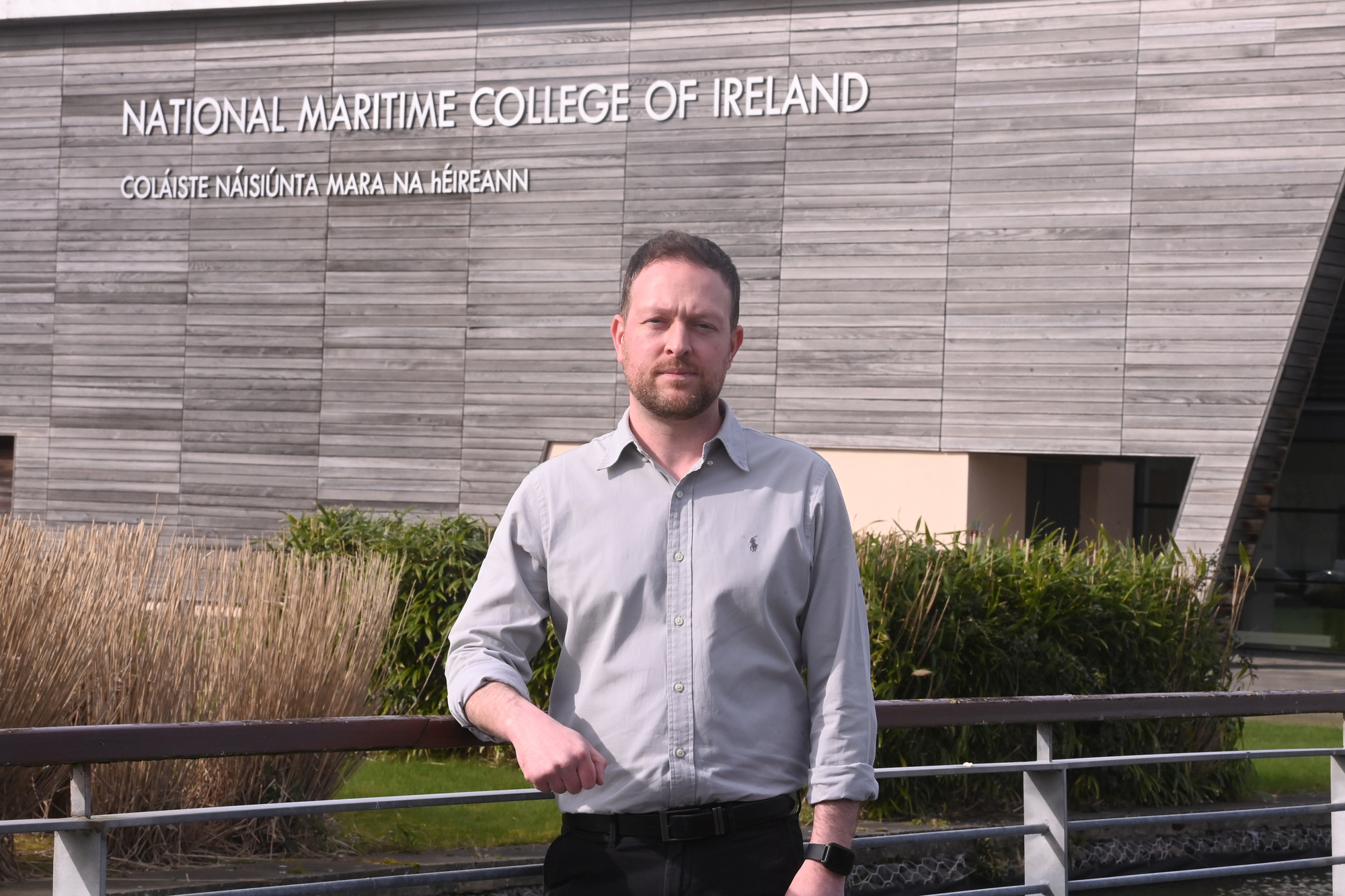
Robert McCabe has been appointed to lead the new maritime security research project at the National Maritime College of Ireland (NMCI) at Ringaskiddy in Cork Harbour. Picture: Larry Cummins
The Strait of Hormuz is a long way from Ireland — almost 7,000km away. But what goes on there, as we have seen, flows all around the world, even to Ireland.
As the man recently tasked by the Government to get to grips with Ireland’s maritime security, Robert McCabe is very conscious of the connection.
“I think it highlights the critical importance of these choke points for the international supply chain,” he says. “And when they are implicated, regardless of how that is, the knock-on effects are very, very evident.
“Almost immediately we’ve seen a spike in fuel prices here. In terms of our domestic maritime security, it is important that these supply chains really matter, particularly for an island state. You start to understand that actually we are intrinsically linked to the global system.”
He says “everything” comes to Ireland by sea, so, when the sea is impacted by events, “it impacts us”.
Earlier this month, Mr McCabe was awarded a contract by the Department of Defence and the Department of Communications to lead the new maritime security research project at the National Maritime College of Ireland (NMCI).
When the visited him at the college, in Ringaskiddy, Co Cork, he was still finding his feet.
Mr McCabe's appointment was widely seen as a coup for the Government as the Dubliner is considered one of the leading maritime security experts on these islands.
He left his role as the head of the master’s programme on maritime security at Coventry University, the first dedicated course on the area in Ireland and Britain, in order to take up the post.
His new post is a two-year research post at the NMCI, right on the edge of lower Cork Harbour, across from Haulbowline, the headquarters of Ireland's naval service.
Those linkages are already in place as NMCI is a partnership with the naval service and a public-private partnership and became part of the Munster Technological University in 2021, when MTU was established.
The college delivers maritime emergency response training to Ireland’s emergency services and is a supply chain education centre for the South-West and an internationally recognised centre for maritime research.
Our visit to his office in Cork Harbour came on the eve of the annual NMCI seafarers’ conference, which brought together industry representatives, third-level education, government departments and their ministers, and various Irish and EU maritime bodies.
The job spec for Mr McCabe’s role clearly sets out his tasks in the context of a worsening global security situation.
“As geopolitical tensions and hybrid threats increase, critical underwater infrastructure, such as subsea cables, offshore wind assets, and energy pipelines, has emerged as a major national security priority for all countries, particularly island nations,” it says.
The pilot project will integrate maritime cybersecurity, surveillance, energy security, and maritime domain awareness (knowledge and understanding of what is happening on, under, and above the seas).
The aim is that Mr McCabe’s work will provide clear intelligence and policy insights for the Government, including the Project Ireland Marine 2040 Co-ordination Group and Ireland’s first national maritime security strategy.
This high priority for maritime security was not always there, as Mr McCabe knows well.
In April 2023, Robert McCabe and Brendan Flynn, lecturer in politics in University of Galway, published a research paper in the Routledge journal, .
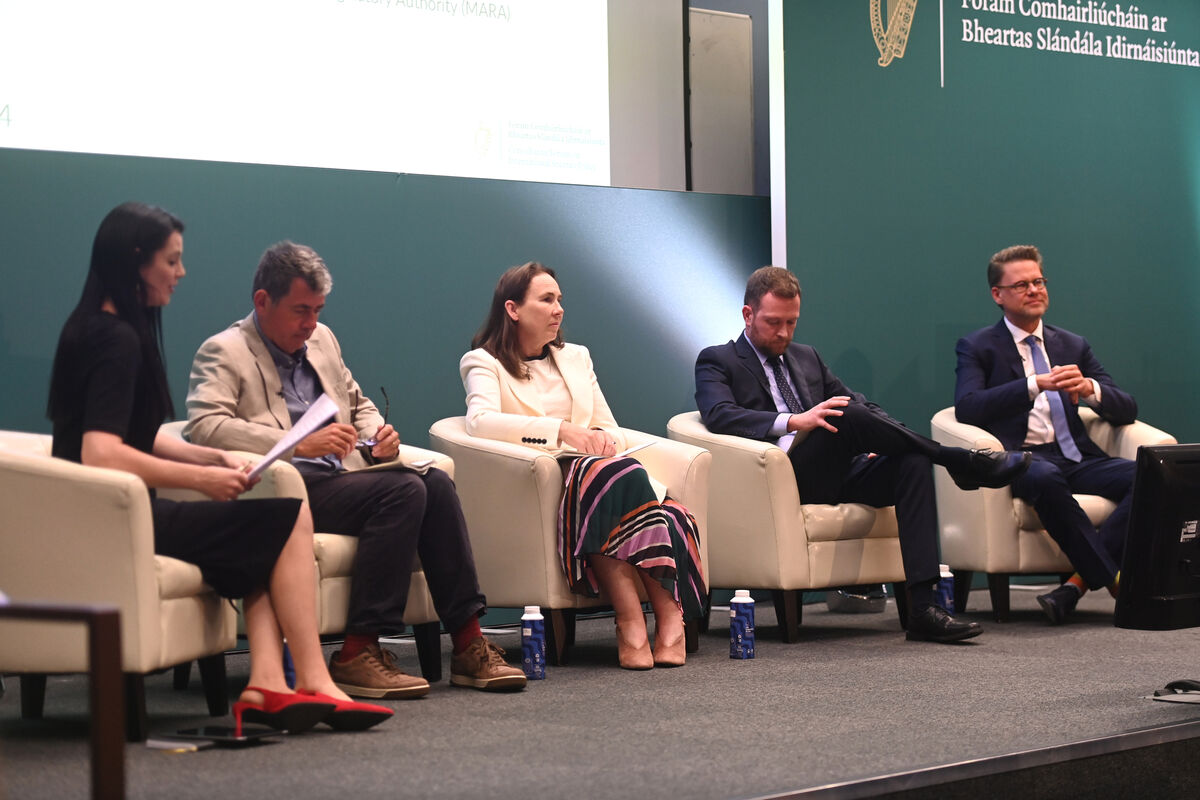
Titled ‘Under the radar: Ireland, maritime security capacity, and the governance of subsea infrastructure’, it highlighted the official neglect of the area, the “siloed, hierarchical, and overly bureaucratic approaches” in State structures governing the area, and the need for a modern naval service.
The research said the Irish naval service did not have the required subsurface capabilities — such as sonar — or enough physical ships, and personnel, at sea to undertake state maritime security responsibilities.
The authors pointed out that subsea infrastructure traversing Irish waters — seven times the size of Ireland — were “particularly exposed” to threats and that the potential impact of a large-scale disruption was “substantial”.
They said building Ireland’s capacity to monitor, detect, and deter hostile acts against critical maritime infrastructure was “critically important” as not only would there be physical and economic damage but also profound “reputational damage” to Ireland.
They recommended new legal provisions, the establishment of a single agency, significantly expanded naval service capabilities, increased investment in smart technology — including drones and sonar — increased private sector engagement, increased co-operation with other European states, and a national maritime security strategy.
While it has taken a number of years to turn the Irish ship around, most of their recommendations have been, at least on paper, adopted by the Government.
In February, defence minister Helen McEntee published Ireland’s first national maritime security strategy, for the period 2026-2030, including many of the recommendations.
At the launch, she repeatedly stressed the importance of Ireland working in “co-operation” with neighbouring coastal states, namely France and Britain, in order protect our waters, not least with Ireland’s presidency of the EU starting in July.
“That study was essentially the first of its kind to look at Ireland’s maritime security capacity,” Mr McCabe recalls of his 2023 research. “We realised there were plenty of gaps. And, you know, this was recognised by the government of the day and it was a useful precursor to the eventual maritime security strategy.”
He is conscious how some people recoil when they hear the words “Ireland” and “security” together.
“I think there’s a misunderstanding of the term maritime security,” he says.
“It is an umbrella term for all aspects of a resilient ocean economy, a maritime domain. And for Ireland, that’s really about understanding what’s happening in our maritime domain.”
He says there are responsibilities on Ireland under international law: “There’s responsibilities to our resources. We govern them to make sure they’re not being exploited.
“When we move towards offshore renewable energy, there’s a need to understand how that fits into the broader picture, and how that operates with other users of the maritime space.
“So it’s about resilience, it’s about awareness. It’s not just about the naval aspect — though that is one important aspect — but you need to be able to understand if there are threats.”
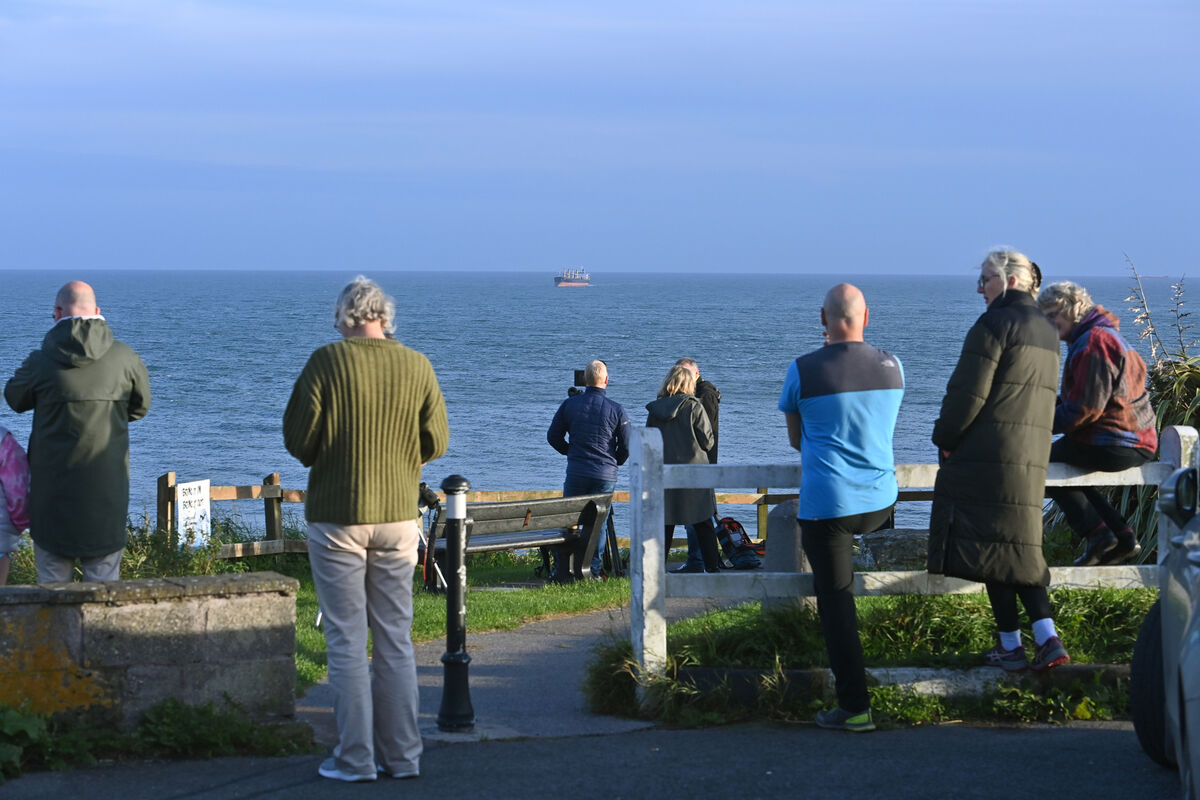
He says there is a broad spectrum of potential threats: “Cyber is one, as these systems are very vulnerable to attack. Another threat is sabotage.
“You need people to be able to board a vessel and search it, if it’s drugs being smuggled, or people, or weapons, or whatever the case.
"I’m interested in looking at maritime security in a comprehensive, holistic way, not one single aspect — not just subsea cables, not just counter-narcotics — but the whole ecosystem.”
Danish and Swedish authorities believe it was sabotage, and German investigations appear to point to a pro-Ukrainian operation.
“Nothing like this happened before,” Mr McCabe says.
“This was planned, co-ordinated, and very likely there was state support on some level.
"Prior to that, this type of infrastructure — cables, gas pipelines — since the Second World War were left unmolested and undisturbed. I think no one probably recognised how critically important they are to modern economies.”
There are few countries where this is more critical than Ireland, with 80% of its gas supply coming from twin gas pipelines from Scotland.
This came into sharp focus in November 2024 when a Russian spy research ship, Yantar, sailed up the Irish Sea and deliberately loitered over this pipeline near the Isle of Man, while under the watch of the Irish naval service and the British navy.
This was seen as Russia sending a clear message that it knew where to hit Ireland if it wanted to — an incident of “signalling” that it carried out previously when it conducted a naval exercise operation on the edge of Ireland’s exclusive economic zone, 200 nautical miles off the South-West coast, in early February 2022, just before its full-scale invasion of Ukraine.
Russian intelligence services are also suspected by Irish security services of being involved in the strategic positioning of drones last December on the edge of Irish territorial waters (12 nautical miles or 22.2km) just after the plane carrying Ukrainian president, Volodymyr Zelenskyy flew past on its way to Dublin for an official visit — interpreted by security agencies as a warning of what might come during the EU presidency.
The month after the Yantar incident, the Government’s national emergency co-ordination group, part of the Department of Defence, ran a table-top exercising examining the impact of a major disruption to those gas pipelines.
Dubbed Operation Cathal, it estimated that it would take six months to repair the damage to the pipeline and that it could lead to “rolling blackouts” across the country with particularly severe impacts on large gas users in the pharmaceutical and agricultural industries.
In addition, the two gas pipelines are responsible for generating between 40% and 80% of Ireland’s electricity.
“We are hugely reliant on those two pipelines, so if there was severe damage to them the impact would be across the board,” Mr McCabe explains.
“Hospitals wouldn’t be able to operate at full capacity — they would have some reserves, but they wouldn’t last long. All the facilities and utilities and public services you take for granted, like electricity, would be very constrained and the impact would be felt very quickly and the impact would be quite detrimental.”
Mr McCabe has been set five main tasks by the Government:
- Assess risks and threats to critical underwater infrastructure in Irish and EU waters;
- Advance maritime cyber resilience of both offshore and onshore assets, by conducting threat analysis and simulation exercises;
- Enhance maritime domain awareness through surveillance and data integration;
- Support energy and infrastructure security against hybrid — both physical and cyber — threats;
- Foster national and international dialogue through expert conferences.
- Map subsea cables, proposed offshore wind farms, energy pipelines and interconnectors, and conduct vulnerability assessment; model risks for different threats, including sabotage, espionage, and disruption; and develop response protocols between the various departments and agencies;
- Conduct a cyber threat analysis for ships, ports, and maritime infrastructure; simulate cyberattacks and response mechanisms; and develop cyber training modules for operations and authorities;
- Integrate data from satellite, radar, and autonomous systems; develop AI and sensor tools for early warning; assess military-civilian surveillance systems;
- Scenario planning for hybrid attacks on offshore windfarms and cable landings; improve physical security, redundancy, and response planning; co-ordinate with energy and marine planning;
- Produce briefings and risk mitigation strategies; contribute to national and EU legal frameworks; carry out workshops and review existing maritime emergency planning
It’s all fairly daunting, but Mr McCabe isn’t fazed: “So, initially, it’s two years, so, we’ll see where it goes. One of the major outputs will be a comprehensive report.”
He plans to take on a research assistant and will link with existing expertise within the MTU and the NMCI, which has state-of-the-art facilities for marine training and has the Halpin Centre for Research and Innovation.
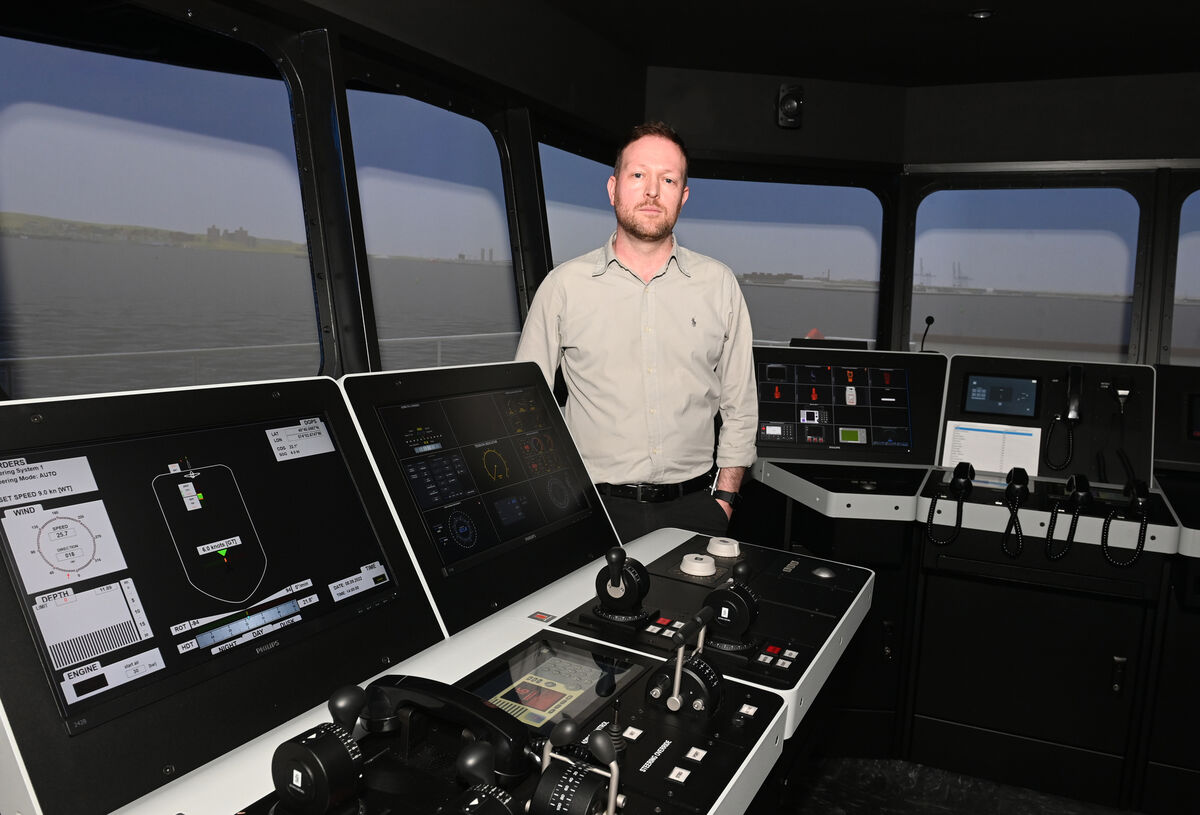
“I think there’s an opportunity for Ireland to position itself as a leader in maritime security research, so my objective is to build on what we currently have,” he says.
“The MTU have a large computer science faculty and engineering faculty that have engaged in top-level research including in cybersecurity and last year ran a simulation exercise of a container ship compromised by a cyberattack... blocking the entrance to Cork Harbour.”
Mr McCabe adds: “I would also like to bring in partnerships, look at technologies, such as sensors and AI and automation, and create a strong foundation for the future of maritime security research in the country.”
But he wants to bring wider society with him too: “I want to raise awareness of the importance of the maritime domain among the public and why maritime security is so important, how it underpins a lot of the things we rely on day to day for a functioning society.”
Read More
CONNECT WITH US TODAY



Be the first to know the latest news and updates