Winter Beef Stew with Polenta
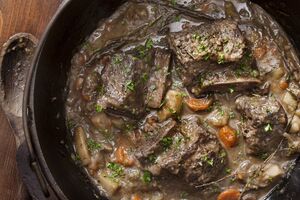
Of all the beef stews I make, this is the favourite. It can be made in large quantities plus it reheats and freezes brilliantly.
SERVES
6
PEOPLE
Ingredients
3 tbsp extra virgin olive oil
285g sliced onions
2 large carrots, cut into 1cm slices
1.35kg well hung stewing beef or lean flank, trimmed of any excess fat and cut into 4cm pieces
1 heaped tbsp plain flour
150ml red wine
150ml homemade beef stock
250ml homemade tomato purée or 3-4 tbsp of best quality concentrated tomato purée mixed with 225ml water or 400g tin chopped tomatoes
175g sliced mushrooms
1 tbsp chopped parsley
Sea salt and freshly ground black pepper
For the gremolata
4 tbsp chopped flat leaf parsley
1 generous tsp grated or finely chopped lemon zest
2 garlic cloves, finely chopped
For the polenta (optional)
1 level dsp salt
225g coarse polenta (bramata)
110g butter
85-110g freshly grated Parmesan cheese
Method
Preheat the oven to 160°C/Gas Mark 3.
Heat 1 tbsp of the oil in a casserole over a gentle heat, add the onions and carrots, cover with a lid and sweat for 10 minutes.
Heat 1 tbsp of the oil in a frying pan until almost smoking. Sear the beef on all sides, then add to the casserole.
Sprinkle the flour over the meat and cook for 1-2 minutes. Add the wine, stock and tomato purée to the frying pan, bring to the boil and then add to the casserole. Season the casserole with salt and pepper, cover and cook in the oven for 2 1/2 - 3 hours, depending on the cut of meat.
Meanwhile, heat the remaining oil in a pan over a high heat, sauté the mushrooms and add to thecasserole with the parsley about 15 minutes before the end of cooking.
To make the polenta, pour 1.7 litres water into a deep, heavy-bottomed saucepan and bring to the boil, then add the salt and sprinkle in the polenta very slowly, letting it slip gradually through your fingers, whisking all the time (this should take 2-3 minutes).
Bring to the boil and when it starts to erupt like a volcano, reduce the heat to the absolute minimum - use a heat diffuser mat if you have one.
Cook for about 40 minutes, stirring regularly. I use a whisk at the beginning but as soon as the polenta comes to the boil I change to a flat-bottomed wooden spoon. (If you stir constantly over a slightly higher heat, the cooking time can be reduced to about 20 minutes, but it is more digestible if cooked slowly over a longer period.)
The polenta is cooked when it is very thick but not solid and comes away from the sides of the pan as you stir.
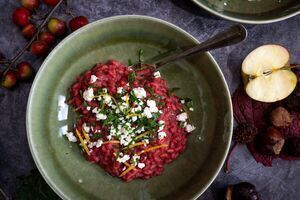
As soon as the polenta is cooked, stir in the butter, Parmesan and lots of freshly ground pepper. Taste and add a little more salt if necessary. It should be soft and flowing; if it is a little too stiff, add some boiling water.
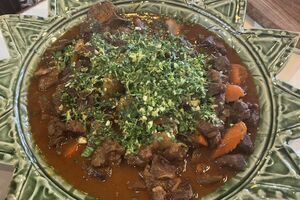
Just before you’re ready to serve, make the gremolata by mixing all the ingredients together in a small bowl.
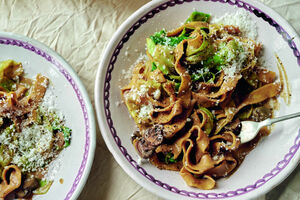
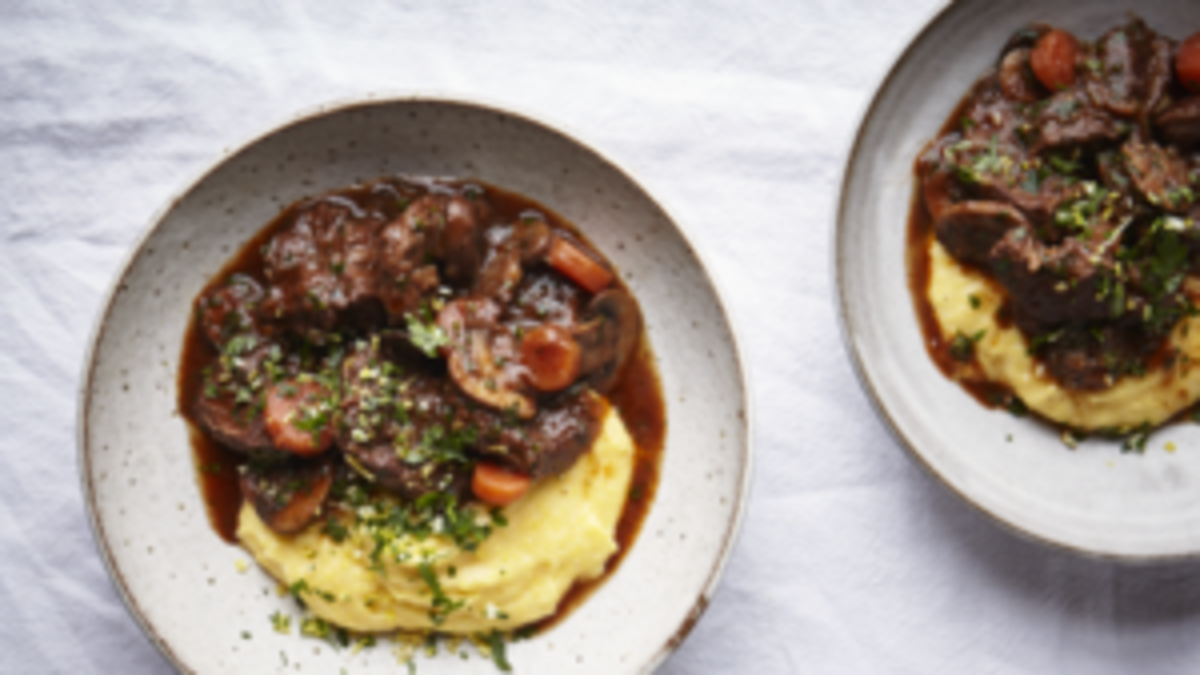
Serve the casserole topped with the gremolata, if using, with the polenta, colcannon, mash or noodles and a good green salad alongside, as you wish.