Catherine Connolly will speak her mind as President — the template is already there
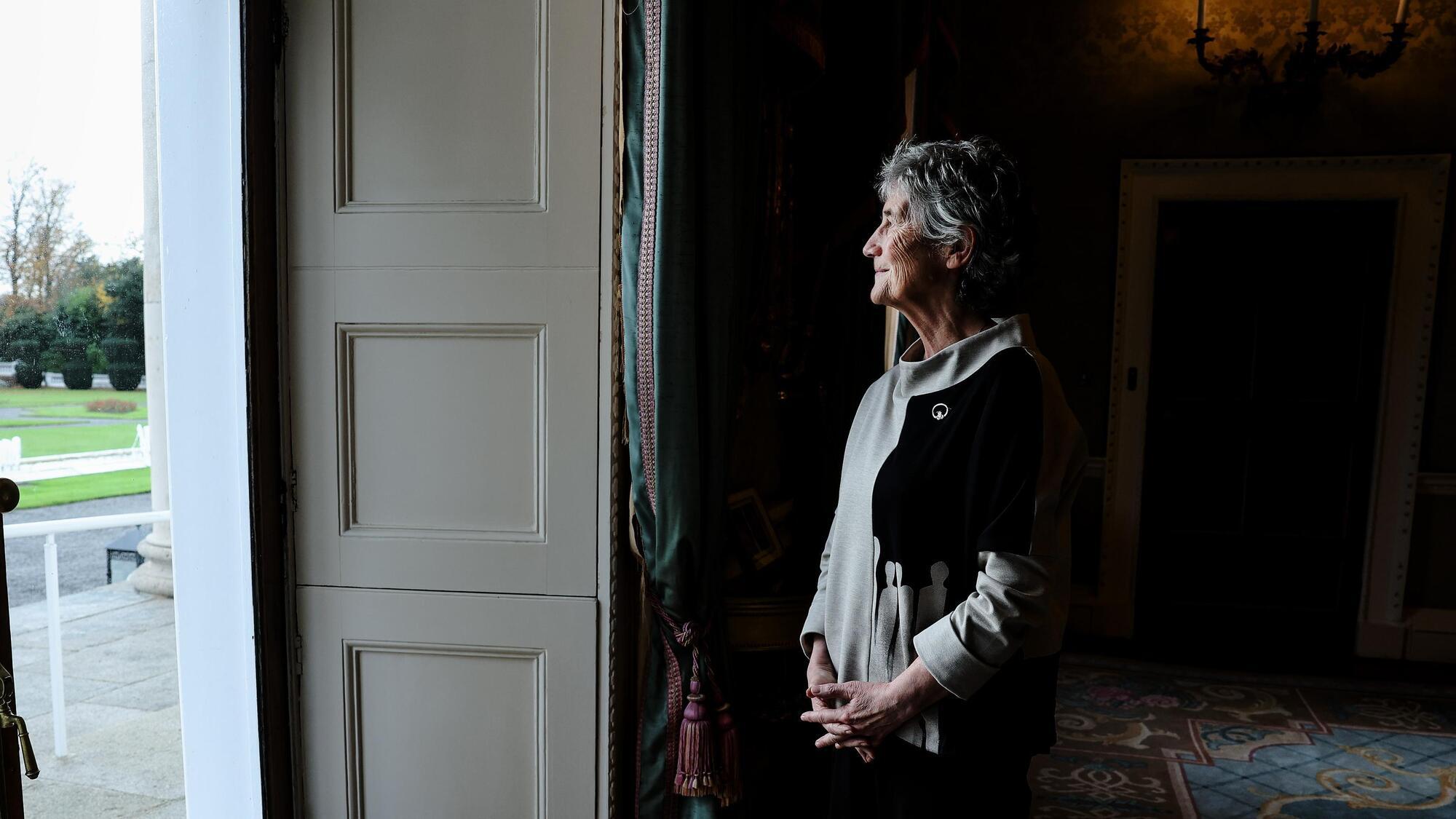
President-elect Catherine Connolly during a visit to Áras an Uachtaráin. Picture: Tony Maxwell
One of the largely unspoken, though sometimes open, worries of those who opposed Catherine Connolly's election as President are her politics.
On a range of issues — relations with the US, views on foreign policy generally, European fidelities — they worry that Ms Connolly will be too left, too fringe, too anything.
"Could you imagine if someone who shared politics similar to those of Catherine Connolly was in the Áras?" they asked.
To which the answer is: Well... yes. He's leaving after 14 years.
One doesn't have to search for hypotheticals of a President speaking their mind on the US; just two months ago, Michael D Higgins suggested the country be suspended from the UN for funding Israel's war on Gaza.
One does not have to search the recesses of the hive mind for examples of singular views on foreign policy; in 2016, Mr Higgins was criticised for hailing Fidel Castro as a “giant among global leaders” in a statement marking the death of the former Cuban president.
One does not have to invent places in which the Irish president might speak on social issues that are the domain of policymakers. In 2022, Mr Higgins said that housing and the basic needs of society “should never have been left to the marketplace” as he called housing "our great, great, great failure".
“It is the mad speculative money that is destroying our country, which we are welcoming, which we shouldn’t be,” he said.
“The fact of the matter is: let’s house our people, let’s educate our people, let’s show that no one is going hungry, let’s show that there is no one excluded from any part of our society.”
Much has been written about the relationship between Mr Higgins and his successor, Ms Connolly, in recent months. She had joined the Labour Party after the 1997 general election, having canvassed for Michael D Higgins, fast appearing as the then-TD's natural successor.
She would be elected to the Galway Corporation in 1999 and become the Mayor of Galway in 2004. Her position as Mr Higgins' successor, however, did not materialise as she would be denied the chance to join him on the Labour ticket in 2007. The event led to her leaving the party, with Ms Connolly instead running as an Independent and missing out on two occasions before being elected to the Dáil in 2016.
While there has been some suggestion that the personal relationship has been cool since, it is unlikely that had she been added to that ticket in 2007 or been elected in the Fine Gael-Labour landslide in 2011, that Ms Connolly could have burnished her independent credentials in the way that saw her elected a few weeks ago. Ms Connolly's path to the Áras was one built on that independent streak and allowed her to build a wide left-wing coalition to power her along that way.
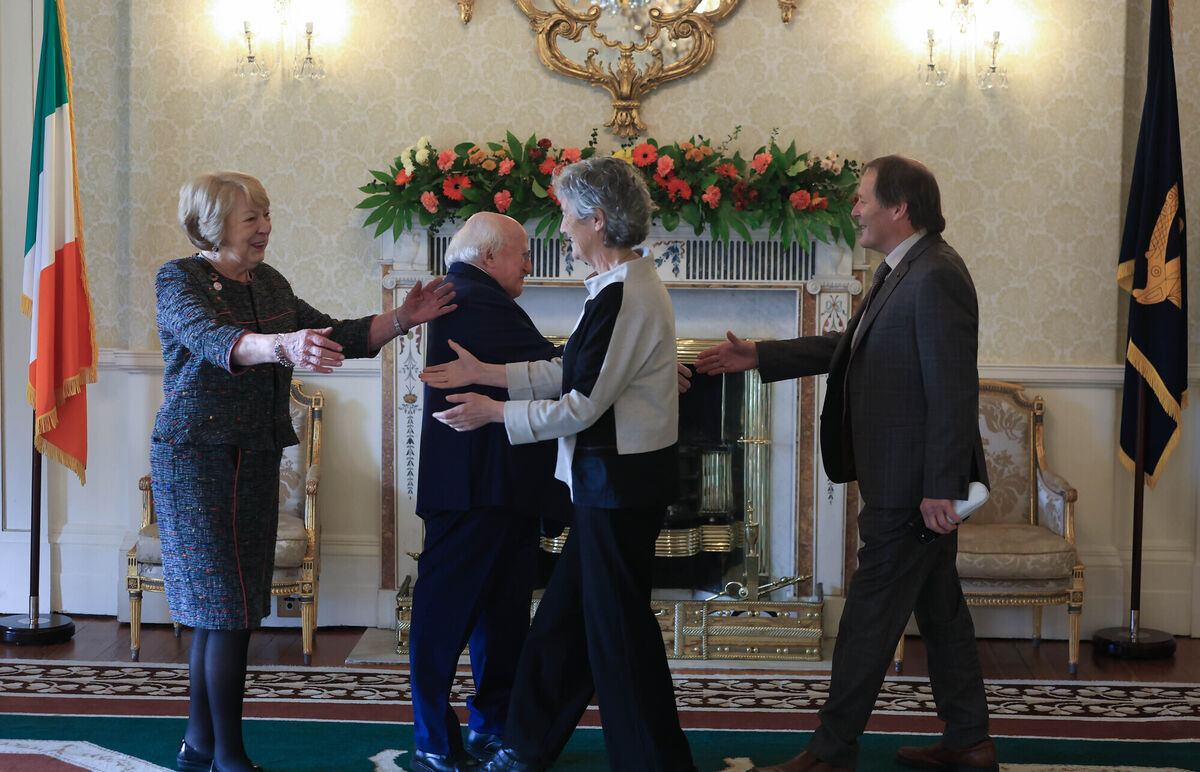
As the two prepared for their paths to cross once more, Mr Higgins last week hosted Ms Connolly and her family at Áras an Úachtaráin, and if there were lingering resentments or ill-feeling, neither party showed it, as they and their spouses — Mr Higgins' wife Sabina and Ms Connolly's husband Brian — shared warm embraces.
As Mr Higgins prepared last month for his departure from Irish politics, an poll on the presidency was illuminating in how he has shaped the role he was elected to in 2011. Asked what matters most in a president, the top three answers were speaking ability and presentation (54%), political experience (36%) and work in the community (32%).
While some have questioned Mr Higgins' expansion of the role of president, he has remained popular with the public, with approval ratings in the 60s, and Ms Connolly might be minded to simply take up the baton and run with it. But Mr Higgins' playbook is not simply to criticise the Government and have nice dogs.
Ms Connolly is unlikely to simply ape whatever it is that makes Mr Higgins popular. It would feel inauthentic and wouldn't suit her.
But to follow a Galway West liberal with their own mind on matters foreign and domestic, Ms Connolly feels like what her campaign sought to pitch her as — the natural successor to a popular figurehead.
How she steps into the role is likely to be what we saw in the campaign — an unapologetic version of Ms Connolly and her beliefs, regardless of public reaction.
One doesn't know what advice he has left for Ms Connolly when the two met last week, but after 14 years in office, he has left behind a rough template and a high bar.
CONNECT WITH US TODAY



Be the first to know the latest news and updates