Subscriber

Ciara Phelan: Accommodation crisis plan lacks a sense of urgency and action

Roderic O’Gorman has drafted a plan with short-, medium-, and long-term measures to address the accommodation issue
Ciara Phelan: Accommodation crisis plan lacks a sense of urgency and action

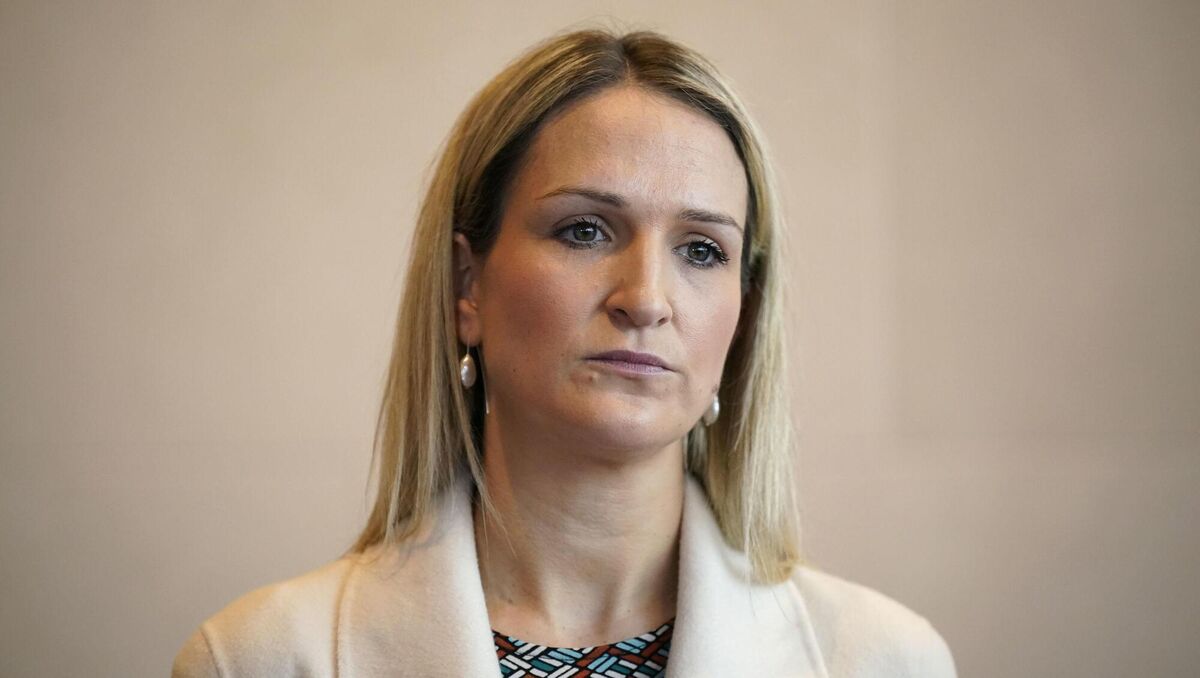
Helen McEntee, the justice minister, Roderic O’Gorman, the integration minister, and Norma Foley, the education minister, announced a new Comprehensive Accommodation Strategy for International Protection applicants at Government Buildings on Wednesday. Picture: Maxwell’s

The day arrived that we had been waiting on for months. The  big plan to solve Ireland’s accommodation crisis for asylum seekers.

It was also the day that the Government, particularly Roderic O’Gorman, the integration minister, would have hoped the noise around how he is handling the immigration issue would quieten. Not with this plan.

Mr O’Gorman arrived at one of three podiums in the Government press centre at Government buildings and was flanked by Helen McEntee, the justice minister, and Norma Foley, the education minister. 

Journalists were unsure why Ms Foley was present to answer questions on the accommodation plan. 

She stood for an hour silently while her government colleagues fielded questions. The absence of a leader from one of three Coalition parties was telling.

It’s no secret that Mr O’Gorman has struggled to get this plan across the line. 

It’s well-known that Tánaiste Micheál Martin asked Mr O’Gorman to go back to the drawing board and include short-, medium-, and long-term measures to address the accommodation issue rather than just a long term goal.

Although it may not be the first issue that politicians are being asked about while out canvassing, they’re aware their constituents are frustrated by the lack of communication when migrants are moved into their communities.

Protests are happening around the country which are being hijacked by the far-right and bringing unwanted shame to some towns and villages.

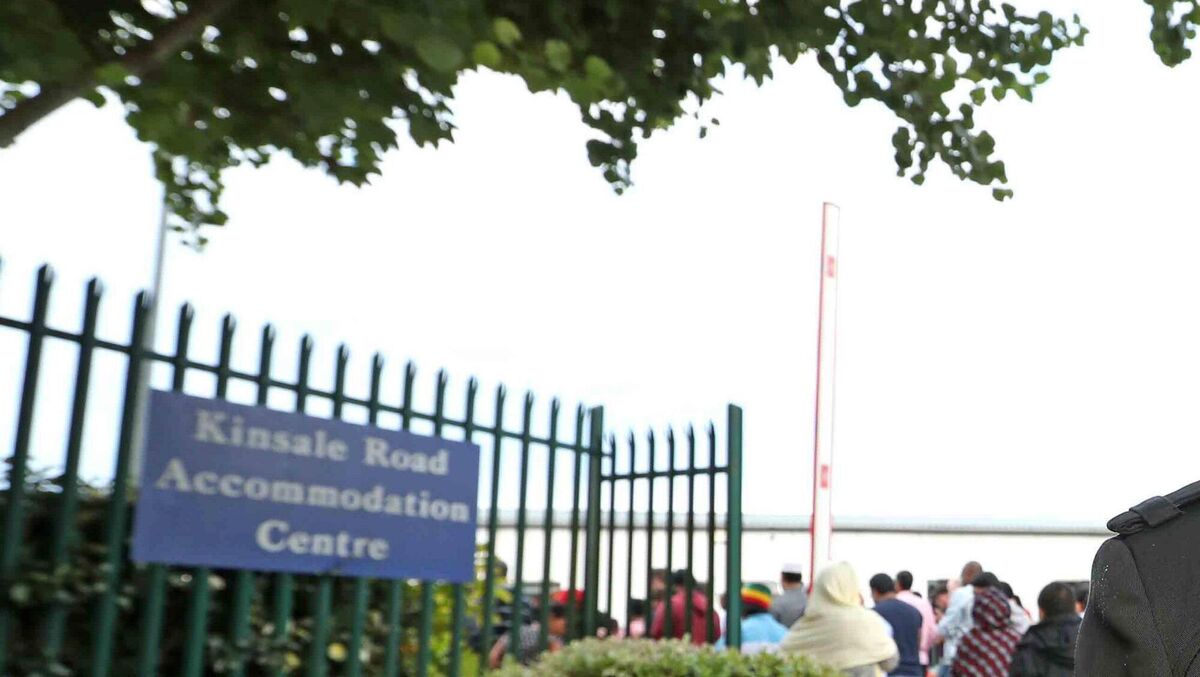
But the majority of the country are saddened at the scenes witnessed outside the International Protection Office where tents are erected for the more than 1,400 men who are living in dire circumstances having fled their country. 

Anyone with a heart could not be angered at successive governments and the State for its lack of planning which has left people in extremely vulnerable circumstances.

There was a lot of pressure on Mr O’Gorman to pull together a solid strategy to let the electorate know the government was from now on going to kick the response to the crisis up a notch. 

Unfortunately, it has failed to do so.

Mr O’Gorman announced the State will move away from full reliance on private providers and towards a core of State-owned accommodation, delivering 14,000 State-owned beds by 2028.

Despite envisaging between 13,000-16,000 arrivals a year, the strategy only proposes scaling the system up by 25% overall by 2028. 

What it does aim to do, Mr O’Gorman argued, is to make more of the 35,000 State-owned beds, allowing the State to “hold the reins” on accommodation. 

Tents used by homeless asylum seekers at Grattan Court, Mount Street, Dublin, earlier this month. File picture: PA

Yes the plan itself says that just 14,000 of the 35,000 beds will actually be State-owned with another 10,000 in emergency accommodation and 11,000 contingency places provided by the commercial sector.
The plan adds that new beds will not come on stream until later this year. 

All the while Cabinet were informed this week that there is an increasing likelihood that families including women and children could find themselves without an offer of State accommodation in the coming weeks and months.

On top of that, justice minister Helen McEntee brought plans to Cabinet this week which will see Ireland join the EU asylum and migration pact

The decision to join the pact means a raft of new legislation is required with the legislative changes also requiring dedicated accommodation for people whose international protection application has been rejected and are to be returned to another country.

When asked if this accommodation is separate to what’s included in Mr O’Gorman’s plan, Ms McEntee said it wasn’t.

“So whether it’s the system that we have now or the system we have in the future, no matter what process a person is going through or what stage they’re in, they will be part of the overall accommodation figures which are included in the figures Mr O’Gorman has outlined,” she said.

She also conceded despite asking Cabinet to sign off on plans for a number of new laws, given the timing of the next general election, they won’t be introduced by the current Coalition.

Justice Minister Helen McEntee brought plans to Cabinet this week which will see Ireland join the EU asylum and migration pact. File Picture: Niall Carson/PA

The near-term strategy will see the conversion of office blocks to house migrants who are currently in tents on the streets. 
One would have to question why isn’t that happening already? And if it is, then the quick-fix measure announced isn’t solving the problem.

Mr O’Gorman, when asked by the Irish Examiner, couldn’t give a timeline for when people in tents would be moved to the office spaces. “As quickly as possible,” he said.

He also pledged that the State will make use of land for prefabricated and modular units. 

Again, a measure that was announced two years ago when we welcomed thousands of Ukrainians here; the modular units announced back then have all yet to be complete.

In September last year, Leo Varadkar admitted “rapid-build” modular homes are slow to deliver and are not cheap. 

Speaking of the outgoing taoiseach, in January he announced that 10 towns and villages that have taken in the highest number of asylum seekers would get a special support package

Another “Leo special” was how one senior government source described it with Mr O’Gorman more or less confirming at Wednesday’s press conference that it would not happen. 

He said it hadn’t been discussed by Cabinet but did point to the €100m community recognition fund announced which came from Heather Humphreys, the social protection minister.

The medium- to long-term plan also includes an upgrade of IPAS centres — formerly known as direct provision centres.  Picture: Jim Coughlan

The medium- to long-term plan consisted of the purchase of turnkey properties and to design and build new reception and integration centres and upgrade IPAS centres — formerly known as direct provision centres. 

The timeline for the development and for the 20-30 centres to be complete is four years away.

It’s hard to argue with Social Democrats TD Jennifer Whitemore who said following the publication of the plan: “The only surprise in the government’s new accommodation strategy for international protection applicants is that this flimsy document took so long to produce.”

To add to that, one civil servant working on the plan privately told journalists they wouldn’t believe how many versions of the document were drafted. 

The total cost of the plan, which will be footed by the taxpayer, was also missing. 

Mr O’Gorman refused to say how much the measures would cost, claiming if he gave an overall figure, it would hinder tendering processes.

When a draft of the plan was presented to senior government figures a number of months ago, it was described as being not “ambitious” enough and Mr O’Gorman and his officials were sent back to work.

Standing at the podium on Wednesday, he said the 15-page plan would “address the immediate accommodation crisis”.

It’s hard to believe his statement given the plan itself lacks a sense of urgency and action.

More in this section