Fergus Finlay: America has never had a president who thinks so little of the country he leads
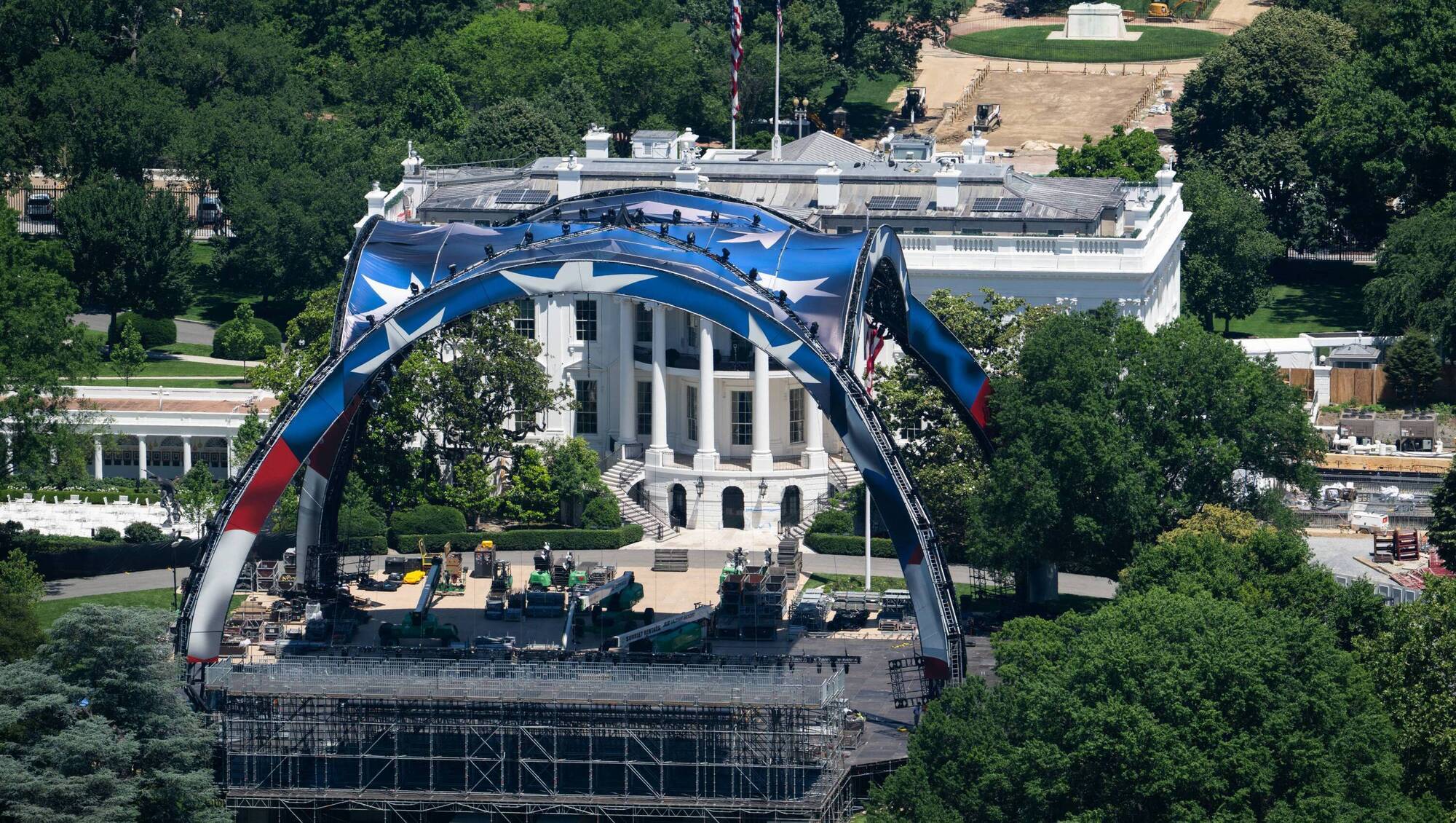
Work on a structure for the upcoming UFC fight US president Donald Trump will host as part of the 250th anniversary of the United States on the South Lawn of the White House. Picture: Getty Images

I turned 20 in America. On a J1 visa, of course. It was a mad, unforgettable summer. I was too late for Woodstock in upstate New York, although I did get to see Santana at the Tanglewood Festival in western Massachusetts (that was where I was introduced to some odd ingestible products that I’d rather not refer to).
But what I remember most is the revelation that was the US of A itself. I wouldn’t have described myself as a conservative Irish Catholic, but the atmosphere in which all of us were raised here was utterly different to there.
I couldn’t recognise it at the time, but when you looked at us from the outside, we came from something dark and repressed. Irish men didn’t demonstrate affection for other men in those days. We called gay people queer and wondered if they were contagious. And we were the educated ones.
None of that was allowed in America. I experienced an openness in friendship that shaped me for the rest of my life. I discovered music (I still play in my car) that reflected honesty about feelings. I fell in love — with the place, with the people, with the character and the values.
Which is not to say America wasn’t pretty messed up even then. In my first summer there, Massachusetts (a Kennedy stronghold) was struggling to come to terms with a new and hated president (in Holyoke, anyway), Richard Nixon.
He in turn was failing to come to terms with the escalating opposition to the Vietnam War. A week or so before I got there, four protesting students had been shot dead in Kent State University in Ohio, and you could still feel palpable pain and anger.
Robert Kennedy was gone by then. So was Martin Luther King. I still have an image engraved in my soul of King, just after delivering his “I have a dream” speech, gazing out from the Lincoln Memorial down the length of the reflecting pool, over the heads of thousands of people who seemed to stretch as far as the Washington Monument.
The rest of the world worried deeply about the US back then — not because of what it had done to us, but what it was doing to itself. Particularly around the issue of race.
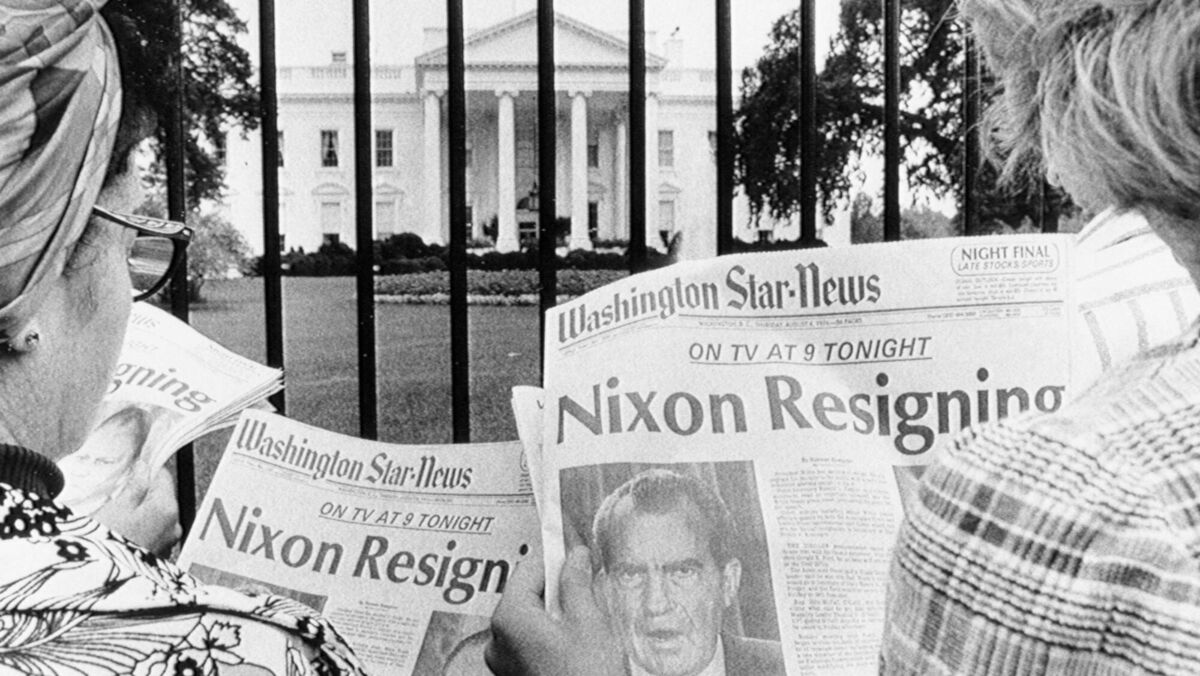
And then, after I left at the end of my second summer, Watergate happened. And a corrupt president had to be confronted by his own, and by the strength of the US Constitution.
But I left America invested in America. Invested in how it had helped me to grow and learn. And, sad to say, I’ve stayed that way. I followed every twist and turn of Watergate — ask me 50 years later who Donald Segretti or Judge Sirica or Bebe Rebozo were, and I can give you a paragraph without blinking an eye.
And I view Watergate still as an example of how strong democratic values and structures can withstand existential internal threat.
It was also, despite the conflicts, an example to the world. Which is why I was heartbroken I couldn’t go back for the 200th anniversary in 1976. Nowadays, you’d be able to follow every minute live. Then you relied on news bulletins, magazines — 's sensational pictures of the world’s largest flotilla of tall ships floating serenely past the Statue of Liberty, President Ford doing a foxtrot with queen Elizabeth in the White House ballroom (gosh, they even had a ballroom then).
And the music — at event after event. Johnny Cash, John Denver, Ray Charles. Elvis Presley is still remembered almost as the soundtrack of the bicentenary. He was in fading health (he died the following year) but his renditions of , , and the — none of them chauvinist or jingoistic, but all deeply patriotic and heartfelt, resonated around the world.
And when Elvis wasn’t holding audiences in the palm of his hand, Leonard Bernstein was conducting great orchestras in extraordinary performances of pieces like Aaron Copeland’s , perhaps the quintessential expression in music of the values at America’s heart.
And would you just look at where it is now.
There’s no chance of any presidential foxtrots in the White House this year. If you stand at the Lincoln Memorial and look out over the Mall, your eyes will be offended by the garish blue of the reflecting pool.
In 1976, the Smithsonian Institute acquired Muhammed Ali’s boxing gloves and robe for an exhibition on the American Bicentennial, “A Nation of Nations”. And they’re there still. He was then seen as perhaps the greatest sportsman America had ever produced.
In 2026, they’re building a giant cage in front of the White House to facilitate cage fights for “UFC 250”. Nothing to do with the 250th anniversary at all, it transpires. It’s all about Donald’s 80th birthday in the middle of this month. Much more important.
Mind you, by all accounts they’re having difficulty filling the seats — they’re out recruiting soldiers who have to have the correct height and weight measurements.
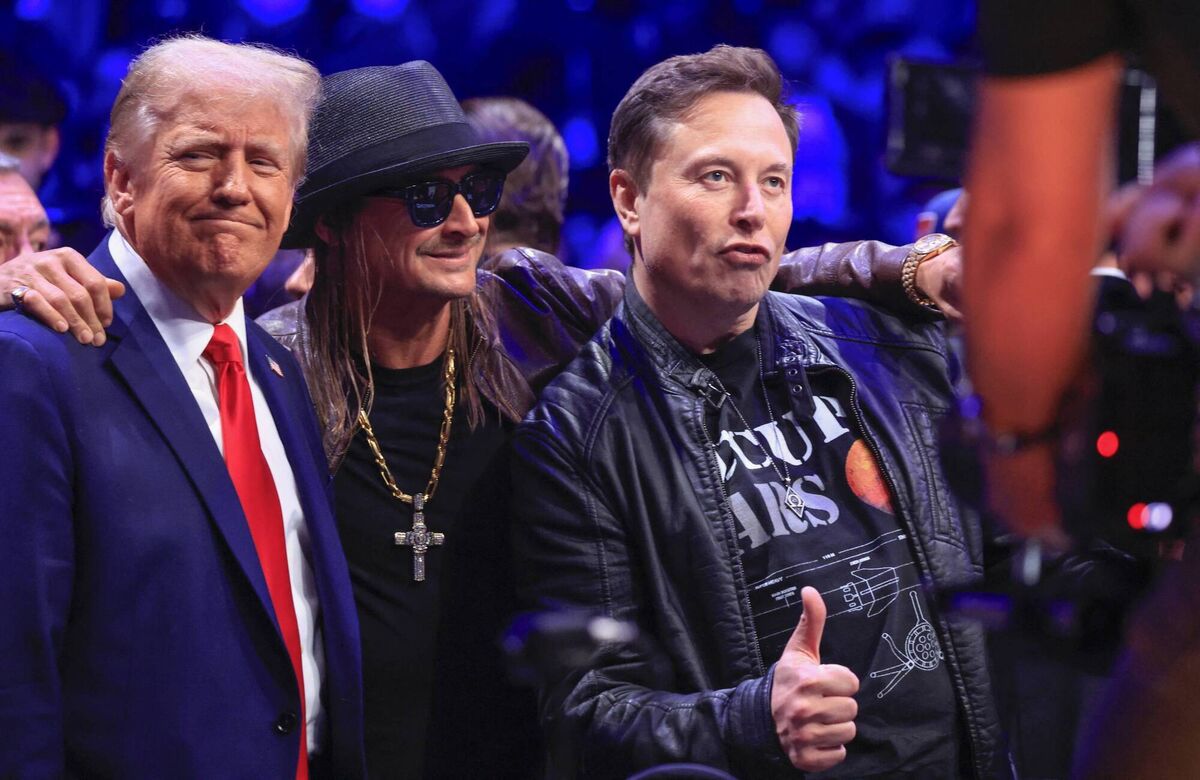
Meanwhile, Elvis this year will be replaced as the soundtrack by someone called Kid Rock (Donald’s favourite singer). I looked him up so you don’t have to. I even listened to one of his “hits” called . It starts with the following, shall we say rebellious, refrain: “Fuck all you hoes, Detroit till I die, motherfucker! Talking all that bullshit …”
It gets worse, much much worse, after that. Kid Rock is running something called a Freedom 250 tour in all the Maga capitals of the world. But if you’re looking to be uplifted by music, it may not be for you. Unless you’re really into Vanilla Ice, one of the last remaining acts not to have abandoned the musical events the president has organised for your delectation ( — remember that? No?)
The 200th anniversary set out to capture the essence and spirit of the world’s leading democracy. The 250th anniversary, it turns out, is not about America at all. It’s about the attempted self-glorification of a supremely trivial and banal man.
America has never had a president who thought so little of the country he led. His decision to go to war with Iran and his conduct of the war have both been so astonishingly superficial they would have destroyed any predecessor.
For serious reasons and in much smaller ways, Trump is a global laughing stock. He is increasingly becoming a laughing stock at home. The clown show the 250th anniversary has become will make thousands of Americans ashamed of what they’re watching and who arranged it. With any luck, that will finally do him in.
CONNECT WITH US TODAY



Be the first to know the latest news and updates