Colin Sheridan: We still have three more years of Donald Trump, and that's terrifying
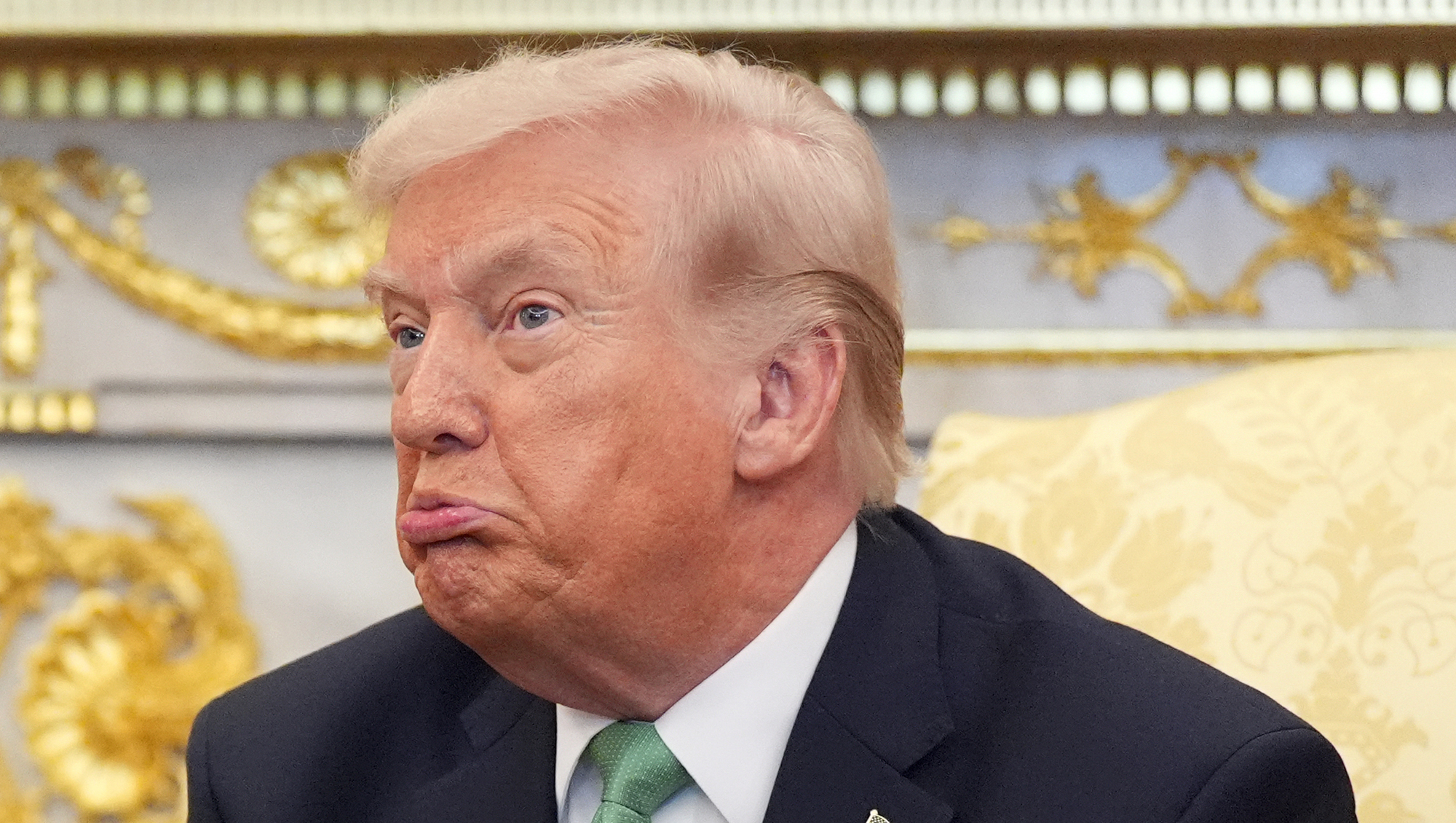
US President Donald Trump in Oval Office in the White House in Washington DC, during a bilateral meeting with Taoiseach Micheal Martin as part of his visit to the US for St Patrick's Day. Picture date: Tuesday March 17, 2026.

Donald Trump has been president of the United States — this time around — for 467 days. Should he complete his second term as prescribed, he will be in power for another 944. Nine hundred and forty four more sunsets.
We are pretty much guaranteed that by the end of that near-milleversary, there will be at least another century of what we might traditionally call “scandals”. That’s a scandal once every nine days or so. I would say that’s pretty much a lock.
So far, the highlight reel of his presidency includes assassination attempts on his own life. Kidnapping the Venezuelan president and his wife. Starting a war with Iran nobody needed or wanted.
Singlehandedly driving the price of oil up to unthinkable levels because of hubris. Facilitating, funding, and vocally supporting Israel’s wars on Lebanon and Palestine.
Read More
Threatening Denmark, Greenland, Ukraine, Colombia, Mexico, Cuba, and the Vatican. Inciting a civil war on home soil due to his deployment of ICE in pursuing an immigration policy that is disgustingly inhumane. Publicly mocking his peers, predecessors, and potential successors. Making adversaries out of allies, and allies out of, well, Vladimir Putin.
It reads less like the record of a presidency and more like the plot of a film rejected for being too implausible. And yet here we are, 467 days in, with 944 more looming like a cryptocurrency subscription you cannot cancel.
His cabinet is like a collection of Marvel villains, albeit with less coherent backstories. Pete Hegseth this week paraded Kid Rock around the Pentagon. Hegseth himself — a man whose personal life reads like a rejected subplot from — has navigated allegations of sexual misconduct, confidential settlements, multiple affairs, and an email from his own mother describing him, with admirable concision, as “an abuser of women”.
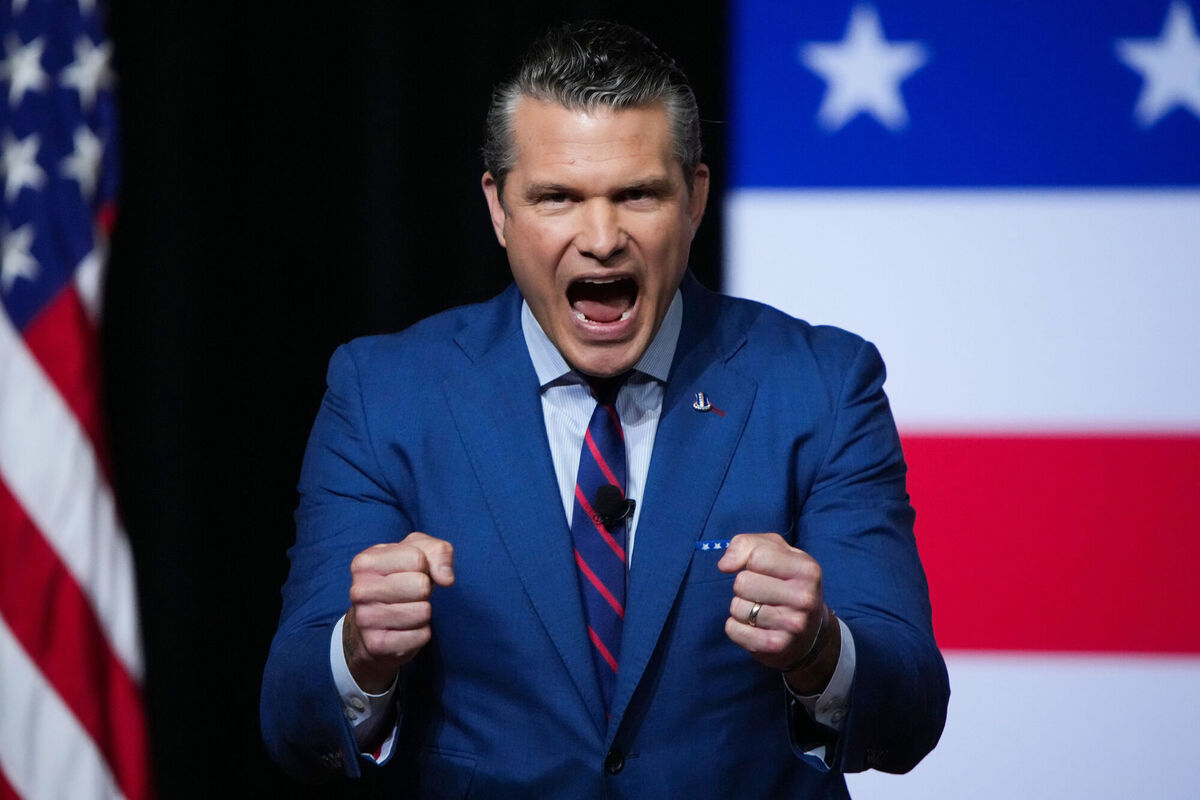
And yet there he stands, secretary of defence, apparently thinking: You know what this briefing needs? A man best known for shouting “Bawitdaba” into a microphone in 1998. One imagines the joint chiefs nodding politely, as if this were all entirely normal and not, in fact, a Pentagon away day organised by a confederate flag-waving stag party.
Then we arrive at one of the saner members of Trump’s cabinet, which tells you everything, Robert F Kennedy Jr. A conspiracy theorist who once testified that a parasitic worm had eaten part of his brain and, judging by subsequent output, may have gone back for seconds. A man who has spent years promoting the thoroughly debunked claim linking vaccines to autism, now entrusted with the health of a nation that already Googles its way into panic at the first sign of a rash.
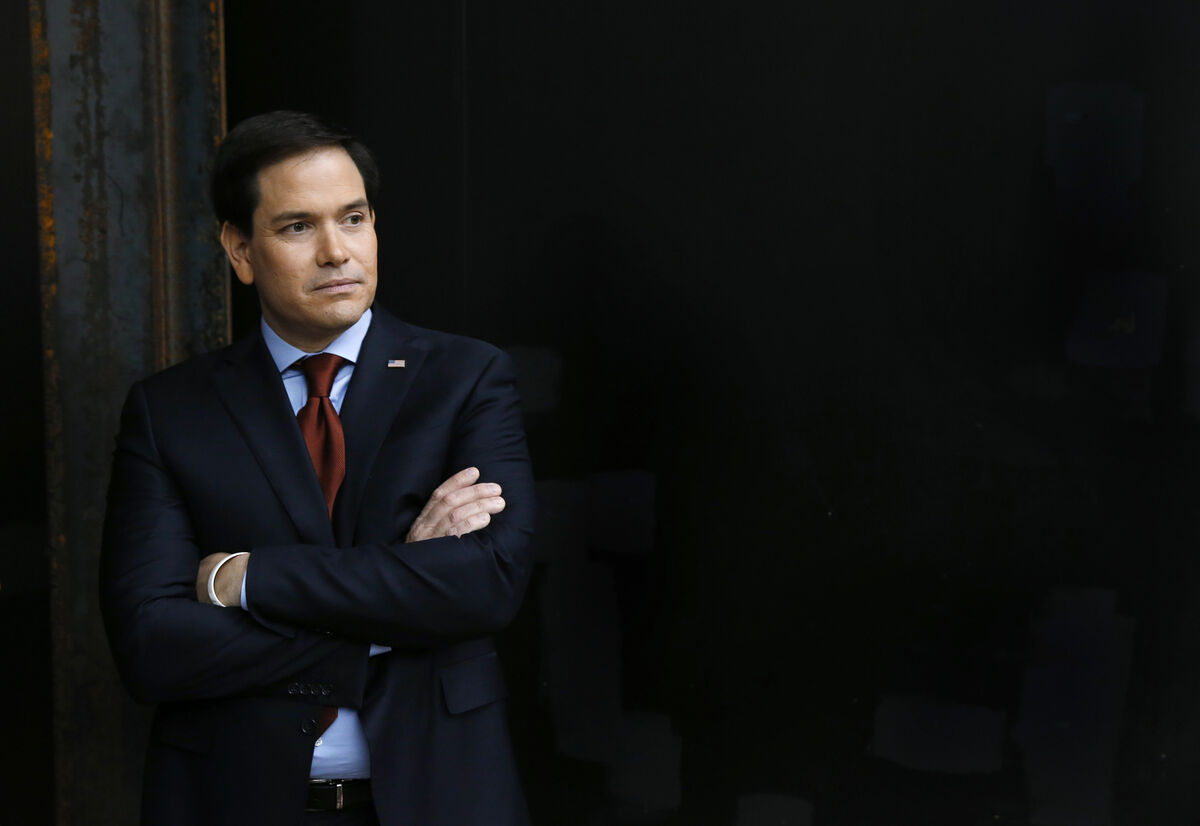
Marco Rubio plays the role of the permanently aggrieved insider, a man who seems to have built an entire political identity out of arguing with his own biography. You know he’s there, not because he believes in Trump, but because he wants Trump’s job. And after he gets it, to invade Cuba.
Vice president JD Vance, in this company, comes across like Jimmy Carter — a sentence that should worry him more than it flatters him.
But here’s the thing: It’s not whether the American people, the media, or the rest of us can endure another 944 days of this. It’s whether Trump himself can. Assassination attempts and impeachment murmurs aside, the sheer velocity of the chaos — the constant output, the endless crises, the industrial-scale outrage — must take a toll.
Joe Biden’s decline was documented in painstaking detail, but at least his presidency moved at the pace of the man. Trump’s operates at the pace of a man who has mistaken vitamins for opioids. His is a presidency fuelled by something stronger than ideology. Call it ego, call it instinct, call it whatever keeps a man awake at 3am posting policy via grievance. It has the jittery energy of a system permanently on overdrive — Red Bull governance. Eventually, something gives. History suggests it is rarely the system.
So what do we do? Official Ireland appears committed to a policy of diplomatic ambidexterity: Trump is regrettable, but America is essential. So we nod politely, issue statements of mild concern, and continue cashing the cheques. It’s foreign policy as tightrope walking, except the rope is on fire and the crowd is pretending not to notice.
But this calculation assumes Trump is an aberration — a temporary disruption to an otherwise stable system. It ignores the Hegseths, the Rubios, the Vances, the Stephen Millers. It lionises Obama. It ignores the fact that Trump is less the cause than the culmination. The symptom, not the disease.
Because the real story isn’t Trump. It’s the ecosystem that produced him and continues to sustain him. A media landscape that rewards outrage over nuance. A political culture that confuses volume with conviction. An electorate so fractured that reality itself has become a partisan issue.
The Democratic Party, for its part, has responded with all the urgency of a committee tasked with choosing a font. It had eight years, from Trump’s first victory to Biden’s final days, to produce a candidate capable of meeting the moment. One candidate. And the best it could offer was Kamala Harris — a poor man’s Michelle Obama, without the authority or the connection. I dare you to name her candidate for vice president? Exactly.
There is a particular skill in politics: The ability to make people feel that you understand both their frustrations and their hopes, and that you might, just might, do something about them. It is not a skill that can be focus-grouped into existence, nor one that emerges from a résumé alone. And yet that seems to be the Democratic strategy, a conveyor belt of barely competent, cautious figures who inspire little, and certainly not enthusiasm.
Don’t doubt they will get it wrong again. And if you think Gavin Newsom is the answer, you’re dafter than a Hegseth haircut. Newsom has the polished sheen of a man who has spent too long practising sincerity in a mirror. He looks the part, sounds the part, and somehow convinces you of neither. He has been described as “reptilian,” and a single podcast exposure to him would tell you why.
Meanwhile, the Republican Party has shed the last pretence of being a traditional political party. It is now a movement organised around a single personality, where loyalty is demonstrated not through ideas but through defence.
The more indefensible the statement, the greater the loyalty required — and therefore the greater the reward. It is politics as performance art, with Trump as both director and lead actor. And still, the numbers hold. Still, millions of Americans look at this and decide it is preferable, or at least familiar. Which may be the most unsettling truth of all. Not that Trump exists, but that he fits.
From Ireland, there is a temptation to treat it as a spectacle. To watch from a safe remove, shaking our heads at the absurdity of it all. But American politics has a way of exporting itself, like fast food or financial crises. What happens there does not stay there.
So we count the days. Not in hope, exactly, but in a kind of morbid curiosity. Waiting to see what breaks first — the system, the opposition, or the man himself.
Because one thing is certain: Whatever happens over the next 944 days, it will not be boring. And in the Trump era, that should worry all of us.
CONNECT WITH US TODAY



Be the first to know the latest news and updates