Fergus Finlay: The UK leadership battle really matters for Ireland — so who will win?
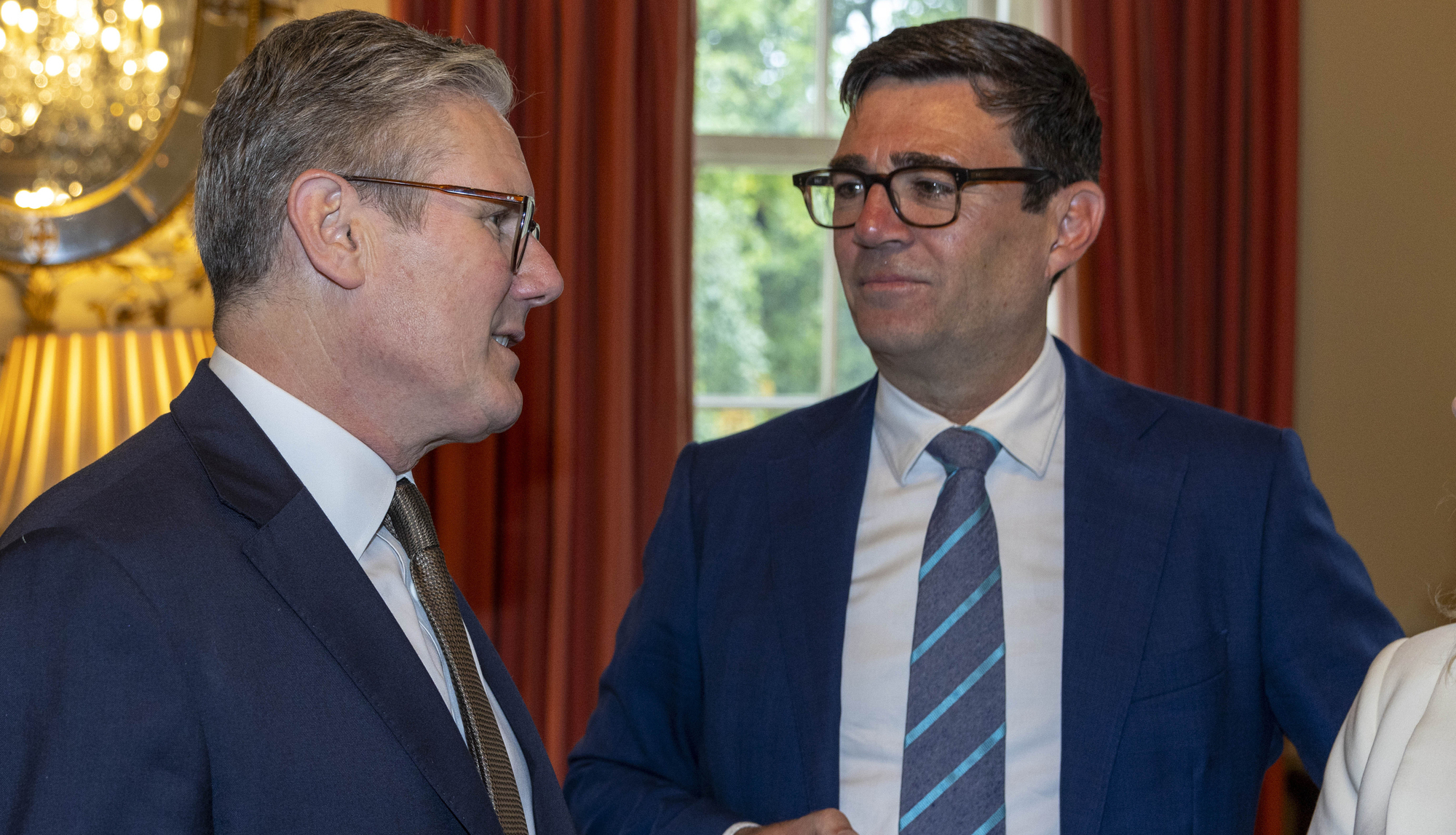
British prime minister Keir Starmer (left) and the mayor of Greater Manchester Andy Burnham who has never declared no confidence in Starmer but is now determined, it seems, to take him out.

A couple of weeks ago I wrote here that they’d be coming for Starmer after the local elections in the UK, and especially if they did badly.
Well, they’re coming. It already has the look of a very British coup (maybe a Keystones Cops coup would be more accurate), but it’s underway.
The weird thing is that even after the local elections Keir Starmer still had a chance. There wasn’t much time, but there was definitely an opportunity to reset.
Of all things, the king’s speech, that highly formulaic (to the point where it looks really silly) annual ceremony that marks the opening of Parliament for a new year, was the prime minister’s moment. And he blew it. Again.
He had talked the talk beforehand. “I know I have my doubters and I know I need to prove them wrong, and I will”, he told his members. “I take responsibility for the losses, and I take responsibility for putting it right”.
Perhaps most significantly he told his audience that incremental change would no longer do. And then, a day or two later came the king’s speech, so called because it was delivered by his majesty but written, of course, by Starmer’s government.
On and on it went, one boring incremental proposal after another. The doubters were surely confirmed in their doubts.
Suppose, for example, the king had said that his government had decided that the greed and waste of Britain’s water utilities had been a betrayal of the people, and the government had decided to introduce immediate legislation to bring them back into public ownership, without any compensation for the profiteers who had destroyed the entire system.
And that a plan would be developed, whatever the challenges, to enable a massive programme of public investment to ensure clean and safe water for the people in future.
If his majesty had said anything along those lines, or something similarly radical (or anything radical at all) there would have been gasps in the House of Commons. The doubters would have been given pause, and at the very least Keir Starmer would have bought himself time.
Yes, there’d have been tough questions — can the UK afford it, will it break the bank? But the people in Keir Starmer’s own party would at last have seen a leader with conviction. But they didn’t and so the coup began.
It’s already clear that this is going to be a very slow-moving and highly conditional coup. It began in earnest with Wes Streeting’s letter of resignation.
He seemed like a man who was forced to resign because several of his junior ministers (presumably supporters of his) had already handed in their notice.
Nearly half of his resignation letter was filled with self-congratulation about the remarkable job he had done as health secretary. “Thanks to our Labour government, it is on the road to recovery: lots done, but so much more to do,” says he.
All good reasons to stay in my post, he concluded that bit. Then he went on to lavish praise on Keir Starmer — his brilliance at leading a general election campaign, his courage and statesmanship on the world stage. More good reasons to stay, you might reasonably think.
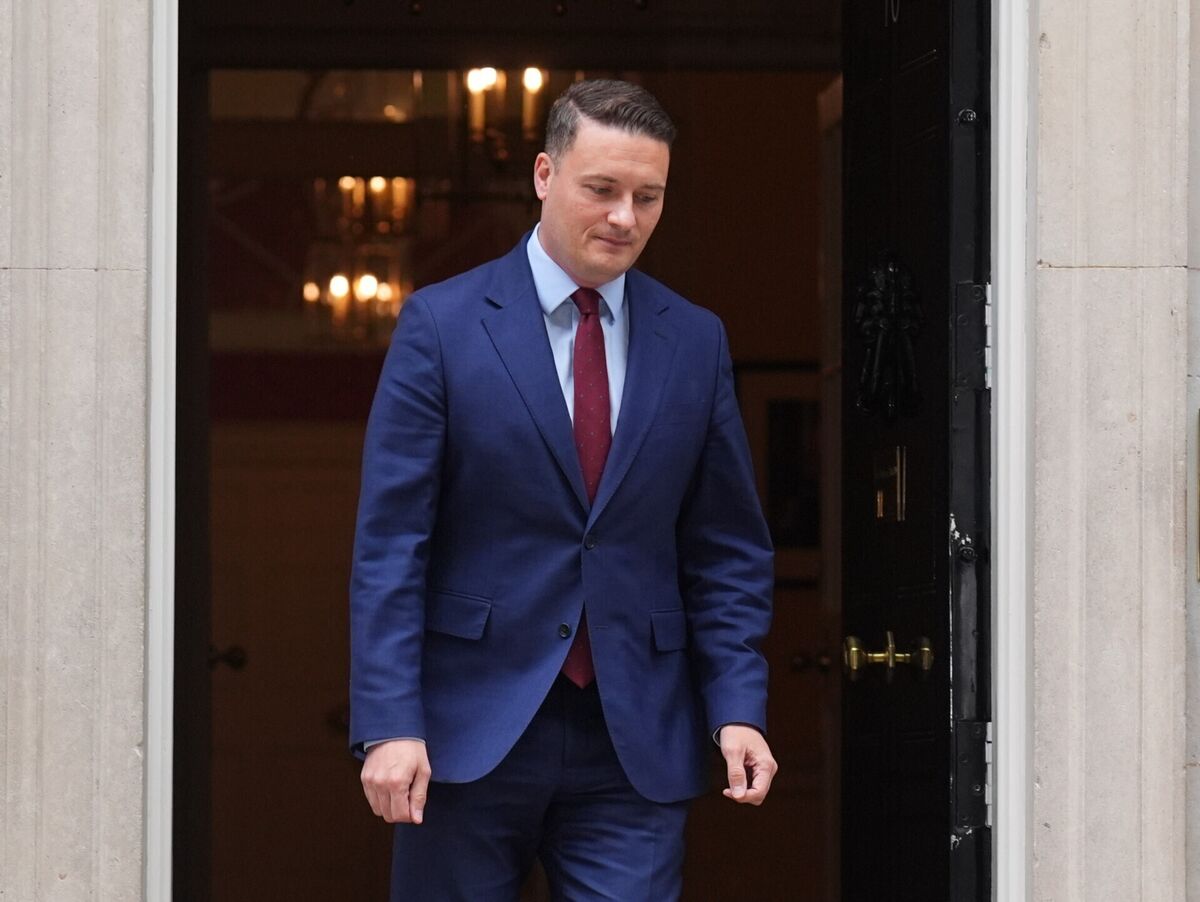
Then he announced his loss of faith and his resignation. “Where we need vision, we have a vacuum. Where we need direction, we have drift ... a heavy-handed approach to dissenting voices ...”
They were his reasons. And then the man who called for direction and vision left. And did nothing.
Anyone determined to bring direction and vision to his beleaguered party would, in any world I understand, have launched a leadership campaign that day and begun the hunt for the necessary votes to challenge the leader formally. But not Wes. Instead, he made it clear that he wanted to wait for Andy.
Andy Burnham, that is. 'The King of the North', they call him. He’s a politician who left frontline politics to become the mayor of Greater Manchester and has by all accounts been very successful and popular in that role.
He’s very well-known in UK politics, and almost entirely unknown everywhere else. He has about three years of not particularly distinguished government experience, and the last time he served in Government Gordon Brown was prime minister. He hasn’t ever declared no confidence in Keir Starmer but is now determined, it seems, to take him out.
In order to do that he has to win a by-election in a constituency where, at the most recent opportunity, the electorate roundly rejected Labour.
Not just that, but it’s a place where all the opposition parties will see him as a long-term threat, so you can expect a lot of heavy campaigning and possibly a lot of tactical voting to try and keep him out.
If he wins, it will be seen as a tribute to his personal charisma and popularity. If he loses, he will carry on as mayor of Manchester but with his reputation severely tarnished.
By any standards it’s fair to say that he is taking a substantial risk with his political future. If that comes to be seen as taking a risk for a greater cause — his party and his country — it will pay off for him.
If it comes to be seen as some kind of expression of entitlement — “as soon as I win this a bigger prize will fall into my lap” — it could blow up in his face.
And if that happens, Keir Starmer will take the fight to Streeting and whoever else wants to have a go. And there’s a rattling good chance he’ll beat them and carry on.
But if he doesn’t or can’t change, there’s an equally good chance he’ll destroy his party for another political generation. If Burnham wins the by-election, my prediction is that Keir Starmer will recognise the inevitable and set a timetable to enable him to depart with dignity.
Whatever happens over the next couple of months, the governing party in our nearest neighbour faces huge challenges if it wants to rebuild its respect.
And that matters to us. Anglo-Irish relations are crucial, and we should all shudder at the prospect of the feckless and values-free Nigel Farage rising to power.
The next prime minister of the United Kingdom needs to have decency, commitment, an endless capacity for hard work, and respect in the world. The very qualities Keir Starmer has now.
But, as Streeting wrote (but did nothing about) he or she also needs vision and direction, and the kind of leadership skill that enables a leader to inspire and enable his or her own people to fight hard battles.
(And don’t rule out a woman. There are at least two — Angela Rayner and Jess Philips — that I’d be proud to vote for if I had a say.)
But let’s assume it’s Burnham at the end. We know from our own experience, political leaders shrink or grow in office (or after office, right Bertie?) Starmer shrank, and there doesn’t seem to be a way back up.
So, it’s in all our interests that Andy Burnham — or the woman who might still emerge — gets a chance to grow and to shine.
CONNECT WITH US TODAY



Be the first to know the latest news and updates