Fergus Finlay: Young people must be taught to think critically or we are doomed
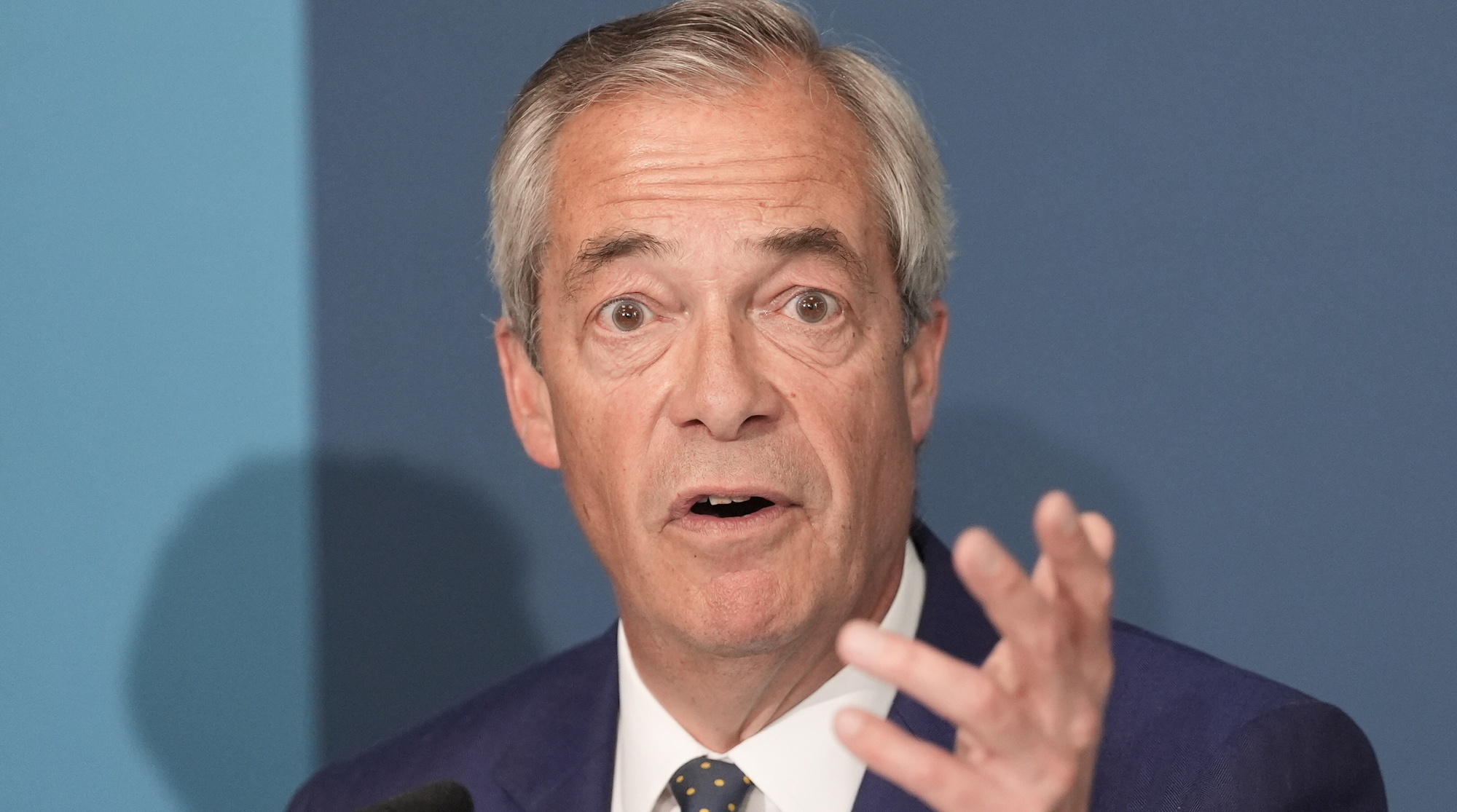
Reform UK leader Nigel Farage. Before last week’s local elections in the UK, Reform UK had 78 seats of those being contested. Last Thursday they multiplied that figure by a multiple of nearly 20, gaining 1,450 seats to add to the 78 they had.

“Young people are growing up in the shadow of war, climate instability, online polarisation and deepening social division. They are trying to make sense of events that can feel overwhelming and chaotic. Education has to help them navigate that reality — not by telling them what to think, but by helping them think critically, question misinformation and engage constructively with the increasingly complex world around them.”
That’s not me talking. It’s Ruairi McKiernan, the CEO of an organisation called Idea — short for Irish Development Education Association — speaking to an Oireachtas committee about education and young people last week.
There are parts of the world where Idea's proposals about much better media education might seem like something high-blown and aspirational. In the world we live in, it’s anything but.
While young people are trying to make sense of overwhelming events, they also live more and more in a world that’s influenced, perhaps dominated, by the algorithms that shape social media, and which seem to be determining the choices more and more of us make.
There are forces shaping our lives — increasingly shaping the way we think — and we simply don’t understand enough about what’s happening to us and around us.
By way of an example, we’ve just witnessed a set of local elections in the UK that represent, at least for now, a seismic change in public opinion. There’ll be time enough to discuss all that as the dust settles, but look at just one figure.
Before last week’s locals, Reform UK had 78 seats of those being contested. Last Thursday they multiplied that figure by a multiple of nearly 20, gaining 1,450 seats to add to the 78 they had.
That’s mind-boggling. What’s even more mind-boggling is that if you asked 1,000 UK voters in a poll to name five of the leaders of Reform UK, 999 of them (there’s always one!) would be able to name Nigel Farage. And there, for the great majority, it would stop.
Nobody really knows who runs the party, nobody really knows what the party would do in government, nobody knows who Farage will appoint as Chancellor or Foreign Secretary. Nobody really knows what Farage would ultimately do about Ukraine or Iran or the ongoing slaughters in Lebanon and Palestine.
And yet he’d sweep the country. The main reason — and it’s the reason Keir Starmer swept the country the last time — was because the great bulk of the population was hell-bent then on voting the Tories out.
And unless Farage succeeds in making the kind of changes autocrats love, he’ll be voted out the minute he disappoints.
We have, at least an awful lot of us have, arrived at a point where choice is no longer about who you admire the most but who you hate the most, no longer about policies but only about personalities. Old distinctions between left and right might mean a lot to old fogies like me, but nothing at all to an entire generation of citizens.
In his opening statement to the Oireachtas committee, McKiernan put all this a bit differently. “Across Europe and the world,” he said: “We are seeing authoritarianism on the march, democratic norms under attack, rampant inequality, and the impact of war, conflict and genocide, alongside fossil-fuel-propelled climate and ecological breakdown, unregulated AI, and growing social polarisation, fuelled by algorithms profiting from misinformation, disinformation and racism, and driving division across our homes, workplaces and communities.”
How could there not be a role for education in the middle of all that? And is it perhaps the case that we may be too late?
Nearly 20 years ago in 2007 a paper published by what's now the Technological University of Dublin and DCU made a strong and well-argued case for what it called critical media literacy to be part of the school curriculum.
It was already clear then that media was about to change, in character, scope and spread, although nobody could predict the pace of change.
In 2007, the phrase “social media” didn’t exist. The iPhone didn’t appear until the following year, Twitter had only just appeared, there was no such thing as an app.
Yes, we used e-mail — though it could sometimes take 10 minutes to download a one page attachment.
Naturally, of course, from the very beginning gambling was available online, and it has been said that online pornography played a huge role in the development of things like online payments and bandwidth infrastructure.
So, it’s clear: even if none of us were able to read the future in high resolution back then, enough was known to make a strong case about the opportunities and the risks of the emerging technological revolution.
Policy makers didn’t want to know. And now it’s critical that younger people learn how to question everything they’re told.
They live in a world where it’s much easier to find scorn and hatred instead of news and analysis.
That’s the essential point Ruairi McKiernan was making to the Oireachtas committee last week, and I don’t know how it’s possible to disagree with him. He was pressing for what he called “a wiser, broader, more holistic approach (to education) — one that fosters critical thinking, (and) helps people to examine the root causes and interconnected nature of global challenges”.
Sometimes I think it’s almost too late. But then I get to meet or to see young people in action, and hope refuses to die.
At the same meeting of the Oireachtas committee on Education and Youth at which McKiernan spoke, three young people, working together, put forward a passionate argument for more transparency in the way Junior Cert results are made available to students.
The young people involved were Sarah Jennings, Phoebe Doyle and Georgia Rossiter, who came from 5th year in Coláiste Bhride in Carnew.
They came prepared. Facts, research, even market research they had conducted themselves among students and teachers. They wanted to persuade legislators to enable students to do the best Leaving Cert they could, by giving them as much information as possible about how their Junior Certs went.
That level of transparency is already now available in respect of Leaving Cert results, so a student demand to extend transparency to another level is not unreasonable.
Watching the students make their case was the impressive thing. These were students well capable of critical thinking, and of applying the principle of critical thinking to a problem holding students back.
These weren’t students likely to be codded or fobbed off by lazy sloganeering or cheap political trickery. But it is the world they live in.
It’s a world where people are increasingly alienated from politics, and politics has only itself to blame for that. The next few years — in Ireland and elsewhere — are going to mark the longer-term future.
The more powerful technology becomes in shaping the way we think, the darker that future could be. We’re relying more than ever on this generation of young people to fight off the darker forces. We really need to give them the weapons to do it.
CONNECT WITH US TODAY



Be the first to know the latest news and updates