Michael Moynihan: Cork deserves better than a 19th-century building for its 21st-century city library
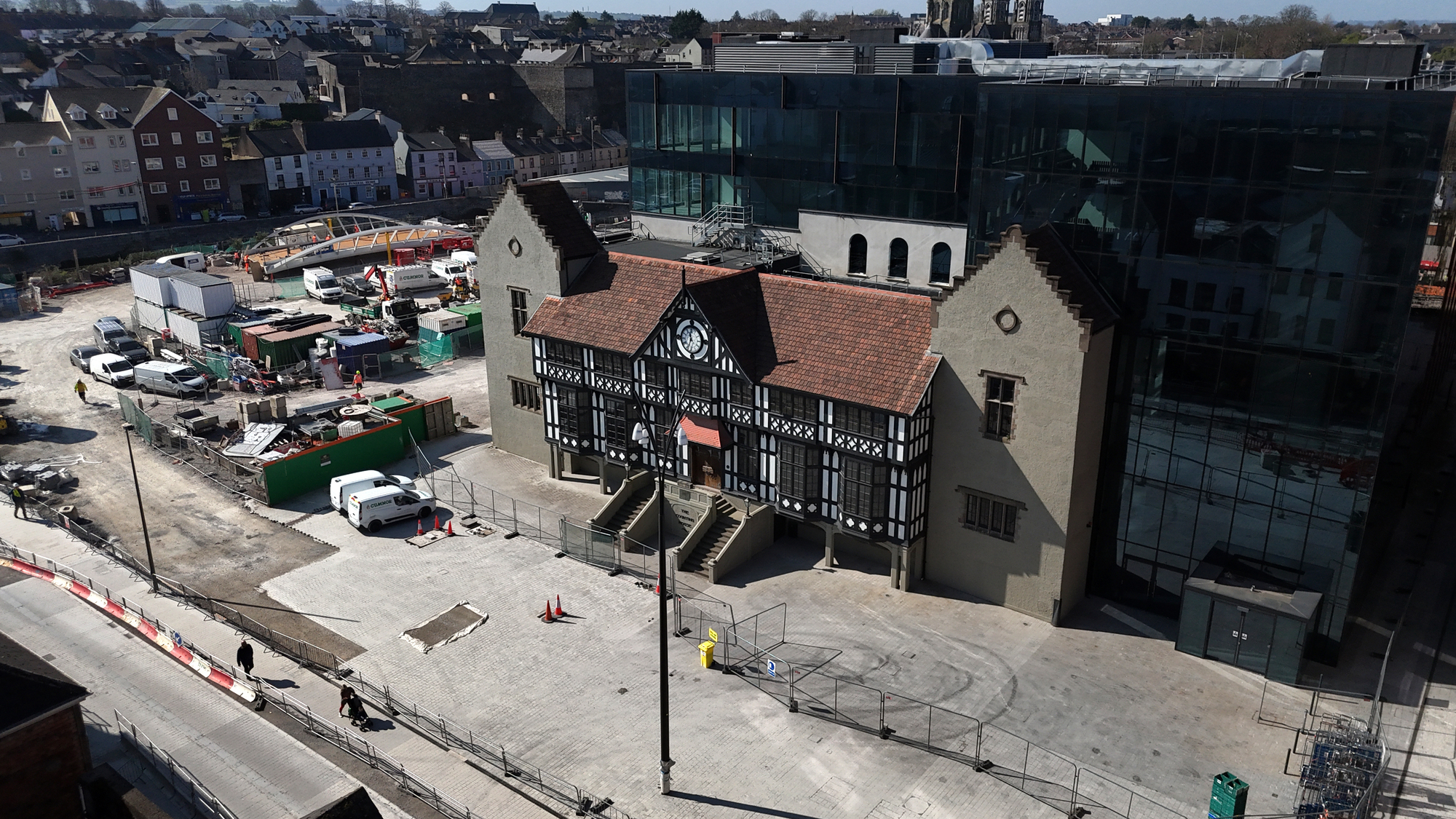
The Counting House at the former Beamish & Crawford brewery site on South Main Street, Cork. Picture: Larry Cummins

On Saturday, April 19, this paper published a wide-ranging interview with Cork City Council chief executive Valerie O’Sullivan.
Catherine Shanahan was the interviewer, asking at one point if Cork’s main city library might move to the former Beamish & Crawford Counting House. Many readers will be familiar with both the library building, on the Grand Parade, and the Counting House nearby on South Main Street.
“It (the library) will have to move somewhere because it’s just not good enough for a European city,” said the chief executive.
“It is not a library befitting Cork. I’d prefer to move the library into something of a far higher standard to cater for a growing population than spend money on refurbishing what’s there.”
Was the Counting House in the running, asked Catherine?
“I think it would be fantastic as a library,” said the chief executive.
Earlier in the month Eoin English reported on Cork City Council’s master plan for the wider Grand Parade-South Main Street area: “It is understood a proposal to house a public library in the Counting House will be included in the plan, which will then be used to secure funding for the project.
“The Counting House was restored by developers Bam in 2021, as office and cultural space, but the building has been vacant since.” Good news?
The Counting House is certainly an eye-catching sight — that mock-Tudor timbering makes it stand out in a neighbourhood which now features a lot of glass and steel. It was built in the early 1900s and was a key part of the former Beamish and Crawford Brewery complex on the site.
The current library is no longer really fit for purpose, as stated. Its users may regard it fondly but the smaller branch libraries dotted around the city are more user-friendly, airier and brighter — more modern, in a word. Hardly a shock when you realise that the Grand Parade library was opened officially by Jack Lynch back in 1979. A building seen as cutting-edge when first unveiled will hardly retain the sheen of modernity almost five decades later.
This raises an obvious question, of course.
The current library is not fit for purpose nearly fifty years after being opened, but at least that building was designed and built to operate as a library.
Cork appears to be the only city in Europe giving serious consideration to housing its 21st-century library in a brewery extension built not long after the end of the 19th century.
Having been in the Counting House that one brief weekend it was open to the public, it didn’t seem a natural fit for a library to yours truly, with little natural light in many parts. If the Event Centre is ever built — coughs politely — there could be even less natural light available in the building.
This leads in turn to other awkward questions. Converting such a building from its original use to make it fit for purpose as a library might be a long and costly process.
The term ‘Fireman’s Rest-type scenario’ is useful shorthand here.
Also: who would actually own the building?
Consider this before getting too worked up about the Counting House, though.
Library plans don’t always come to fruition, as we know very well in Cork.
Cast your minds back to March 2021, when Cork City Council issued a statement which welcomed some significant news.
Funding was on the way from Ireland 2040’s Urban Regeneration and Development Fund (URDF): “The URDF support for the Grand Parade Quarter (€46.05 million) will regenerate the southern end of the Grand Parade. This includes the funding needed to develop Bishop Lucey Park, which was subject of an international architectural competition in 2019 / 2020.
“In addition, the funding will enable public realm works in Tuckey St and South Main St. It is proposed to develop the area with a mix of cultural activity, job creation and housing.
“The funding will also help progress plans to develop a new 7,700 square metres city library that will facilitate up to one million visits in this quarter.”
Stay focused on the library. Sean Murray reported here in March 2022 on site options for the new library: “One is on the Grand Parade Site which includes Tuckey St, Grand Parade and South Main St. It would set aside 7,700 sq m of space for the library and 60 sq m for a public amenity space alongside 25,300 sq m of office, retail or residential space.
“The second option on the Kennedy Quay and Marina Walk would be based on a similar-sized new development.
“Another option would be the existing building of the Counting House on South Main St, while the fourth option is ‘do nothing’.
“Cork City Council is to enlist a team of architects, quantity surveyors, financial analysts, and legal advisors to conduct the preliminary business case for the project.”
The fourth option seems to have prevailed for the last few years, unsurprisingly: ’do nothing’ rivals ‘statio bene fide carinis’ as a municipal motto. But that last detail is intriguing.
Did our ‘team of architects’ ever draw up plans for a new city library?
Such a facility on the site of option one or two, along the lines of the Dun Laoghaire Lexicon library, say, would have been a fitting addition to the city. It would have been a bold statement of intent, a commitment to the city, a real anchor for cultural in Cork, a welcoming and nurturing space, and a magnet to draw people into the centre of the city at a time when a multitude of factors make a trip to the centre of the city less than enticing.
Or we could have what we have now.
Libraries have long been recognised as a refuge and a resource. O’Connor himself would have benefited from the Carnegie Library in Cork before the British Army burnt it down in 1920. That was one of the libraries funded by philanthropist Andrew Carnegie, a kind of Jeff Bezos of his day, though Carnegie put his fortune into helping people read rather than charging them for the privilege, as Bezos does with Amazon.
The Cork Event Centre is often cited as the most glaring example of ineptitude and inaction in Cork. It’s pretty bad, but it’s not the worst.
The library is far more important than the Event Centre, and the lack of a modern facility shames the city.
CONNECT WITH US TODAY



Be the first to know the latest news and updates