Mick Clifford: Long before the bombs started falling, truth had perished in the war of words
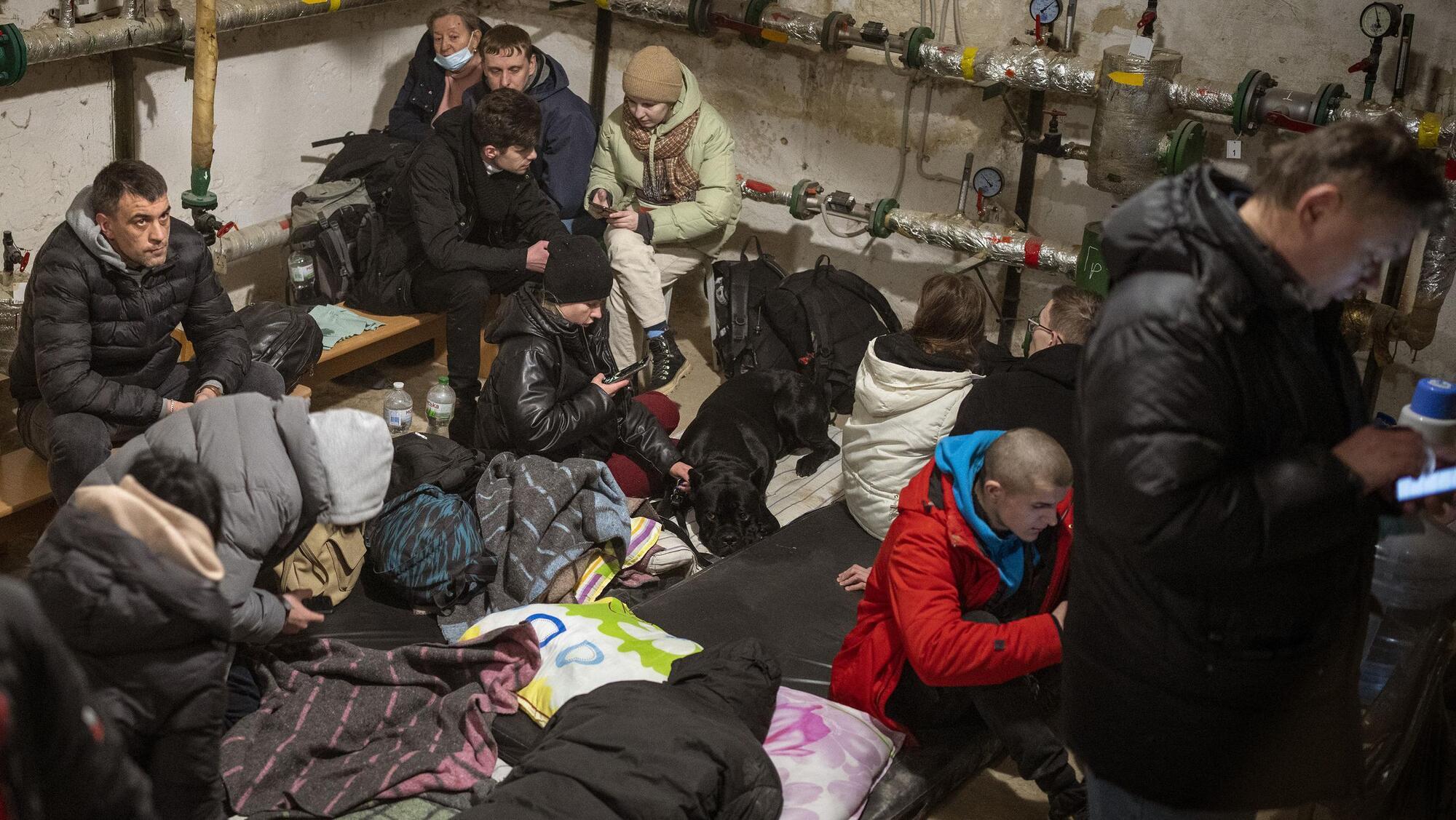
Some of the 'lucky' ones take shelter in a service basement while an unknown number of others are dying as Russia attacks Ukraine. The pretext for this war was established by relentless disinformation from official Russian channels and anonymous bots on social media. Picture: Emilio Morenatti/AP
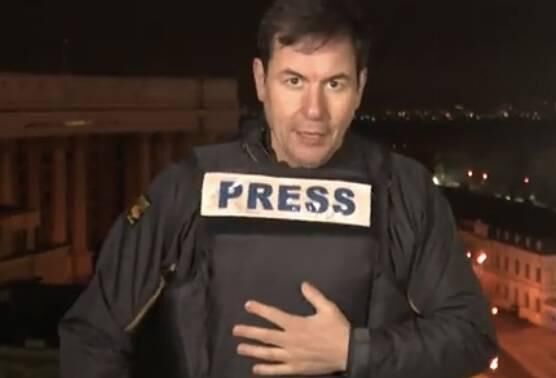
Matthew Chance was on the roof of a hotel in central Kyiv in the early hours of Thursday when the war began. The CNN correspondent was talking to Don Lemon, who was back in the studio in the US.
They were discussing the surprise announcement by Vladimir Putin some minutes earlier about a military operation. Then Matthew said: “Oh, I tell you what. I’ve just heard a big bang behind me. There are big explosions taking place in Kyiv right now.” Don asked whether it was safe where he was. “Yeah, I’ve got a flak jacket right here. Let me get it on.”
And with that, live on air, Matthew Chance bent down and began heaving on the heavy jacket, now that the war was under way.
Don told his audience: “Just moments ago you witnessed live on this programme, explosions. He [Matthew] is trying to put on a flak jacket right now. We should stick with this right now.”
And so it was that the war got under way.
In today’s world, wars only really take off once they are broadcast.
War, as lived by those who experience it firsthand is dirty reality, the needless deaths and destruction, the displacement of millions, the sheer outrage of man’s capacity to do inhuman deeds. And then there is the stuff that goes on across airwaves and cyberspace, the reporting that can sometimes be presented as a macabre form of entertainment, and the propaganda that is fuel for the killing.
This week, the war for many Americans and TV viewers around the world began on CNN. The footage of Matthew Chance brought to mind another man on another rooftop in another continent nearly 20 years ago.
This man was not reporting but propagating on behalf of Saddam Hussain during the brief first act of the Iraq War. His name was Mohammad Saeed al-Sahhaf, better known to the world as Comical Ali because of his press conferences that sounded more like the staging of a Disney production.
In his final broadcast he stood on that rooftop and declared that American soldiers were committing suicide “by the hundreds” outside the city, and denied that there were any American tanks in Baghdad.
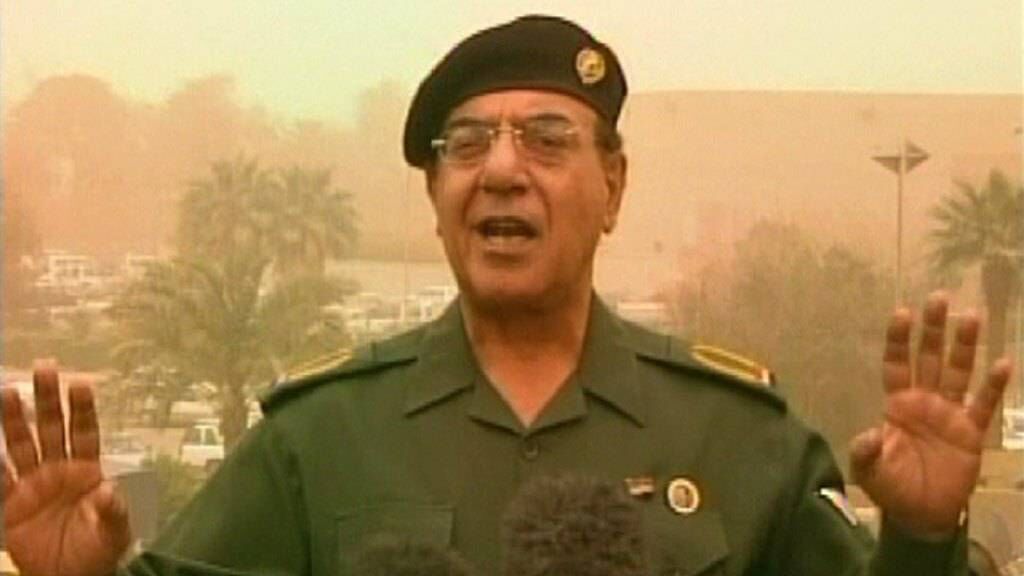
His impassioned statements were interrupted by the sound of gunfire coming from the American troops who were several hundred metres away.
Propaganda, or more specifically the spreading of disinformation, is set to be a major feature of this conflict. It will also be the first time that Europe has experienced a war in the digital age. The tone for what’s to come was set by Putin in recent weeks with his various ‘false flag’ and ‘genocide’ narratives.
During the first address to the Russian people on Monday, Putin made a series of outlandish charges that “Ukraine intends to create its own nuclear weapons and this is not just bragging”. He went on to say that the US is converting its missile defences into offensive weapons and has plans to put nuclear weapons into Ukraine.
Around a third of Putin's protracted, rambling speech was given over to this conspiracy theory that has no basis but appears to have been designed to weaponise public opinion ahead of the invasion.
Some of the claims in his speech were pure fiction.
“The Kyiv authorities cannot challenge the clearly-stated choice of the people, which is why they have opted for aggressive action, for activating extremist cells, including radical Islamist organisations, for sending subversives to stage terrorist attacks at critical infrastructure facilities, and for kidnapping Russian citizens,” he said.
“We have factual proof that such aggressive actions are being taken with support from Western security services. In fact, this is nothing other than preparation for hostilities against our country, Russia.”
Ciarán O’Connor of the Institute for Strategic Dialogue (ISD) was not surprised at Putin’s tactics. ISD identifies and monitors online operations targeting policy and election agendas.
“What’s really interesting is the playbook that was mentioned even a few weeks ago,” he says.
“That said that Russia would promote false or misleading stories and claim that Russia is the peaceful country. All those narratives have played out in the last week. The calls for leaders of the two breakaway republics [in the east of Ukraine], the suppose evacuating of citizens.
The promulgating of what is little more than lies in attempt to set up a pretext for war is not confined to Putin. There is a case to be made that the campaign by the US administration in 2002-3 to find excuses to invade Iraq was a perfect example of this.
The pretext was that Saddam Hussein had access to weapons of mass destruction and was therefore a threat to the so-called free world. The basis for claiming so was highly dubious and argument and theory still persists as to whether evidence was carefully doctored to give the impression that the weapons were in situ.
Arguably, as the US was operating in an environment where the press was not subject to state control, the propaganda was of a much higher order than that which Putin requires in a country where his grip on media is tight. Either way, Putin’s disinformation tactics are nothing new in the world.
A major feature of the disinformation in this conflict is set to be played out on social media.
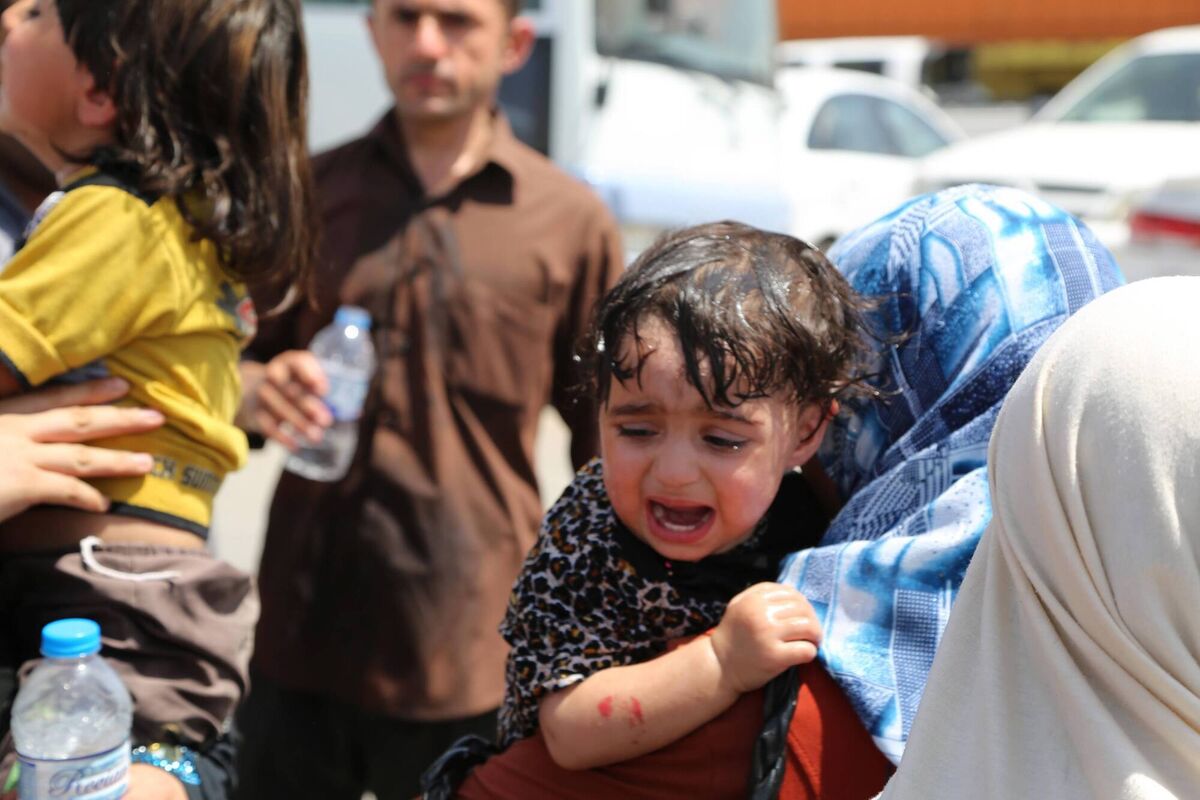
The capacity of social media to shape a conflict cannot be underestimated, and this became obvious during the invasion of northern Iraq by Islamic State (IS) in 2014
At the time, IS militants were reported to have had around 1,500 fighters, their equipment consisting of little more than pickup trucks and second-hand weapons they had acquired. But instead of using the element of surprise in the invasion, they tweeted madly about it.
Among their armoury was a hashtag campaign #AllEyesOnIsis, which they used broadcast their propaganda. Apart from supporters around the Middle East in particular who were tweeting, they also had a huge army of Twitter bots (anonymous accounts) which amplified the whole campaign.
The result was that despite having only a small invading force, they were able to spread fear, give the impression that they had a huge army, and demoralise the defenders of the city of Mosul to drop their weapons and flee. The domino effect of their online campaign spread across the a large part of the globe.
“It became a source of great inspiration for people following along at home,” according to Peter Singer, who co-wrote , in a recent interview on US radio.
“It was a direct result of these online tactics that they were able to recruit some 30,000 fighters from the Middle East but also the wider world — more than 100 countries where people would leave their homes to journey to Syria and Iraq to join them. Or if that wasn’t possible, they felt inspired to commit acts of violence at home.”
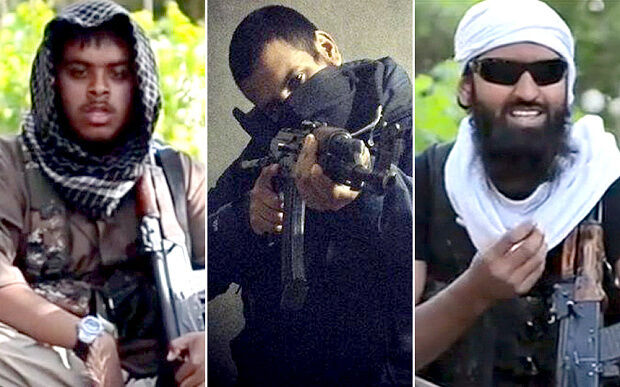
Singer believes that whether one is prosecuting a war or flogging a product, the playbook for social media remains the same.
“It’s a battle space where a wide variety of actors with very different real-world goals are ending up using the very same tactics,” he says. “You would see ISIS’ top recruiter, this hacker from Britain named Junaid Hussain, using the same tactics that Taylor Swift uses to sell her music albums.”
Ciarán O’Connor forecasts that the Russians will use tactics in this conflict taken, to some extent, from the IS playbook. “What we can expect is hybrid warfare,” he says.
“They will be getting messages on SMS or social media saying ‘your leaders are traitors, put down your arms and go home’.
“In Russia, they will use social media to portray the invasion as peacekeeping and an attempt to bring the country [Ukraine] back from a neo-nazi government.
“All the time that this is going on the narratives in the state-controlled media will continue to portray Ukraine as aggressor and puppets of the USA or NATO.”
The flip side of social media is that it can be an organic tool, used by masses of people to mobilise against human rights abuses or a dictatorial regime. This is what unfolded in the Arab Spring of 2011-12 and was initially seen before the war in Syria ballooned out of control. What of the chances that Russian people, for instance, could use social media to mobilise opposition to the war and call for the troops to be brought back home?
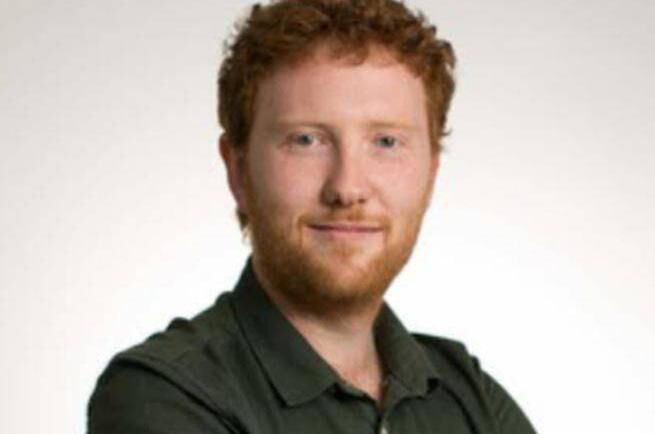
O’Connor doesn’t see that as a runner. “There is a lot of state control of social media in Russian,” he explains. “Their version of Facebook — VK — is controlled, not to the same degree as social media is in China where dissent is removed immediately, but it is controlled and the authorities in Russia flood the online space so much that the aim appears to be to create mass confusion.”
While the net has provided fertile ground for those spreading disinformation, it is also in times of war a vital tool in verifying what exactly is going on.
Open source investigations (OSINT) is a process in which dedicated journalists piece together all available footage online to verify whether and the extent to which incidents occur in times of conflict. Organisations such as Bellingcat, a Dutch-based website, specialise in this fact-checking of amateur videos and various footage on social media.
In the so-called mainstream media, large companies are also concentrating on this form of journalism, most notably the .
At that newspaper, Limerick man Malachy Browne has had considerable success in identifying and cataloguing outrages in the Syrian war, perpetrated by the Assad regime, which is allied to Putin.
The early days of the Ukrainian conflict have been notable for the kind of claims and counterclaims about attacks and casualties that are part of any conflict.
However, it is expected that in time open source investigations will be able to verify exactly what is happening and who is responsible.
“There are teams dedicated to that,” Ciarán O’Connor says. “They prioritise the verification of footage, confirm locations, and use all sorts of tools including the likes of Google Maps. There are going to be claims and counterclaims and in such an environment the ability to verify what exactly has gone on will be vital.”
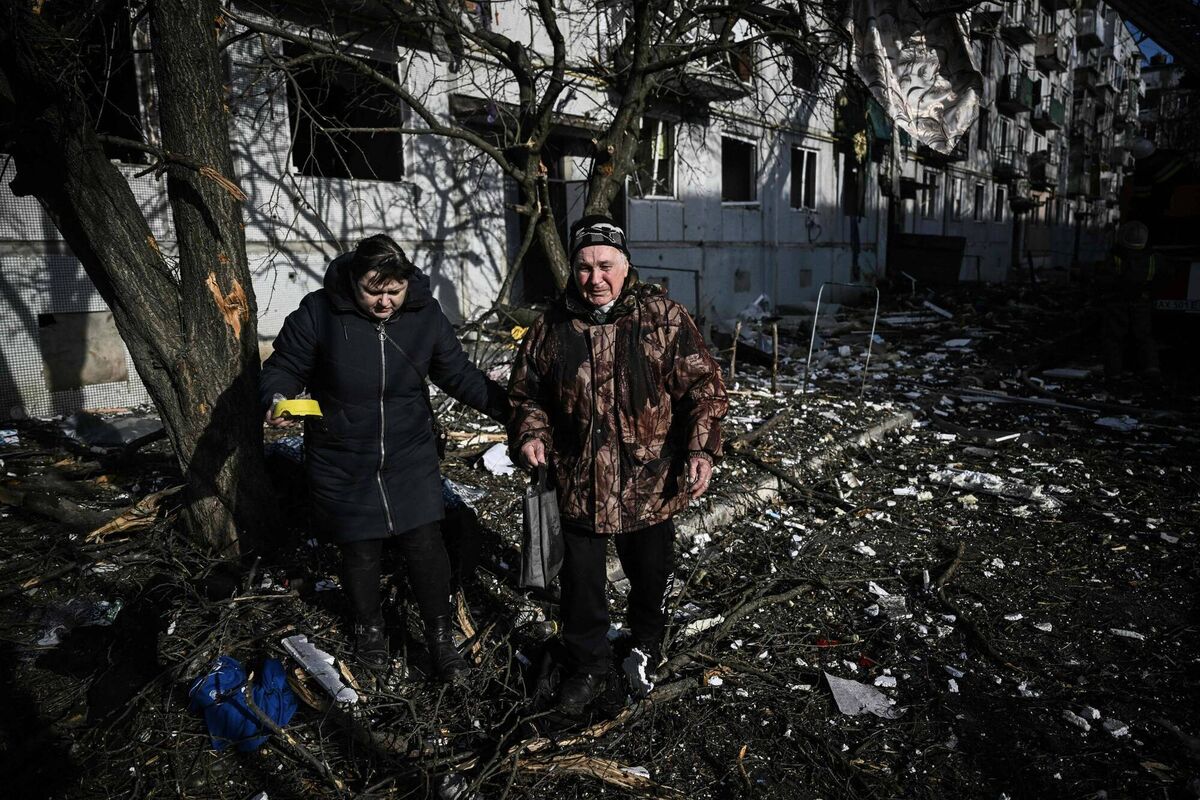
Much of the advances in communication, disinformation, and genuine journalism have been put into practice in various conflicts around the world in the last decade.
This will be the first time that they will be used in a war in Europe. And it is just one more element of what is going to be, in the first instance, a conflict that is going to result in a shocking waste of human life, displacement, and fallout that will ripple right across the continent.
CONNECT WITH US TODAY



Be the first to know the latest news and updates