Donal Lenihan: Munster Rugby needs urgent change, not more empty optimism
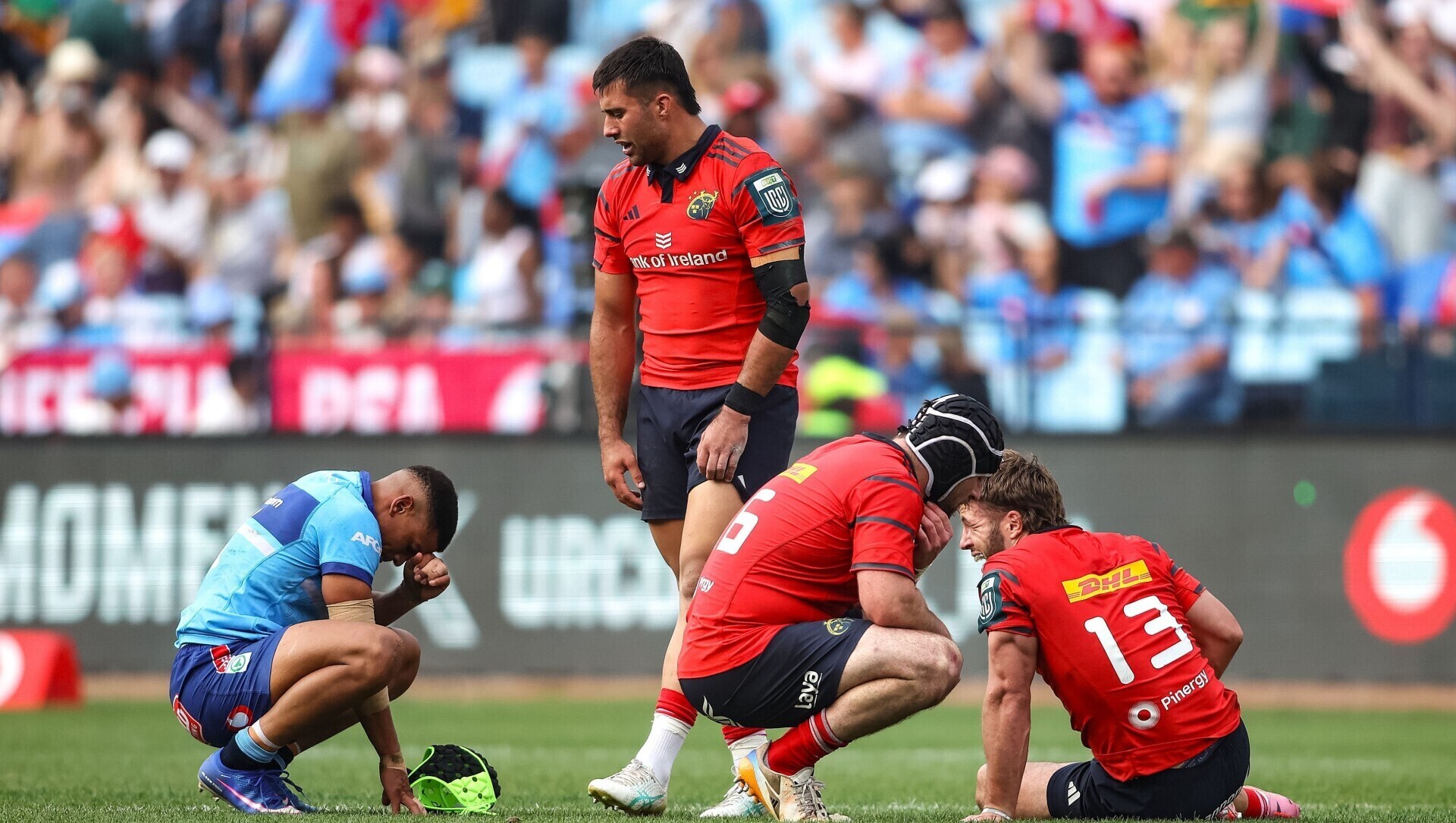
Munster's URC quarter-final defeat to the Bulls summed up their season. Pic: Shaun Roy/Sportsfile
A long-distance flight offers plenty of time for reflection. Clayton McMillan could be forgiven for allowing himself a long exhale on the trek home from Johannesburg last Sunday. It’s been a demanding debut season for the New Zealander at the helm of Munster.
Even for me, it feels appropriate that an end-of-campaign review should be Munster-centric with last Saturday’s URC quarter final exit to the Bulls encapsulating their season to a tee.
Monday’s match report on these pages, penned by Craig Ray, captured the action succinctly. “Munster conceded six tries while three more Bulls scores were chalked off for obstruction and a forward pass. They were beaten up at set piece and in the aerial battle and had little answer to the Bulls' physicality. There was plenty of tenacity and courage, mind, but Munster were sadly outgunned in almost every department”.
Let’s just say, without questioning the desire and commitment of the players to any degree, there’s plenty of scope for improvement within the Munster set up, the most serious of which is required off the field. It’s why I read Munster CEO Ian Flanagan’s recent interview with Simon Lewis of this parish with interest.
Read More

Five weeks after Billy Holland, Mick O'Driscoll and Killian Keane resigned from the Professional Game Committee (PGC) because of the failure to adhere to clearly established protocols surrounding the appointment of New Zealander Roger Randle as assistant coach, Flanagan broke his silence.
After weeks of McMillan fronting up at press conferences and players like Tadhg Beirne, Gavin Coombes and Alex Kendellen also having to answer questions on an ongoing saga not of their making in the lead in to season defining games, why did it take so long for the CEO to publicly address the issue?
When he finally faced the music at least he was man enough to acknowledge the entire fiasco was his responsibility. Other than that, what did I learn from Flanagan’s mea culpa and what assurances were offered to encourage Munster fans that things were about to change sometime soon? In truth, not a lot.
Perhaps that’s what he wanted to achieve in the first place. With due respect, he spoke about rugby issues that he knows little about. In fairness, even he would acknowledge that his skill set and experience is more suited to other key aspects of the role, most notably fundraising, marketing and the organisational leadership side of the house.
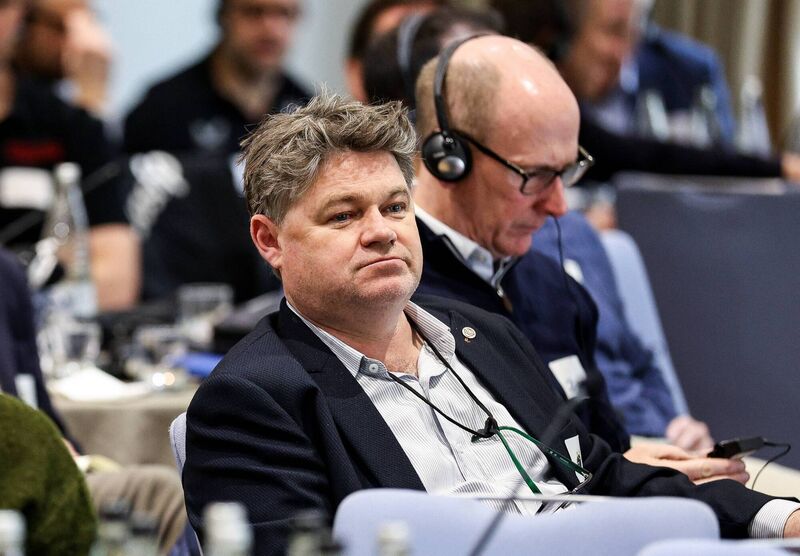
That’s fine. You don’t have to be a horse to judge a horse show. Instead, when it comes to rugby, he continues to place a reliance on a cohort of individuals, some on the professional side of the house, but others on the board of Munster Rugby who operate on an a purely amateur basis, devoting enormous amounts of their time for nothing more than the love of the game.
That’s admirable but the game has moved on. A number of those key decision-makers have been in situ now for over a decade but hold a major influence on the direction Munster has travelled over that period. With the exception of the magnificent URC triumph, against the odds in 2023, rugby in the province has regressed significantly over that period.
As for the review being undertaken by “The Governance Company” I sincerely hope it digs far deeper into the issues that have been central to Munster’s demise over this period and go far beyond the Randle appointment.
With due respect, and without paying a penny for the undertaking, we already know the shortfall surrounding Randle’s appointment was arising exclusively from the failure of Flanagan and general manager Ian Costello to follow well established protocols put in place across all four provinces by the IRFU. Don’t pay a fortune of money at a time when the province is forced to seek a mix of voluntary and compulsory redundancies just to tell us that. Conduct a deep dive right across all the rugby activities that impact on the performance of the Munster team. Identify the key areas that need to be addressed in order to make Munster, at the very least, competitive again.
I’ve spoken to a number of people who’ve either served on the Munster Branch on behalf of their clubs or on the PGC. Their comments are very much aligned. The appetite for change seems to be minimal. That’s a worry.
Flanagan has repeatedly said that funds are available for McMillan to sign high profile overseas players, with New Zealand tight head prop Tyrel Lomax being name checked on a number of occasions. “We’ve tabled an offer for Tyrel Lomax”.
With additional losses in excess of €700,000 expected this season, less money being committed from benefactors and donors than was available in the past, falling attendances and the number of season ticket holders falling, where exactly are these funds going to come from?
The potential signing of Lomax sounds great but, even if he does commit to joining Munster, the earliest the current All Black would become available is December 2027 after the World Cup in Australia. That means Munster having to endure another full season without a top class tight head prop.
If last Saturday’s comprehensive defeat to the Bulls reinforced anything, it’s that Munster don’t have the depth of props required to compete with the big French and South African teams in the URC and Champions Cup. But we’ve known that for a long time now.
Expressing an interest and tabling an offer for Lomax is great but means very little. On that basis you might as well proclaim you’re interested in signing Louis Bielle-Biarrey, Eben Etzebeth or Sacha Fienberg-Mngomezulu. It doesn’t mean they're coming.
What the URC has shown us, time and again, is there’s a surfeit of disruptive props plying their trade in South Africa at present. Munster were dealt a boost before kickoff on Saturday when Springbok tight head Wilco Louw had to cry off to be replaced by a relative unknown in Francois Klipper.
Despite Louw’s withdrawal, Munster were pummelled in the opening scrums of the game. The Bulls were awarded a penalty in the second one after only four minutes, their superiority in that key sector already established with referee Andrea Piardi. After that it was all downhill.
Munster can’t afford to waste another season on the off chance Lomax might sign. The more Munster regress, the less chance there is of top rated overseas internationals committing to signing. All we’re getting now is pure speculation.
In the not too distant past, Munster had the capacity to sign some outstanding South African props in BJ Botha and Tomas du Toit not to mention one of the provinces favourite sons in Argentina’s Federico Pucciariello. If I was Flanagan or Costello I’d be scouring South Africa for emerging young props such as Klipper. They’re certainly out there.
If they cite restrictions on signing non Irish qualified props by the IRFU then what about their talent identification model at home. How were Connacht able to identify and attract two excellent young props from outside the province in Sam Illo, who started ahead of Finlay Bealham in recent outings, and Billy Bohan, the grandson of a proud Currow and Kerry man in former Irish coach Mick Doyle, an Irish U20 just last season. How come Munster failed to attract them?
Of equal concern is Munster’s failure to replace departing players such as Jean Kleyn, Thaakir Abrahams, John Ryan, Niall Scannell and, potentially, Michael Ala’alatoa. As of now, Scarlets hooker Marnus van der Merwe is the only high profile signing confirmed for next season.
While Munster have announced that Jack Aungier will be joining, he’s currently Connacht’s third choice tight head behind Bealham and Illo. There must be concerns surrounding Oli Jäger’s future given the number of concussions he’s suffered while it beggars belief that 28-year-old Roman Salanoa is still on the books given he hasn’t featured for Munster since the URC final three years ago.
Yet, on the recruitment front, the message Flanagan gave Munster fans in that interview sounded far more optimistic. “We want to be as strong as possible, as competitive as possible, and we’re doing everything we can to make the team as strong as possible for next season”. On current evidence, that statement doesn’t hold up to scrutiny.
In addition, the void left on the coaching ticket with Mike Prendergast and Alex Codling leaving is still to be filled. We also have the ridiculous situation where the province’s scrum coach, former Irish international Sean Cronin, operates on a part-time basis in tandem with his role as a Munster development coach. Given the way Munster’s scrum has operated all season that has to be a priority.
One of Costello’s key areas of responsibility in his new role as General Manager is recruitment. It’s why his involvement in the controversial decision to sign Randle propelled him into the public domain. Along with Costello, who does Flanagan rely on for rugby cues and advice?
One of the issues highlighted after Leinster’s most recent Champions Cup final defeat is a lack of clarity on the coaching side of the house given Leo Cullen selects the side and designs the game plan but does little of the on field coaching, something that’s frustrated Jacques Nienaber and Stuart Lancaster before him.
It would be informative if Munster provided some clarification around the exact areas of responsibilities attaching to Costello’s new appointment, particularly around the rugby chain of command. Who is the boss?
Does McMillan enjoy complete autonomy over everything relating to the Munster team? Is he answerable to Costello? If so, what process was in place to appoint Costello to this new, all-embracing role? In relation to filling the vacancies in McMillan’s coaching team for next season, who is calling the shots and what progress has been made?
At a recent press conference McMillan hinted at potential changes having to be made to satisfy him. “As I've said before, a few things that I think need to happen in this team and in the club to give me confidence that we all want the same things, and we're all heading in the same direction.” That sent alarm bells ringing for me.
On a broader basis, referring specifically to what the Munster public expect, Flanagan said “what our supporters really want to see more than anything, is a team that leaves everything on the pitch and is 100% effort and determination and grit. And I think the 80 minutes against the Lions recently (the 24-17 win in Thomond Park that secures Champions Cup rugby next season) were 80 minutes of determination, grit, effort, and hard work”.
I’ve said here many times before that grit and determination, effort and hard work, while admirable and necessary, will win you nothing on a consistent basis. As Craig Ray said in his match report, the Munster players displayed plenty of those characteristics against the Bulls but it got them nowhere. A functioning scrum would prove a far more meaningful starting point.
Despite a number of disappointing results over the course of the season, Flanagan remained optimistic in his interview with Lewis. “We still have a chance of a trophy and we’re going to do everything we can to get past the Bulls and see where that takes us”.
That statement doesn't stand up to scrutiny either when you look at Munster’s travel plans for last weekend’s quarter-final. The squad flew to Johannesburg on the Tuesday before the game, arriving at their hotel base in Pretoria last Wednesday afternoon.
In order to cope with the effects of altitude it’s a well known fact that you either base yourself at the venue a week to 10 days in advance or arrive 24 hours before kickoff, as Munster did in their 34-31 defeat to the Bulls last March, spending the week in Cape Town before heading to Pretoria on the eve of the game.
On this occasion Munster did neither and suffered a harrowing defeat to bookend a season best forgotten.
Underneath the match report from Loftus Versfeld on these pages on Monday, a Munster advert. “We go again. Together. 2026/27 season tickets now available."
So much needs to be done before the demand for season tickets reaches anything like the heights of old. Something has to change.
CONNECT WITH US TODAY



Be the first to know the latest news and updates