Six Nations: the best, the breakouts, winners and top teams
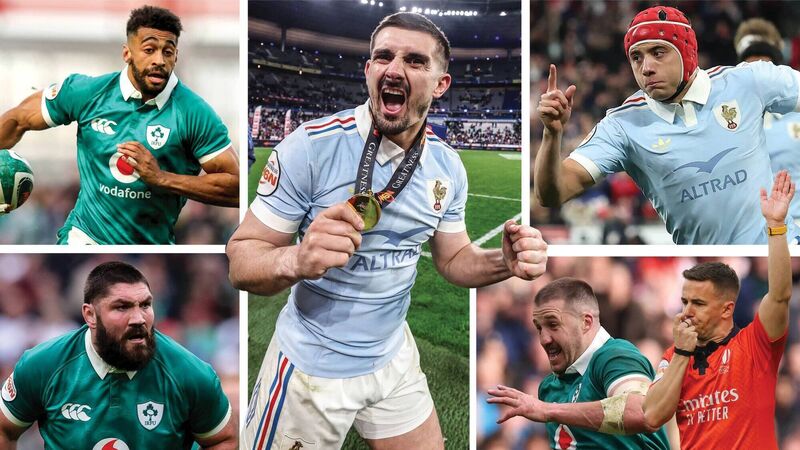
(Clockwise from top left) Robert Baloucoune, Tom O'Toole, Thomas Ramos, Stuart McCloskey, Luke Pearce, Louis Bialle-Biarrey
The hot-shot try-scorer just keeps on keeping on, dazzling all and sundry with his pace, his nerve and his eye for an opening. Four tries against England saw him eclipse his own record for a single tournament: nine this year, eight last year, taking him to 18 tries in 14 Six Nations matches. A winner.
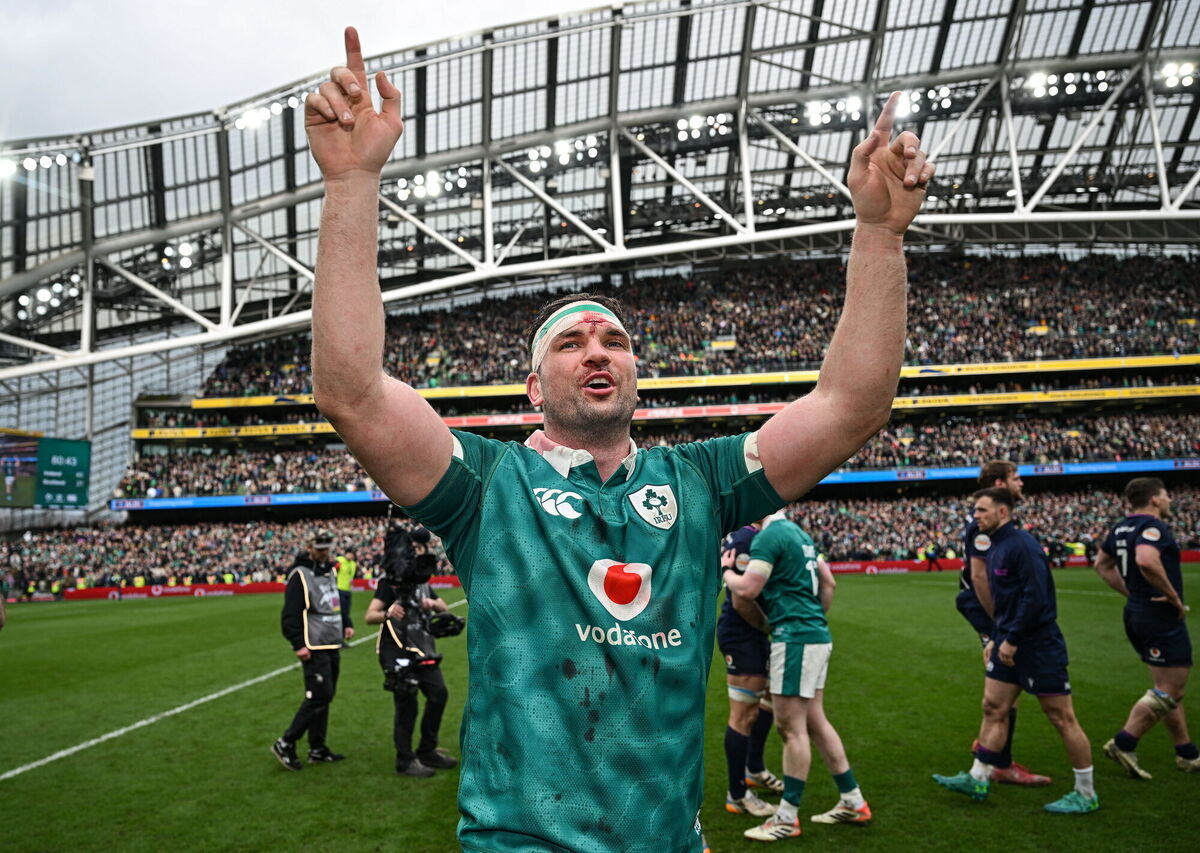
Stuart McCloskey (Ireland). Ok, we’re stretching the definition and never before can the rugged Ulster man have been defined as a Hollywood-type starlet but this has been his breakthrough tournament. Injury and suspension gave him the opportunity and the uncompromising 33 year old took it with both hands, the Peter O’Mahony of the back line.
: Luke Pearce (RFU). No-one would take issue if the choice had been Hollie Davidson after she became the first woman to referee a men’s Six Nations match when taking charge of Ireland against Italy. But Pearce gets the nod for his unfussy, measured handling of the Triple Crown decider. It was how referees used to be – unnoticed.
Read More
Yes, he did, massively so. There had been so much talk of Ireland being over the hill, especially so after the opening night trauma at the Stade de France yet Farrell showed he still has so much to offer this group, rousing them to near-title levels of performance, using 35 players and so strengthening Ireland’s depth.
Tadhg Beirne. The blue head guard of the Munster forward was a constant throughout the tournament, a barometer of how Ireland were faring. If you saw a lot of it, as you did against Scotland, then you knew that Ireland were on the move with Beirne influential either side of the ball.
Rob Baloucoune. The Ulster wing had shown promise at provincial level but by the time the final whistle sounded at the Aviva Stadium Saturday, Ireland followers knew that the succession planning for the wing berth had borne fruit. Baloucoune has pace and footwork, a threat in whatever company.
Biggest Frustration: Our dear old bug-bear, the Television Match Official. As with VAR in football, the TMO is still too present, too influential. Luke Pearce showed how it should be used in the game against Scotland, with minimal reference to the man in the TV truck.
Thomas Ramos (France), Robert Baloucoune (Ireland), Tommaso Menoncello (Italy), Stuart McCloskey (Ireland), Louis Bialle-Biarrey (France) Finn Russell (Scotland), Jamison Gibson-Park (Ireland; Rhys Carre (Wales), Dan Sheehan (Ireland), Joe Heyes (England), Mickael Guillard (France), Tadhg Beirne (Ireland), Ollie Chessum (England), Rory Darge (Scotland), Lorenzo Cannone (Italy).
A few contenders including Stuart McCloskey, but tries win matches and in the case of France wing Louis Bielle-Biarrey tries win Championships. He had work to do every-time he got the ball and did so with lethal effect.
: Can you be a starlet at 28? Rob Baloucoune is and was during his maiden 6 Nations campaign. Exciting with ball in hand and a top quality finisher, ask Darcy Graham for further info..
Only one referee had the opportunity to referee more than a single game in the 2026 edition of the 6 Nations. That gave us a good chance to check out the standard of match official. He stood out, Luke Pearce, firm, no fuss, top class communicator and fair to both teams when in charge. Honourable mention for Holly Davidson also, wrote her own piece of history.
After the poor opening to the Championship, Ireland won their next four. Somewhat inconsistent but impressive at the same time. Away to England was top quality bettered only by the Triple Crown winning performance against Scotland. Squad depth tested but expanded.
: Stuart McCloskey, consistent throughout, tied up defenders, made hard yards, range of passing to help others shine. Now a central part of the Ireland mid-field. Others shone because of him.
I Tom O'Toole, seemingly drifting along in most peoples minds, down the pecking order at tight head and loose head, always outside the top three for each position. Suddenly an injury crisis and TOT comes to the rescue, lacking experience we were told, he answered that with his performances.
Lack of consistency from match officials and TMO's. A slight knock on can be spotted in the build up to a try yet a finger poking player can't – despite the camera angles available. Ridiculous. Someone needs to take charge of the camera replays, it's not up to the discretion of a TV Director whether we can see something or not. Replays of serious incidents are more important than "cutaway" shots of spectators or former Internationals.
Jersey gate in the France v England game. Sky Blue v White does not make for good viewing. May have looked ok at the match venue, not so on TV. Also, jersey numbers should be clear to see and not faded into the shirt colour. Think of the fans, after all they pay a lot of money to see the games.
Thomas Ramos (France), Rob Baloucoune (Ireland), Tommaso Menoncello (Italy), Stuart McCloskey (Ireland), Louis Bielle-Biarrey (France), Finn Russell (Scotlland), Jamison Gibson Park (Ireland); Rhys Carre (Wales), Julien Marchand (France), Simone Ferrari (Italy), Daffyd Jenkins (Wales), Thibaud Flament (France), Tadgh Beirne (Ireland), Ben Earl (England), Caelan Doris (Ireland).
Louis Bielle-Biarrey. Four tries against England in Saturday’s Six Nations’ decider; a record nine in the tournament; 17 across the last two, in which he has scored in every match he’s played; 18 touchdowns in a total 14 Six Nations outings, and fifth on the tournament try-scorers’ list. He’s 22.
Theo Attissogbe. Damian who? France’s other winger, who’s 21 by the way, silenced January’s derisive howls of disbelief at his selection ahead of Penaud, scoring five times to finish second on the try-scorers’ list. A shout-out, too, for two ‘slow breakout’ stars of 2026, Ireland’s Tom O’Toole and Robert Baloucoune.
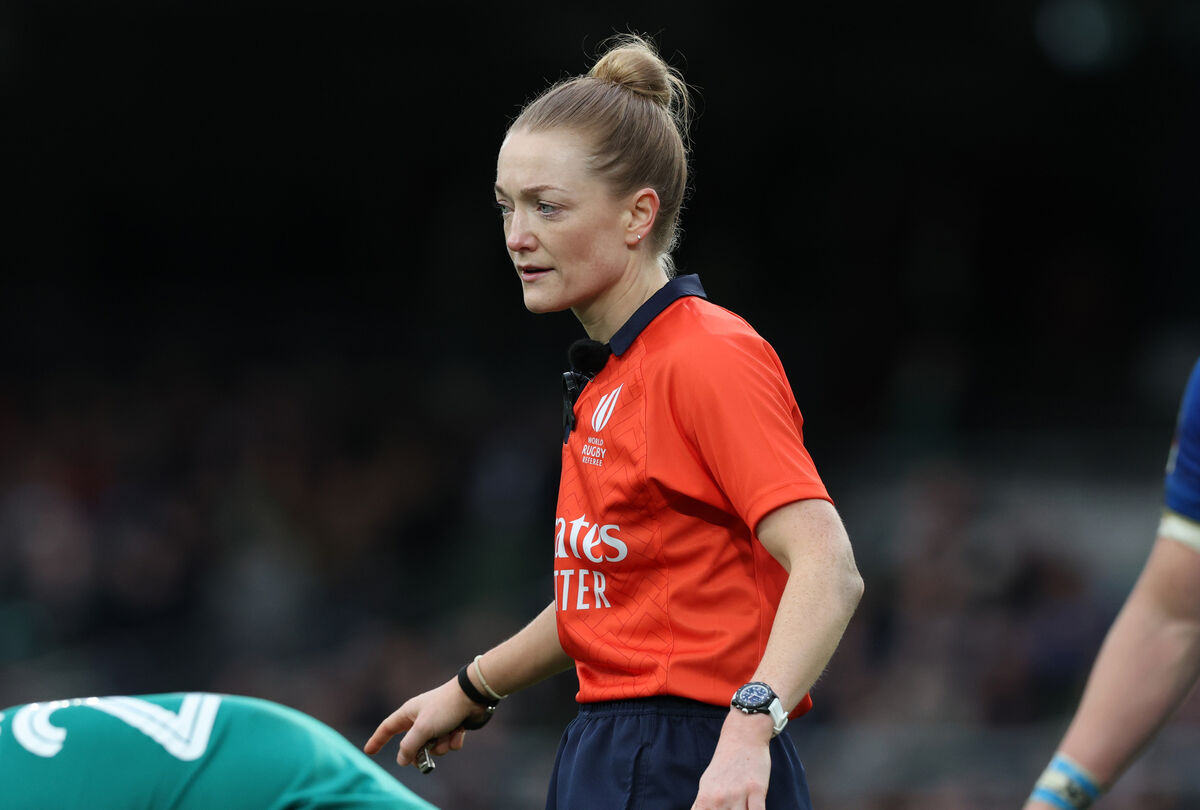
Hollie Davidson. As she has done at every stage of her pioneering career so far, Davidson handled everything about her Six Nations’ central refereeing debut with calm and understated assurance, from the hype surrounding her appointment for Ireland-Italy, to every minute of the match itself.
: Ireland’s improving scrum, without several key players, as the Six Nations went on will be a particular positive that the coaches will want to highlight in the post-tournament debrief. Without three frontline loosehead’s John Fogarty and the players worked hard and successfully to eradicate their early issues, leading up to a strong performance up front against Scotland.
Read More
Jack Crowley. The debate about Ireland’s fly-half pecking order is over — until late June at least. Munster’s 10 took the chance offered by Sam Prendergast’s travails against France and Italy and grew into his role as the tournament progressed. He and Gibson-Park now need plenty of minutes before Australia 2027.
It might have been the kit clash in the France-England game. But it's the thought that Super Rugby wants to tinker with rugby’s laws in the name of ‘fan-focused’ ‘entertainment’. Honestly, if any sports-body issues a statement that includes the term ‘fan-focused’, it’s a cue to run away. The template to follow is the wildly entertaining and competitive Six Nations we’ve just seen, guys.
Rhys Carre’s try against Ireland. Wildly entertaining from beginning to end, the Welsh loosehead’s Cheshire Cat charge to the line — for his third touchdown of the Six Nations — quickly became a deserved viral highlight in a thoroughly enjoyable tournament that was packed with viral moments. On French TV, the commentators could do little but chortle in Gallic admiration.
Thomas Ramos (France); Theo Attissogbe (France), Tommaso Menoncello (Italy), Stuart McCloskey (Ireland), Louis Bielle-Biarrey (France); Finn Russell (Scotland), Antoine Dupont (France); Rhys Carre (Wales), Julien Marchand (France), Simone Ferrari (Italy) Charles Ollivon (France) Tadhg Beirne (Ireland), Francois Cros (France), Rory Darge (Scotland), Caelan Doris (Ireland).
French wing Louis Bielle-Biarrey, whose four tries at Stade de France set the stage for Thomas Ramos to kick his team to title glory. The Bordeaux star, still only 22, had an outstanding campaign, topping the try-scoring charts with nine and continuing his try-per-game streak to a 10th consecutive Six Nations match. Phenomenal.
Theo Attisogbe may have played second fiddle to his fellow France wing Bielle-Biarrey but the Pau flyer, a year younger than the Bordeaux man at 21, contributed five tries to the title-winning cause as well as matching Antoine Dupont and Emanuel Meafou for offloads with six.
A difficult one to gauge given only two, Karl Dickson and Nika Amashukeli, took charge of more than one game but plaudits to Scotland’s Hollie Davidson for becoming the first female official to take control of a men’s Six Nations fixture when she took the whistle for Ireland v Italy in round two.
Absolutely. Using 35 players has broadened experience in so many positions and deepened his squad’s preparedness for the World Cup. He unleashed two genuine speedsters in wings Rob Baloucoune and Tommy O’Brien, has discovered a prop in Tom O’Toole who is comfortable on both sides of the scrum and also seen Jack Crowley blossom at fly-half after a much-needed run at number 10. So many boxes ticked.
Stuart McCloskey, hands down. And what hands. For all his power, the inside centre has a wide array of passing and offloading skills that produced a team-high six try assists. McCloskey also led Ireland’s charts for offloads (8), defenders beaten (20), dominant contacts (18), post-contact metres (105) and tied Tadhg Beirne with eight turnovers each.
Aside from the aforementioned Baloucoune, Crowley, McCloskey and O’Brien, Jamie Osborne’s emergence as a potential full-back in the absence of the injured Hugo Keenan is a big bonus for Andy Farrell. Osborne’s best position is probably at centre but his eye for a try brings an added dimension to the 15 jersey.
As good as the atmosphere was at the Aviva last Saturday, the failure by Ireland supporters to take their seats before their team runs out is a regular irritant. Every other stadium in the Six Nations is bouncing long before the players take to the field yet Ireland emerge to banks of empty seats in every section of the ground.
Referee Luke Pearce, heard over the RefLink microphone, admitting to an unknown techie that he had left his whistle in his tracksuit pocket. That this discovery was made after the national anthems and moments before kick off between Ireland and Scotland at Aviva Stadium only heightened the match official’s anxiety.
Thomas Ramos (France); Rob Baloucoune (Ireland), Tommaso Menoncello (Italy), Stuart McCloskey (Ireland), Louis Bielle-Biarrey (France); Mathieu Jalibert (France), Jamison Gibson-Park (Ireland); Danilo Fischetti (Italy), Giacomo Nictoera (Italy), Simone Ferrari (Italy); Mickael Guillard (France), Tadhg Beirne (Ireland); Charles Ollivon (France), Caelan Doris (Ireland), Lorenzo Cannone (Italy).
Hard not to plump for Stuart McCloskey here but Louis Bielle-Biarrey scored nine tries, including four on the last day. Jacob Stockdale got this honour in 2018 for scoring one less. The Bordeaux wing claimed a score in every one of the five rounds for a second year in a row. A try-scoring machine.
It really does have to be 28-year old Robert Baloucoune. The Ulster wing hadn’t earned a cap since November of 2022 before this tournament and he has been sensational. Three tries were just the start of it. A player whose speed, athleticism, game intelligence and defensive prowess add massively to the team.
There were 13 used across this year’s tournament, including Hollie Davidson who was the first woman to take the whistle. Only two officiated more than once with Karl Dickson taking France-Ireland and Ireland-Wales and Nika Amashukeli in charge of Scotland-England and France-England. Luke Pearce was excellent in the Aviva last Saturday.
: Huge, with 35 players used and eleven of them playing Six Nations for the first time. He has a brand new back three, McCloskey and Baloucoune have added a new dimension and a freshness, Tom O’Toole could be invaluable across the front row come the World Cup... The list goes on.
It has to be McCloskey, the ‘Irish Fridge’, whose six try assists were only the tip of the iceberg. Baloucoune was immense as well and there were others in Tadhg Beirne, James Ryan, Jamison Gibson-Park and Caelan Doris. Apologies to those omitted.
Tom O’Toole. The Ulster tighthead wasn’t even in the squad in November but the loosehead injury crisis allowed Andy Farrell to go with his long-held idea of using him on the loosehead side. He grabbed it with both hands. The sort of guy worth his weight in gold at a World Cup.
Nothing. Absolutely nothing. Worries over rugby going to hell in a hand cart were rife before it all started but the dreaded box kick became less of a staple as it went on. So much of the rugby was just top class. France starred, Ireland looked reborn by the end, Scotland did their bit, Italy were class at times and Welsh improvement finally delivered a win. Even England turned up in Paris. What’s not to like?
That jersey clash in Saint-Denis last weekend. And England’s fans mock-cheering George Ford for finding touch with a penalty kick after he’d missed two easy efforts earlier in the game against Ireland. It was tough on Ford, who has given such sterling service, but all too symbolic of how a side that won 12 in a row was disintegrating in front of our eyes.
T Ramos (France); R Baloucoune (Ireland), H Jones (Scotland), S McCloskey (Ireland), L Bielle-Biarrey (France); F Russell (Scotland), A Dupont (France); D Fischetti (Italy), J Marchand (France), S Ferrari (Italy); C Ollivon (France), T Beirne (Ireland); A Wainwright (Wales), C Doris (Ireland), L Cannone (Italy).
Thomas Ramos. After his late Parisian heroics, in the final play of the championship, it’s time to put some respect on this legend's name. “Mr. Clutch”, as Simon Zebo dubbed him, has been a mercurial kingpin in a backline that also features two of the best players of this generation.
Robert Baloucoune: A late talent is better than one never uncovered. After years in and out of contention with Ireland, Ulster’s Robert Baloucoune announced himself onto the international stage with his blistering pace helping him to nab three tries and an assist in his four explosive starts.
Angus Gardner: In a year where Hollie Davidson made history and both injuries and travel chaos disrupted selection, one man reminded us of where he is at his best. Angus Gardner’s hands-off style facilitated one of the all-time Six Nations classics between Scotland and France, showing us how test rugby should look.
Absolutely! It’s better to be a lucky general, and even the rain turns to stunning sunshine for Andy Farrell. Without upwards of 10 first choice options pre-tournament, Farrell was forced to use 35 different players, his most ever in a Six Nations Championship, and reaped great reward as Ireland hit their usual table heights, while unearthing a few hidden gems in the process.
Stuart McCloskey: The talismanic Ulster centre was at his brilliant best in this tournament, tying Matthieu Jalibert with a tournament leading six assists, and coming up with massive defensive plays, none more so than his now famous cover tackle on Marcus Smith.
Tom O’Toole: A beneficiary of injuries at loosehead prop, Tom O’Toole’s seamless transition across puts him in prime position to make the touring squad to Australia. A standoff regarding his best position is expected to rumble on between club and country, but if performances continue, O’Toole will make his second World Cup.
Neil Diamond in Dublin: Call me an old contrarian, but my main gripe is not new. At a time where ticket prices continue to soar, there was something utterly demoralising to see the Aviva Stadium’s loudest vocal renditions versus Scotland come for ‘Sweet Caroline’; a poor reflection in comparison to our French or Scottish counterparts. More Fields of Athenry, Zombie or even Ireland's Call please.
Andrea Piardi’s injury: The Italian referee might not be a fan favourite, but he still made a major impact on his sole game this tournament. Piardi pulled up injured in the first half of Ireland’s win over England, giving us the now famous “my quad is gone” line as he made way for Pierre Brousset. A game so fast, even the officials were casualties.
Thomas Ramos (Fra), Rob Baloucoune (Ire), Tomasso Menoncello (Ita), Stuart McCloskey (Ire), Louis Bielle-Biarrey (Fra), Finn Russell (Sco), Antoine Dupont (Fra); Rhys Carre (Wal), Julien Marchand (Fra), Simone Ferrari (Ita); Dafydd Jenkins (Wal), Tadhg Beirne (Ire); Oscar Jegou (France), Rory Darge (Scotland), Caelan Doris (Ireland).
CONNECT WITH US TODAY



Be the first to know the latest news and updates