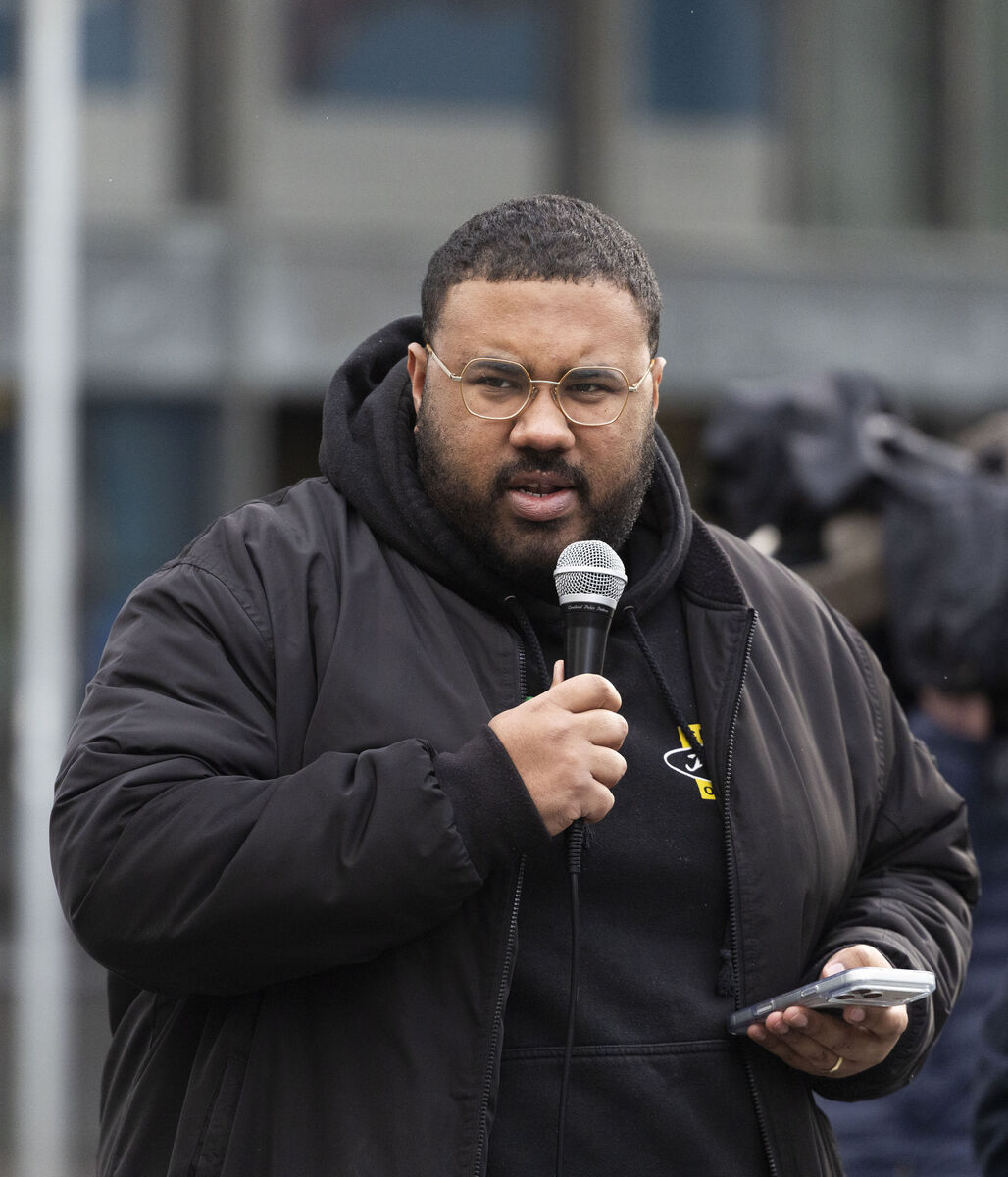
Emer O'Neill: I was born here. I represented Ireland — when will I be Irish enough for the racists? 
Yves Sakila's death after an alleged attempted theft inspires EMER O'NEILL to ponder racism in Ireland — against immigrants, certainly, but also against black Irish people
Emer O'Neill: I was born here. I represented Ireland — when will I be Irish enough for the racists? 

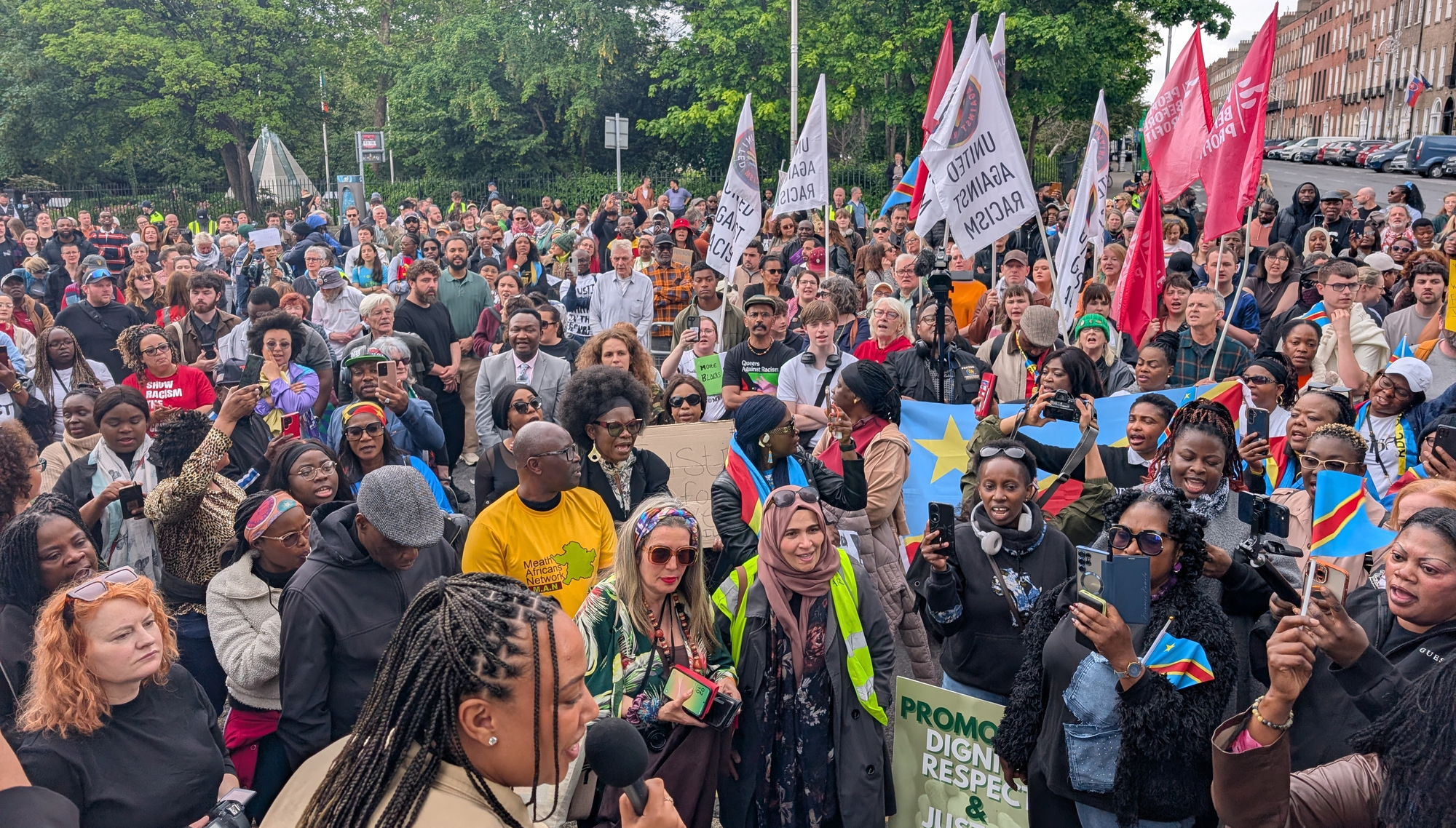
A protest last Thursday outside Leinster House, Dublin, over the death of Congolese man Yves Sakila following an incident with security guards at a Dublin department store. Picture: Cillian Sherlock/PA

Thursday, May 21, 2026, is a day many people in Ireland will not forget.

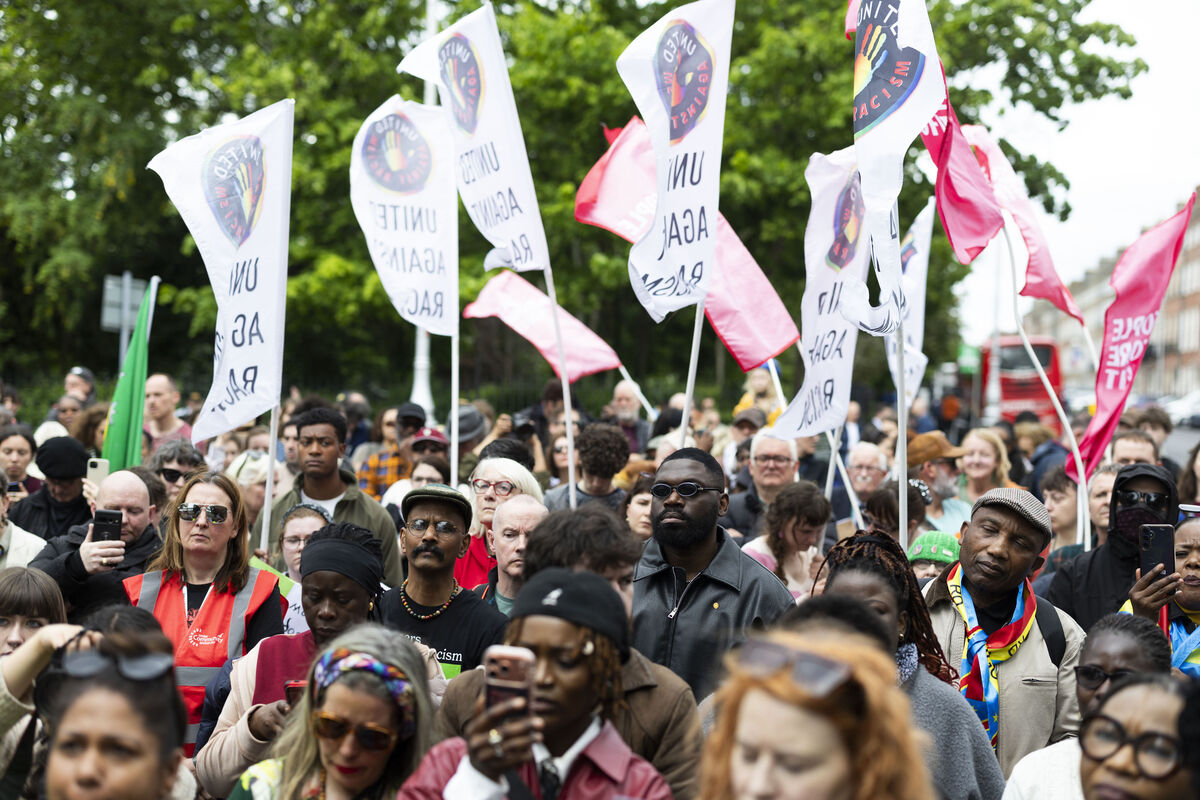
Outside the Dáil, hundreds of people stood together in outrage, grief, and solidarity after the death of Yves Sakila, a Congolese-born man who had called Ireland home since he was a teenager.

He died after being restrained on Henry St in Dublin following an alleged shoplifting incident on Friday, May 15.

How does an alleged theft end in death?

The question many people are asking is simple: How does an alleged theft end in death?

The investigation has now been referred to Fiosrú, formerly known as Gsoc, the independent police oversight body. The security company involved has also said it is carrying out a review. Those processes are important.

Emer O’Neill. File picture: Andres Poveda/RTÉ

But so too are the wider questions many people in Ireland are now asking around de-escalation, racial profiling, cultural understanding and sensitivity, mental health crisis response, and the training given not only to gardaí but to private security staff operating in increasingly tense public spaces.

These are not anti-Irish or anti-garda questions. They are necessary questions.

Social media — and Bertie Ahern

And yet, within hours of Yves’s death, social media once again became flooded with comments debating whether black people belong in Ireland at all.

It is also difficult to ignore former taoiseach Bertie Ahern’s comments regarding “the Africans” and “people from the Congo”, and the fundamental damage language like that can cause when spoken by people in positions of influence and power.
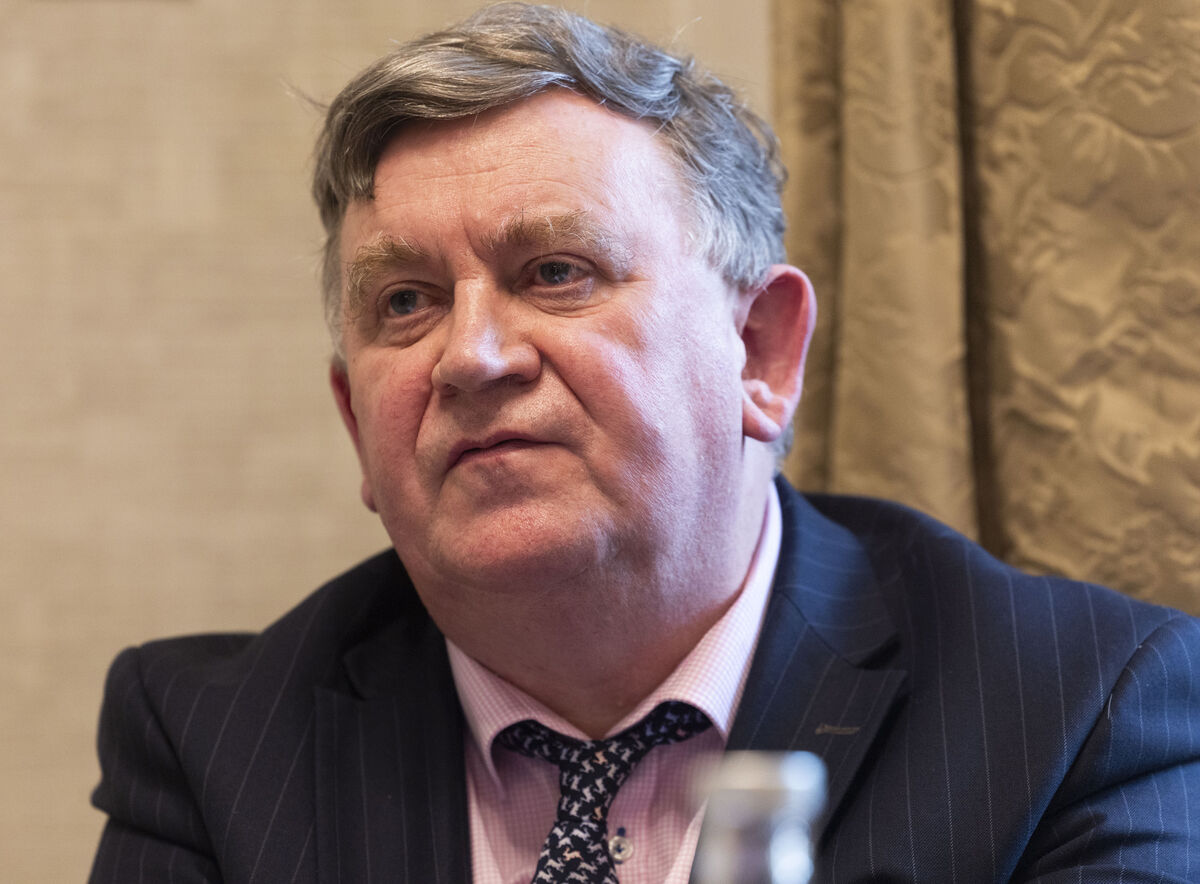
John Cullen, a solicitor representing the family of Yves Sakila, speaking in Buswells Hotel on Thursday about his death. Picture: Sam Boal/Collins

Too often these moments are minimised as simply “inappropriate” instead of honestly examining the deeper impact they have on communities already struggling to feel safe, accepted, and fully Irish.

Jim O’Callaghan’s labelling of the comments in the leaked Ahern video as “an unfortunate coincidence” could be called a perfect example of the lack of understanding of how racialised language and political rhetoric shape public attitudes.

Dignified protest 

What struck me most at the protest was not only the grief but the dignity within it.

I watched members of the Congolese and wider African community cry openly, pray together, sing traditional Congolese songs, and comfort one another.

People from every background stood side by side: White, black, brown, Irish-born and not. People who may disagree on politics but who understood something very basic: A man is dead, and people are hurting.

Racism is right at home in Ireland

When George Floyd was murdered in 2020, many people in Ireland insisted that racism was an American problem.
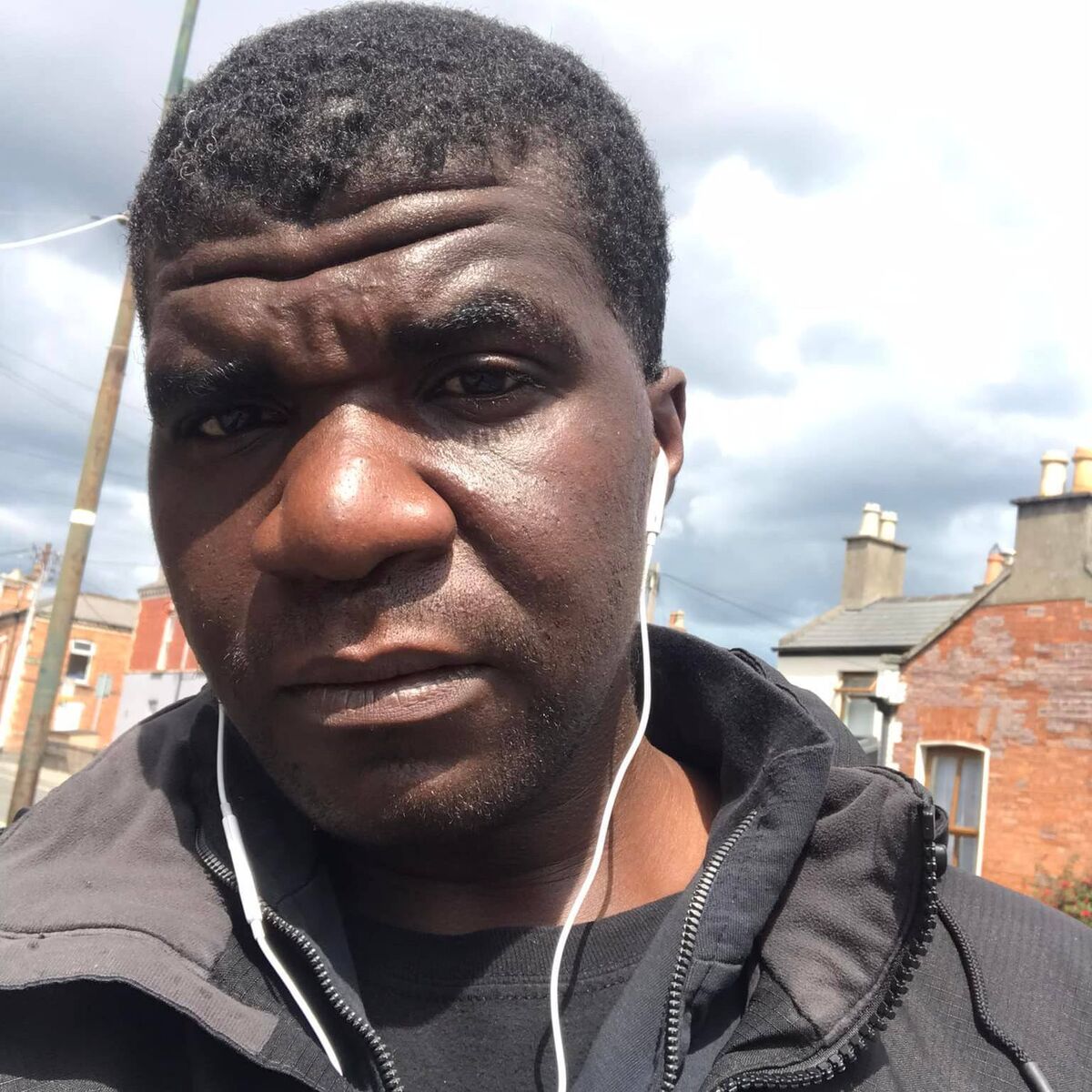
Yet, during that same period, my own family was experiencing racial harassment here in Ireland, and I spoke about this publicly on Claire Byrne Live at the time.

Congolese-born Yves Sakila, who had called Ireland home since he was a teenager, died last week following an incident with security guards at a Dublin department store. File picture: Facebook

My son was approached by young boys and told his father was George Floyd. He was only a child.

Now, six years later, we are seeing an escalation in the type of racist rhetoric being experienced by ethnic minority communities across Ireland.

Progress has been made in Ireland, of course it has, but not quickly enough. Not deeply enough. And certainly, not honestly enough.

Hate crime legislation and online safety legislation are important steps, but many people still question whether the laws are being implemented strongly enough and whether meaningful accountability is truly being felt.

One only has to look at the racist abuse directed towards black, brown, and mixed-race public figures in Ireland, from broadcasters to athletes to public representatives, to see how normalised this hostility has become.

Following my own broadcasting work during RTÉ’s St Patrick’s Day parade coverage, I received comments telling me to “go back to your own country,” that I was “not Irish”, and even one stating that “only half of her is human”.

Ireland has seen this kind of othering before.

Listen to black Irish voices

At Thursday’s protest, Leon Diop held the audience and spoke on the importance of unity with compassion and restraint, while activist and community leader Jude Hughes — born in the 1940s and raised through the era of mother and baby homes and industrial schools — spoke movingly at the protest about the danger of scapegoating vulnerable communities during times of national frustration and economic hardship.

 A file photo of Leon Diop speaking at a rally outside Store St Garda Station after the death of George Nkencho who died on December 30, 2020. Picture: Collins
A file photo of Leon Diop speaking at a rally outside Store St Garda Station after the death of George Nkencho who died on December 30, 2020. Picture: Collins

Historically, Irish people themselves knew what it meant to be othered: “No blacks, no dogs, No Irish.”

The “blacks of Europe” remains etched into the collective memory of this country and its diaspora.

Yet now, in moments of fear and instability, we risk repeating the very behaviour that once wounded us so deeply ourselves.

On a purely practical level, how can immigration alone be blamed for problems that began long before recent migration patterns following the collapse of the Celtic Tiger in 2008?

I understand that many people in Ireland are angry, frightened, exhausted, and feel politically voiceless.

But marginalised communities are too often used as distractions while the deeper structural failings that affect housing, healthcare, disability services, and social inequality remain unresolved.

Earlier this week, before the protest, I attended a Coimisiún na Meán conference on gender, equality, diversity, and inclusion, where I listened to Traveller singer Sharyn Ward perform sean-nós singing.

There was something ancient in her voice.

Something mournful and familiar. It awakened something in me.

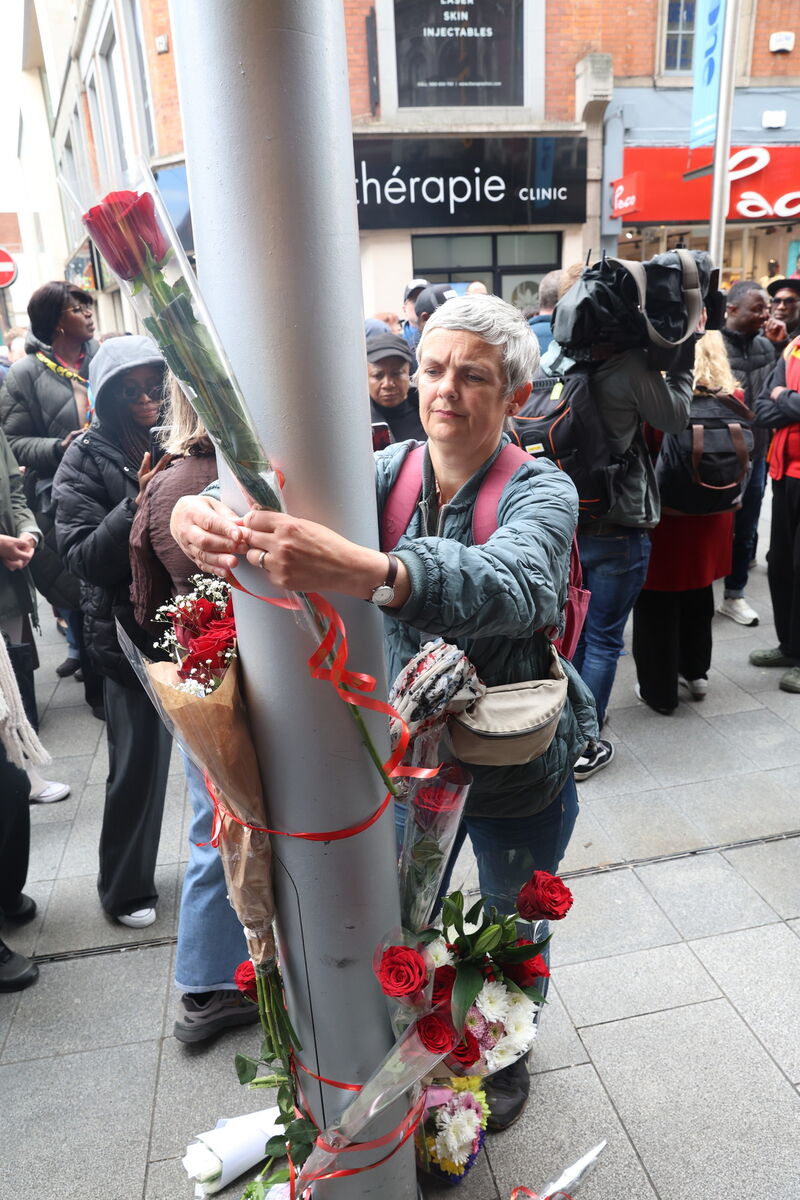
One of the people taking part in Tuesday's protest on Henry St in Dublin following the death of Congolese-born man Yves Sakila. Picture: Stephen Collins/Collins

Many Congolese and West African vocal traditions share a similar role to sean-nós singing: Storytelling carried through grief, spirit, and survival.

Though born in different cultures, both traditions use song not simply as performance but as memory, mourning, and connection.

That feeling stayed with me and inspired me to sing publicly for Yves at the protest, simply as a human being grieving alongside others.

I was visibly nervous as I sang. My hands trembled. My voice cracked. At times I sang off key.

But I made it to the end, for Yves, for every community that has ever felt othered, unseen, or pushed to the margins.

At what point does somebody become Irish enough to belong without question?

Why am I questioned about my Irishness?  

As an Irish speaker myself, a bodhrán and tin whistle player, educated here, raised my children here, and earned over 20 caps representing my country, with my mother from Ballindaggin, Wexford, if I am still questioned on my Irishness, what chance does any other person of colour have?

As a teacher, one of the first things we learn is that children need a sense of belonging in order to develop safely and confidently.

Psychologically, belonging is foundational. So I often wonder what happens to a child who grows up constantly hearing that they do not truly belong in the place they call home.

I think often about a picture that hung in my mother’s room when I was growing up. It was of two children, one black and one white, arms wrapped around each other in friendship.
No labels. No hierarchy. Just children. 

Looking back now, I think that was my mother’s quiet way of teaching me something she perhaps did not yet have the language for herself: That we are the same but different.

Protesters outside Leinster House in the wake of the death of Yves Sakila. Picture: Sam Boal/Collins

Ireland is changing. It already has changed. 

The question now is whether we are capable of allowing our understanding of Irishness to grow alongside it, while still protecting the beauty, culture, and identity that make Ireland what it is.

Because there are children in this country right now, black children, brown children, Traveller children, migrant children, children from every background, trying to figure out where they belong.

'No need to ask permission' 

Trying to understand whether this country sees them fully. Trying to decide whether they are allowed to claim Ireland as their own.

I hope one day they no longer feel the need to ask permission.

Ní neart go cur le chéile. There is strength in unity.

Agus sin é.

More in this section