Fergus Finlay: Nothing will ever change while the Government sits on the sidelines
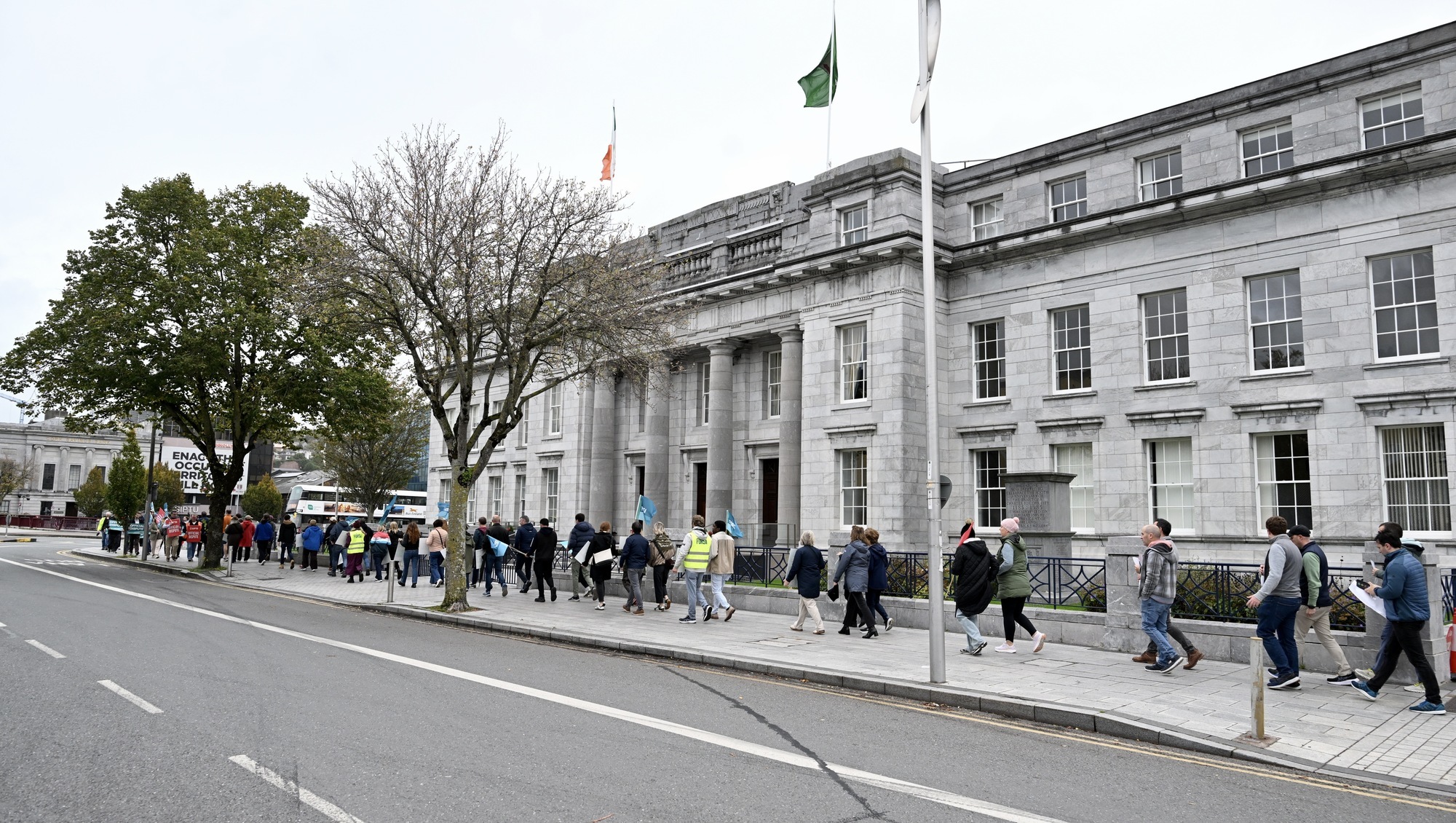
Public sector workers picket at Cork City Hall, Anglesea Street, Cork City, last week. It seems that our elected government has chosen a bystander’s role in the talks process around public sector pay. Picture: Larry Cummins

I’m a bit mind-boggled. And I’m not even sure if that’s a word. It appears that long-awaited and long-demanded pay talks between public servants and their employer are starting this week. Except they’re not.
If they were, we’d have seen the public sector union leaders arriving at Government Buildings for a sit-down with relevant Government ministers, led by the Taoiseach, and welcomed around one of those long tables in the main meeting room on the first floor. (That room used to be called the Sycamore Room, because that’s what the table was made of. I haven’t been there for a while, but I presume it still is).
After the niceties, there’d have been an hour or so agreeing on the agenda for the talks, and an agreement about structures. Sub-committees would have been set up, and they’d all be assigned tasks — one to deal with basic pay issues, one to deal with productivity measures, and maybe one to deal with issues such as recruitment, early retirements, and the like.
That would have been it for the first day, really. There’d have been cameras at the plenary session, and doorstep interviews where both sides stressed the importance of the issues at hand and how hard they’d work in the national interest to reach an agreement.
And then the process would have got down to business, with everyone reassured that the Taoiseach and the Government were managing the situation and looking for the right balances on our behalf. Which is what we elected them to do.
None of that has been visible.
What we’ve seen instead is a three-person team welcoming the trade unions, presumably into a nice big room in the Workplace Relations Commission, because apparently “there is a need to rebuild trust and confidence in industrial relations in the public sector by addressing commitments made in the context of the previous agreement".
Neither the Taoiseach nor any of his ministers were present in any sort of leadership role. I sort of know who the three-person team is (and actually they’re all highly respected people in their own right), but I don’t remember electing any of them.
I don’t even know what they look like. I don’t know (though I have a suspicion) who broke the trust and confidence that now needs to be rebuilt.
What does seem clear, though, is that our elected government has chosen a bystander’s role in the process. They were bystanders in the run-up to last week’s industrial action, and seem content to stay that way.
Civil servants will tell the three-man team what’s possible and what’s not, and in turn will tell the Government what it might have to stump up in the end.
Ultimately, I suppose, the Cabinet will have to decide on the shape of the final package.
But we shouldn’t try to pretend that Government by anonymous committee is leadership. Instead, our leaders have allowed a process to emerge that they will follow but be involved in as little as possible.
If there’s a breakdown in the process, it will be referred to another third party of distinguished anonymous people. Of course if there’s a breakthrough, there’ll be no shortage of government ministers ready to swoop in and claim the credit.
Maybe I’m wrong, but I don’t ever remember any government as disengaged as this one in a centrally important national process.
We’ve had all sorts of national pay agreements in the past, and I can remember a string of taoisigh going back to Fitzgerald and Haughey playing major roles at every level.
Nowadays it’s find three wise people and set up a process.
And not just in this area. The criminal legal aid scheme is on the brink of collapse. There have been delays in rape cases, sexual assault cases, and child custody cases — and little sign of any of those cases being resolved soon.
That leaves people — both perpetrators and victims — in limbo. If you’ve been the victim of a sexual assault, and you’re being told the case isn’t going to come on because, effectively, of an industrial action, that can have a deeply traumatising effect.
Children at risk who have to wait for a solicitor to turn up are in jeopardy.
The only person who can solve this is the justice minister. His position is simple. I’m right, you’re wrong, this dispute is unnecessary, and I won’t talk to you about it.
Do leaders refuse to talk? Do leaders refuse to defend their positions in dialogue? Or listen? Not any decent leader I’ve ever come across.
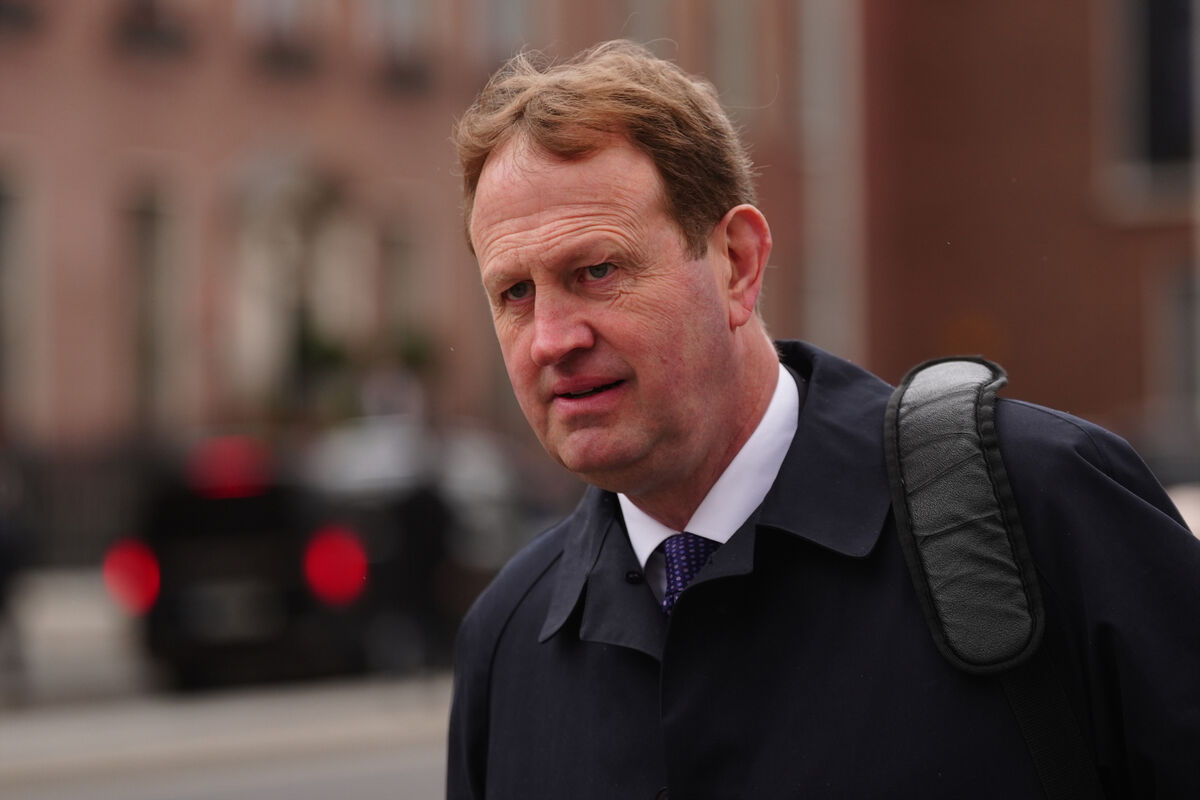
So Jim O’Callaghan’s refusal to engage in a face-to-face meeting with the president of the Law Society reflects very poorly on him — and will, I suspect, be remembered at any time in the future by anyone assessing his credentials for political leadership.
The worst word you could choose to characterise the way the Government is carrying on is leadership. A better word might be indolence.
And that’s exacerbated, if that’s possible, by this Government’s addiction to process.
Here’s another example.
From time to time in Ireland we need deep examinations or inquiries into scandals. It might be about historic sex abuse, financial wrongdoing, medical malpractice, or something equally concerning to the broad public interest.
Most governments in my memory would write the terms of reference (not always as well as they should have) and set up the appropriate enquiry.
Nowadays, and in the new tradition of indolence, a scoping enquiry happens first. A very (very) distinguished lawyer is appointed. That person labours mightily (for a long time), interviews all sorts, and then sends a report to the Government that says two things.
First, what should be inquired into. Second, what should be the process. These are both precisely the questions to which the Government effectively knew the answer before it asked the very distinguished lawyer the questions.
But it was afraid of being accused of getting it wrong. So it asked the lawyer instead. The only real effect was to lengthen by a year or so the timeline within which the people damaged by whatever scandal we’re talking about might start getting answers to their questions.
There’s one other effect, of course. Adding layers of process to necessary decisions undermines confidence in general. People now believe that if you really want the truth to come out, don’t rely on a lazy and indolent government to bring it to you.
Just as you shouldn’t rely on a lazy and indolent government to face up to its responsibilities to change bad law.
This Government, like its predecessors, knows the two worst pieces of legislation we have. The Education for Persons with Special Educational Needs (EPSEN) Act, and the Disabilities Act 2005. It knows both acts stink to high heaven.
So is it going to change them? No. It's going to take a couple of years to review them. Then we’ll see. Maybe.
These are all tragedies. Especially for someone like me who believes in the power of political leadership to change the world for the better. But you’ll never change the world by sitting on the sidelines.
And this Government, I’m afraid, does far too much of that.
CONNECT WITH US TODAY



Be the first to know the latest news and updates