Fergus Finlay: Government’s failure to lead is to blame for public sector strikes

A letter from the CEO of a major hospital group to everyone employed in the hospitals said: 'Teams will continue to provide care to our inpatients throughout the period of industrial action.'

This week, I read a letter from the CEO of a major hospital group about the consequences of impending industrial action.
The letter was to everyone employed in the hospitals, and it was very clear. “Our priority is the safe care of patients in our hospitals. Teams will continue to provide care to our inpatients throughout the period of industrial action.”
The CEO acknowledged that there would inevitably be disruption and delays to treatments, but that work would be done to minimise that where possible.
And the letter concluded: "This is a national dispute, and we respect and support our colleagues exercising their right to take industrial action. We appreciate your continued professionalism and commitment to the patients and families we care for during this period.”
That’s an interesting approach, isn’t it, to an imminent strike over which the immediate employer of the strikers has no control? Its tone is urgent and centred on the needs of patients, who will be the innocent bystanders in this dispute.
Read More
But it’s also respectful and supportive of the rights being invoked. I have little doubt that CEO will get the co-operation necessary to keep patients safe and protected.
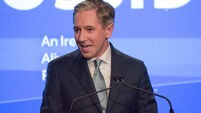
But I also heard the Taoiseach on the radio during the week, on the subject of a possible national strike by public servants. "I just get the sense now that people want industrial action, irrespective of what happens," he said.
That’s a bit weird, I thought. I was a trade union official for a significant part of my working life, and I don’t think I ever met a group of members who were dying to down tools and lose pay.
Sure, every branch had a few hotheads, and every now and again you came across people who were ideologically driven to use their union involvement for things the union wasn’t invented for. They were always a tiny (sometimes noisy) minority. They’d be listened to at branch meetings, because the loudest voice in the room gets heard. But they would almost never be followed.
Which is not to say I was never involved in strikes. I was. I led some of them, and they were bitter affairs often enough. But they were all strikes of last resort. We settled them when a strike forced our employers to listen to a reasonable case.
That’s because I was trained by great men. They were men who stood up for working people, men who believed that people at work were entitled to dignity and respect and a decent standard of living. They were men who’d fought long and bitter battles in their lives, in an era when working people had to band together or get trampled on.
And in the trade union movement I worked in, there were great men, and remarkable women, who worked endless hours with great skill and patience to solve problems without strikes.
That’s because they all came to believe, and inculcated it in those that followed immediately after them, that every strike was a failure of negotiation.
So when I hear the Taoiseach saying that people want to go on strike, irrespective, that’s weird. In fact it’s not just weird.
So why, I wonder, does he seem to regard it, in some blasé way, as inevitable?
It’s also a gross failure of imagination. As I write this, the strike will not be about pay and conditions — it will be about the way negotiations about pay and conditions are structured.
The unions want pay on the agenda; the employer (the Government) only wants to talk about pay after a long engagement about reforms and how to make savings.
In other words, it’s not even about the agenda; it’s about the order of the agenda. This strike would not be happening — at least not this week — if it was agreed that the talks would begin by both sides setting out their positions and outlining their case, in relation to pay and the cost of living.
Apparently, at least according to the government, that’s unreasonable. They’re calling it a pre-condition to the pay talks. Which in plain English means they want pay talks without talking about pay.
That might make sense to some. But actually it’s utter nonsense. And it makes even less sense when you consider that they have already tabled an opening offer of a €1.2bn increase in the public sector pay bill. If you spread that evenly across every public servant, it would yield an average increase, give or take, of about 3.5% for everyone.
An Irish nurse with about five years’ service earns around €800 a week. Jack Chambers’s proposed increase, spread evenly across the board, would give that staff nurse about €28 a week before tax.
That might sound ok in easier times. But the basic rate of inflation is running at more than 4% right now, and there’s no sign of that coming down. The lifestyle and household pressures — heating bills, food bills, travel bills — that ordinary people are experiencing are intense — and public servants are ordinary people.
They are the ordinary people who put out fires, tend our sick, and teach our kids. In other words, they are the ordinary people on whom our quality of life depends. And many of them won’t be able to heat their homes this winter.
So, they don’t just want an uplift in their pay right now. They want an agreement that will help to protect, to the maximum extent achievable, pay and conditions into the reasonable future. They’ve been successful in doing that in our recent past.
And when the economy collapsed in shame and ignominy in 2011, for reasons that had nothing to do with public servants, nurses and teachers and thousands of others bore major pay cuts to keep services going.
And now they’re going on strike for a day. Why? Essentially, I believe it’s because they see no sign of urgency whatever on the part of their employer.
The indolent and cavalier approach taken by government ministers to an issue their employees see as a crisis, has generated the kind of anger that may well, in the end, make a public service pay agreement harder to reach. I know from experience that once a strike starts, attitudes harden.
So I’m hoping that reasonable public service union leaders see tomorrow’s strike as the kick in the behind the government needs and deserves.
Justice and fairness demand that, at the very least, public service pay talks should have been under way for some time now, because the existing public service pay agreement expired three months ago. And nobody can argue that the last agreement broke the bank.
If the government respond as they should, pay talks will start quickly, with an open invitation and an inclusive agenda. If the government keeps striking poses as they have been, we’ll end up in a very cold and hostile winter, with major impacts on critically important public services.
And it will be the government’s own fault, and no one else’s.
CONNECT WITH US TODAY



Be the first to know the latest news and updates