Mick Clifford: Ireland should think twice before embracing the new left-right political divide
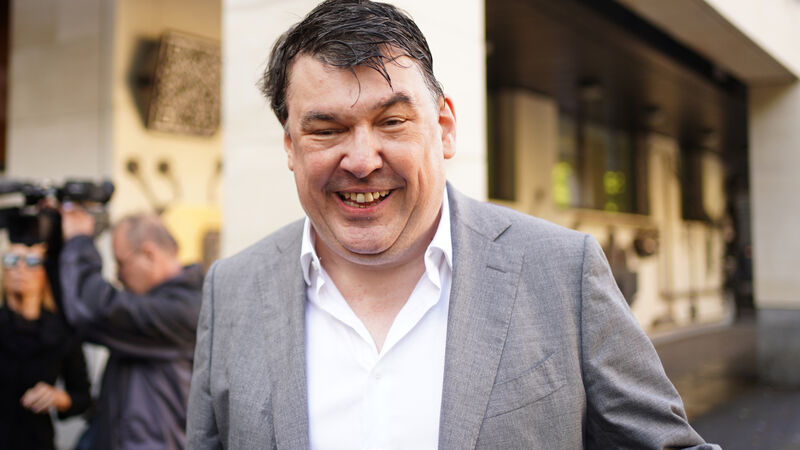
‘Father Ted’ writer Graham Linehan said US authorities should put pressure on the Irish Government to open a debate on the 2015 Gender Recognition Act.

For a long time, I was one of those who pined for a clear demarcation in Irish politics.
Unlike most developed states, we did not have any defined left-right divide in the State. Elections were largely fought on the embers of the civil war.
Other countries argued across a divide informed by taxes, wealth, different approaches to public services, the role of the State.
Here, the philosophical argument boiled down to who was more likely to ‘deliver’ and whether they could trace any lineage back to the bitter conflict of over a century ago.
In today’s environment, perhaps a little revision is required on the notion that we would be better off following the path beaten by other Western democracies.
This week, we got a glimpse of how they are faring on the traditional divide and what they would like to see imported into this country.
On Tuesday, a report from US politicians was published claiming that Irish and EU regulators aggressively “censored” social media coverage of Ireland’s 2024 general election and last year’s presidential election.
This was greeted with glee by the small but vocal element of right-wing populists in this country.
The report was written by staff on the judiciary committee of the Republican-controlled US Congress.
It alleges that various state and EU bodies effected “harassment” against tech groups in order to undermine conservative and populist parties.
You thought we had free and fair elections in this country? Think again. ‘They’, the deep state, the ‘elites’, the ‘leftists’, are out to get you, to undermine elections, to effect a peaceful coup d’etat against the wishes of the people.
This is what passes for rational politics on one side, at least, of the divide in the US at the moment.
This right-wing populist trope has it that there is an attack on free speech, particularly in the EU. And, as a prime example, they look across the Atlantic at dear old Ireland.
There isn’t a scintilla of evidence to back up this report. It originates from the half of the US where an awful lot of people believe the 2020 presidential election was stolen from Donald Trump. There isn’t a scintilla of evidence to back that up either.
There are differing interpretations on what constitutes free speech on social media. As far as the right in the US are concerned, free speech should be absolute, just on the right side of the criminal law.
There should be no limits to what can be said, for instance, about minorities. There should be no limits on the right to abuse others, to slander others, to utter untruths, irrespective of how damaging that might be to society.
The market should determine everything and tech companies should have the right to turn a buck in whatever way is deemed most advantageous.
That view is shared by their kindred spirits on this side of the Atlantic, a growing band in Britain and other European countries, and a small but vocal contingent here.
At the hearings into ‘free speech’ on Capitol Hill this week, an Irish writer testified about another matter that occupies this new right.
writer Graham Linehan said American authorities should put pressure on the Irish Government to open a debate on the 2015 Gender Recognition Act.
The law, which confers the right of anybody to change genders, “was quietly passed while Irish people were celebrating their vote for marriage equality”, he told US politicians.
Mr Linehan wants a foreign power to interfere in this State’s sovereignty on behalf of a small but vocal group to which he aligns himself.
It is debatable whether the 2015 law would make it through the Oireachtas today but that’s not the point. We have a democracy. Nothing is set in stone but asking a foreign power to interfere, as if this was a banana republic, is a worrying development.
So much for efforts to import the new right into the State. It’s not pretty on the other side either.
Out of the traditional left over the last few decades has grown an authoritarian strain that purports to position itself as an unimpeachable high moral authority. In their world, there is only one way, and that is their way.
One example of this was reaction to the publication a few years ago of a report from another American body, a civil rights watchdog called the Global Project Against Hate and Extremism. The report suggested that Ireland was a hotbed for far-right elements.
Twelve organisations were listed as spreading hate. These included the Iona Institute and the former political party Renua. There was also an organisation of women who had issues with gender ideology, and a tiny religious outfit that practises the Tridentine Mass.
A large protest against an International Protection Accommodation Service centre in Galway was portrayed as if it was something akin to the Nuremberg rallies conducted by the Nazis. The whole thing was ludicrous. Yet it was welcomed heartily in the Oireachtas and on social media by those claiming to represent the left in this country.
I wrote a column pointing out the silliness and distraction of the report and those who championed it, which set off a flurry of high indignation and snarling outrage online.
In the aftermath of the Dublin riots, one individual, who has featured on national media, opined on a podcast that what I had written meant I bore culpability for the night of violence. It was water off a duck’s back on one level and highly illuminating on another.
As with their kindred spirits on the populist right, those on the authoritarian left are ironclad in their belief that they speak a higher truth on behalf of the people.
These days, the divide on both sides of the Atlantic is informed largely by cultural issues rather than the traditional economic and societal ones. Probably more than anything, the respective sides define themselves by opposing what the other side favours.
So far in this country, the populist right and authoritarian strain of the left represent relatively small minorities on the political spectrum, at least in elected politics, whatever about the jungle of social media.
Maybe that has a lot to do with the history of this country, particularly in terms of where the extremes can lead, as evidenced by the divide and violence that existed in the North in the latter half of the last century.
Elsewhere, this kind of divide is polluting democracy and giving rise to the kind of leaders who thrive on the division but are usually incompetent when it comes to attempting to better lives for all of society.
Some day perhaps there will be a return to traditional values that divide political philosophy and opinion but, in the meantime, it might be best if we continue to keep the head down, despite the effort of some to drag us into the morass.
CONNECT WITH US TODAY



Be the first to know the latest news and updates