Mick Clifford: Inside Ireland’s first Maga-style forum and the rise of populist disaffection
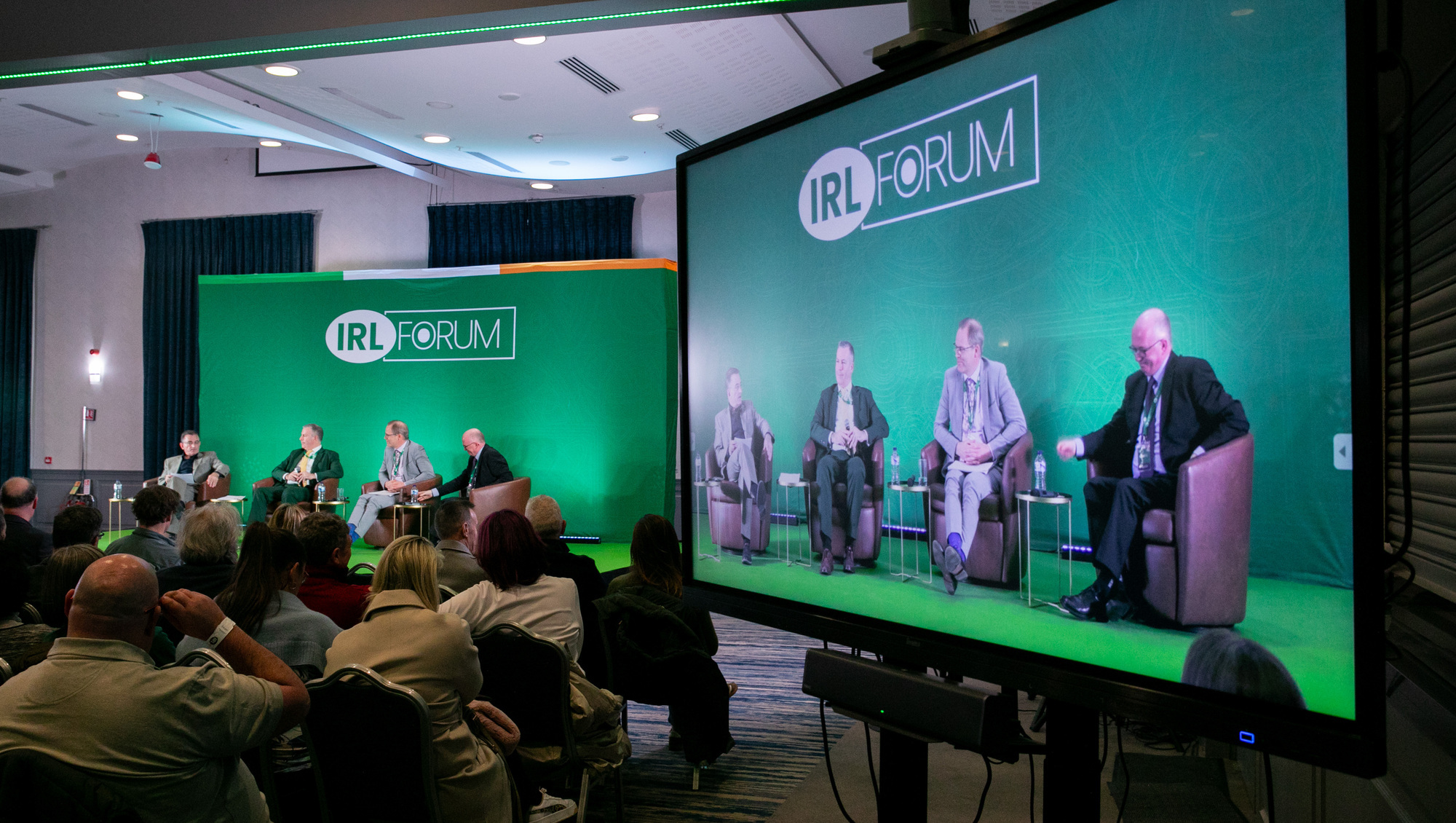
Eddie Hobbs, Herman Kelly, Patrick Morrissey, and Pat Greene on stage during last Saturday's IRL Forum at the Pillo Hotel in Ashbourne, Co Meath. Picture: Gareth Chaney
They came to put meat on the bones of their disaffection, disillusionment, and disgust at where the country is going.
Last weekend, the first IRL Forum convened in the Pillo Hotel in Ashbourne, Co Meath.
Eddie Hobbs brought everybody together to find solutions. Hobbs, a former high-profile financial adviser, has a politically-focused show on YouTube these days.
If an Irish Maga (‘make America great again’) movement ever gets off the ground, this will be retrospectively identified as an early staging post. If it doesn’t, the forum will have served as just another valve to let off a little steam.
Last October, a total of 213,738 people spoiled their vote in the presidential election. This represented 13% of voters who attended at a polling booth.
There is a general consensus that a large portion of the spoilt votes came from those disappointed that Maria Steen wasn’t on the ballot as a voice for elements of the populist and religious right. They believe they are disenfranchised, but what they really want to do about that is unclear.
Last week, Hobbs was trying to put some coherence on a loose amalgam of ideas and notions.
The large conference hall was nearly full, with well over 300 in attendance.
That is a notable result on frosty January weekend. They came from all over the country, some staying overnight in the hotel. All age groups were represented, although most were middle aged and the sexes were roughly equally divided.
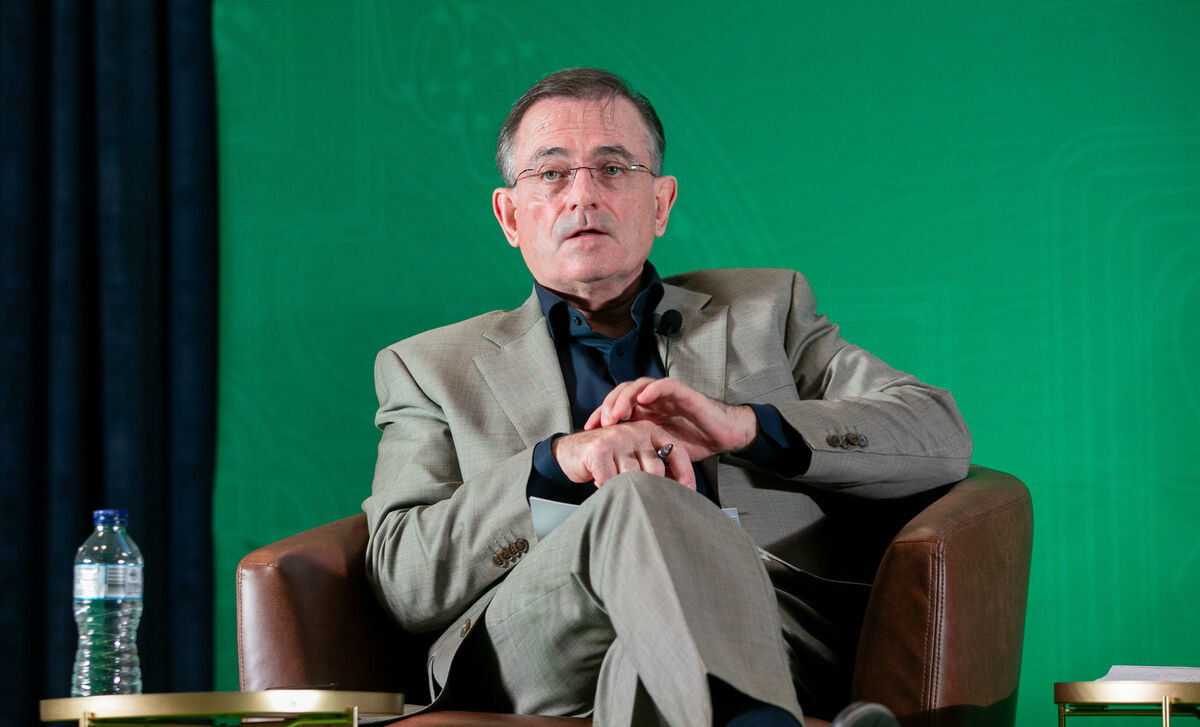
Among the audience was Edward Walsh, Donald Trump’s choice of US ambassador to Ireland. According to Hobbs, the ambassador’s people “reached out” to him. A spokesperson for the embassy said the ambassador “attends a wide range of conferences, cultural events and meetings with community representatives”.
It is also the case that some might perceive an event like this as an attempt to import a Maga movement, something that would be of interest to the current US administration.
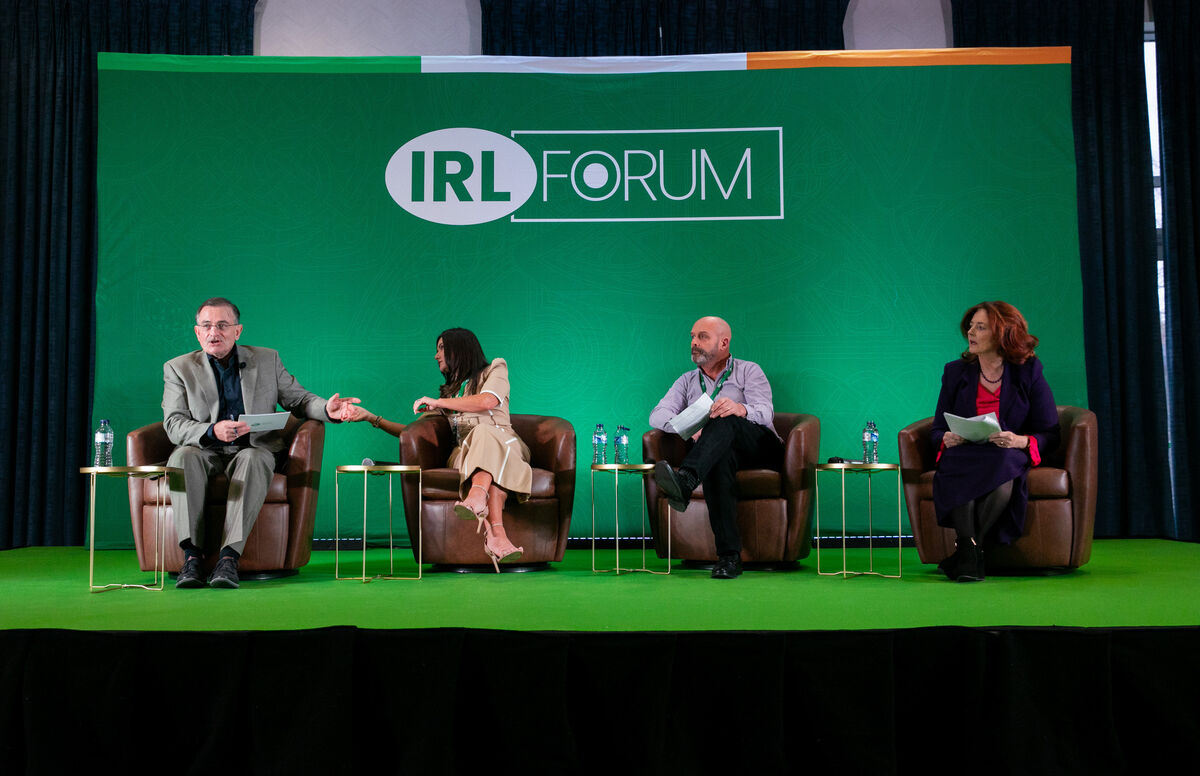
The backdrop to the stage was emerald green, with a green, white, and gold strip across the top. Lately, the national colours have been used in a campaign that is obviously anti-immigrant, but beyond that some constituencies like to see themselves as the real Irish, holding the tide back against alleged progress.
“What happens in this room over the next two days will be very significant from a national perspective,” Hobbs said.
The format was for 12 panels of three, split across the weekend. Some panels had repeat members, like businessman Declan Ganley, Dublin City councillor Malachy Steenson, and Independent senator Sharon Keogan.
They each have a say and then there is a debate, hosted by Hobbs.
The first panel was on family housing and wealth. It consisted of Steenson, South Dublin councillor Lia de Courcy, and Jana Lunden, who was advertised as “founder of the Natural Women’s Council”.
Much of the fare could have come from elements of the parliamentary opposition, which tend to be on the left.
The housing problem was described in terms of young people unable to access it, Government failures and how it is impacting on families. One suggestion was more State involvement in building houses.
Immigration was blamed as contributing to the problem, although this notion is highly contentious. And then, for some reason, gender dysphoria featured here and there, nearly like a piece of red meat to throw out to the audience.
“We have created a generation of people who believe all kinds of nonsense like a man can be a woman and that the world is going to end tomorrow,” Steenson said.
Lunden wants to make it illegal for any politician to have ties to the World Economic Forum (WEF). There is a theory among some on the extremes of left and right that leading politicians are secretly doing the WEF’s bidding.
“We need to control immigration,” she said. Both comments received a spontaneous scattering of applause.
She admitted that she herself is an immigrant, North American from her accent. She has a plan to encourage Irish emigrants to return home do the jobs that immigrants now do.
“Let’s double the wages for Irish doctors, gardaí, and nurses,” she said. “We need to take the country back.”
Cue another round of applause.
Steenson said that there is a fear factor out there among people that they might be called the far right but change can be brought about.
“We have seen huge success with the flag project,” he said.
Hobbs tried to get things back on track by saying: “Can I focus on solutions?”
“What we need unfortunately is another financial crash,” Steenson said. “That’s when we can get rid of the NGO [non-governmental organisation] class.”
Apart from immigration and the tiny proportion of the population who have issues around gender, NGOs and the media are repeatedly cited as being at the root of why the country has gone to hell.
There are estimated to be over 30,000 NGOs in the State, operating across all sectors of society, assisting literally millions of citizens. It is unclear why, collectively, NGOs elicit such ire on the populist right.
The size of the attendance suggests the sense of alienation among a not insignificant cohort is acute. To dismiss them, in general, as far right would be inaccurate, although elements who are innately anti-immigrant or racist find common cause with much of their agenda.
It would be more accurate to say they are experiencing a heightened sense of displacement in a rapidly changing world.
And right now, across the globe in this unsettled age, many who are disaffected are finding relief in the kind of right-wing populist that revels in conspiracy theories about the State and points the finger of blame at the weakest elements of society.
The next panel discussion was titled ‘housing, immigration, and security’. Steenson stayed on and was joined by businessman Declan Ganley and barrister Una McGurk.
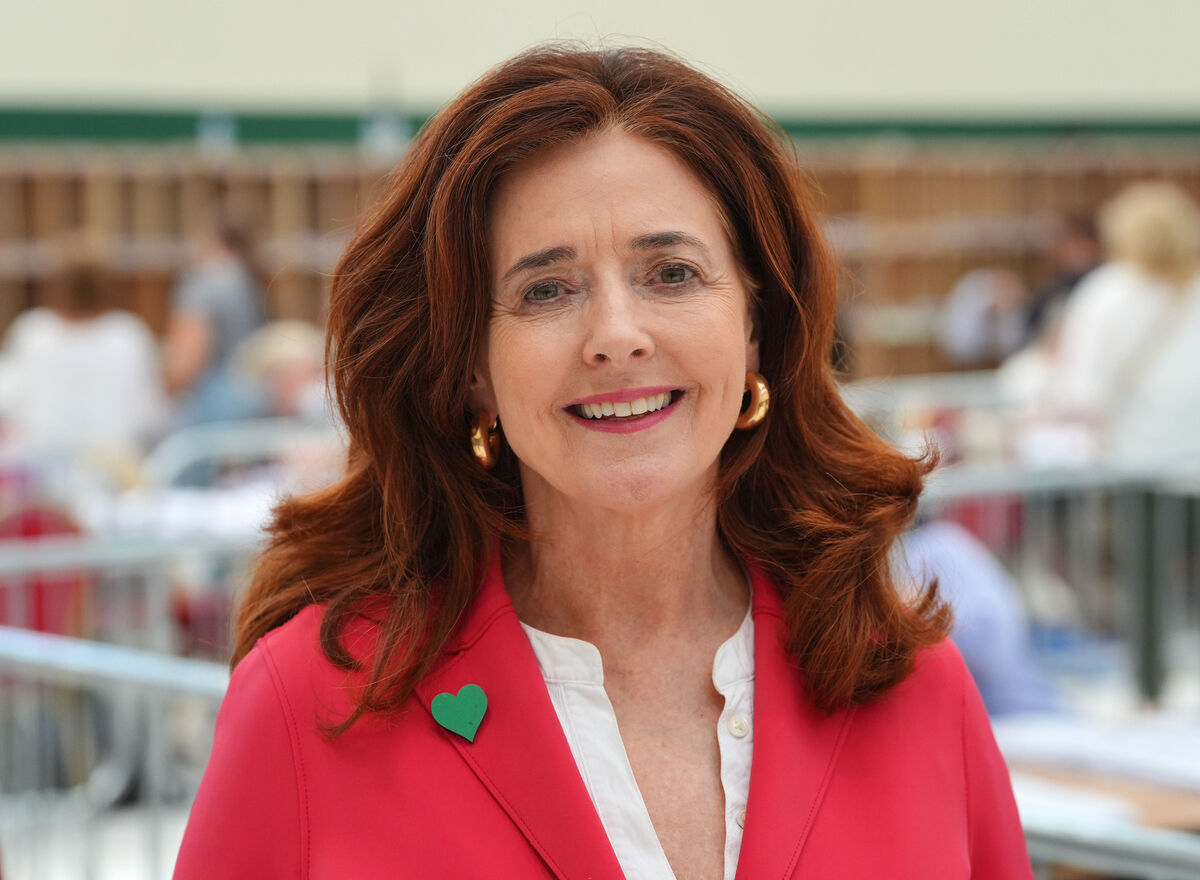
“There is a correlation between immigration and crime,” McGurk said.
This statement is at variance with the facts. A report from An Garda Síochána on crime issued last September noted that figures “show Ireland has recorded a 7% reduction in crime [comparing 2024 to 2019] while undergoing a 9.3% increase in population since 2019”.
McGurk referenced single men “whom we know nothing about” coming into the country.
“There are many places in our country where women are afraid to walk at night,” she said.
According to the gardaí, women have absolutely no reason to fear immigrants of any hue in this respect. If there is fear out there, then perhaps people in general, and women in particular, are being told that they should be very afraid.
The general tone of the discussion on immigration into this country is that it is out of control.
Recent CSO figures point to a reduction of 16% in immigration last year, while the Department of Justice has been recording reductions of the order of 40% in international protection applicants.
Declan Ganley made some suggestions on housing that are sensible and would possibly be welcomed by elements of the left in Irish politics. But he also had bigger fish to fry.
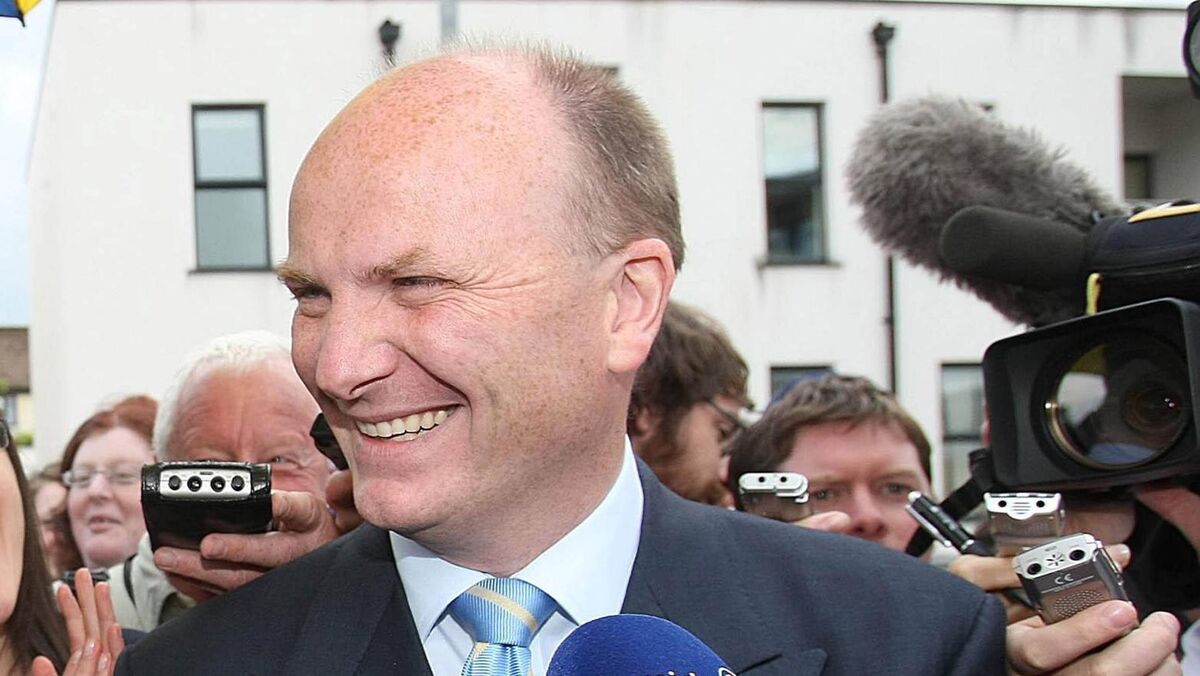
“We have to lower the tax crucification of the Irish working person,” he said.
“You are taxed on income, on consumption. We are the second worse in of the OECD [Organisation for Economic Co-operation and Development] countries in terms of personal taxation. The only one worse is South Korea.”
The assertion received a round of applause.
In a comprehensive study by Nomad Capital, Ireland is 15th for personal taxation, with nine other European countries ahead of it. Indirect taxes in this country — on property, wealth, etc — are among the lowest in Europe.
The discussion turned to family.
McGurk said that abortion rates now are around 10,000 a year and “those relate to our own native white population where as we have an expanding immigrant population coming in and many of those don’t believe in abortion so they are going to expand the population here”.
Among the various theories on the populist right is the 'replacement theory', which posits that various forces are attempting to engineer a society where white people are far outnumbered by people coming from African or Asian countries.
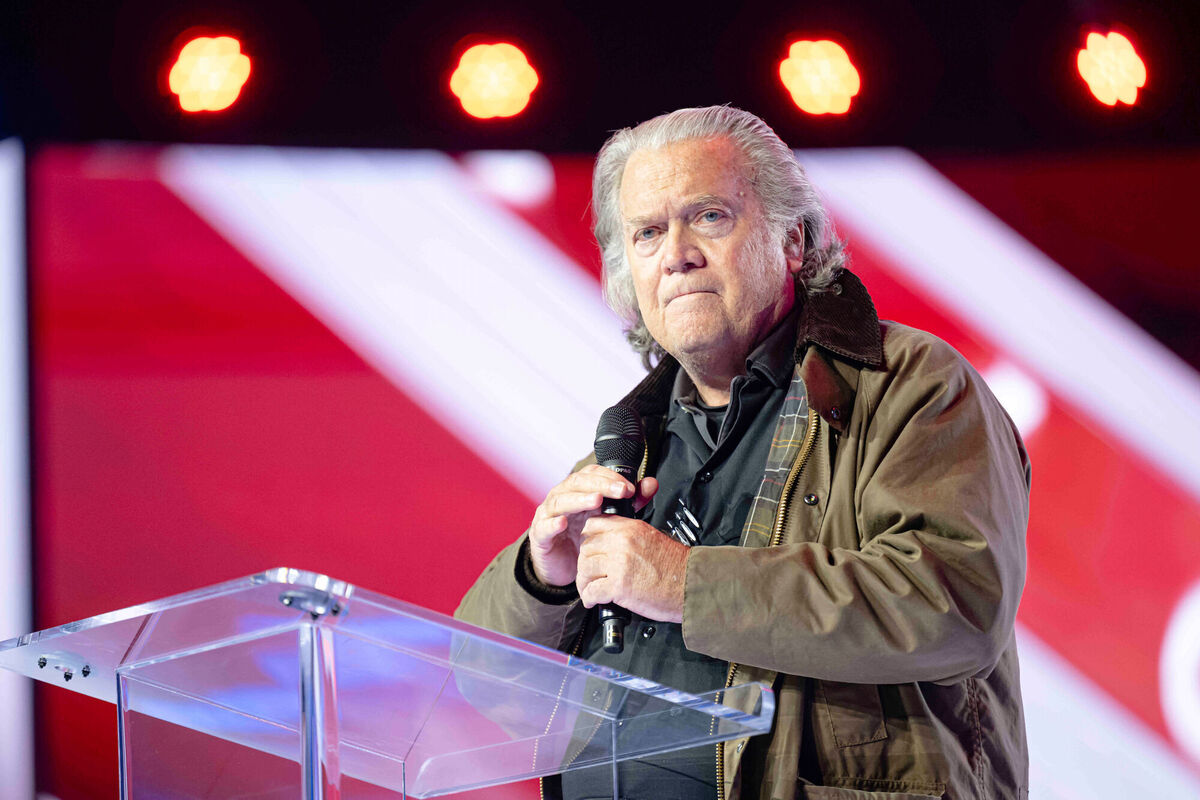
In the course of the ensuing debate, Hobbs suggests that those who want to reduce immigration and cut ties with "globalist elites” should seek help from the Irish diaspora in the Maga movement.
A leading architect of Maga, Steve Bannon, recently told a podcast he was working on the “Irish situation” and that there would soon be an “Irish Trump”.
One of the reasons that a right-wing populist movement has not emerged in this country is the complete absence of a charismatic leader.
Trump is a one-off, possessing an extraordinary talent for communication and manipulation. But there have been others, the UK’s Nigel Farage, Marine Le Pen in France, Geert Wilders in the Netherlands, Giorgia Meloni in Italy, and Viktor Orban in Hungary. So far, nobody of that calibre has been unearthed here.
Speaking later to the , Eddie Hobbs conceded that the lack of such a figure has hampered the aim to see a Maga-style movement here.
Can he identify anybody who might fit the bill? He said:
When pushed, he added: “There is potential in Independent Ireland but they need to show their authenticity and to politically create far greater distance between themselves and Fianna Fail, Fine Gael.”
One of Independent Ireland’s four TDs, Ken O’Flynn was a panellist at the forum.
Does Hobbs see trace of a messiah in there?
“He’s an interesting character,” is all that Eddie will say.
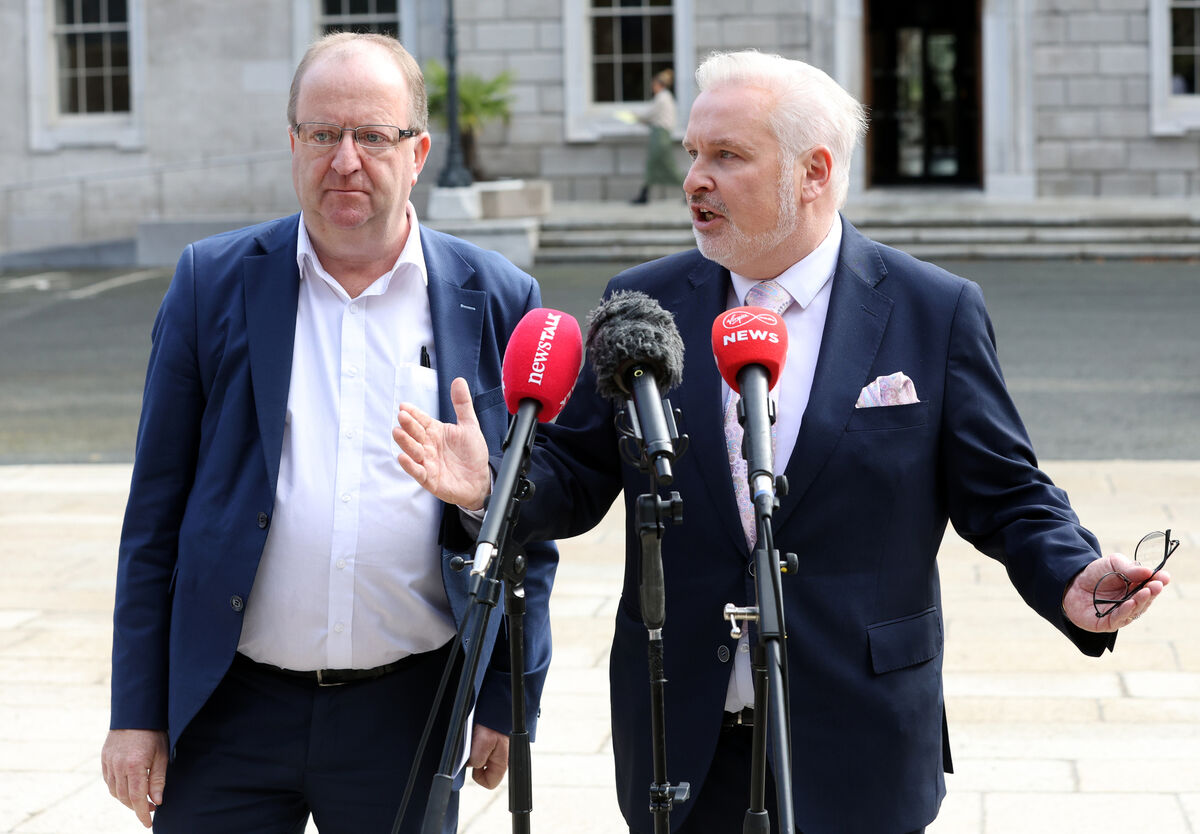
The next panel is concerned with “law media and free speech”, and includes another barrister, Tracey O’Mahony, Independent senator Sharon Keogan, and Gerard Casey, who is described as a philosopher.
Free speech is big on the populist right.
This is connected to the belief that that so-called mainstream media is hopelessly compromised and effectively in bed with the Government.
In terms of the law, O’Mahony thinks that judges are a problem.
“They are appointed by the Government,” she says. “Until you can resolve something to have independent judges I don’t think we can get anywhere.”
How exactly judges should be appointed if not by government, as is the case across the world, was not parsed.
The senator tells the gathering that the idea that we have a free media in this country is nonsense.
“Without X [formerly Twitter], I don’t know where we would be,” she said.
During the break, the attendees appear very upbeat, as if they have just received plenty of nourishment.
Shane Malone travelled from Limerick and he is looking for solutions. One of the things bothering him was what he described as a convening of the Dáil at 1am recently to pass the Comprehensive Economic and Trade Agreement bill on trade.
“It was something they tried to use when they were trying to ban cigarettes,” he said. He thinks the media are a huge part of the problem, and he refences Noam Chomsky’s theory on manufactured consent.
Anne Marie Pickett and Brian McGuigan are making a weekend of it, staying overnight in the hotel to attend both days. Pickett is a big fan of Hobbs on his YouTube show.
“The biggest problem of all is the media,” she says. “The first obstacle that has to be overcome is to waken up the rest of the people. The media shut everything down.”
McGuigan spent a lot of time in England.
“I saw it over 50 years,” he says. “What’s happened there is happening here now.”
The conference went on in that vein.
A whole range of public issues were discussed but, for the most part, solutions proposed were not unique. Time and again it was back to the staple diet of immigration, the media, falling fertility rate, and the poor benighted NGOs.
Afterwards, in an interview with the , Hobbs accepted that in some “softer areas” as he termed them, there is little in terms of solutions between mainstream politics and the fare at the forum.
He has no designs on being an Irish Trump. He sees himself as building what he terms “the horse” of a media platform and the cart of the politics will follow.
“There is a huge number of people in middle Ireland who are disaffected but not prepared to come out onto the streets wearing Tricolours,” he says.
“That audience is huge.”
But is it not always the case that when a small but passionate group can’t see why everybody else is asleep to that which lights their fire, the convenient answer is the dozy public are being kept in the dark by the media?
Hobbs says the media are not telling the people like it is. He cites the pandemic and outlines how various elites, including Bill Gates, had a role in conning the public about the extent of the virus, and even how it came about and what it was. The theory is a well-thumbed one on the populist right.
“The media are not reporting that,” he said.
And what of the US influence? “Everybody is reaching out,” he says.
“The diaspora in the USA and in Australia have deep concerns about what is happening here.”
No money, he says, was received from the US in relation to the forum.
Hobbs considered the event a success.
Where, if anywhere, it goes from here will be interesting. The disaffection, some of it fuelled by the extremes propagated on social media, is real.
Whether this country is ready for a populist right party will depend on a number of factors, including the economy, outside influences, and how mainstream politics reacts to perceived disaffection. Already, we have seen among the three main parties a move to the right on immigration.
As of now, there is no sight on the horizon of an Irish Trump, or the political heft to fashion a Maga movement. In a world in demented flux, however, absolutely anything is possible.
Read More
CONNECT WITH US TODAY



Be the first to know the latest news and updates