Michael Moynihan: Technology to maintain the flow of traffic would surely benefit us all
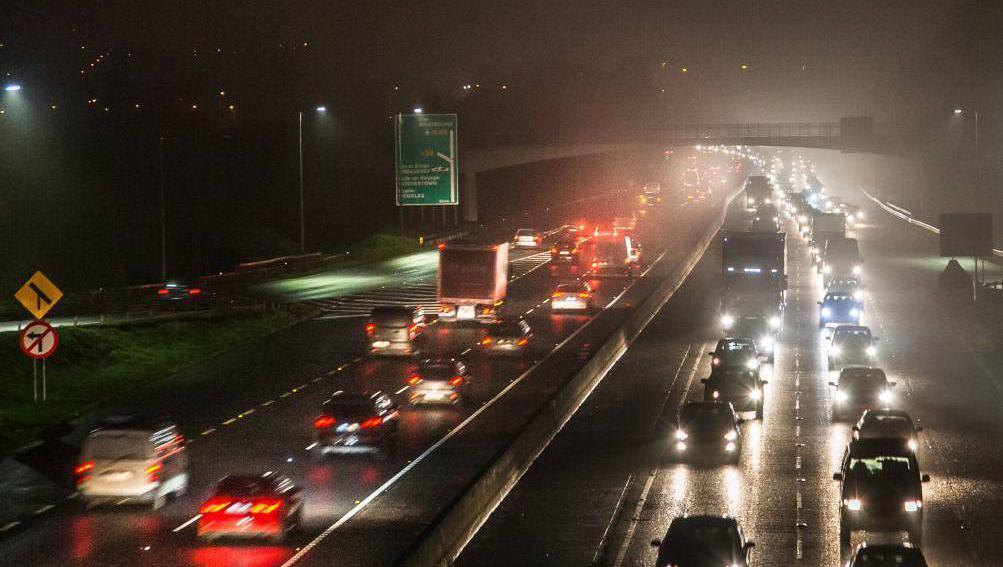
Early morning traffic building up on the N40 near Mahon in Cork. File picture: David Creedon

When the singularity comes true, and I expect that to arrive any day, it will surely manifest first at the entrance to Mahon Point.
The traffic lights will go out and slowly but surely the realisation will dawn: the machines have finally taken over.
This will be the ultimate test of us as a species. Nudge forward in turn-and-turn-about cooperation or ploughing-straight-ahead and damn the consequences?
You might laugh, but our ability to coexist and eventually survive will be keyed to our behaviour behind the wheel, methinks.
Traffic, eh? A friend of mine has some very convoluted theories about the flow of vehicles in the city.
Accessing the outer reaches of the city from the quays is a big set piece of his, and this usually culminates in, well, suffice to say it doesn’t do to get him started on Summerhill North.
He mixed up his repertoire this week with some additional news, pointing out that we are cutting down on traffic cameras rather than expanding their use.
Apparently in 2015 traffic cameras were installed for a six-month trial at a Luas intersection with Blackhall Place in Dublin after some crashes involving cars breaking the red light.
How did that go? Very well, apparently. The number of drivers breaking the light halved in the second three months of the trial period, and no fines were successfully appealed in court.
The trial was discontinued and is only being revived now, 11 years later, and only in Dublin.
Plans to roll out traffic cameras at rail crossings nationwide have stalled.
As for other non-Dublin projects: I note recent media reports suggesting that Department of Transport officials believe its 2026 budget will not be enough for any new services, quoting those officials as noting “the allocation, while substantial, will not allow for new services to be delivered”, though it “will allow for continued investment on major projects”.
Not sure what that means for us in Cork but we’ll try to stay positive. Back to the perils of Mahon Point, or matters associated.
Readers may recall the initiative in San Francisco I cited last year, one in which drivers were warned that new traffic cameras were being installed at certain trouble points in the city.
Once they were in place 100,000 warning notices were issued when the cameras began to click.
One intersection was recording 1,779 notices per day, and another was hitting 944 notices per day.
This is a recognisable approach: set up cameras to record those who are breaking red lights or driving dangerously, and issue those warning notices to deter them from repeating the offence.
(Side note: after a bedding-in period in San Francisco those notices were replaced with fines and, as I mentioned in a previous column, the amounts raised by the fines were significant, running into millions of dollars.)
There’s another way to look at traffic lights, however, which goes beyond putting cameras on top of them and snapping photos of speedsters and joyriders.
Some cities are using their traffic lights differently, and a crucial part of that difference is reevaluating the purpose of the traffic lights in the first place.
Instead of seeing them as a means of getting as many cars through an intersection and promoting the flow of traffic, some cities, like Albuquerque and Portland, are using them to change the behaviour of drivers to try to ensure the safety of all road users, not just those sitting behind the wheel of a car.
One of this strategies involved is “resting in red”, which clicks into action at night, when pedestrians in particular are in more danger because of the darker streets.
Instead of the traditional green-amber-red sequence, traffic lights at intersections default to red in all directions at night, which means drivers must slow down and stop.
A traffic light sensor detects their car and then flips the light to green, allowing them to proceed, but there are slightly more high-tech variations where sensors are calibrated to give a green light to an approaching car which is adhering to the speed limit.
If cars are travelling too fast the sensor reacts to turn the traffic lights to red.
Advocates pointed out that not only does this force cars to stop, this traffic light sequence can also train drivers to slow down because they learn that doing so ‘rewards’ them with a green light.
Another strategy becoming popular in the US is “green wave”, which is a sequence of different traffic lights going green, one after the other, to allow drivers to go through several intersections without having to brake.
Traffic lights are timed to accommodate vehicles which are consistently moving at a predetermined speed, and researchers believe this influences driver behaviour, who learn that maintaining this speed will result in that green wave of traffic lights — and who will then, as a consequence, learn to lower their speed accordingly in order to avail of that sequence of green lights.
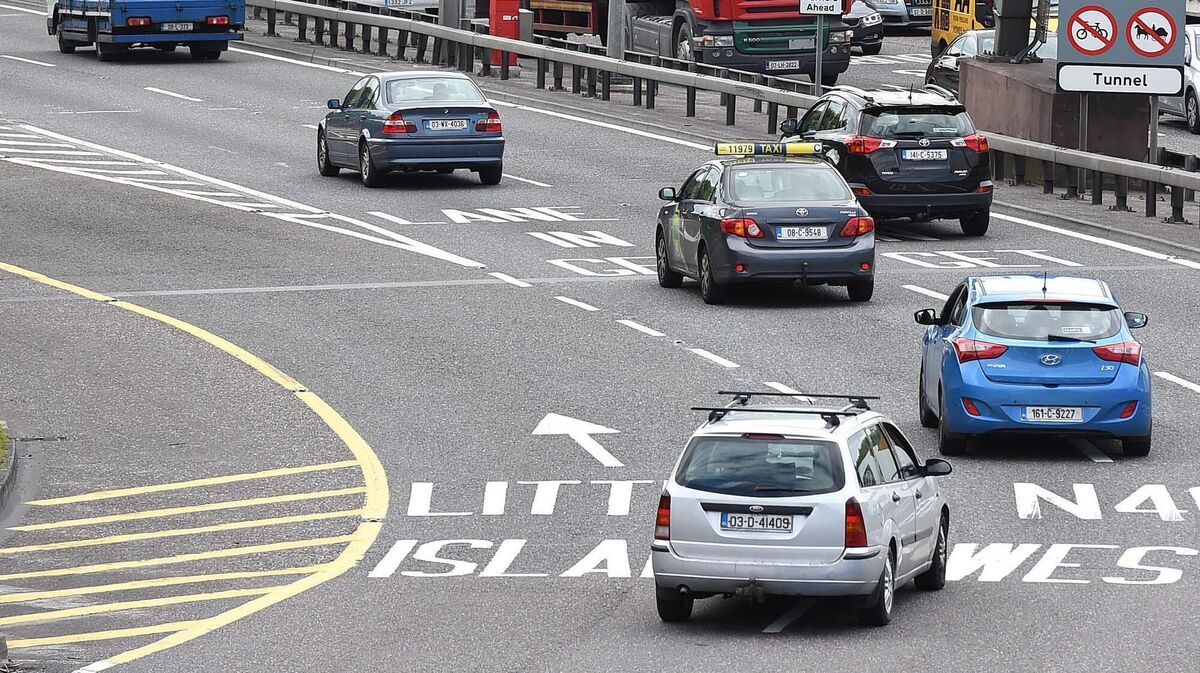
Obviously if traffic is moving at a safer speed, driver reaction time improves, and the roads become safer, but such systems can be refined even further, apparently.
The Roads and Transport Authority of Dubai (RTA) recently announced a new smart traffic system — V2X — which will connect traffic signals directly to vehicles as part of its Smart Connected Vehicles project.
It won’t be rolled out until next year at the earliest, but it aims to transmit real-time information to the dashboards of connected vehicles, information such as green-light duration and red-light countdowns at traffic lights, signal status at upcoming intersections, optimal crossing speeds, congestion alerts, detours, closures, and accident notifications.
The RTA also pointed out that car manufacturers are already working towards incorporating this level of connectivity in their new models, while those which lack the capability now can be hooked up to the network easily enough.
The next phase is expected to involve vehicle-to-vehicle — V2V — communication to give cars warnings of slowdowns or obstacles which lie ahead. Cars, not drivers.
According to an RTA spokesperson: “The main goal is to reduce driver distraction from mobile phones by integrating all essential traffic information into the vehicle dashboard, thereby improving safety and preventing accidents.” Impressive? Up to a point.
This isn’t a plea for maintaining the independence of the car driver, as anyone who has seen me reverse into a space in Carroll’s Quay will attest (so, so narrow).
Nor is it the spectre of bad faith actors taking over smart cars, even though MEPs were given a pretty chilling warning about that specific problem just this week.
What’s interesting is that we keep hearing about what technology is capable of and what improvements it has wrought, yet how often do see concrete examples of technology being deployed to tackle some of the challenges of modern life which all of us must suffer?
Installing the hardware to enable resting-in-red or green waves would surely help us all. And prepare us for the singularity.
CONNECT WITH US TODAY



Be the first to know the latest news and updates