Michael Moynihan: Council responses show they can't see the wood for the trees

Trees on Knockfree Ave. Picture: Save the Knockfree Avenue Trees on Facebook

In recent days, residents of Knockfree Ave in Cork have taken to the streets.
They are angered by council plans to cut down mature trees in their area and they’ve taken action — protesting by those trees and organising an online petition, putting their unhappiness with the plan to remove the trees on record.
I salute their steadfastness and their commitment to their locality.
However, I also want to share some information with them.
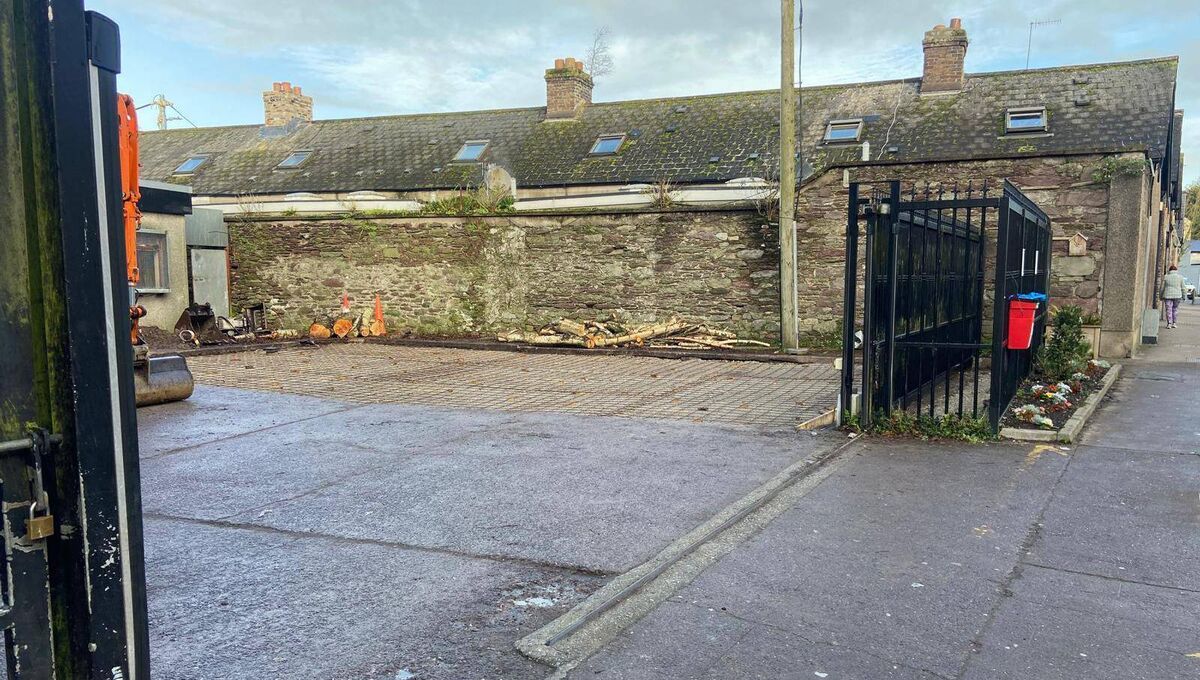
Readers may recall that I wrote about the tree and green space near Madden’s Buildings in Blackpool being removed recently.
I dropped Cork City Council (CCC) a mail looking for some clarification, and after a couple of weeks, I got a response.
And... wow.
I won’t reproduce the answer right here in its totality for health and safety reasons, but a few highlights should give readers a flavour of the communication (the full text is below).
For instance, you may recall that CCC said the tree in Blackpool had to be removed because it was posing a danger.
Doubtful as I was, I bowed to the experts.
But I did ask (in print) why the green space around this tree was not retained, a question I repeated in my communication.
“The small green space around it was part of the depot and was never open to the public for use as public open green space,” was the answer.
The eagle-eyed may see that whatever this is, it is not an answer to the question.
It is pretty consistent with the council’s general performance in responding to this matter, though, which has ranged the spectrum from evasive answers to partial responses, with an unexpected glaze of self-pity for flavour (“The city council also recognises that criticism often comes more readily than praise”).
For instance, in its answer, the council lists its various projects as examples of how to “work together to create greener, safer spaces while tackling climate challenges”.
This is the kind of boilerplate that every municipal authority on earth specialises in, but go back a few sentences in this statement and the council is stating that “there was no statutory requirement to consult with local residents about the removal of the tree (in Blackpool)”.
Working together for greener spaces on one hand, but doing the legal minimum for residents on the other.
The sheer delicacy of the phrasing here should give readers pause because it suggests the local authority’s focus is misplaced, to be kind.
I also asked the council about the role of the organisation’s trees officer in the decision to remove the tree in question.
The local authority itself said in its communication that when a tree presents a hazard, removal becomes necessary — always as a last resort.
I was wondering, therefore, about some of the first resorts that might have been considered, like saving or replacing the tree.
So I asked whether the trees officer was consulted on this matter, and if so what was his or her view.
In response, the council stated that just as there was no statutory requirement to consult residents (see above) about the removal, “. . . nor was there a statutory requirement to consult with the city council’s tree officer”.
I’m not entirely sure how to articulate a response to this other than a sharp elevation of the eyebrows.
Comparing it with other parts of the statement does beg some pretty obvious questions.
Take “the decision to remove this tree does not conflict with the city’s tree policy or diminish the city council’s climate change commitments”.
Much the same as the statutory requirements about consulting residents, leaning on the precise legal definition of your obligations to explain why there was no consultation with an employee specialising in the area under discussion seems pretty extraordinary.
The contradictions keep on coming once you start to look. Describing your organisation as “a city council that is actively expanding and enhancing its green infrastructure and working to address climate change” is rather undercut by the admission that “the space will remain in use as part of the council depot”.
If you go past the location, you’ll see that the formerly green space is in use. It’s a car park for Cork City Council vehicles.
I didn’t have the denizens of City Hall down as hardcore Joni Mitchell fans, but there you have it, paving paradise and putting up a parking lot.
The most significant part of the answers given, however, relates to the council’s focus on other parts of the city. I was told about “the planting of about 5,000 trees in 2025, including the free giveaway of about 2,000 trees at two separate events... the completed €14m Marina Park... which involved the planting of hundreds of new trees... In October, the city council planted rain gardens at Railway Park... the delivery of a 116 hectares (287 acres) park for the north west of the city.”
All very praiseworthy in their own right, but can I offer a quick geography lesson?
From Madden’s Buildings to the Marina is a stroll of 2.5km, according to Google Maps. Railway Park to Madden's Buildings? The shortest journey is 2.1 km. And Kilmore Heights to Madden’s Buildings is 3.2 km.
I’m sure that Cork City Council will lay on free transportation for anyone in Blackpool who wants to see trees somewhere nearby, or perhaps some photographs of those trees can be placed at random spots around the Watercourse Rd if anyone needs to get in touch with nature.
I’m joking, but there’s a serious point here.
There’s a simple reason why we have services and facilities in different places around the country.
It’s because no one would think of telling people that while there isn’t a hospital within an hour’s drive of their home, for instance, they don’t need to worry because there are great hospitals three hours’ drive away.
A seven-year-old child could point out that removing trees and green spaces from one location isn’t offset by putting trees and green spaces miles away from that location.
It’s surprising that Cork City Council didn’t point out the number of trees Blackpool residents can appreciate in Farran Wood. Or the Black Forest. Or the Amazon.
I understand the Knockfree Ave residents are to meet the council. They may want to bear in mind the communication I received, with its heavy emphasis on statutory requirements, its bizarre contradictions, its, ah, list of tree locations..
I implore those residents not to be critical of the council, given that body’s sensitivity to criticism, but rather to be grateful in the knowledge that trees will be planted somewhere. It might be miles from where they live, but the point is that they were planted. All must be thankful.
Much as I would love to say that this is my last word on the matter, the council’s war on trees is bound to break out somewhere else.
Thanks to the readers who have been in touch about similar cases. The rest of you?
Keep your eyes peeled.
Cork City Council understands that the removal or loss of certain trees can evoke strong feelings and that it will, at times, face criticism about such changes. The city council also recognises that criticism often comes more readily than praise.
The recent criticism about the removal of this single tree and the small surrounding green space at a council depot in Blackpool has presented an inaccurate and unfair narrative.
A decision was made to remove the tree on health and safety grounds. The decision was taken in the interests of public safety.
Recent storms had caused the tree to begin lifting. It had also started to lean toward nearby council-owned residential properties.
The tree posed a potential risk to council staff based at the deport, to adjoining council-owned homes and tenants, to adjoining private property, and to the general public.
Cork City Council’s Tree Strategy prioritises the protection and expansion of urban greenery, where appropriate, but also recognises that public safety must come first.
Where a tree presents a hazard, removal becomes necessary - always as a last resort.
The removal of this specific tree, which was not subject to a tree preservation order, was carried out in line with best practice and our commitment to maintaining a safe environment for all.
There was no statutory requirement to consult with local residents about the removal of the tree, nor was there a statutory requirement to consult with the city council’s tree officer.
The small green space around it was part of the depot and was never open to the public for use as public open green space.
The space will remain in use as part of the council depot.
The city council engages regularly with the Blackpool Tidy Towns group and will continue working with the group on the maintenance of the remaining green space just outside the depot and on other areas of Blackpool village.
Tree removal is a routine operational matter and decisions about other locations will be made, as usual, on a case-by-case basis.
The narrow focus on this tree in a council depot ignores the bigger picture: a city council that is actively expanding and enhancing its green infrastructure and working to address climate change.
The decision to remove this tree does not conflict with the city’s tree policy or diminish the city council’s climate change commitments.
For example, the city council was involved in the planting of about 5,000 trees in 2025, including the free giveaway of about 2,000 trees at two separate events.
In late December, the city council delivered the completed €14m Marina Park, the largest investment in green space in the city in decades and which involved the planting of hundreds of new trees.
In October, the city council planted rain gardens at Railway Park in the city’s first learn-to-cycle track as part of a community-led climate project which has transformed what was once an old Irish Rail storage space.
This project shows how communities and councils can work together to create greener, safer spaces while tackling climate challenges.
The council is currently assessing applications for some €860,000 in funding for projects run by community, voluntary and non-profit groups to help deliver projects in areas including community energy, travel, food and waste, shopping and recycling, and local climate and environmental action.
The council is also advancing the delivery of a 116 hectares (287 acres) park for the north west of the city, within lands zoned as "public open space" in the Cork City Development Plan north of Kilmore Heights and south of Lower Killeens Road.
CONNECT WITH US TODAY



Be the first to know the latest news and updates