Fergus Finlay: It feels like political parties want the elections finished with quickly
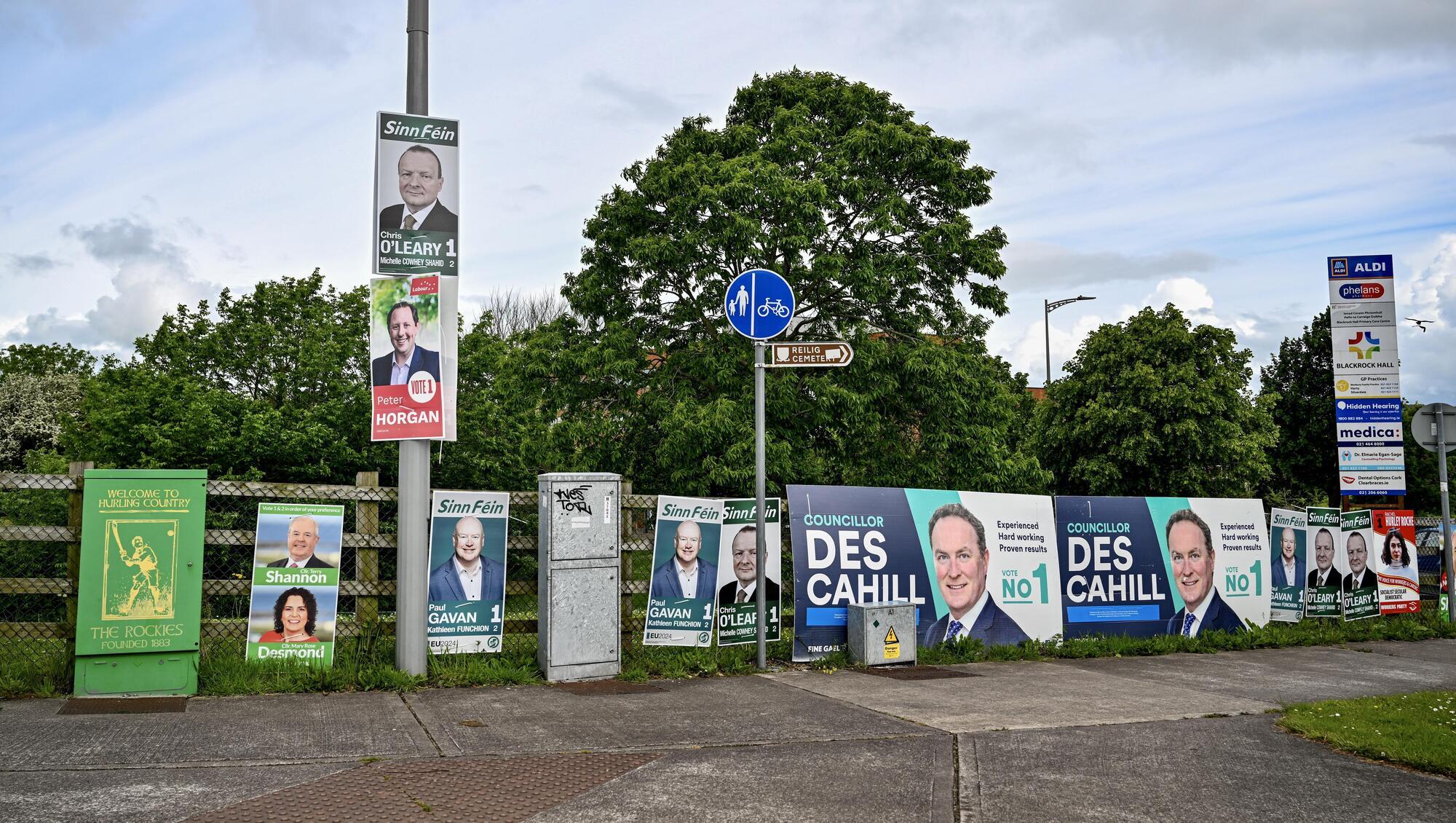
Political campaign posters fill every available space of fencing at the junction of the Skehard Road and the Mahon Link in Cork. Picture: Chani Anderson

Is it just me, or are these the weirdest set of elections you’ve ever seen? You know there are elections going on, because every lamppost in the country is festooned with posters. My letterbox is in danger of falling off the wall under the weight of the leaflets surreptitiously stuffed in there, I’m guessing at dead of night.
I live in a very polite and friendly neighbourhood. We greet each other in the street, we help people across the road if the need it, we (mostly anyway) take care to manage the material that all the friendly dogs around here would leave behind if it wasn’t managed. We’re nice, we’re decent, we’re ok around here.
But nobody has darkened our door. Not the National Party, none of the mainstream parties, not even that lad with the very dark poster who says he’s standing up for us and there’ll be no great replacement on his watch. I wouldn’t mind a chat with him.
Let me declare my biases, in case you didn’t know. I’ll be voting for the Labour candidates in the local elections. I don’t believe any party has a prouder record in local government. The greatest house building programme in Dublin, which succeeded in clearing many of the earlier slums, started when Jim Larkin stood for Labour and became Chair of the Corporation’s Housing Committee.
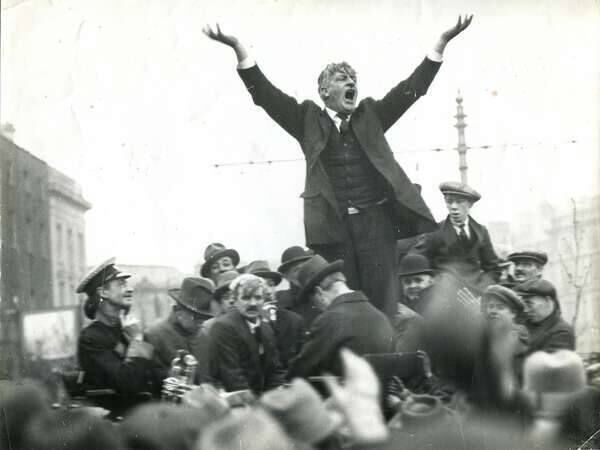
As Sean O’Casey said about him, James Larkin “was a man who would put a flower in a vase on a table as well as a loaf on a plate”. That was why he hated the indignity of the slums as much as the deprivation, and why he and all of his successors believed in the right to a home. You can check the historical record and you’ll discover that in good times and bad Labour build houses.
As far as Europe is concerned, of course I’ll be voting for Aodhán Ó Ríordáin. I first met Aodhán years ago when he recruited me to help in a campaign around children’s literacy.
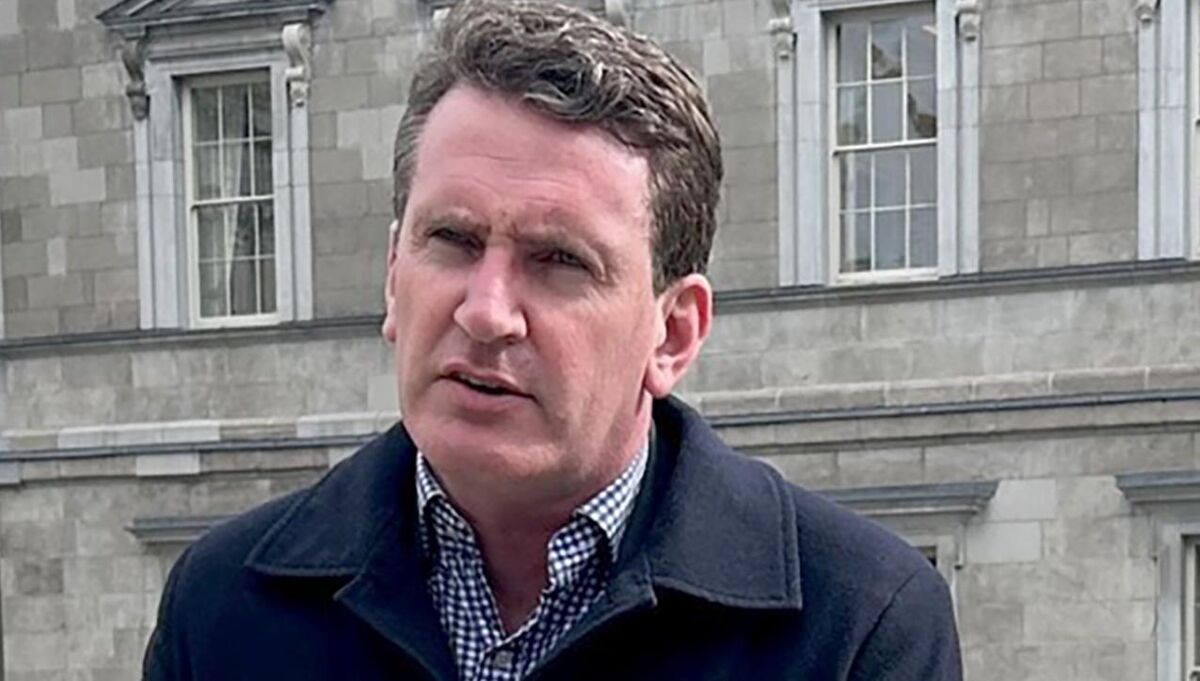
As a teacher then, he was determined to get Dublin’s libraries involved and he drove and drove until he succeeded. He’s passionate about kids, and passionate about breaking the cycle of poverty. He has always struck me as precisely the sort of person we need in the rather staid corridors of Europe. He’ll make the place hum by focusing on the things that matter.
And, by the way, if I were in a position to do so I’d be proud to be giving a number one to Fergal Landy in what I’m going to call the West and Niamh Hourigan in what I call the South (the mind-boggling geography of those constituencies baffles me). They’re both brilliant people, who have translated academic excellence into social activism that has made a difference in their communities.
But apart from that, what? There appear to be only two issues in these elections, one on the surface and one a bit subterranean. The government parties don’t really want to talk about either one. For sure, both the Fianna Fáil and Fine Gael websites proudly proclaim where they stand. Housing for all, says one. We’re backing home ownership, says the other. So far so nothing at all.
Then there’s Sinn Féin, said to be dipping in the polls (don’t believe a word of it). Their website has a pretty simple message — Change starts here. You have to work a bit to figure out what’s going to change and how. There isn’t a manifesto that I could find. Change seems to consist of “get rid of this disastrous government”. Fair enough I suppose. You can’t really distinguish between them and Keir Starmer in this election. But maybe they don’t want you to.
Almost certainly not a seat, because the plethora of far-right candidates hate each other as much as they hate the rest of us, so they can’t unite around a possible winner. But the underlying racism behind a lot of these campaigns remains poisonous and repellent. Even without a racist motivation there is no doubt that a lot of people in Ireland — who welcomed Ukrainians with open arms a couple of years ago — are now afraid of what immigration might mean. And no one in politics really wants to talk about it.
Look, these elections matter. Who represents us in local government, and who represents us in Europe, matters. The issues matter. Public service broadcasters and the newspapers are doing their dutiful best to maintain interest.
But there was a time in Ireland when elections like these created excitement, even a bit of pizzazz. There were launches, rallies, mass meetings. Sunday mornings were characterised by lads shouting at us from lorries outside Mass. People would knock on your door, humbly ask you for your vote. In fact I passionately believed that it was an article of political faith in Ireland that if you didn’t ask for the vote, you didn’t get it.
Well, I’ve yet to meet anyone who got a knock on the door. I’ve yet to see a report of an exciting campaign launch. I can’t find actual manifestoes on most of the Party websites. It’s as if the entire political system wants to get these elections over and done without anyone noticing.
Maybe it’s all my fault. Thirty nine years ago to the day I devised an exciting and dramatic launch for Labour’s 1985 local elections. Thirty nine years, and the memory of it is still burned into my soul. The media were invited to an airfield so they could record and film an airplane swooping down to pick up a proud red banner with Vote Labour written on it. That would then fly over Dublin for the rest of the day.
Just like the walking disaster that is Rishi Sunak I picked the wettest day in history. The banner had been lying there all night as pound after pound of rain lashed down on it. The plane did eventually pick up the sodden yoke, but instead of proudly unfurling, it hung down like the tangled mess it was. We watched aghast as the plane struggled to gain height under the unexpected weight of the banner, until the pilot did the only thing he could to save his life. He ditched it, and it fell to earth, just like our hopes for the campaign.
Mind you, it made great television. I’m probably the only one who couldn’t watch it then, and I still go pale and trembly when I remember it. It took the Party several years to recover from the morale boost I tried to give them that day. As for me, I’ll never get over it.
It’s possible that even at this remove, there are party apparatchiks who, when someone suggests a brilliant wheeze to get a campaign off the ground, says, “do you not remember Finlay’s 1985 launch?”. And another great idea bites the dust. Who could blame them really?
CONNECT WITH US TODAY



Be the first to know the latest news and updates