Michael Moynihan: I think I’ve found the person to champion Cork and arrest decline
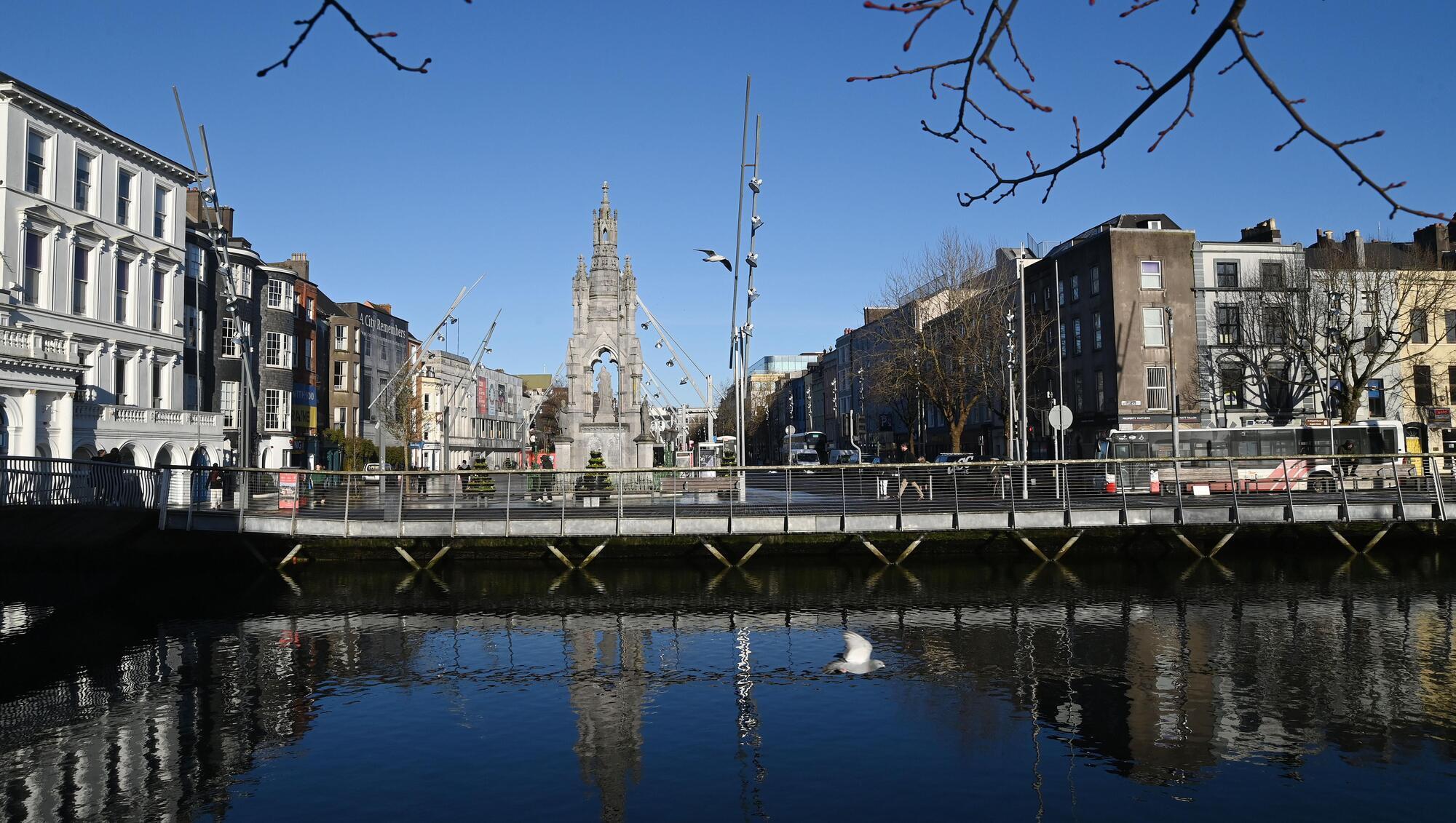
There appears to be nobody taking the fight against the decline of Cork.

Last week I wrote here about Cork city centre, saying how grim it was.
The column seemed to strike a chord with many readers, who agreed with the general points — that the city centre is not a welcoming place, that it shows signs of sharp decline, and, perhaps worst of all, that there seems to be no-one leading the fight against that decline.
A couple of readers asked what my solutions were, and I had to point out that I don’t run the local authority. In fact, not even my closest family members would want to live under my iron rule — er, benevolent reign.
But when they asked about a champion for Cork, if you like, I have a possibility or two.
And those alternatives are not remote figures located somewhere like Paris or Canberra, either. They’re from an hour and a half down the road, if you can get through the Dunkettle Interchange in good time.
I was in Waterford a couple of weekends ago, and it was eye-opening when it came to the civic offering.
Starting on the city quay you can go through 1,000 years of history in 1,000 steps, per the local tourism website: the Viking Triangle, which includes four museums, six national monuments, the House of Waterford Crystal, not to mention the birthplace of opera composer William Vincent Wallace.
(In the case of Wallace’s birthplace, there’s an obvious contrast with Cork. Take a look some day at the birthplace of one of the greatest Corkmen of all time, 23 North Main Street, as a comparison.)
Recently this newspaper carried an interview with Rupert Maddock, who just retired as Waterford city architect. He outlined the thinking behind their approach to that Viking Triangle idea, explaining that they wanted to incorporate the history and heritage of the city as they revitalised an area that was looking pretty run-down.
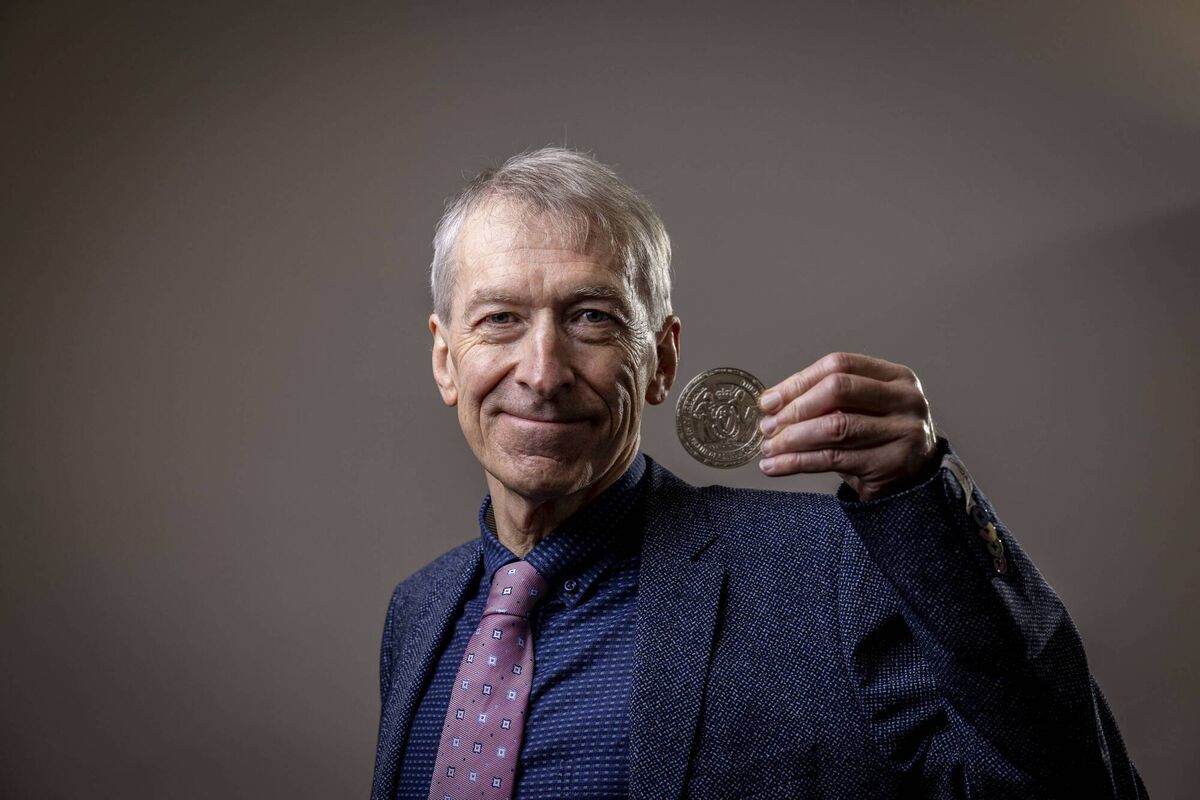
“The idea originally was that the museums would be arranged in chronological order: from Reginald’s Tower, which is obviously Viking; the Medieval Museum, which reflects the medieval history of the city; and the Bishop’s Palace, with 18th century to modern, and they were strung out along the medieval town wall which passes through all of the buildings.
“It was like beads on a necklace.”
See? That’s a vision. That’s someone championing their city.
Waterford has other champions. Take someone like Eamonn McEneaney, former director of Waterford Museum of Treasures, the man who led the creation of museums such as the Irish Museum of Time, the Irish Silver Museum, and, most recently, the Museum of the Irish Wake.
I need hardly add that all of this cost money. But I do need to add that it did not, to give a far from random example, cost €85 million without a hole being dug or a block laid. Cork’s Event Centre is a shameful ongoing mess compared to the brisk creation of a series of bespoke venues celebrating local heritage in Waterford.
The weekend I visited Waterford there wasn’t a specific festival or celebration going on, but the city has a good track record with such large events.
Spraoi is in August, the Harvest Festival is on the following month, and the big one takes over the city in the run-up to Christmas: Winterval.
Readers may be aware of Winterval for a very good reason. I know of people who travel from Cork to Waterford for the festival because there is nothing comparable in Cork coming up to Christmas.
Why?
This was the attitude to Christmas outlined by Cork City Council last November to Eoin English of this parish: “A public ‘Christmas lights switch-on’ event has not been held since 2019 and for reasons of public safety and challenges related to crowd management . . . a large-scale public switch-on event is not planned for this year.”
It was pointed out then that Dublin, Galway, and Limerick did not have switch-on events either. At the time I noted that Dublin had enjoyed a New Year’s Festival but Cork had not, suggesting the example set by the capital wasn’t being followed slavishly, but anyway.
Cork had a “pre-programmed, interactive, immersive lighting display” on Emmet Place last Christmas.
Waterford had a five-week festival which thousands of people enjoyed.
The mindset? Maddock told this newspaper: “If you want to put on a large event like the Harvest Festival, Spraoi or Winterval, it’s a completely different type of use of space than accommodating cars and vehicles — with thousands of people moving around the city.”
Hmm.
No mention of public safety. No reference to challenges related to crowd management.
Is it possible that they don’t try to hide behind Dublin’s example whenever it suits them?
Whatever the answer, Waterford was officially recognised as European City of Christmas 2024 at a ceremony in Madrid last January.
Maybe in time Cork will be recognised as the European City of pre-programmed, interactive, immersive lighting displays.
In that piece Rupert Maddock was asked if he had any advice for Cork. First, he laughed and said it wasn’t for him to advise Cork.
Then he added that what was needed was a flexible vision that incorporated an understanding of why and how the city has developed in the way it has: “Cork is 1,000 years old, so most of the history of the city is not the way we perceive the city now, it takes a little lateral thinking. It has been dominated by cars and vehicles only for the last 60 or 70 years.
“You can look up photographs from Cork from 100-120 years ago — that’s almost what you want the city to go back to, the way the streets had a wide variety of uses, people selling fruit and vegetables, with all sorts of public events happening.
“Cities were lively places, with multiple uses.”
Those few sentences show more understanding of what would improve Cork than I have ever read from an official in Cork itself.
Waterford isn’t perfect, obviously. There are probably Deise readers spitting out their coffee because of all the faults I didn't see on my visit.
But the city has key people committed to preserving its heritage, to attracting visitors, to repurposing dereliction, and to providing ambitious public events. I haven’t even mentioned its famous — and famously successful — Greenway, which was recently extended right into the city itself. Yet another winner.
Cork City Council recently advertised for a city architect. Clearly, we need to send a squad of masked agents down the coast in a boat to press-gang Rupert Maddock and bring him back to Leeside.
CONNECT WITH US TODAY



Be the first to know the latest news and updates