Irish monument marking both the rising and setting solstice sun — and it's not Newgrange
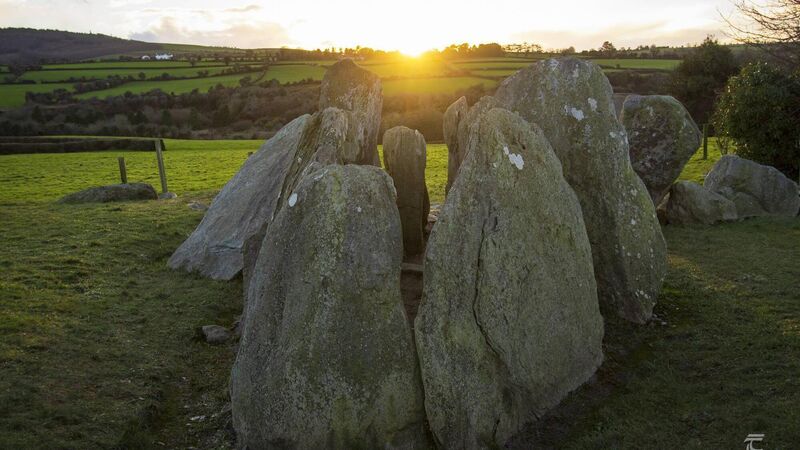
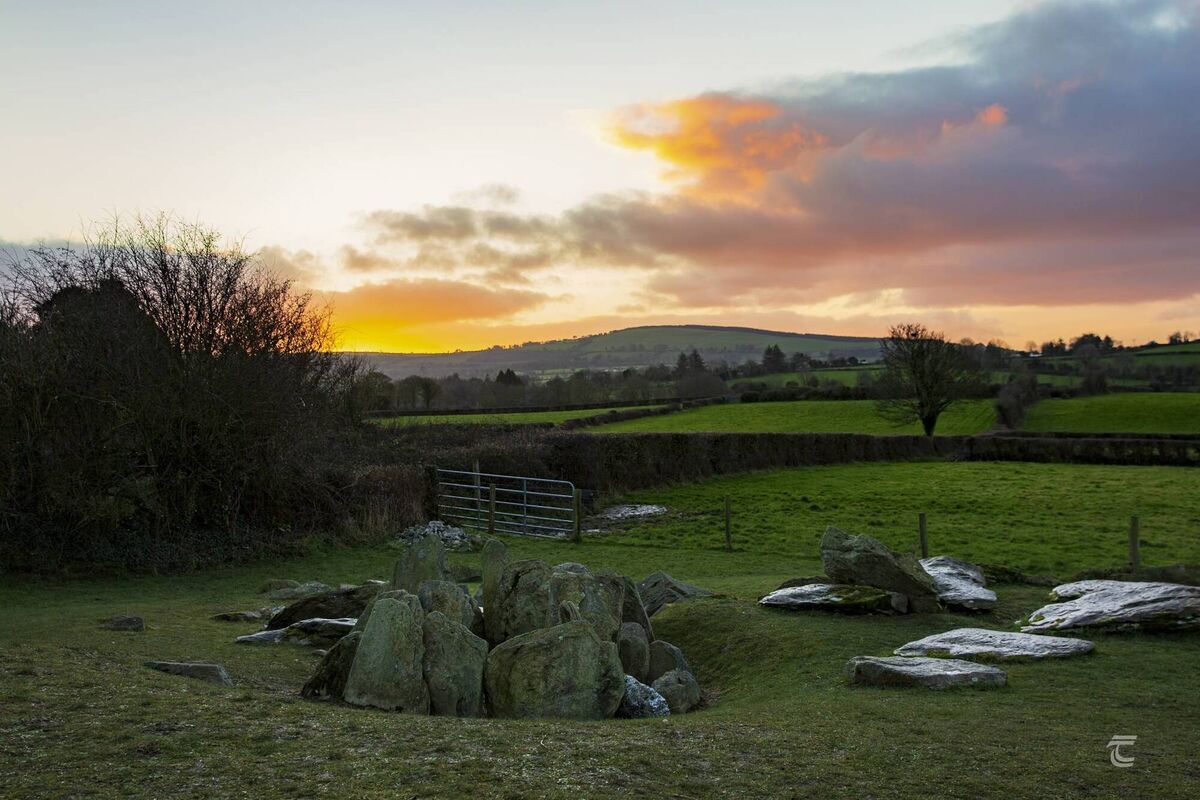
Knockroe: The western tomb aligned with the Winter Solstice sunset. Picture: tuatha.ie
As the winter solstice — Friday, December 22 — approaches, many eyes will turn to the great monument of Newgrange in the Boyne Valley. Newgrange has become world-famous for its winter solstice alignment. Every year — or at least on those years where the Irish winter sky is clear — a thin finger of golden light from the rising sun is channeled up the ancient passageway into the burial chamber. It has become a focal point for celebration.
Newgrange is one of more than 200 passage tombs recorded in Ireland. Passage tombs typically consist of a mound of earth or stone that covers a burial chamber. The chamber is accessed via a stone-lined passageway from where these monuments take their name.
These monuments date to the Neolithic period, generally constructed between 3,600–3,000 BC, though many continued in use for centuries after they were first built. Not all passage tombs have an astronomical alignment. Work by Frank Prendergast has revealed that fewer than 10% of passage tombs face the rising or setting sun at key times in the annual solar cycle, such as the solstices.
However, Newgrange is not the only passage tomb where people gather today at the winter solstice. Another monument is hidden away in the townland of Knockroe in the Lingaun Valley that forms the borderlands of Tipperary and Kilkenny. Though much smaller than the great tombs of the Brú na Bóinne, Knockroe has the distinction of being the only known tomb to mark both the rising and setting sun of the solstice.
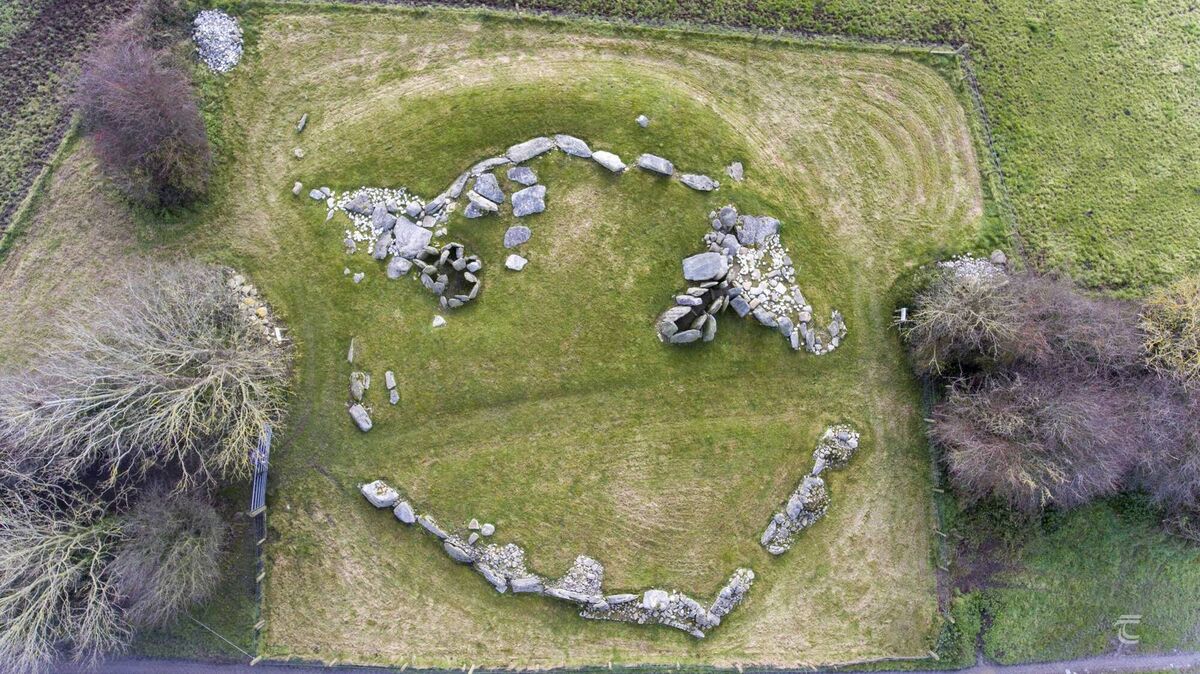
During its heyday in the fourth millennium BC, Knockroe would have appeared as an earthen mound surrounded by large kerbstones, with two stone-lined passageways — one in south-west and the other in the south-east of the mound.
One of the truly special things about Knockroe is that it has a dual Winter Solstice alignment, with the eastern passageway aligned with the rising sun, and the western passageway aligned to the setting sun on the shortest day of the year.
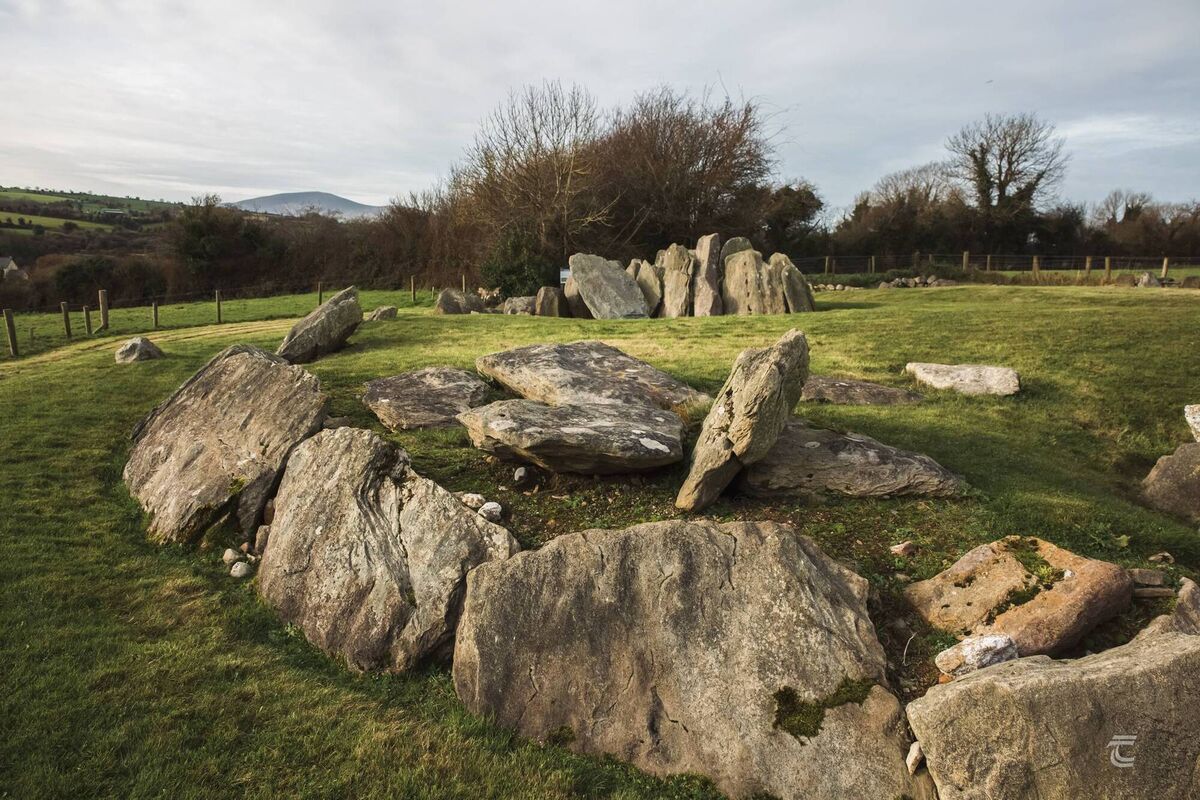
The tomb was archaeologically investigated in a series of digs led by Professor Muiris O’Sullivan. The excavations revealed that the tomb was constructed on a prepared platform that countered the natural slope of the ground. The tomb was made up of boulders at the base, with smaller stones forming the cairn on top.
There appears to have been a phased development of the monument. The eastern passage appears to be earlier, with the western added when the tomb was enlarged at a later time. Cremated human remains were discovered in both passageways along with bone and antler pins, beads, pendants and fragments of pottery.
The Neolithic builders of Knockroe were some of our earliest farmers in Ireland, so the knowledge of the passage of the seasons was critically important for their lives. Few days were as tangible and important as the Winter Solstice, as it marked the shortest day of the year — from here each day would grow longer as life and Spring returned.
🌤️#WinterSolstice2022🌤️
— National Monuments Service (@NationalMons) December 21, 2022
What makes Knockroe Passage Tomb #Kilkenny stand out from all other Neolithic passage tombs in Ireland is its dual alignment on both the rising and setting sun of the #WinterSolstice https://t.co/XZsn9NRWWC #HeritageWellbeing #BrighterDaysAhead pic.twitter.com/djYnOsqAoS
Imagine how dramatic it would have seemed to those early farmers to see the inner recesses of this great tomb illuminated once again. It is intriguing to consider what spiritual or religious meaning it may have had. As discussed by the psychiatrist Anthony Stevens, the natural cycle of the sun setting at night and rising in the morning links it with archetypal symbolism of death and rebirth.
Today, the experience still draws a crowd. Members of the local community gather for both dawn and sunset at Knockroe, to watch the light move up the ancient passageways once more. If you are lucky to be in attendance, Professor Muiris O’Sullivan, the archaeologist who excavated the site, is often there to talk about the significance of the monument. It is always a warm and friendly experience, shared by the local community, archaeological enthusiasts, and pagan groups alike.
The community event is on — though you should leave plenty of time for parking and to walk down to the site. The parking areas and lane to the site are likely to be muddy so wellies or boots are advised. Please note that Knockroe is an important national monument. Take care not to disturb the site and please leave no trace.
While the site normally sits in quiet seclusion throughout the rest of the year, it can be a busy and lively place on the solstice. But at the critical point a hush and thrill of excitement builds as the community shares the experience together, just like another community did more than 5,000 years ago: all of us standing in the dark... all of us waiting for the light.
- Neil Jackman is an archaeologist, travel writer, and owner of tuatha.ie, an online membership featuring articles, itineraries, courses, and more, for people who want to explore more of Ireland’s wonderful heritage
CONNECT WITH US TODAY



Be the first to know the latest news and updates