Workplace Wellbeing: How your manager has a central role in your mental health at work
Work can have a huge effect on your mental health, so it's vital to take steps to control your stress levels and for companies to prioritise employee wellbeing
Richie Butler, head of occupational health and wellbeing at the Sisk construction company. Pic: Moya Nolan
Thu, 13 Jul, 2023 - 18:13
Sharon Ní Chonchúir
TO WHAT extent does work impact our mental health? In a recent report, US tech company UKG set out to answer this question. Having interviewed 3,400 employees in ten countries, it found that 60% believed their job to be the single biggest factor affecting their mental health.
Dr Na Fu, a professor of human resource management at Trinity College Dublin, isn’t surprised. “Work takes up eight hours out of 24,” she says. “And as the boundaries between work and life have blurred and more of us check emails outside of working hours, many spend much longer than eight hours thinking about work. It’s no wonder it plays such a part in our mental health.”
The part it plays can be positive or negative, says Dubliner Dr Jennifer Hynes, professor of organisation and management at Berlin International University of Applied Sciences. “Work gives us the opportunity to learn new things, bolstering our sense of mastery, and to spend time with others, influencing our social resources,” she says.
“It can be a place to build self-esteem and professional efficacy and gives us a sense of stability.”
Yet not all workplaces offer such psychological benefits. “Some of us work in high-demand environments, and if there aren’t resources to buffer that, we can get stressed,” says Hynes. “If that occurs constantly, we get burnout.”
Others work in jobs with unpredictable schedules which can undermine their sense of financial security. And some work in controlling or toxic environments. “This can mean they lack autonomy when making decisions about work, feel stagnant, or face hostile interactions with colleagues and staff,” says Hynes.
Such feelings often spill over into people’s personal lives. “It’s common for people to take their worries home,” says Hynes.
“They vent to partners or take it out on them, which can erode relationships. They may cancel plans with others because their work is so draining and over time, their friendships and relationships deteriorate. In addition, they can turn to substances such as drugs, alcohol, food, or nicotine to soothe themselves, all of which can lead to a downward spiral.”
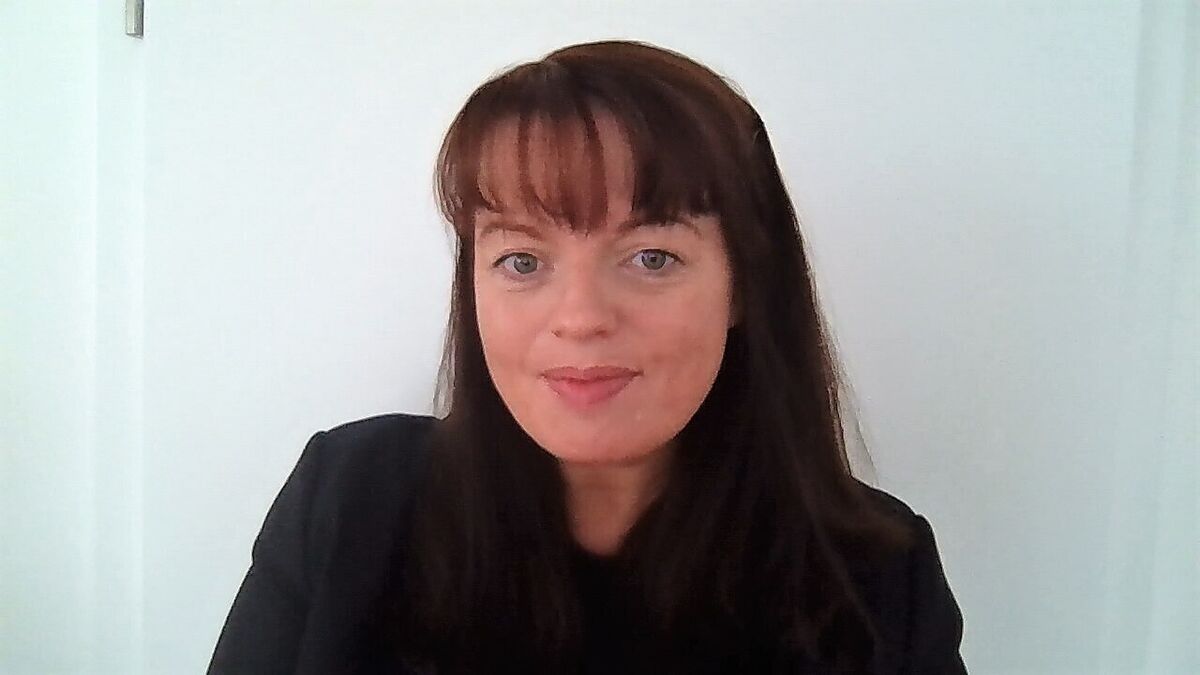
Professor Na Fu, TCD
Taking control
In the UKG report, 71% of employees said that work stress seeped into their private lives, with a detrimental effect on relationships and wellbeing. Some 64% said they would take a pay cut for a job that better supported their mental health.
For those of us not in a position to take a pay cut, Fu suggests you take control. As a first step, proactively manage notifications, particularly emails.
“So many people spend their days being interrupted by pings from devices,” she says. “There’s an expectation that we have to answer messages instantly, which is stressful in itself. Rather than spending all day on the alert, turn notifications off and only check messages at regular specified times.”
Another tip is to use technology to your advantage. “From Excel shortcuts to setting up email replies, there are so many ways you can automate boring, repetitive tasks,” says Fu.
Hynes recommends carving out personal time for yourself. “Spend time doing sports, walking, meditating, or meeting friends,” she says. “Your physical health buffers against stress and while you may feel exhausted and not in the mood to do something, it’s scientifically proven to increase happy hormones.”
Prioritise your nutrition too. “When you’re exhausted, it’s all too easy to grab something quick but try to have a healthy meal,” says Hynes. “Your body needs nutrients to cope with stress. Without them, you’ll become rundown and susceptible to colds, flu, and chest infections.”
While these strategies can boost our mental wellbeing, there’s only so much individuals can achieve by themselves. “We have power over some things,” says Hynes. “But there isn’t much we can do if we work for a corporate psychopath.”
The UKG report underlines the manager’s central role, with 69% of employees claiming that they had just as much of an impact on their mental health as their spouse did.
So, what can managers and leaders do to support mental health in the workplace? Fu suggests that they learn to check in, not check out. “Checking out involves asking for updates about work and making sure tasks are completed,” she says. “But checking in entails asking how people are and paying attention to their wellbeing, taking action to help if needs be.”
They can also make a conscious effort to manage stress. Too much stress leads to burnout. Too little, and employees lose motivation. Managers need to aim for just enough.
“We all know the difference between work projects that exhaust us and those that energise us,” says Fu. “Managers need to assess projects carefully, automating what can be automated and assigning tasks to draw out their team’s skills and creativity.”
Dr Jennifer Hynes, professor of organisation and management at Berlin International University of Applied Sciences
Employee needs
Investing in wellbeing programmes is another intervention that can help. “Just make sure that they are built around employee needs,” says Hynes.
This is something that Richie Butler, head of occupational health and wellbeing at the construction company Sisk, is trying to do for its workforce of 2,100 across Ireland, Britain and mainland Europe.
“My position was created when I joined in 2019,” says Butler. “Construction is a high-risk sector, so we had been looking after employee safety for years but based on feedback from employees, we realised they were looking for the same level of support for their physical, emotional, and mental health.”
The construction industry is particularly affected by mental health issues. “Two construction workers die by suicide in Ireland and the UK every day, which is higher than the national average,” says Butler.
“There is a multitude of factors for this, including long working hours, high-risk working environments, a male-dominated workforce, and, in many cases, workers living and working away from home and removed from their normal support structure of family and friends.”
Butler’s team is taking a data-driven approach to tackling this. “Lots of companies have wellbeing programmes that aren’t informed by anything in particular,” he says. “It can be a case of throwing mud at a wall and hoping some sticks.
“We’ve been reactive for too long, waiting for people to put their hand up before we helped them. The preventative element was missing.”
Butler and his team are working to identify “the associations between work-related stressors and negative health outcomes and to start addressing those.”
A physical health screening programme was administered to 1,100 employees. “The data from this should give us real insights into the predominant health risks affecting our workforce and we can tailor our programmes accordingly.”
Butler is committed to providing Sisk employees with a healthy work environment. “Such workplaces give people purpose and meaning, a sense of belonging and social connection, financial security, health benefits, and health prevention programmes that can have a positive effect on health outcomes,” he says.
“The flip side is that unhealthy workplaces can be damaging to physical and mental health. It’s our responsibility to tackle work-related issues that negatively affect our employees.”
It also makes economic sense to do so. “Happy, healthy employees equal high-quality work at an individual level and improved organisational performance through increased productivity and reduced absenteeism and presenteeism, to name but a few benefits,” says Butler.
“While the workplace has a direct impact on a person’s health and wellbeing, a company’s performance is dependent on the health and wellbeing of its people.”