Subscriber

Mick Clifford: State has failed another innocent person
The wrong men were jailed in one of the most notorious failures in Irish policing and judicial history. One of the men's family still awaits an apology from the state, writes Mick Clifford
Mick Clifford: State has failed another innocent person

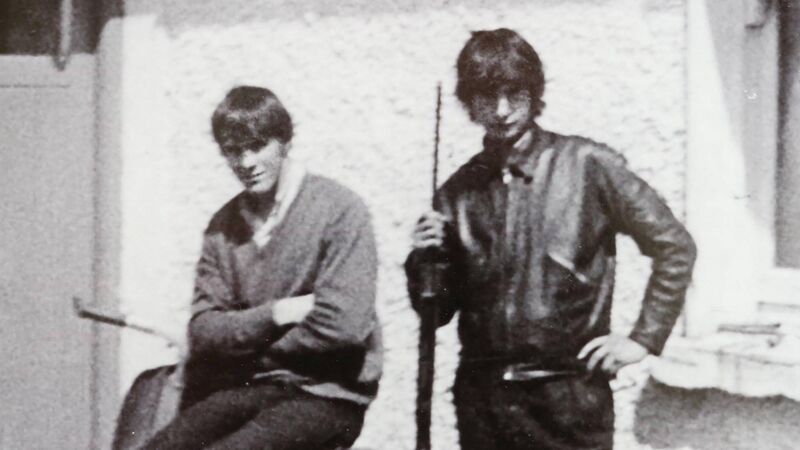
Martin Conmey and Martin Kerrigan in 1971. Picture: Fran Veale

Justice delayed is a way of life in this country. There are many examples of how justice is arrived at following campaigns to right a wrong that extends for decades. The old saying that justice delayed is justice denied certainly rings true, but at least, in some instances, there is at the end of a long road a resolution of sorts.

The most recent example was the inquest into the deaths of forty eight young people in the Stardust tragedy in 1981. The outpouring of pent-up emotion was writ large across the public square in April when the verdict of unlawful killings for all was announced. Friends and siblings of the bereaved who had carried their pain and grievance through practically all their adult lives were at last able to glimpse the relief of closure.

A similar closure occurred a few years ago for a family in Co Kerry who had spent nearly forty years living under a shadow thrown by the state. Joanne Hayes and her family received an apology for what they had been put through in the Kerry babies case in 1984. The government took the unusual step of repudiating a tribunal report compiled on the matter which had accused the family of lying.

There is another case of a serious injustice stretching back further than the two above which has gone unaddressed and is now freighted with urgency. Marty Kerrigan was beaten to death in December 1971 on the basis that he was suspected of murdering a neighbour. He was an innocent man and there is a body of evidence to suggest the actions of a small number of gardaĂ­ prompted the killers to act as they did. None of these gardaĂ­ wanted Mr Kerrigan dead but they did recklessly identify him as a killer and events thereafter spun out of control.

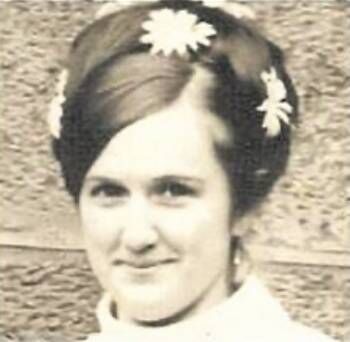
Murder victim Una Lynskey. 

The case in question began on October 12, 1971, outside the village of Ratoath in Co Meath. Nineteen-year-old Una Lynskey disappeared on the short walk from the local bus stop to her home. The murder squad were called in. A group of gardaĂ­ associated with this unit would acquire through the seventies a reputation for assaulting suspects. Early on in the Lynskey case they came to the conclusion that three local men in the close-knit community were responsible for what had befallen Una. Marty Kerrigan was 19, his friend Martin Conmey was 20, and the third man Dick Donnelly was 22. A number of sightings of a suspicious man in the vicinity at the time Una disappeared were discounted by the gardaĂ­.

Within a few weeks, the three were taken into Trim garda station. 

There is a copious evidence that they were intimidated and assaulted in custody. Both Conmey and Kerrigan signed statements implicating themselves in Una’s disappearance. The narratives were disjoined, didn’t make sense, and were highly inconclusive

After their release, the now obvious suspects, and particularly Kerrigan, were marked men. Six weeks later Una’s body was found in the Dublin mountains. Nine days after that, Kerrigan was kidnapped by Una’s two brothers and her first cousin and taken to a spot near where Una’s body had been located. They killed him and drove back home.

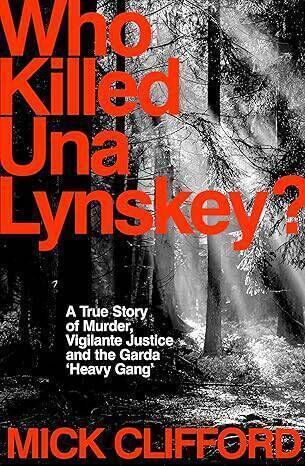
That is an outline of a case that is now nearly fifty three years old. I have written a book, Who Killed Una Lynskey?, which details the tragic sundering of a community and what in places is shocking evidence of malpractice and worse by some gardaí. 

Early on, they decided who the culprits were and thereafter built a case around that premise. When facts came into conflict with their “hunch” they got some new facts. Where interrogations didn’t yield results to back up their hunch, they allegedly used violence. When they gave evidence in the subsequent murder trial it seems all but certain that they committed organised perjury.
They didn’t set out to frame the young men. The most benign explanation is that they believed their hunch and were willing to go to great lengths to find Una’s killers and her remains in order to bring closure to the woman’s family. But the evidence was so threadbare that the continued pursuit of the line of inquiry was, at the very least, reckless. The case was the first in a whole string of cases right into the 1980s, culminating with the Kerry Babies, in which highly dubious confessions were obtained amid allegations of assaults in custody. Who Killed Una Lynksey? details the similarities and recurring themes in so many cases during that period, the same allegations, the same methods, the same small group of gardaí at the centre of it all.

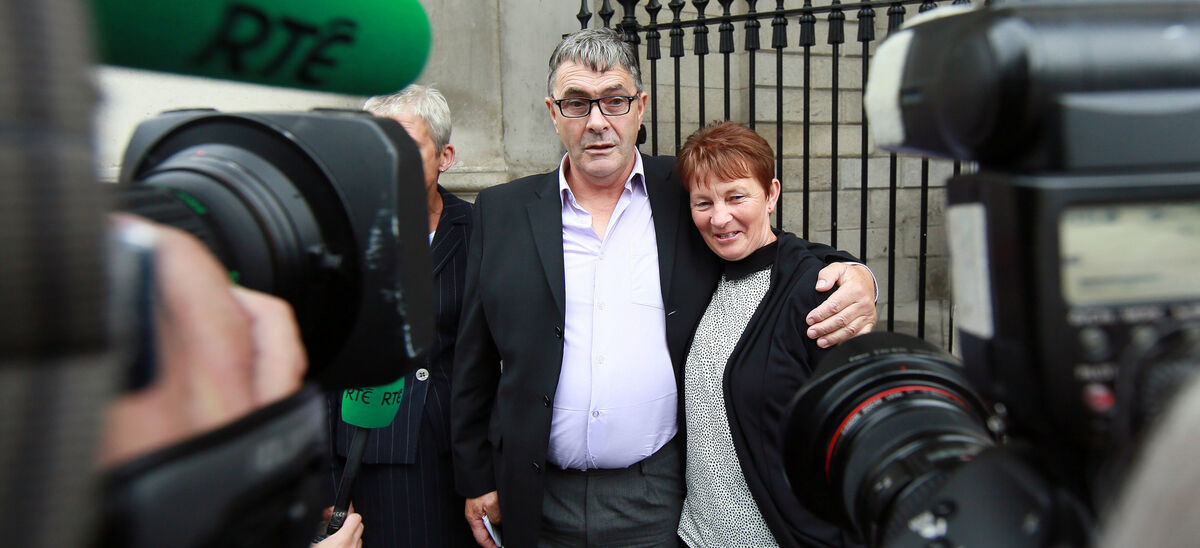
Dick Donnelly and Martin Conmey were convicted of the manslaughter of Una Lynskey in 1972. Dick successfully appealed, but Martin’s appeal was rejected. He served three years in Mountjoy. In 2010 his conviction was overturned by the Court of Criminal Appeal. Subsequently he received a certificate of miscarriage of justice and compensation from the state.

Marty Kerrigan never had a chance to clear his name. He died with the stain of being a murder suspect. There is no official process open to his next of kin to right that grievous wrong

 Two years ago, ahead of a TV programme on the case, Martin Conmey received an apology from the garda commissioner, Drew Harris. It is unclear what exactly the apology was for.

 Martin Conmey, of Porterstown Lane, Co Meath, at the Four Courts with his wife, Anne, after the Court of Criminal Appeal declared that his conviction for the manslaughter of Una Lynskey in 1971 was a miscarriage of justice.
 Martin Conmey, of Porterstown Lane, Co Meath, at the Four Courts with his wife, Anne, after the Court of Criminal Appeal declared that his conviction for the manslaughter of Una Lynskey in 1971 was a miscarriage of justice.

Shortly afterwards, Marty Kerrigan’s relatives met with Harris. By all accounts the garda chief appeared sympathetic to their plight and assured them that he would look into it. Separate to that, a cold case review of the killings of Una Lynskey and Marty Kerrigan was launched last year. That review has now delayed any prospect of an apology or some form of acknowledgment of a wrong done to a 19-year-old man that cost him his life. Why such an investigation has to delay any gesture for the Lynskey family is unclear.

The premature death of anybody is tragic and weighs heavily on bereaved loved ones. That is the case for Una Lynskey’s family. Their pain is compounded by the fact that nobody has been deemed culpable for her death. The Kerrigan family have had to bear an additional burden throughout practically the whole of their adult lives. His siblings, John, Mary, Ann, Katie, and Eileen now range in age from mid seventies to eighty plus. At this late stage surely they are entitled, as carriers of their brother’s flame, to an acknowledgment from the state that Marty Kerrigan was an innocent man, the victim of malpractice that left an indelible stain on An Garda Siochána.

Who Killed Una Lynskey? By Mick Clifford is published by Penguin Ireland and is on sale from next Thursday.

More in this section