Government survives no-confidence motion as Michael Healy-Rae resigns as junior minister
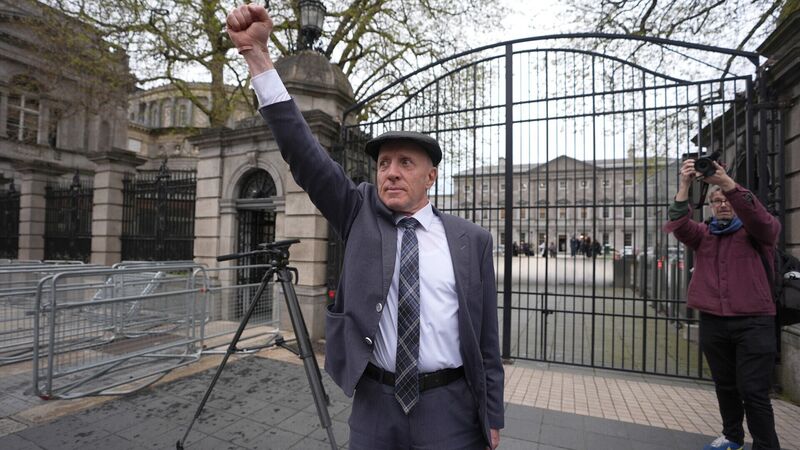
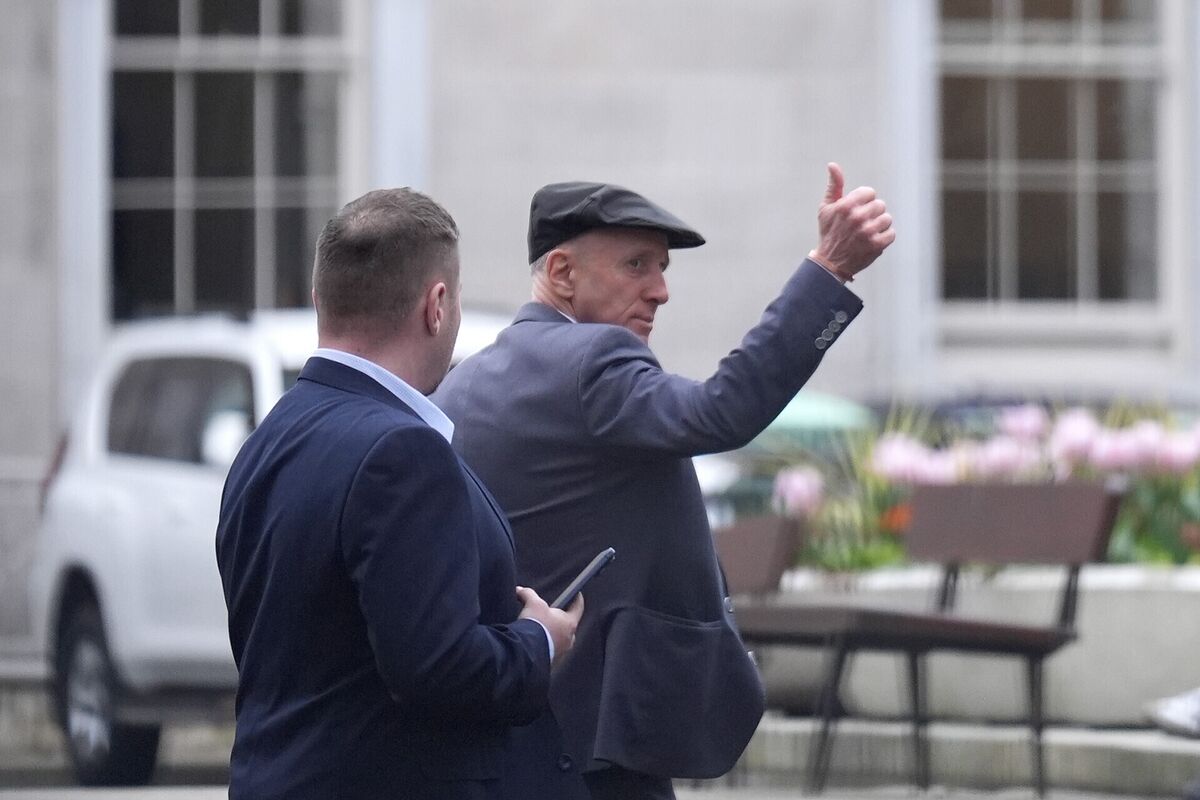
Independent TD Michael Healy-Rae waves to the crowds gathered outside Leinster House after resigning in the Dáil as Minister of State. Picture: Niall Carson/PA Wire
- The Government has defeated a no-confidence motion over the handling of fuel protests;
- Michael Healy-Rae voted no confidence in the Government and resigned as a junior minister;
- Government plans to pass €505m support package today;
- Price increases at forecourts have already overtaken Government’s first tax relief issues last month;
- Commissioner "absolutely appalled" by attempts to identify and abuse individual gardaí policing protests;
- What have we learned from how the fuel protest was handled?
- What is a no-confidence motion and how does it work?.
Michael Healy-Rae said he had been “mulling” over his decision to resign in recent days.
“I always thought I was a voice of Ireland, rural Ireland, definitely a voice for Kerry. I felt this was the right decision to make, to stand with the people of Kerry and not to be part of a Government that I wasn’t happy with,” Mr Healy-Rae said, speaking to reporters outside Leinster House.
“At the end of the day, I’ve made this decision and I’m standing true to the people that elected me in the first instance.”
Mr Healy-Rae said he did not regret going into Government and there was “nothing personal” in his decision to resign.
However, Mr Healy-Rae said he had “grave reservations” about the leadership of Taoiseach Micheál Martin.
On the €505m package of measures, which he helped negotiate, Mr Healy-Rae said it should have been “a lot more”.
Mr Healy-Rae said he and his brother Danny always “gauge” what is right and it was a decision they needed to make “on behalf of the people that are our bosses”.
He rejected any assertions that he was coerced into the decision by his brother.
Michael Healy-Rae's resignation as junior minister was not flagged with Government leaders.
A spokesperson for Taoiseach Micheál Martin said there had been no prior warning and that both Mr Martin and Tánaiste Simon Harris had found out about the resignation as it happened.
After Mr Healy-Rae announced his resignation, he went to the Taoiseach's office to hand in his letter of resignation, but was forced to wait as Mr Martin was on a scheduled phone call with Canadian prime minister Mark Carney.
Unlike Michael Healy-Rae, fellow high-profile independent Michael Lowry stayed loyal to the Government, but conceded that it had failed to communicate effectively with people.
He claimed Government-affiliated independents had “used our influence” on the introduction of financial support for key sectors of the economy, including hauliers, farmers, and bus operators.
Mr Lowry said “we in Government” did not respond “effectively in a timely fashion” and failed “to listen and understand the extent of people’s worry and frustration”.
“We all have encountered anger, resentment and outright hostility, which, in my view, arises from indecision, slow intervention and failure of communications.
“The protests started out with many aggrieved, hard-working, decent, respectable people who were worried sick about their future.
“It was later infiltrated by undesirables whose only agenda was to cripple the country and bring down the Government.”
He then said: “Sinn Féin and others on the left have inflamed a very volatile situation. They wanted to cause the country further suffering in a point-scoring exercise against the Government. I want to say this today and put it on the record: Sinn Féin are the most hollow, cynical, destructive political impostors we have ever witnessed.”
The Government has survived the no-confidence motion over the handling of the fuel protest crisis.
92 TDs voted confidence in the Government while 78 voted no-confidence. Danny Healy-Rae voted against the Government.
After over two and a half hours of debate here in the Dáil and an explosive resignation, we’re now waiting for votes to be cast on whether TDs have confidence in the Government.
Even with the resignation of Michael Healy-Rae and the expectation that Danny Healy-Rae will vote against the Government, it retains a majority.
It will be a roll call vote, so we'll know straight away who is backing and who is not backing the Government.
Several ministers told the that they were not aware that Michael Healy-Rae was about to resign.
One senior Government source said Mr Healy-Rae's resignation was coming “since the day they entered”.
The Kerry TD said when he canvassed in previous elections, he said he would go into Government if the opportunity was right and it was good for his constituents.
“But now the people of Kerry are telling me that they’re unhappy with this Government. They don’t want to see me or any Healy-Rae supporting,” Mr Healy-Rae said.
“It’s a lesson for people in the future. I adored being a minister in the Department of Agriculture because I felt I was able to do good and I was passionate about my job.”
After announcing his resignation, Mr Healy-Rae left the Dáil Chamber with his brother, Danny.
He returned 25-minutes later, but as his seat is still with the Government benches, he is sitting with Fianna Fáil TDs. He shook Tánaiste Simon Harris’ hand as he took his seat.
Read More
Michael Healy-Rae has confirmed he will vote no confidence in the Government and will resign as a junior minister.
“I’ve always looked at myself as a gauge of the people of rural Ireland, and I really believe that I am,” he told the Dáil.
“When I see people on the side of the road, when I’ve seen grown men crying… when I met tractor men, lorry men, farmers and when they were telling me how unhappy they were, the leader of the country should have listened.
“Because of the fact that I believe this government have let the people of Ireland down, I will be voting no confidence in the leader of the country, and I will be tendering my resignation as a minister of state from now.
“I would ask that future governments and this government that they would listen, that they would be kind, that they would be understanding.
“There are farmers that are really suffering so much at present. There are agricultural contractors that are really suffering.”
Mr Healy-Rae had been Minister of State with responsibility for forestry, farm safety and horticulture within the Department of Agriculture.
He had supported the Government formation alongside his brother, Danny Healy-Rae.
Ruth Coppinger said the protests stemmed from the previous budget.
“You would not listen to the Opposition who were saying this was not dealing with the fundamental problem that there’s a cost-of-living crisis,” said the People Before Profit-Solidarity TD.
Paul Murphy, a People Before Profit TD, said it appeared the Government would hang on because of the votes of the Regional Independents.
“There’s a very important lesson for everybody in that. Don’t trust these fake independents. These are sheep in wolves' clothing, people who pretend to stand for the ordinary person but in reality, just seek to get into bed and get into Government with Fianna Fail or Fine Gael,” Mr Murphy said,
Green Party leader Roderic O’Gorman, meanwhile, accused the Government of making a difficult situation worse with protests.
“Ministers caused confusion, unnecessarily raised tensions and ultimately failed to protect the Irish people’s ability to move and go about their business for five long days,” Mr O’Gorman said.
Holly Cairns, the Social Democrats leader, said the cost of living crisis did not emerge six weeks ago when US President Donald Trump launched a war in Iran.
“It has been growing and growing for years, and this Government has had the resources to provide meaningful support,” Ms Cairns said.
She said the Coalition has refused to do that, while the public has seen it waste “countless billions” and fail to deliver public services, housing and infrastructure.
Ms Cairns said this is being done while ministers give “sermons about the importance of fiscal prudence”.
The Cork South-West TD said her party did not agree with the blockading of critical infrastructure, but that it understood people’s frustration and “growing sense of desperation”.
Ms Cairns said the failure to help people has created a “vacuum” which allowed a number of far-right actors to “hijack the protest to their own agenda”.
Meanwhile, deputy leader Cian O’Callaghan criticised “GI Jim O’Callaghan” for fanning the flames by threatening to call in the army on protesters.
Junior minister Jerry Buttimer criticises Ms Cairns, saying that leadership “isn’t about sticking your finger in the air and wondering what way the wind is going”.
He described the motion brought forward by Sinn Féin as being a “charade”.
“Our language and our words matter,” Mr Buttimer said.
Sinn Féin’s Matt Carthy said Fianna Fáil and Fine Gael backbenchers are under more pressure than they have been for a “political lifetime”.
He said this pressure isn’t coming from Sinn Féin, but from their own constituents.
“Sinn Féin tabled the no-confidence motion, but we’re just the messenger, folks,” Mr Carthy said.
“The Government has failed, and you’ve lost the trust of the people.”
He criticised the Government for its previous budget, saying it had made people “worse off”.
“It’s time, a chairde, to pick a side. You’re either on the side of those you pledge to represent, or you’re on the side of this debacle of a Government.
Jack Chambers, the public expenditure minister, said all TDs fully understand the pressure that rising costs are placing on the public.
However, he criticised some of the actions of protesters last week, saying that blockades of critical infrastructure were “reckless, irresponsible and deeply concerning for our society”.
Mr Chambers said the Government was able to make its interventions on Sunday because of the economic strength of the State, saying the Government needs to be “careful in how we expand expenditure”.
He particularly targeted the opposition, saying the opposition is only calling for a model of “higher tax, higher spending, more expansion, and continued populism in every decision”.
Education minister Hildegarde Naughton goes on the attack against Sinn Féin.
She says that the opposition party had not spoken on the impact that blockades had on sick people or people going to work.
She goes on to outline some of the work of her department.
Housing minister James Browne says that Ireland is being impacted by "events that seem very far away" and that the war in Iran reminds us of our place on the edge of Europe.
He says that the Government has responded in a "robust way".
Foreign affairs minister Helen McEntee said the world is going through a period of “profound global instability”, stemming from the US-Israeli war in Iran and the blockade of the Strait of Hormuz.
She said this blockade has had “far-reaching consequences” and has sent “shockwaves” through global markets.
“We all know it is directly impacting families and businesses here in Ireland. We can see that the pumps, we see it in our bills, we are seeing it in the cost of living that people are facing every day,” Ms McEntee.
The foreign affairs minister was critical of the fuel depot blockades last week, saying it prevented fuel from reaching communities and placed “further strain” on those communities.
Labour leader Ivana Bacik says that the Government is "zoned out" and takes aim at media minister Patrick O'Donovan's suggestion that the media regulator examine media coverage of the protests.
"Goodbye Victor Orban, hello Patrick O'Donovan," she says.
She adds that this Government is the most "ideologically right-wing" in a generation and has rolled back on climate change, employment laws and cost of living supports.
Ms Bacik calls for Mr Martin to call in the US Ambassador and that America is "not acting as a friend anymore".
Pearse Doherty, the Sinn Féin finance spokesperson, has excoriated the Government over its handling of the fuel protests.
“A Government that doesn’t listen doesn’t have the confidence of the people, and by God, this is a Government that doesn’t listen,” Mr Doherty said.
He said people are being crushed by the rising cost of living, particularly due to fuel.
Mr Doherty said the Government had left people with no option “but to rise up and take to the street”.
He said the Government’s initial package had been an “insult”, with any benefit being wiped out immediately.
He said the additional €505m package would not fundamentally change things for “ordinary households”.
“This is not a solution. It is a holding operation designed to contain the anger, not solve the problem,” Mr Doherty said.
He called on the Government to further cut excise on petrol and diesel to a level which makes it affordable, remove carbon tax from home heating oil and green diesel.
Mr Doherty said the Government should provide energy credits to the public.
“People are angry, and people are struggling, and people are being pushed to the limit,” Mr Doherty said.
After a dressing down for the chamber by Ceann Comhairle Verona Murphy about how rowdy things had begun, it's time for Mary Lou McDonald to lead off for the opposition side.
She says that the Government's ask for confidence is "brazen from people who have abandoned the Irish people". She says that the Government "tried to short-change people with half measures", "refuses to listen", and "acted only to inflame" the situation.
She says that the coalition lacks empathy and "its time is up".
She says the seeds for the current issues had been sewn in last year's Budget and had "left people worse off" despite spending €9.4bn extra. She said that families are feeling the cost of living in supermarkets, petrol pumps and when deciding on "heating or eating".
She adds that the Government had responded by increasing school transport fees and exam fees and then "walked away".
Ms McDonald criticises the Government for allowing the Dáil to rise for 20 days, something that she had written to the Taoiseach about and "you ignored me because you know your time is up".
"People are calling for real leadership and you don't provide that," Ms McDonald says.
"You demeaned peaceful protesters...because you decided it was beneath you," she adds.
"As if your government has some lofty standards about who it will meet."
She goes on to say that the Government had "threatened people" with sending in the army.
"People see a government that is out of touch, refusing to act in their interests...big promises made at the general election broken at the first hurdle," Ms McDonald says.
She ends by saying that the Government should allow an election.
Seán Canney, who leads the independent ministers, called for the opposition to reflect on their plans to remove the Government.
“If the opposition succeeded in the aim to put this Government out of business, those €755m of supports will not be in place for the people of Ireland,” Mr Canney said.
He hit out further at the opposition, saying some had actively encouraged obstruction and said this was not acceptable.
“Key infrastructure was placed under threat. This does not help anybody. We need to work together in these unprecedented times,” Mr Canney said.
“The war in Iran is affecting every single citizen in this country. The State can’t handle every single element of this pressure, but we have worked collectively and in partnership with other Government parties to introduce key supports to ease the burden.”
Tánaiste Simon Harris began his speech by immediately criticising Sinn Féin, saying they had intended to bring forward a no-confidence motion before the Government’s measures had been announced.
“In other words, the no-confidence motion is just another one of their stunts, and in the cold light of day, people know that,” Mr Harris said.
Mr Harris said the Government has deployed the “State’s balance sheet” to help maintain jobs, livelihoods and incomes.
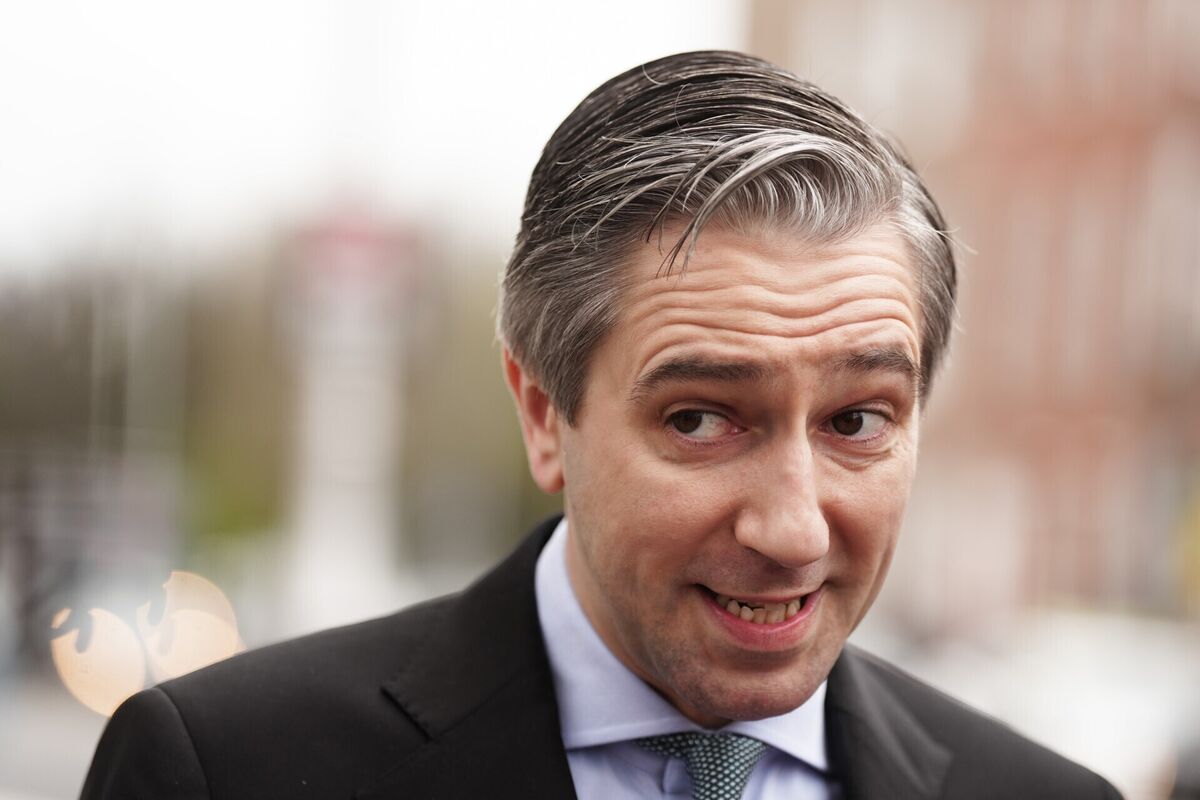
In particular, the Fine Gael leader refers to measures brought forward in previous budgets, including the introduction of free school books, cuts to Vat on gas and electricity and increased minimum wage levels.
Mr Harris accused the opposition of having “no shortage of spending plans but no strategy for growth”.
He said the airwaves were filled with people who “shout the loudest”, but this volume can be mistaken for “consensus”.
“Yet beneath the noise was the cancer patient who couldn’t get to their chemo, the expectant mother who didn’t get to their check-up, and the man who didn’t get to his dialysis appointment,” Mr Harris said.
The Fine Gael leader acknowledged there are “genuine, hardworking, concerned people” who joined protests because they’re “feeling the pinch”.
Mr Harris said the Government would be working to “make sure work pays and that tax reform is firmly on the agenda” in the upcoming budget.
He said the Government’s management of the economy has ensured the Coalition went into the Middle East crisis from a “position of strength”.
He added the Government had done more than most in its supports, due to the strength of the public finances.
Ceann Comhairle Verona Murphy begins the debate by outlining the proceedings for the watching public.
She reminds members of the Dáil that they are bound the rules and that their counterparts are "entitled to a fair hearing".
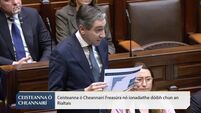
As the Government has tabled a counter motion of confidence in itself, Taoiseach Micheál Martin begins by moving the motion.
He says that "we need to talk about the huge impact of rising oil prices" but also of protecting jobs and getting Ireland through a period of international turmoil.
There are structural issues to be addressed, he says, and "welcomes and honest debate" on energy prices.
However, today, he says, the focus has to be on oil prices.
"The opposition claims the Government has done nothing...this is manifestly untrue," he says, saying that the rise in prices is little to do with his government, but rather to do with the war in the Middle East.
The €505m plan announced on Sunday is "designed to protect jobs and keep costs down". He says this goes beyond helping lobby groups and will keep costs down across the board.
He says that Sinn Féin TD Matt Carthy had claimed that the Government is a "profiteer" on fuel costs, but says that the Government is spending more on supports than it is taking in in additional taxes. He points out that Ireland has rolled out the largest per capita support in Europe and that Germany's is 90% lower.
Mr Martin says that the answer is not straightforward and that any politician who says it is is not being honest.
Turning to last week, he says that Ireland is a place where people are free to protest and do so every week.
"Everybody has a right to protest, but nobody has the right to appoint themselves as the voice of the people," he says, adding that the blockades seen last week had threatened jobs.
"Oil intended for Ireland was about to be sent elsewhere," he says.
"No group has the right to say that it will decide who will get fuel, who gets to go to work or who gets to export."
Mr Martin says that gardaí acted with the "utmost professionalism" under difficult conditions.
He goes on to say that there are "many extreme groups" in Ireland who claim to speak for people. He says that most who protested did so reasonably, but that some had targeted gardaí, truck drivers and politicians and that this should be condemned.
The Government has a clear mandate, he says, and has "an ambitious programme of work".
Price increases at fuel forecourts have already overtaken the Government’s first tax relief issued last month, and it remains “uncertain” if the new reduction will offset the hikes to come, AA Ireland has warned.
Its latest fuel price analysis suggests that diesel prices remain elevated at €2.14 per litre on average in April, while petrol is costing an average of €1.91 a litre.
In the case of diesel, this has risen 24c in the space of a month, while petrol is up 10c.
These rises followed the Government’s cuts to diesel and petrol in March, and the AA said the increases at the pumps had already overtaken this initial support.
Following unprecedented scenes of protest across the country last week, the Government has announced an additional 10c reduction in both petrol and diesel, taking effect from midnight to the end of July.
“Motorists are continuing to feel the pressure, with diesel prices remaining well above the €2 per litre mark,” an AA spokesperson said.
“The Government’s latest intervention will provide some short-term relief, but the scale and speed of recent increases mean many drivers are still paying significantly more than earlier this year.
“The introduction of a second round of tax relief within weeks highlights the severity of the situation. While these measures are welcome, it remains uncertain whether they will be enough to offset continued volatility in global oil markets.”
The Government’s proposal to scrap Leaders’ Questions has been formally agreed this afternoon, with TDs now set to debate a motion of confidence.
The Order of Business was passed by 93 votes in favour, compared to 74 votes against.
We can expect a similar margin later this afternoon, when TDs vote on whether they have confidence in the Government.
However, the question is how Danny Healy-Rae will vote this afternoon, after signalling he may not back the Government.
He did not cast a vote during the Order of Business vote.
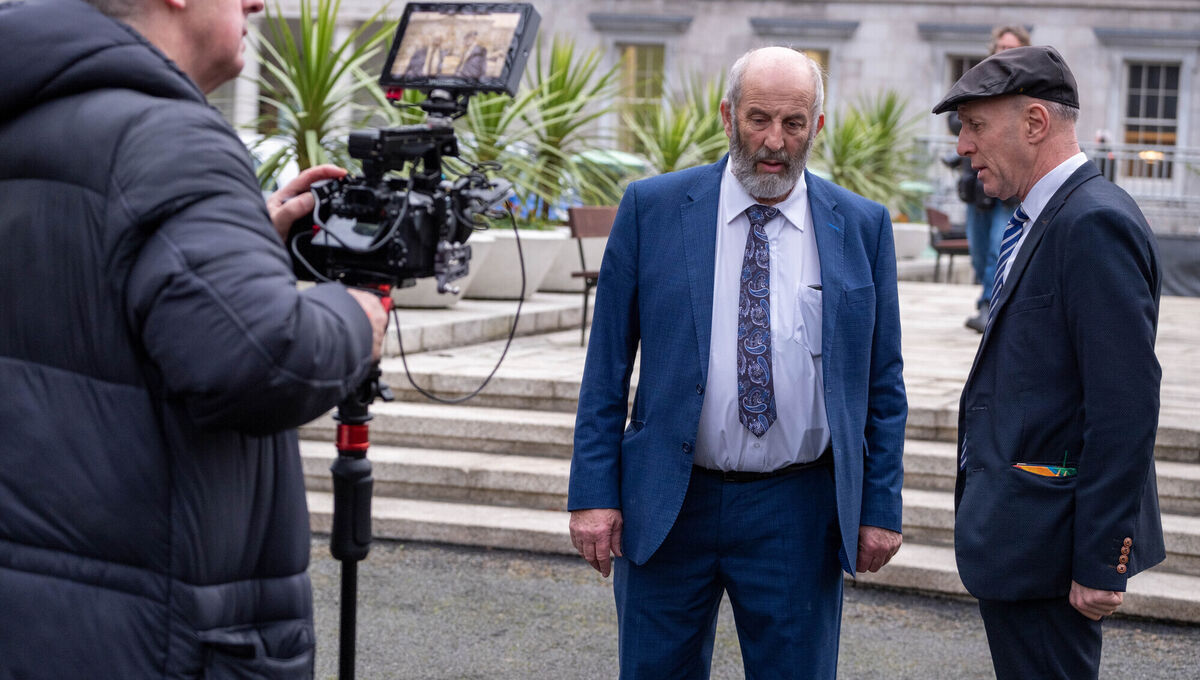
Before the confidence motion, the opposition is criticising the Government's decision to hold the motion in the time normally occupied by Leaders' Questions, Taoiseach's Questions and Questions on Policy or Legislation.
Labour's Duncan Smith says that what will come today is "more spectacle than scrutiny" as Sinn Féin's Padraig Mac Lochlainn calls it "unacceptable".
Independent Ireland's Michael Collins asks: "Why the silence?"
Government chief whip Mary Butler says that the scheduling is "normal practice" when a no-confidence motion is moved.
Already some angry scenes, and the debate hasn't even started.
Backbench Government TDs have a “chance to back the ordinary Irish person” and vote against the coalition in a confidence motion, Sinn Féin has said.
Party TD Pearse Doherty said the Government “continues not to listen to people” and instead took an approach of “insulting, demeaning and threatening” those who joined the protests.
Addressing the upcoming confidence motion, he said: “I say to every single Fianna Fáil and Fine Gael TD and indeed the independents who are backing them, that today is a chance.
“It’s a chance to stand up, it’s a choice that everyone is going to have to make, and the choice is very simple, are you going to back the ordinary Irish person, or are you going to back Micheál Martin and Simon Harris, who have abandoned them, who have left them behind at this time of a cost-of-living crisis?”
The Sinn Féin finance spokesperson was questioned repeatedly about whether his party supported the blockades.
Mr Doherty said he supported the protesters and “what they have done to get the Government’s attention”.
“The real question is, why did it take people to go to those lengths to actually get the ear of Government? Government that still refuses to listen to them,” Mr Doherty said.
The Sinn Féin TD for Donegal said the Dáil not sitting last week was “unacceptable” and if the Government had acted, there would have been no protests.
Kevin McPartlan, chief executive of Fuels for Ireland, said that excise cuts for petrol and diesel will not feed through immediately at forecourts around the country.
“We understand that motorists will expect to see the excise reduction reflected at the pump as quickly as possible,” Mr McPartlan said.
“It is important to say that this may not happen at every forecourt immediately, and that should not be misunderstood as a failure to pass on the tax cut.
“The reason is practical. Excise is applied when fuel leaves a terminal or refinery, not when it is sold at the pump.
“In recent days, the industry has been operating under disrupted conditions, and the priority has been to keep fuel moving and forecourts supplied where possible. As a result, some of the fuel arriving at sites in the immediate aftermath of the change will still have left facilities at the old excise rate.”
Mr McPartlan said it may take between 48 and 72 hours to feed through excise cuts to consumers, saying the “overwhelming majority” would be passed through by the weekend.
The Government is due to pass the excise cuts via financial resolution later this evening, with 10c cuts to petrol and diesel and 2.4c cut to green diesel.
The confidence motion in Government is an “acid test” for independents, People Before Profit leader Richard Boyd Barrett said at Leinster House.
He said People Before Profit-Solidarity would vote against the Government.
“We take today as an acid test for some independents, as to whether they are genuinely independent and standing on the side of ordinary people in this country, or whether they are Fianna Fail and Fine Gael, in disguise, as quite a few of them have shown themselves to be.”
On his way into Government Buildings this morning, Taoiseach Micheál Martin said some learnings can be taken from last week’s protests.
However, he said there was an “absolute obligation” on the Government to get critical infrastructure reopened, including Whitegate oil refinery in East Cork and ports.
“We export about 90% of everything we make in this country. So the ports are the lifeblood of the economy, and if the ports were blockaded for any length of time, people would have lost jobs, people would have been put on part-time, production would have ceased.
“It would have been very serious. That’s the balance here.”
Mr Martin said the Government supports people’s rights to protest, but insisted there needs to be a distinction made between “the blockading of absolutely critical national infrastructure and protest”.
The Taoiseach also pushed back on comments by the Irish Congress of Trade Unions (Ictu), which told RTÉ Radio's Morning Ireland there is a “hierarchy of rights” in the country.
“It seems that if you shout the loudest, you succeed,” Owen Reidy said.
The Taoiseach said it wasn’t fair criticism from the trade union body.
“I've been a strong advocate for an enhanced form of social partnership, and I'm open to enhancing social partnership as a means to navigating the current international crisis and the succession of international crises that we've had to deal with, from covid to Ukraine to the tariffs and now to the war in the Middle East,” Mr Martin said.
Tánaiste Simon Harris has distanced himself from comments made by media minister Patrick O’Donovan on Monday, suggesting that RTÉ’s coverage of the blockades needed to be reviewed.
Mr O'Donovan suggested he would ask Coimisiún na Meán to review whether the coverage had been balanced. The comments were criticised by the National Union of Journalists (NUJ), which branded them “sinister and deeply disturbing”.
On his way into Cabinet, Mr Harris dismissed the suggestion.
“I'm a big supporter of freedom of the media, freedom of the press, as is the government, as is the minister.
“In fact, Minister Patrick O'Donovan will be bringing forward legislative change later this year to further underpin the importance of freedom of the media, in line with a number of European developments.
“Free media, a robust media, is an absolute, vital part of our democracy.
“Of course, at the end of any difficult period, you can look back and say, ‘At a moment of national crisis, how do we get information out there? Are there learnings?’
“But I certainly don't think there's any need for any sort of formal review. These are matters for Coimisiún na Meán. We have, in this country, a free media. We have a robust media, and I think we have a fair media.”
A spokesperson for Tánaiste Simon Harris has confirmed that he will not travel to Washington DC this week.
The finance minister was expected in the US capital this week for International Monetary Fund (IMF) and World Bank meetings.
Regional Independent TDs and ministers are meeting this morning, with one source saying there is “serious pressure” being placed on Danny Healy-Rae to back the Government in its confidence motion this afternoon.
On Monday, there was some concern in Kerry that Michael Healy-Rae’s junior ministerial role could be in danger if Danny voted against the Government in the confidence motion.
One source said Danny had gone “out on his own” in his criticism of the Government over the fuel protests, describing the commentary as “not helping”.
Danny Healy-Rae called for both the Taoiseach and Tánaiste to step down, saying there needed to be a change of leadership at the top of Government.
One senior Government source said it would be more of an issue if Michael Healy-Rae votes against the Coalition, given his position as a junior minister.
Independent TD Barry Heneghan has told the that he will vote confidence in the government.
He says this is because “we need a functioning government, particularly at the moment of global insecurity, for any financial measures to come we need a functioning government”.
“Also the private wires legislation I am working on at the moment to reduce loss of renewables across Ireland can’t be done without one.”
The Government is set to defeat a no-confidence motion over its handling of the fuel crisis today, and will immediately look to pass its €505m support package in a bid to quell public anger over spiralling costs.
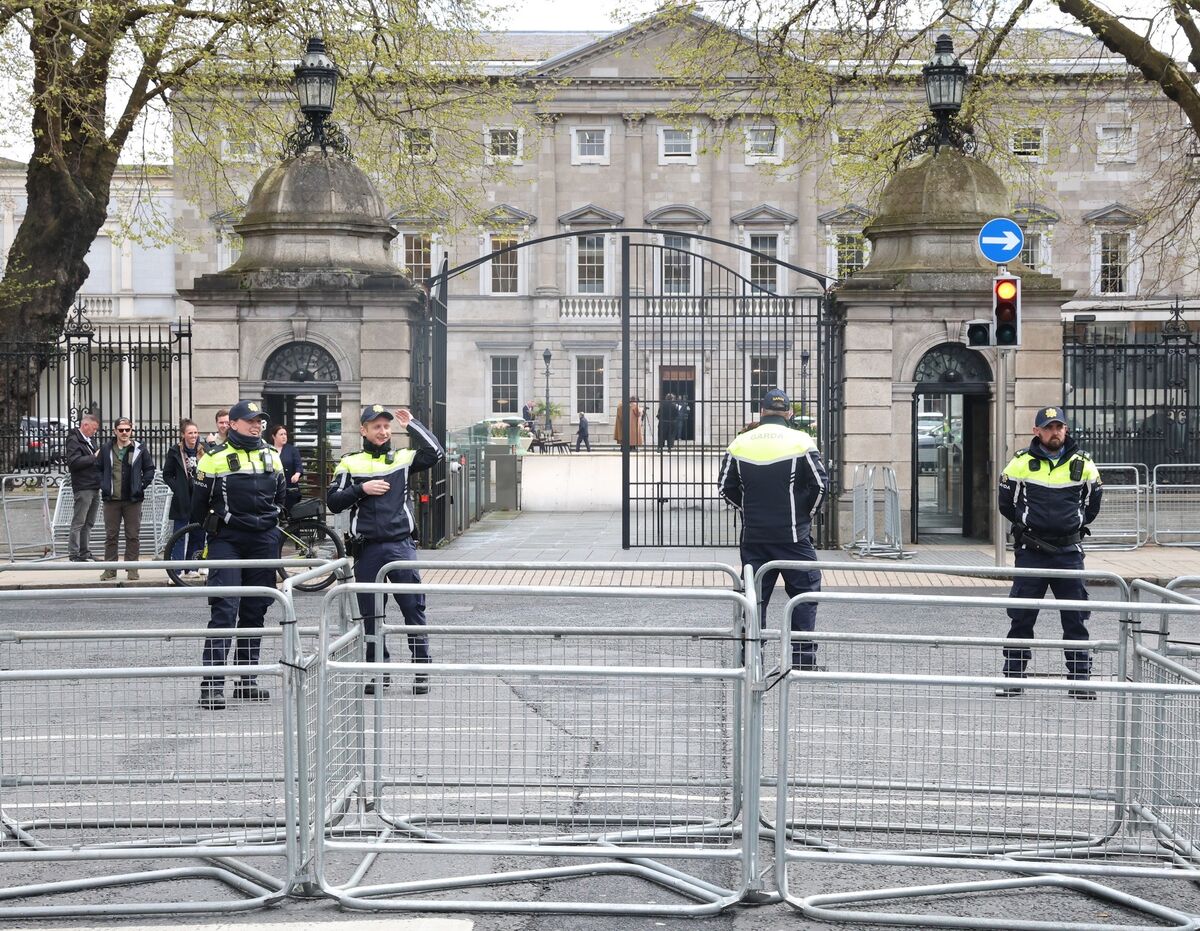
Barriers will be erected outside Leinster House in anticipation of further protests as TDs return to the Dáil after an Easter break dominated by blockades and fuel shortages.
While the Government is expected to win the no-confidence motion, some Independent TDs have declined to say how they will vote.
Independents Gillian Toole and Danny Healy-Rae have not said if they will back the Government.
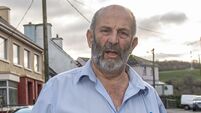
Kerry TD Danny Healy-Rae, whose brother Michael is a junior minister, has repeatedly criticised Taoiseach Micheál Martin, calling him “arrogant”, and called for a change of leadership at the top of both Fianna Fáil and Fine Gael.
Asked if he would back the Government, Mr Healy-Rae said he would first engage with his supporters before coming to a decision.
Read More
A tumultuous week of protests and blockades was met with a Government announcement of a further €505m of supports, on top of the €250m in excise cuts announced last month.
If voted through, the package will see a planned rise in carbon tax deferred to October and extension of the excise duty cut to June, a further 10c reduction on petrol and diesel, and 2.4c on green diesel from midnight, along with a fuel subsidy for farming and fisheries.
The opposition has criticised the package as not going far enough to alleviate the fuel price spikes caused by the US-Israel war with Iran.
The vote comes amid growing tensions in Government amid suggestions that Fine Gael — and defence minister Helen McEntee in particular — are trying to throw justice minister Jim O’Callaghan “under the bus”.
Some in Fianna Fáil believe Fine Gael is trying to blame Mr O’Callaghan for stoking public anger by involving the Defence Forces following reports Ms McEntee was unhappy she was not consulted beforehand.
Earlier, Garda Commissioner Justin Kelly thanked gardaí for their actions during the protests and criticised the online abuse faced by some gardaí.
Mr Kelly said he was “absolutely appalled” by the attempts to identify and abuse individual gardaí amid policing operations carried out to maintain public order during the fuel protests. He said:
Fuels For Ireland chief executive Kevin McPartlan said that fuel truck drivers have also been targeted with similar abuse.
The Dáil vote comes as the US confirmed a blockade of the Strait of Hormuz had begun while talks with Iran stalled. Blocking the strait will further disrupt the flow of oil into the international market.
US president Donald Trump said talks with Iran had hit a roadblock related to nuclear issues and confirmed the “blockade” of ships was under way.
He said that Iran had “called this morning” and that “they’d like to work a deal” but he added: “We can’t let a country blackmail or extort the world.”
Although oil prices lingered slightly under 0 per barrel yesterday, US stocks remained steady, suggesting that traders think there could be hope for a diplomatic solution that would stave off chaos for the global economy.
Energy markets remained more jittery as crude oil increased more than 4%, but that was a less intense shift than markets have seen since the war broke out in late February.
Oireachtas webcasting is provided by the Houses of the Oireachtas Service, in association with HEAnet, Ireland's National Educational and Research Network.CONNECT WITH US TODAY



Be the first to know the latest news and updates