Colm O'Gorman: How to make bibimbap with gochujang salmon
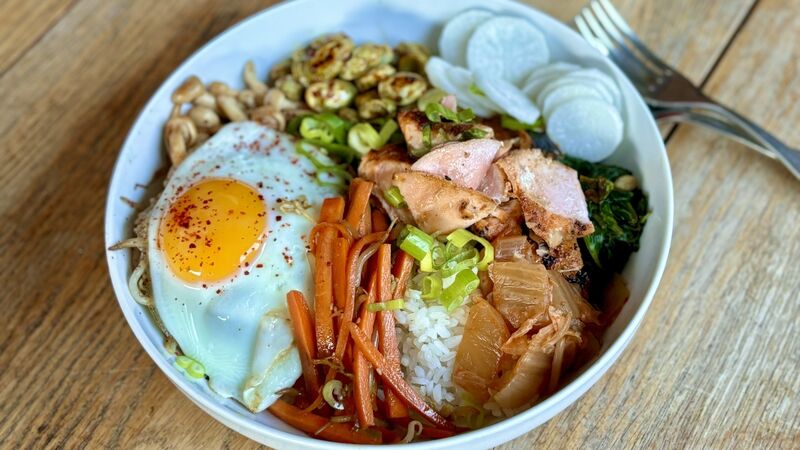
Gochujang, the fabulous Korean chilli sauce, is a key ingredient in this dish

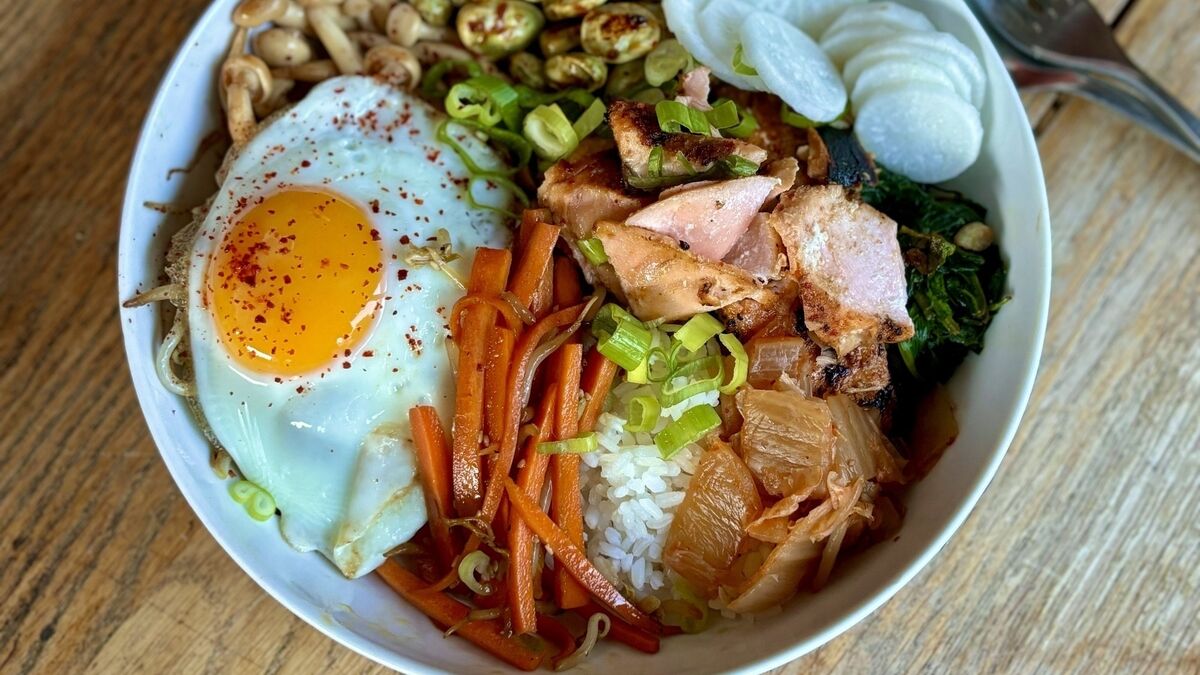
Bibimbap is a Korean rice dish of stir-fried vegetables and meat, served topped with a fried egg, pickles, kimchi and a chilli sauce. Bibimbap translates as “mixed rice with meat and assorted vegetables”, which is a very literal description of the core elements of this lovely, comforting dish. It is often served with beef, but the recipe I am sharing this week uses salmon as the protein. Gochujang, the fabulous Korean chilli sauce, is a key ingredient in this dish, and it works beautifully with the salmon.
You can mix it up when it comes to the vegetables, swapping out my suggestions below to suit your own taste or to whatever is available locally and seasonally. Pickles are a must with bibimbap, but if you cannot get hold of any daikon then you could use white turnip - not swede though, that would not work at all. Cucumber would also work well.
Gochujang is quite rightly becoming more and more popular. It is a fabulous ingredient. Tesco now stock it, but it may not be available in every store. You will find both gochujang and daikon in most Asian supermarkets, which are usually a lot less expensive than the big supermarkets. Make sure to serve kimchi on the side with your bibimbap. That is very readily available these days, so you should be able to source it locally.
I like to use sushi rice when I make bibimbap, as I love the texture of it, but any plain boiled white rice will work well.
Bibimbap with Gochujang Salmon
This is a lovely, comforting dish.
Servings
4Preparation Time
15 minsCooking Time
20 minsTotal Time
35 minsCourse
MainIngredients
300g sushi rice
4 skinless salmon fillets
1 tsp grated fresh ginger
1 tbsp gochujang
½ tsp toasted sesame oil
2 tsp soy sauce
1 tsp honey
Vegetables
½ a fresh daikon
100ml white wine or rice vinegar
100ml water
50g caster sugar
½ tsp sea salt
200g carrots
1 tsp sesame seeds
A drizzle of honey
200g or shimeji or chestnut mushrooms
200g bean sprouts
200g frozen baby broad beans or soybeans
1 tsp gochujang
200g spinach
1 plump clove of garlic
Sesame oil to stir fry
Soy sauce to season
To serve
4 eggs
Some kimchi
A few spring onions
Method
Cook the sushi rice. Rinse the rice under cold water, drain, and place it in a pan with 400ml cold water. Bring to a boil, then reduce to a simmer. Cover and cook for fifteen minutes or until all the water has been absorbed. Remove from heat, cover with a clean tea towel, and let it sit undisturbed for ten to fifteen minutes.
Next, prepare the salmon glaze. Combine the grated ginger, gochujang, sesame oil, soy sauce, and honey in a bowl. Brush the glaze over the salmon fillets and set aside.
Pickle the daikon. Slice the daikon into 3mm thick discs and place it in a ceramic or stainless-steel bowl. Heat the vinegar, water, sugar, and salt in a pan until dissolved. Pour this picking liquid over the sliced daikon and set aside.
Prepare the vegetables next. Peel and julienne the carrots, that is, cut them into thin strips. Clean the mushrooms. I use shimeji mushrooms, so I simply remove the root and divide them into small clumps. If you are using chestnut mushrooms, cut them into thick slices after you have cleaned them. Blanch the frozen broad beans in boiling water for three minutes. Drain, rinse them in cold water and set aside.
Wash the spinach. Peel and finely slice the garlic.
Time now to get the salmon on the pan. Heat a non-stick pan with some olive oil, just enough to coat the surface. Fry the salmon fillets for three to four minutes on each side until they cooked through. While the salmon is cooking, stir fry the vegetables.
Heat a little sesame oil in a wok over high heat and stir-fry the vegetables one by one, wiping the wok clean with a damp cloth in between each batch. Have a large warm plate or platter on the side so that you can transfer each batch of vegetables to it as you cook the next. Start with the carrots and stir fry those in a little sesame oil for two to three minutes, adding a drizzle of honey and the sesame seeds for the last minute of cooking. Cook the mushrooms next, adding a little soy sauce, about half a teaspoon is plenty, and a grind of black pepper. Move on to the bean sprouts next, stir frying those for three to four minutes with a splash of soy sauce added for the last minute. Finish the blanched broad beans in the wok next, adding a teaspoon of gochujang and a drizzle of honey until they are heated through and well glazed. Finally, add the sliced garlic to a little sesame oil and stir fry that for one minute, before tossing in the spinach and a little soy sauce. Stir fry until the spinach has wilted, this will take just a minute, and then transfer to the warm platter along with the rest of the vegetables.
Flake the salmon into bite-sized pieces and use a fork to fluff up the cooked rice. Fry the eggs, ensuring the yolks remain runny.
Time now to assemble the bibimbap. You can serve the bibimbap by placing all the elements on platters in the middle of the table and letting everyone help themselves or serve it in individual portions in warm bowls.
If you prefer to serve individual portions, divide the rice among four warm bowls. Arrange the vegetables and pickled daikon around the perimeter. Place the flaked salmon in the centre and top with a fried egg.
Garnish with chopped spring onions, a sprinkle of red pepper flakes if you have them and serve with kimchi and more gochujang on the side.