Maurice Brosnan on football: Mayo break the mould, the Kilkenny effect, and the Clifford conumdrum
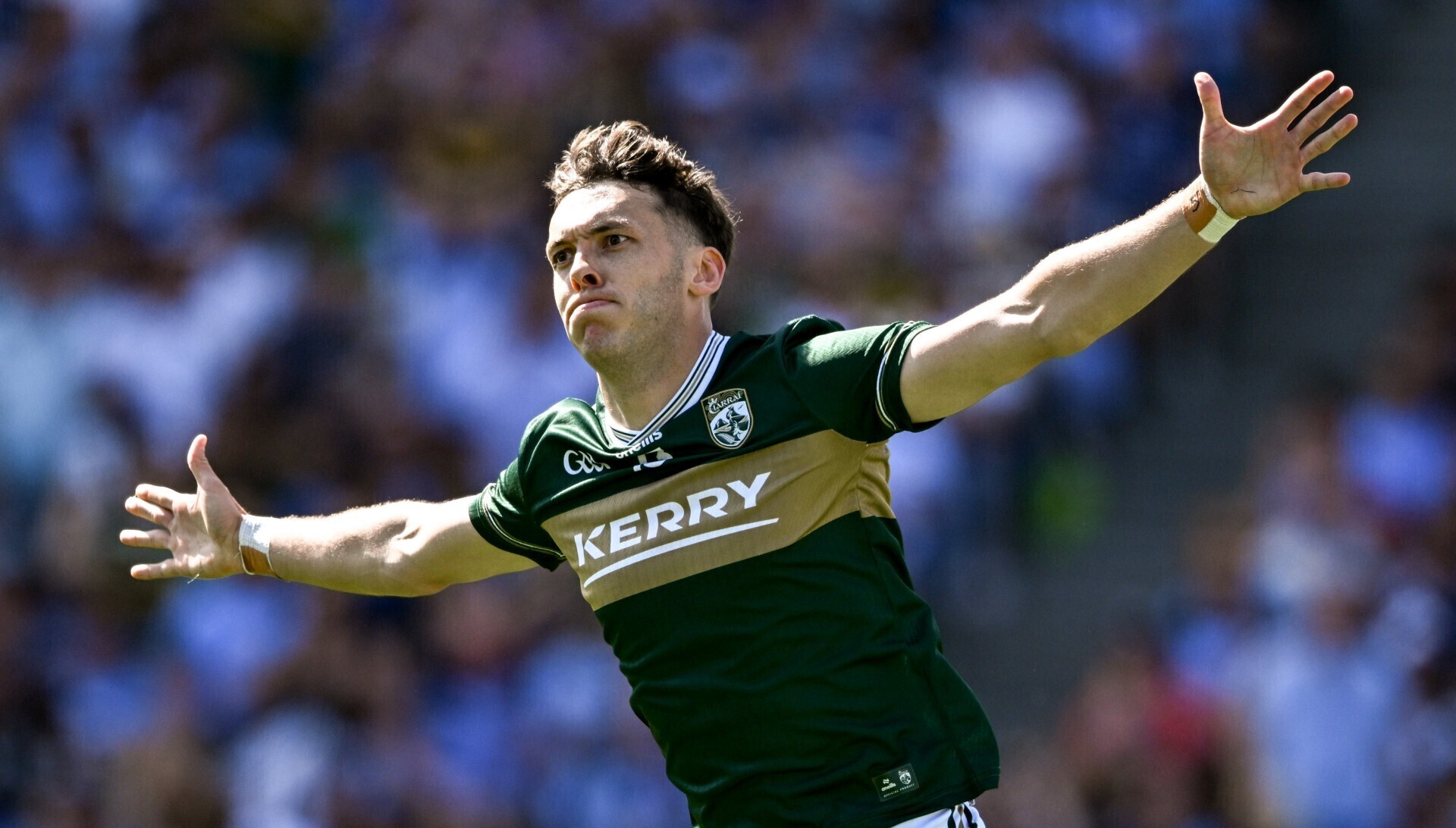
David Clifford of Kerry celebrates scoring a third minute goal. Pic: Ray McManus/Sportsfile
The ask was simple.
The young attacker sized up his opponent and went to lay the ball off. Andy Moran immediately intervened with a curt instruction: “A bit of magic now.”
One Mulligan-esque dummy and dart past the defender was greeted with a heartfelt laugh.
It was a bitter winter night in Hastings Insurance MacHale Park when Mayo organised several coach education workshops with the new members of their management team.
Colm Boyle and Paddy Tally took the principles of defensive play. Moran’s remit was the other side of the ball.
He wanted young players to try ambitious things. Eventually, he wandered over to locals in the stand with that super-charged energy.
“You have to encourage them to do it and let them make the mistake. If we don’t let them make the mistake, we will be up in Croke Park saying, ‘Jeez why don’t we produce Clifford? Why don’t we produce this or that?’
“We have to let them play. We have to encourage them to play. Kids go out playing soccer, you watch them play and messing. Oh! Nutmeg! Having the craic. We have to encourage that. Players we watch in soccer, basketball or Gaelic, guys who have us at the edge of our seat, but unless we encourage it, we are not going to get it.
“You might be at club level where there is a really high standard and a really low standard, let that kick go!”
Read More
This vibrant scene came to mind as we watched Kobe McDonald and Darragh Beirne make several mistakes and thrive anyway in their first-ever All-Ireland semi-final. The two wildly talented teens are part of what is now a heavy-metal attack.
There is a glorious innocence about the way they play football and the licence this group have afforded them. Speaking in his post-match press conference, Moran made sure to credit the squad with giving that grace.
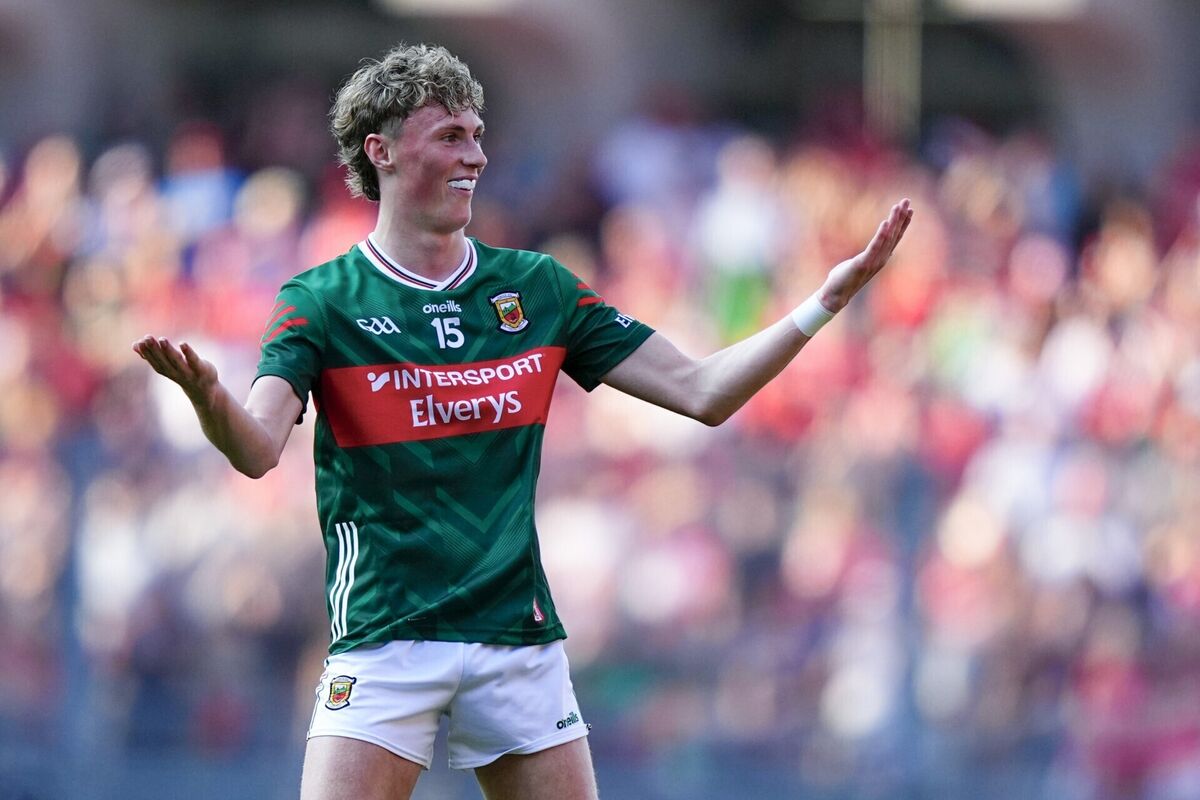
These guys give them the freedom to make a mistake and not be f’ed out of it.”
Where the idealism meets the asphalt is what happens against a top-tier team who thrive on such blunders. The margin for error is squeezed when the air gets thinner.
Mayo have beaten one Division 1 team in the championship, Monaghan. Few times punish wastefulness like Kerry can.
And yet, there is a wonder to this style of play too. What will be critical ahead of a highly-anticipated decider is the ability not to compound errors.
Coaches like Cian O’Neill are fond of having a prescribed way of resetting after successive turnovers. There are some teams that will deliberately keep ball for a spell as a means of stopping the bleed.
It was noticeable that after three successive faults in the first half, Mayo’s response was measured.
When the game was still a game, Paul Towey was penalised for steps, Kobe McDonald tried a wild two-point shot into Hill 16 and Jordan Flynn fumbled a ball in his own half before conceding a two-point free.
Mayo’s next two scores were a 21-metre free and a fisted point. Teams at all grades shout about “next ball,” but the ultimate goal is the same. Find a way to survive. Park it and move on.
When recent minor All-Ireland winner Keith Ricken led the Cork U20s to the summit, they did so with a “tea and toast” mantra.
After his illness and surgery, Ricken’s family were enquiring about how he was, but all he could think about was tea and toast.
That became Cork’s code. In the final against Dublin when they conceded a sloppy goal to go nine points down, Seán Meehan ran into goalkeeper Josh O’Keeffe and said that to him. "Tea and toast."
There is no expectation of great players to be flawless. The game is too chaotic for that. Mistakes happen. What makes them great is how they respond to it.
Here are eight observations from the Gaelic football championship.
Our favourite stat of 2025 was that before the All-Ireland quarter-final, Sean O’Shea hadn’t taken a single shot on his left foot that season.
In the biggest fixture of their campaign, during that shock-and-awe stretch against Armagh, he went for it and nailed a two-pointer. It was the flow state personified.
Fast forward to 2026. In the first game of the season, O’Shea caught a mark in the corner after a floated ball by Joe O’Connor.
It was missed by the match broadcasters and wrongly registered as a free in places. O’Shea curled it over with his left to notch his only point of the day.
Kerry scored three marks in that fixture and were awarded four, but blasted one wide. On Sunday, they caught three. O’Shea was awarded an identical one from the corner on his left side and, again, curled it over with his left.
O’Shea later caught another advanced mark but carried it back for a superb two-pointer in the second half.
David Clifford was less than impressed with Brian Ó Beaglaoich for not popping the ball back out for a two-point shot after he was awarded a mark. Ó Beaglaoich missed his effort and the subsequent opportunity.
The reason those marks appear is because defences have started to evolve. They cheat off the corners to stay connected and compact. If the mark did not exist, is there any incentive to not have that cheating happening all the time?
As it is, few teams really play those passes. The fact that Kerry do speaks to their creativity and audacity in attack.
Dublin did not man-mark Paudie Clifford in the All-Ireland semi-final. He had 69 possessions and scored 0-5.
Tyrone’s Michael McKernan man-marked Paudie Clifford in the All-Ireland quarter-final. He had 35 possessions and scored 0-5 (0-3 from play, he also kicked a two-point free that he won himself).
Against this awesome outfit, it is a case of pick your poison. Dublin evidently elected to trust in their collective rather than individual matchups and hope Davey Byrne (with help) could limit David Clifford.
The Kerry captain on the day scored 1-5, including a goal after missing a penalty. What he is doing currently in the game is absolutely freakish. No other player in the country has scored 50 points from play this year. Clifford has a total of 91.
Does this partly explain why he is so reluctant to use his non-dominant right foot? In total, Clifford has taken nine shots on his right side for three points. He missed a shot off his right last weekend.
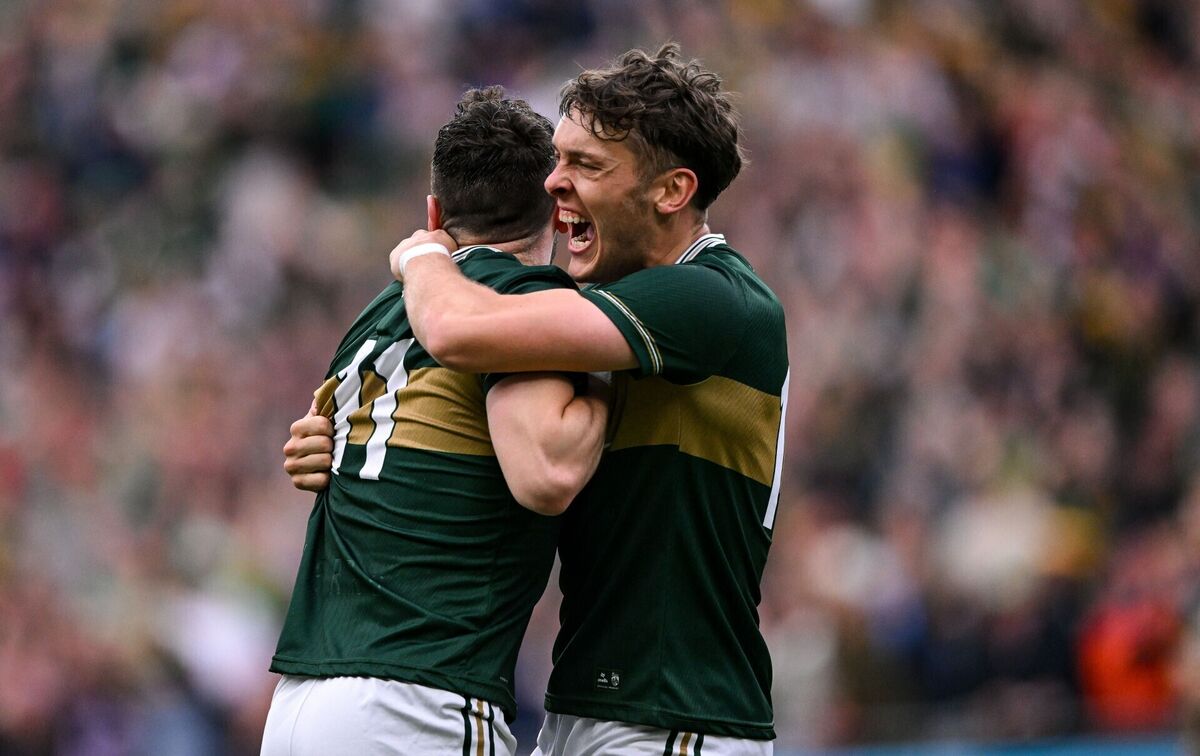
When the number 13 went past Byrne in the second half, the covering Brian Howard stood off him and showed him down the right side.
Clifford, who is right-handed, tried his typical fisted point from this side, yet Howard was well-prepped on this too and blocked it down. The subsequent 45 was missed.
The 27-year-old is well able to use his right. Perhaps part of it is prior scarring too. The point of least resistance is his dominant side and why go away from that while it is working.
As defenders evolve, they will get better at showing him right. Everyone can see it coming, including him.
You can imagine Clifford is already honing that type of shot for the final. Watch out.
Read More
In their last five games, Mayo’s average kickout retention was 59%. Last weekend, Louth won the kickout war and lost the game by 17 points. That is against the norm.
For a number of different reasons, including time constraints and limited footage, the level of analysis for kickouts is quite low currently.
There are tedious discussions about raw numbers without sufficient context for the elements that make up a successful or unsuccessful restart.
To state the obvious, there is far more to it than lump it out and hope. Empty rhetoric about “intensity” and “hunger” is an age-old crutch in GAA punditry. The variety, the trajectory, the principles and the triggers all play a part in a cohesive kickout.
Even still, you will lose some. That’s the game, you miss shots or misplace passes too.
In hurling, innovative coaches like Derek McGrath and Paul Kinnerk developed structural systems for being set on their own puckout. Essentially, if we don’t win possession, how do we make sure we don’t concede from it?
This is something Mayo have worked tirelessly on in recent weeks. We wonder did they learn a lesson from the Roscommon game? Keith Doyle, Conor Ryan and Ronan Daly were superb in dropping back to cover if Mayo won a Roscommon kickout that day.
To explain it simply, on Saturday, Mayo defended the wheel. If the ball went long to one wing, the other immediately tucked across to cover.
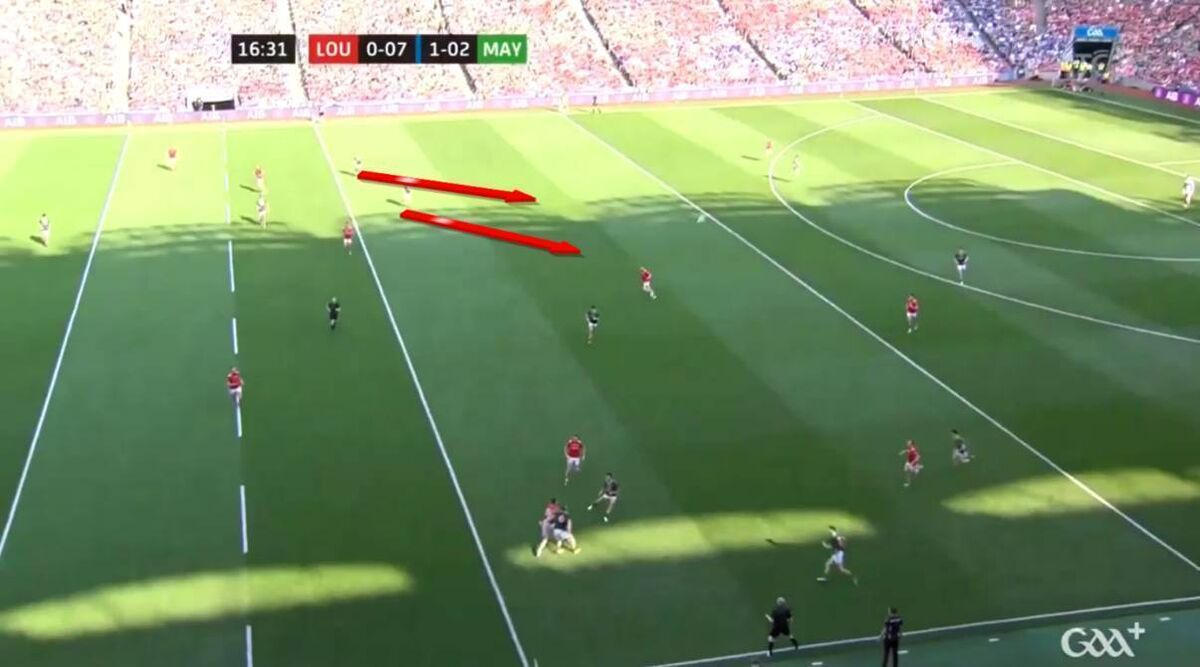
***
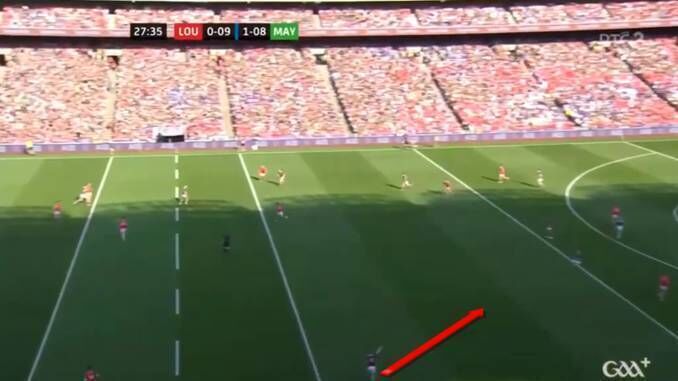
And while it has held so far, the greatest test is yet to come. Can Mayo afford for Kerry to claim 40% or more of their restarts?
Welcome to inside baseball. So, when we’re dispatched to report on games, we ‘tag’ it while working. Basically, that means keeping track of kickouts, scores and turnovers with analysis software.
However, the urgent need to file on the whistle, maintain live blogs and track individual scores and key involvements can render this a haphazard process. Live data is notoriously inaccurate, but we take that to another level by our inability to smoothly multi-task.
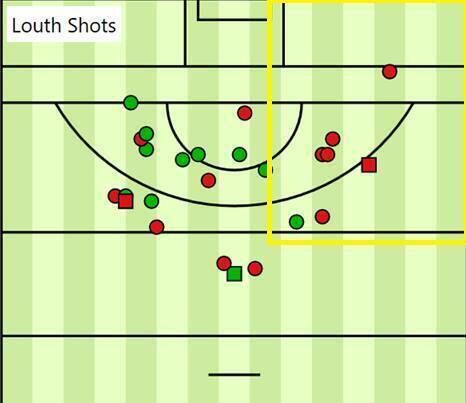
Even still, we mention all of this because sometimes shot maps can tell a story. For example, if a team struggles to shoot from a specific side.
On Saturday, Louth had a pronounced issue with shots outside of the right post. Only Ciaran Downey’s two-pointer came from this side. Typically, that zone would be ideal for left-footers. It is a tricky kick for a right-footed shooter moving towards the right sideline.
Louth don’t typically take many shots from that wing. Ryan Burns has a capable left-foot, but he plays at 15. Several other players can score with their left from inside the 21m line or close to goal. When it is further out left, they struggle.
Did Mayo notice that?
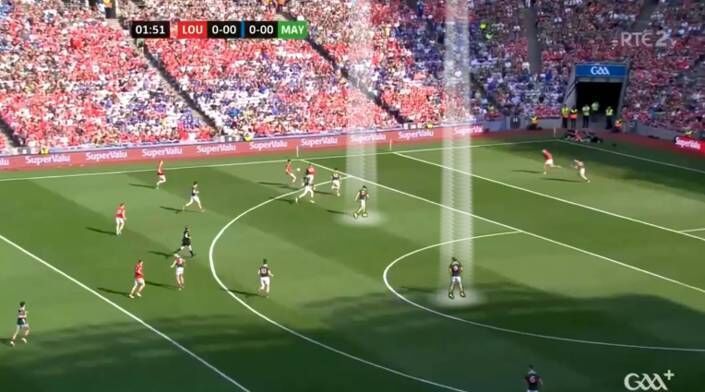
With Louth’s first attack, it became clear that Andy Moran’s side were flooding that side of the pitch. In the end, Gavin Devlin’s outfit scored four points with their left foot.
Mayo defenders doubling-up to cover one side of the pitch.
This is just another area for them to develop over the winter. On Saturday, they saw the levels to this game.
Athleticism, an expanded game plan, a wider spread of shooters, they go after all of them.
There was something slightly absurd about the fact that David Coldrick, an All-Ireland final referee, was deployed pitchside as a voluntary steward while umpires struggled to adjudicate Sean O’Brien’s goal that surely should have been ruled out as a square ball.
Coldrick was on duty as a Croke Park voluntary steward for Sunday’s quarter-final.
The point has already been made that given Hawk-Eye’s presence in the ground, the brief of umpires should evolve so that they can concentrate on the decisions that do not have the benefit of technology.
Both of them were positioned to watch Dylan Geaney’s effort rather than monitoring the square for that controversial call.
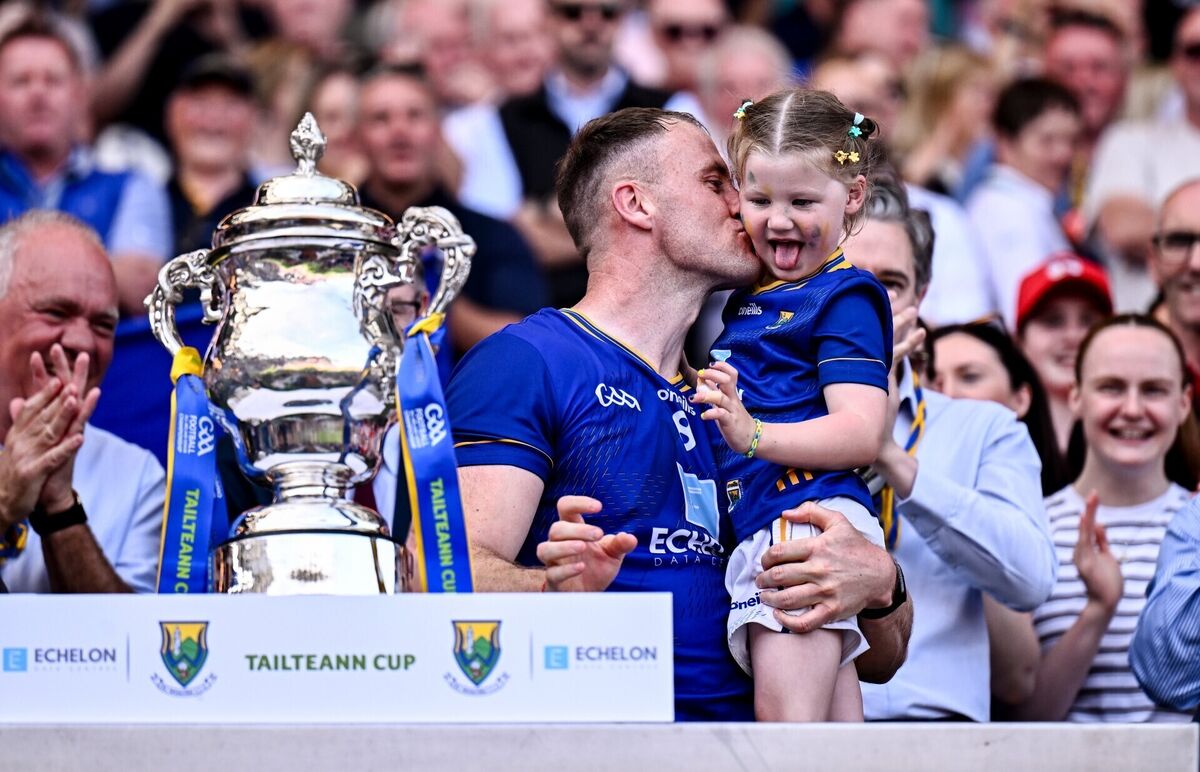
Elsewhere, it was wonderful to see a referee actually enforce steps the way Barry Tiernan did in the Tailteann Cup final.
Six times players were penalised for over-carrying. Such a policy rewards defenders who press out and incentivises teams to engage their opponent higher up the pitch.
There were some massive moments from various number ones last weekend.
Wicklow’s Mark Jackson missed two 45s and a two-point free while erring for both Down goals in the first half of the Tailteann Cup final. He nailed a clutch free from outside the arc in the second half as they engineered a dramatic comeback.
Down’s Ronan Burns was sensational once again off the tee, with his frees and acrobatic saves. He scored 0-4, saved a penalty and numerous other goal chances and finished with an 88% retention rate.
Evan Comerford has been brilliant since regaining his spot for Dublin.
His conspicuous consultation of a notebook before David Clifford’s penalty almost paid off, only for the rebound to break back to the number 13. Jack Livingstone has had a fine rookie campaign.
As for Shane Murphy, his assured displays have been seamless since filling in for Shane Ryan. What odds on Kerry having two different All-Star goalkeepers back-to-back?
After their pulsating triumph, Wicklow boss Oisin McConville was at pains to clarify that there was no half-time explosion.
They left the players alone for several minutes while consulting the numbers and then entered the dressing room.
The most significant number of all was the score, down 2-10 to 0-4. How could they make a case for a comeback?
For starters, they were playing into the Canal End. The ferocity of the wind meant teams rarely attempted shots from outside the arc into the Hill. Secondly, Down’s possession-to-shot ratio was just 56%. They were turning over plenty of ball themselves.
Wicklow simply couldn’t take advantage of it.
Their salvation was to hunt majors, twos and threes, and hope Down’s wastefulness endured. That it did. Their possession-to-shot ratio finished at 57%.
Conor Laverty was brutally frank in his post-match assessment.
“I don’t have the words to describe it; that is the truth. A lack of discipline, very sloppy in possession, the amount of turnovers we gave away…”
How this group deals with expectation is something that they will have to confront now.
Down the stretch, they skewed their final seven shots. Two of those (Pat Havern just inside the arc and Ruairi McCormack’s final effort) could be deemed impetuous decisions, but the rest were flawed execution under pressure.
Shane Annett hit the post. Havern missed a free after Caolan Mooney’s missed goal chance.
Odhran Murdock dropped a fisted effort short and missed another free inside the 13m line.
Wicklow were primed to take advantage. In the end, only a point separated them. However, on Saturday night they would have been in different worlds.
There is a sense with some players that if you drop them into any squad, they would make them immediately more competitive. Michael Murphy, Sean O’Shea and Ciarán Kilkenny fit that bill.
The Castleknock clubman won eight All-Ireland titles and six All-Stars during an extraordinary career. For a decade, he was Dublin’s Xavi or Modrić, the man who made them tick.
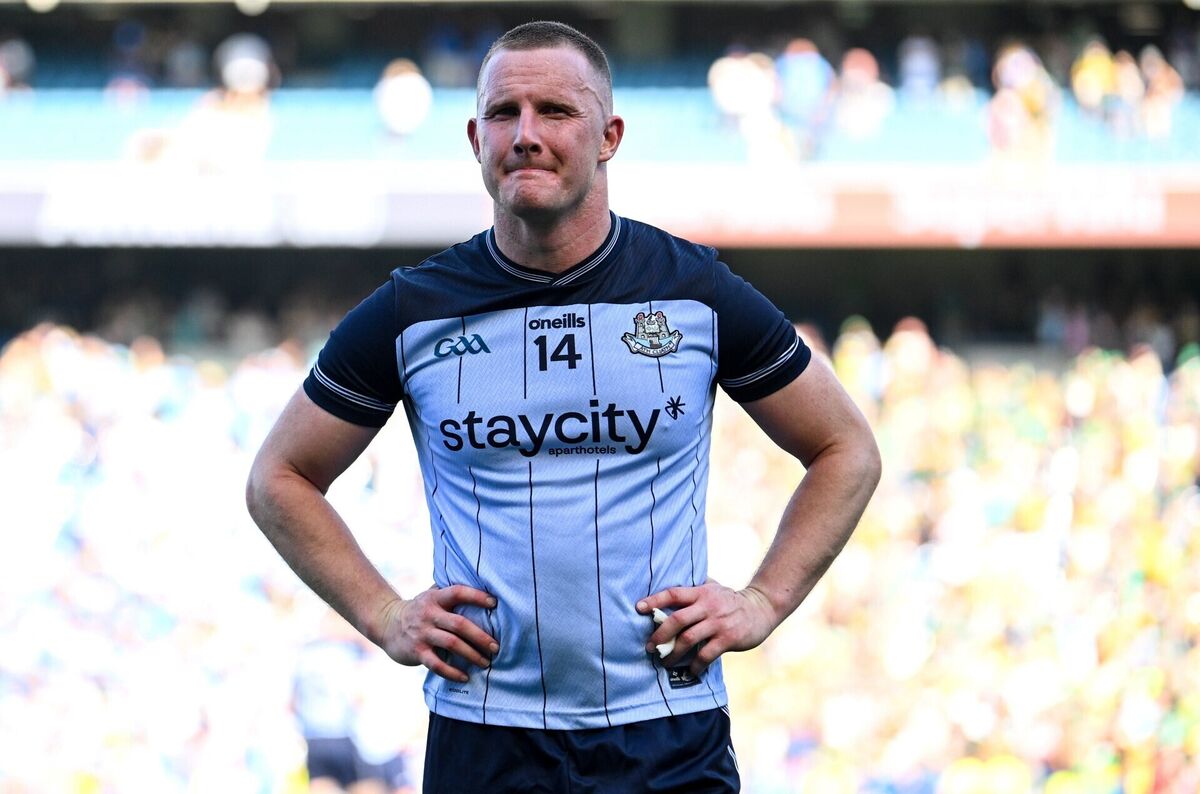
Kilkenny had an uncanny ability to diagnose what was required. He was their top creator on the way to the five-in-a-row in 2019, but became their top scorer in 2020 as Paul Mannion, Cormac Costello and Paddy Small struggled for form.
Kilkenny was Dublin’s only All-Star in 2021 and 2022. Come 2023, he was their most reliable long kickout target.
Some of the defiant displays he has given since were cast in his image.
A Man of the Match performance in Salthill last summer will endure as the monument for what he stood for. Turnovers, catches, huge tackles, creating and finishing scores.
He could do it all.
CONNECT WITH US TODAY



Be the first to know the latest news and updates