Christy O’Connor: Will Kevin Walsh continue to spook Mayo?
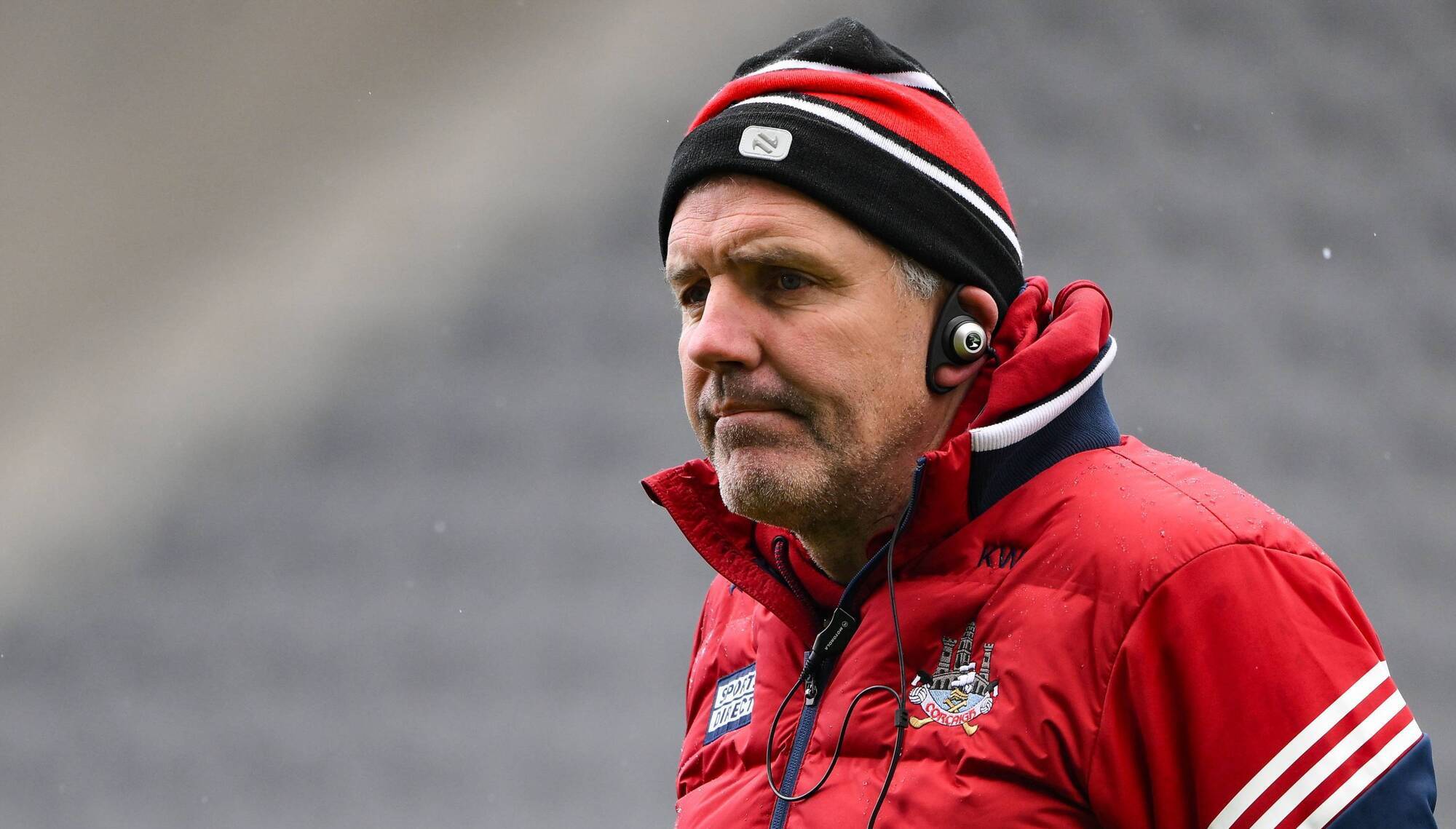
TELLING INFLUENCE? Cork's Kevin Walsh. Pic: Brendan Moran/Sportsfile

A few days before Mayo played Cork in their final round robin game in the 2023 championship, James Horan sounded the warning siren.
Mayo had already beaten Kerry and Louth and were in pole position to top the group and secure a straight passage through to an All-Ireland quarter-final. But Horan felt compelled to fire a flare into the sky to alert Mayo of the impending danger.
The warning was wrapped up in two words – Kevin Walsh. Horan had first-hand experience of facing Walsh when he was Galway manager before he joined John Cleary's backroom team at the outset of that 2023 season.
“He changed Galway football significantly,” said Horan on that “We (Mayo) were beating them and beating them heavy from 2010 onwards. We got a jump on them physically, but when Kevin came in he definitely went about making them tougher, harder, more difficult to play against. And they did a job on Mayo for a couple of years.”

Few names spooked Mayo as much in the last decade as Kevin Walsh. His last game as an inter-county manager was in July 2019 when Walsh’s Galway side lost to Mayo in a qualifier. If any team were going to close that chapter in Walsh’s career, no county wanted it more than Mayo.
In six league and championship games against Galway under Walsh, that was the only game Mayo won. It was about time.
Mayo always knew what to expect from Galway until Walsh arrived and altered their DNA and culture by overriding their natural instincts, replacing flamboyance with pragmatism. It didn’t always appeal to the Galway public but it got results. And it made life hell for Mayo.
Walsh had also got under Mayo’s skin when he was Sligo manager; Sligo defeated Mayo in 2010, and ran them to two points in the 2012 Connacht final.
After he departed Galway, life against their neighbours seemed easier for a few years at least for Mayo when Walsh was no longer around. Mayo thought they’d seen the back of Walsh. And then they ran in to him again, albeit in a different form as Cork coach. And the pain returned.
Read More
That Cork-Mayo game four years ago wasn’t a claustrophobic Connacht dogfight. It didn’t carry any jeopardy of the old qualifiers, but Mayo were still slightly on edge knowing that nobody understood Mayo’s mindset, and how to rattle it, better than Walsh. And he did. Again.
Cork’s victory plummeted Mayo into a treacherous away preliminary All-Ireland quarter-final against Galway in Salthill.
Cork had previous outside coaches in Billy Sheehan and Cian O’Neill, but Walsh’s status as a double All-Ireland winner with Galway as a player elevated his profile in Cork. After Ronan McCarthy stepped away in 2021, Cork invited managerial applications from outside the county for the first time. Walsh didn’t apply.
The county board did contact some outside managers to see if they were interested and, while Walsh was on that long wish list, he wasn’t one of those contacted.
After 11 years managing Sligo and Galway in a 12-year period between 2008-2019, Walsh had had enough of inter-county management. But he was open to returning as a coach. And he did once John Cleary picked up the phone.
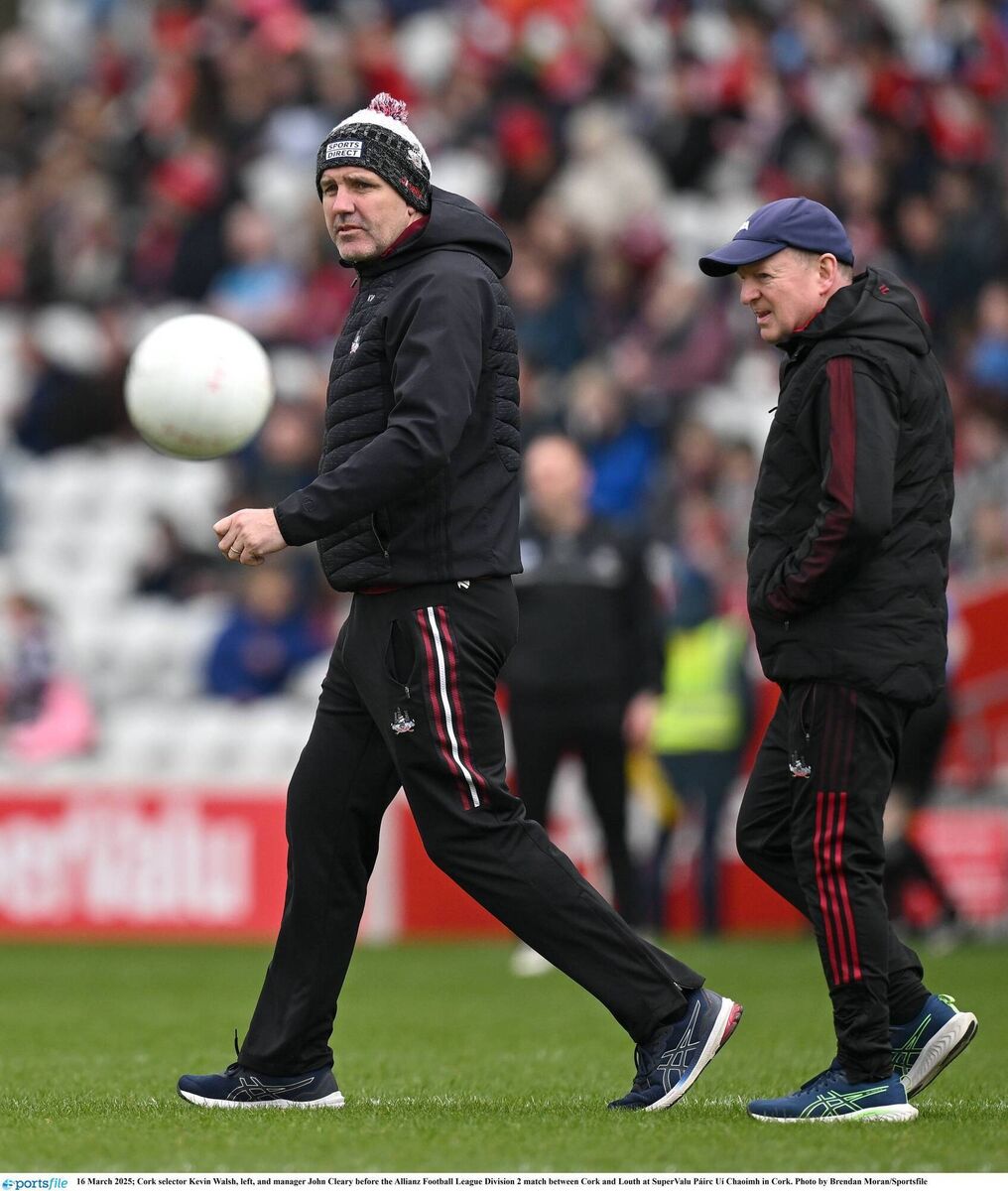
It took a while for Walsh’s influence to become evident, but it was always going to take time for him to embed his principles and coaching style. Progress was slow. Some of Cork’s tactical play, especially on kickouts, was predictable under Walsh. But Cork were incrementally making strides forward.
At the end of last year, Walsh committed to a fourth season with Cork. It has also been advantageous to Cleary to have someone with Walsh’s wealth of playing and managerial experience to lean on. Recruiting former inter-county managers to backroom teams has become a recurring pattern in the last couple of years. But Cleary was one of the first to take that plunge with Walsh.
Football is unrecognisable now from when Mayo struggled to cope with Walsh’s game back then, which was a defensive style. In the five league and championship games Mayo lost to Walsh’s Galway between 2016 and 2019, Mayo’s average score was 0-14. Their average concession rate to Galway was 1-14. When Cork beat Mayo three years ago, those scores were almost identical; 1-14 to 1-11. Spooky.
It is a different world now. The vast majority of this Mayo side have never come up against Walsh. Many of those players would have been too young to remember the black shadow he cast over the county as a player and manager. The shadow has lightened further with Walsh and Cork not having faced Mayo in league or championship in the last four years.
Still, having Walsh on board is an advantage to Cork in this game – especially when he knows the personality of the opposition so well. And it’s another opportunity for Walsh to spook Mayo.
Read More
A year before Jim McGuinness and Donegal radically altered and shaped modern Gaelic football, Dublin silently fired the first shot of that revolution. Dublin had already undergone huge structural and tactical change from the side annihilated by Kerry in the 2009 All-Ireland quarter-final, but they showed a whole new level of tactical sophistication and ingenuity against Tyrone in the 2010 All-Ireland quarter-final.
Dublin backed off and invited Tyrone on; 22 of Tyrone’s 27 kickouts were short, which had never been seen before in Gaelic football. Dublin forced Tyrone to consistently try and build through the middle and the attrition eventually wore them down; Dublin buried Tyrone on the counterattack, mining 63 per cent of their scores from that source.
Dublin agonisingly lost that All-Ireland semi-final to Cork by one point, but they were already on the path to securing a first All-Ireland in 16 years in 2011. And that Tyrone match laid one of the key foundation stones of that success.
Dublin arrived with a new team trying to forge a new path in that 2010 season. They needed to do something different after losing successive All-Ireland quarter-finals to Tyrone and Kerry. And they did.
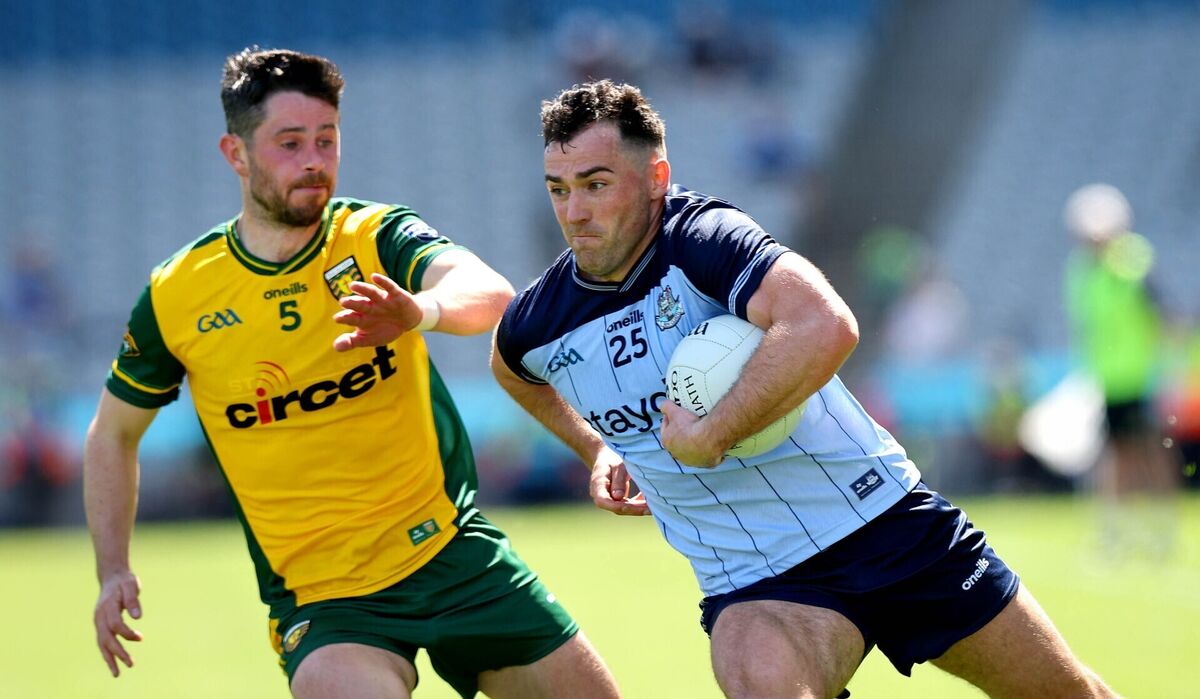
Sixteen years on, Dublin are in a similar type situation, not tactically, but psychologically. This is effectively a new team with some hardened experience. The difference now is that those seasoned warriors have the All-Ireland medals (and bags of them) that their predecessors from the 2010 side didn’t. And this feels like another gateway game against another side with serious All-Ireland ambitions.
Pat Gilroy was in his second season as manager in 2009. Ger Brennan is in his first year now but Brennan is still trying to mould what is effectively a new group. Gilroy trawled the county for talent during that winter of 2009-’10, just as Brennan did last winter when he looked at a staggering total of 164 players.
Brennan is still trying to shape some of those uncut stones that Gilroy and Jim Gavin later turned into diamonds but the win against Donegal was an important part of that process. Sunday’s match against Galway is even more critical in trying to give this side more opportunities to evolve and develop. And the confidence to kick on.
It is also important from a historical perspective. Dublin have never lost three successive All-Ireland quarter-finals before. They were staring down that barrel against Tyrone in 2010 but they made sure not to fall in. And if they don’t fall in now (after losing the last two quarter-finals), this could be another massive breakthrough All-Ireland quarter-final for a new Dublin team.
Late on in the Dean Ryan Cup (Munster U17 colleges) final between Ardscoil Rís and CBC Cork last December in Kilmallock, Shane Waters stood over a free that he had to nail. Ardscoil were trailing by four points. They had missed their first three frees of the half but Waters converted the placed ball and the whole mood of the match changed.
Ardscoil were level within a minute after a goal from Clare minor Ian O’Brien. And then they were on a roll. A Waters free edged them ahead before points from Rian Horgan and Eamon O’Sullivan secured the win.
Ardscoil winning another blue riband Munster Colleges title didn’t really resonate too loudly around the Munster hurling corridors considering how much of a dominant force the school has become at colleges level in the last two decades. However, the value of that success underlines now just how important it could yet be for Limerick’s future.
Ten of the Limerick side which hammered Galway in the All-Ireland minor semi-final two weeks ago were part of that Ardscoil Dean Ryan winning team; Sam Collins, Rowan Collins, William Ryan, Eoin Hennessy, Xavier Neligan, Shane Waters, Eamon O’Sullivan, Rian Horgan, Donagh Horgan and Gavin O’Brien.
Ardscoil Rís’s fingerprints have been smeared all over the Limerick hurling revolution across the last decade. The school has consistently helped to produce top-quality players for John Kiely’s side, but the latest young harvest has been even more timely considering Limerick’s struggles at minor level in the last five years; prior to this season, Limerick had only won six of their previous 19 minor championship games.
Limerick are underdogs heading into Saturday’s All-Ireland final against Tipperary, but the Galway performance proved just how much this side has improved and developed throughout the season. And the Ardscoil factor has shown how tight and cohesive they are as a unit.
A collection of the latest sports news, reports and analysis from Cork.
CONNECT WITH US TODAY



Be the first to know the latest news and updates