Kieran Shannon: 2011's Operation Ambush ensures Mayo have no hang-ups about playing Cork
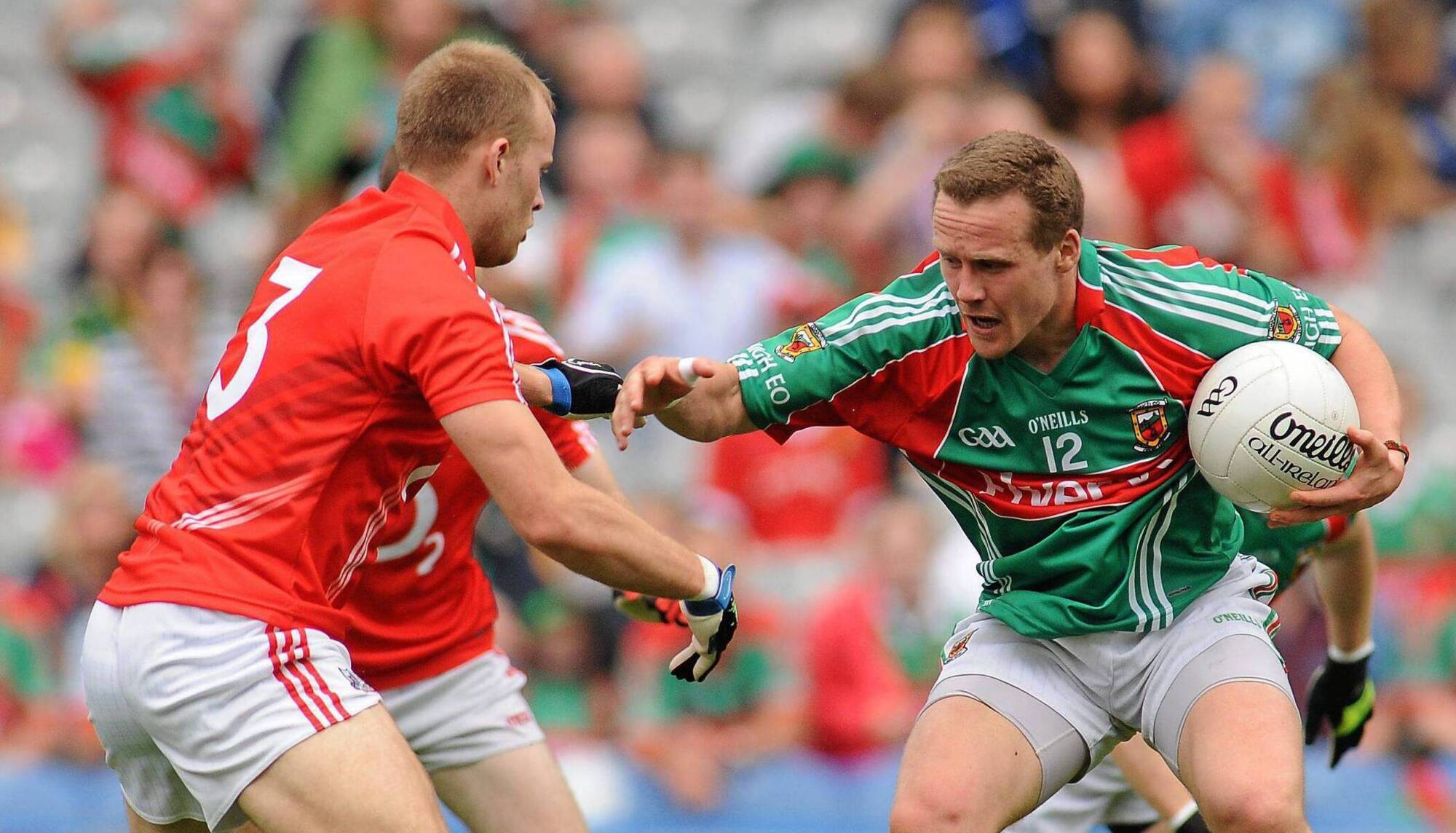
After spending time with Cork players on a 2010 All-Star tour, Andy Moran returned home a change player. The following year, Mayo would be reigning All-Ireland champions Cork in an All-Ireland quarter-final. Pic: Diarmuid Greene / SPORTSFILE
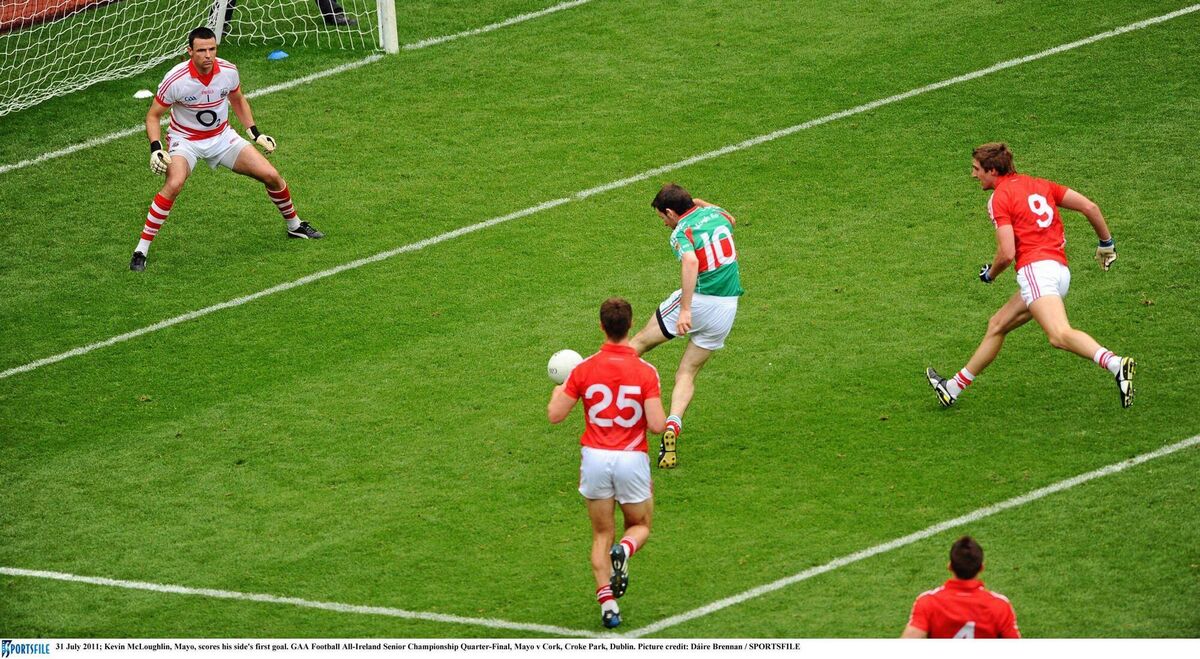
In more ways than one, that crazy run of theirs began with Cork, and not just with that amazing run and goal of Kevin McLoughlin’s in that watershed quarter-final 15 years ago.
In November 2010, Andy Moran found himself in a late bar in Kuala Lumpur along with Player of the Year Bernard Brogan and a host of other reigning All-Stars and their partners.
Something had been puzzling Brogan for days, and with the subject in question now in his company and a table of people for an audience, this was the perfect chance to ask.
“Andy, tell me this. Mayo lost to Sligo and Longford this year…. What the f**k are you doing on this trip?!” Moran, in keeping with his nature, laughed his head off. “Bernard’s verbal shot to the kidneys was well-meaning and delivered with customary humour,” he’d recount in his 2021 book
Read More
“And he was dead right to ask the question.”
Moran himself had thought it was a windup when four days out from the trip he had been invited onto it.
But it wasn’t: Graham Canty, the man who had lifted Sam Maguire just a few months earlier, was a late withdrawal from the biennial tour, and with Moran having been an All-Star nomination in 2009, a ticket to Malaysia was his.
“Sport and life are funny,” he’d later reflect. “If Graham Canty had been able to make it, my phone would never have rung. How different the next nine years of my life would have been… I came home a changed man.”
The trip had been an education. While Kerry and Tyrone were also handsomely represented on that tour, for Moran “one set of players there stood out more than any other”.
He’d observe how the likes of Alan Quirke and Nicholas Murphy guided the younger Cork players.
“Nothing too public or sanctimonious, just simple gestures and actions. Conor Counihan was on that trip too but not once did I observe him in the gym having to crack the whip.”
In that same gym Moran also watched how the of Paudie Kissane, John Miskella and Pearse O’Neill worked out.
“A sight to behold.”
In that year’s league final with Moran playing at wing forward, Cork had trampled over Mayo and Moran reckoned that it would only be uglier if the counties were to meet in Croke Park again.
“My career up to then had been decent in the national league, decent in the Connacht championship, but get to Croke Park – waste of time,” he’d reflect on another occasion.
“When the Cork lads started running, it was all over for me. I’ll never forget coming home from that trip going, ‘I’m not near fit enough here.’ Looking at John Miskella and thinking, ‘I’m genuinely not physically able to mark these guys if we get to Croke Park.’”
While Moran was in Kuala Lumpur, James Horan was in his first month as Mayo manager, surveying not so much the landscape as the wreckage.
“Their [the players’] confidence had been shot to absolute pieces,” he’d remark shortly after he’d get the team to return to – and win – in Croke Park.
“There was this perception after the Longford game that players weren’t putting it in for the jersey. From knowing the lads, it was unfair. But when players constantly hear and read things like that, it does seep in. It does have an effect.”
He started putting the pieces together, bit by bit.
By bringing on board Ed Coughlan, a Corkman and close friend of Cork’s S&C head Aidan O’Connell, as Mayo’s equivalent: while players were putting it in, they had to put it in even harder, smarter.
By empowering Moran and captain Alan Dillon to guide and mentor the younger players like a Quirke and Murphy would in Cork. The following July, Mayo were Connacht champions.
But then came the draw for the All-Ireland quarter-finals and no-one gave them a hope. They’d been paired with Cork, a team who were reigning All-Ireland champions and back-to-back national league winners and a county that Mayo hadn’t beaten in the championship in 95 years.
More than any later supposed hoodoo a Kerry or Dublin had over them, Cork were viewed as Mayo’s true kryptonite.
With Kerry playing Limerick on the same double-bill and the semi-final draw predetermined, everyone was assuming and anticipating a Cork-Kerry Croke Park faceoff for a seventh consecutive year.
To counter that narrative seeping into his players, Horan had to come up with one of his own.
The day after Cork had trounced Down in the preliminary All-Ireland quarter-final and having consulted his stats team and his sport psychologist, he made a presentation to his players: Operation Ambush.
“My memory of the lead-up to that game was just how upbeat James was about it,” says Enda Varley.
“That though Cork were the All-Ireland champions he was delighted we’d got them. He really set the tone and the belief that they were a team gradually on the way down from the top of the hill while we were a team on the way up.”
A mantra of Horan’s was to check the data and facts instead of falling for myths so he presented them to his players.
Yes, Mayo hadn’t beaten Cork since 1916. But the counties had met just five times in that period, as scarring as defeats like 1989 and 1993 and 1999 were for Mayo supporters.
The only Mayo player sitting in front of Horan to ever lose to Cork in championship was Trevor Mortimer, back in 2002 in Horan’s own last game as a player.
The only surviving Cork player from 2002 was Graham Canty. Cillian O’Connor was only 10 years old back then. What had 2002 to do with him or anything now? It was ancient history, like ’99 and ’89 and 1916.
What was more relevant was recent history. In their previous five league encounters Mayo had won four of them, including their clash in Castlebar that March.
Most of the Mayo team had beaten the core of Cork’s in a 2006 Under-21 All-Ireland. If anything this group of Mayo players usually beat Cork, not the other way around.
He also highlighted that Derek Kavanagh, John Hayes and Anthony Lynch had retired. Ciarán Sheehan, Colm O’Neill and Daniel Goulding were all injured. This was not the Cork of 2010.
Instead it was just like Tyrone in 2004 and Dublin in 2006, an ambush set up for an underestimated but chomping Mayo.
“There was an air of giddiness about us running onto Croke Park that day, belting balls over the bar,” says Varley. “Most of us had only played there a couple of times, if even that. In 2010 Cork had toyed with us in the league final. Playing them in 2011 we were like sheep let out."
It took them awhile to find their bearings.
“I remember early on cutting in to take a shot and I pulled it outside the near post whereas in MacHale Park I wouldn’t even have had to look up and it’d be a point,” says Varley. “I remember thinking, ‘What the feck is going on here? Okay, the dimensions here are different.’”
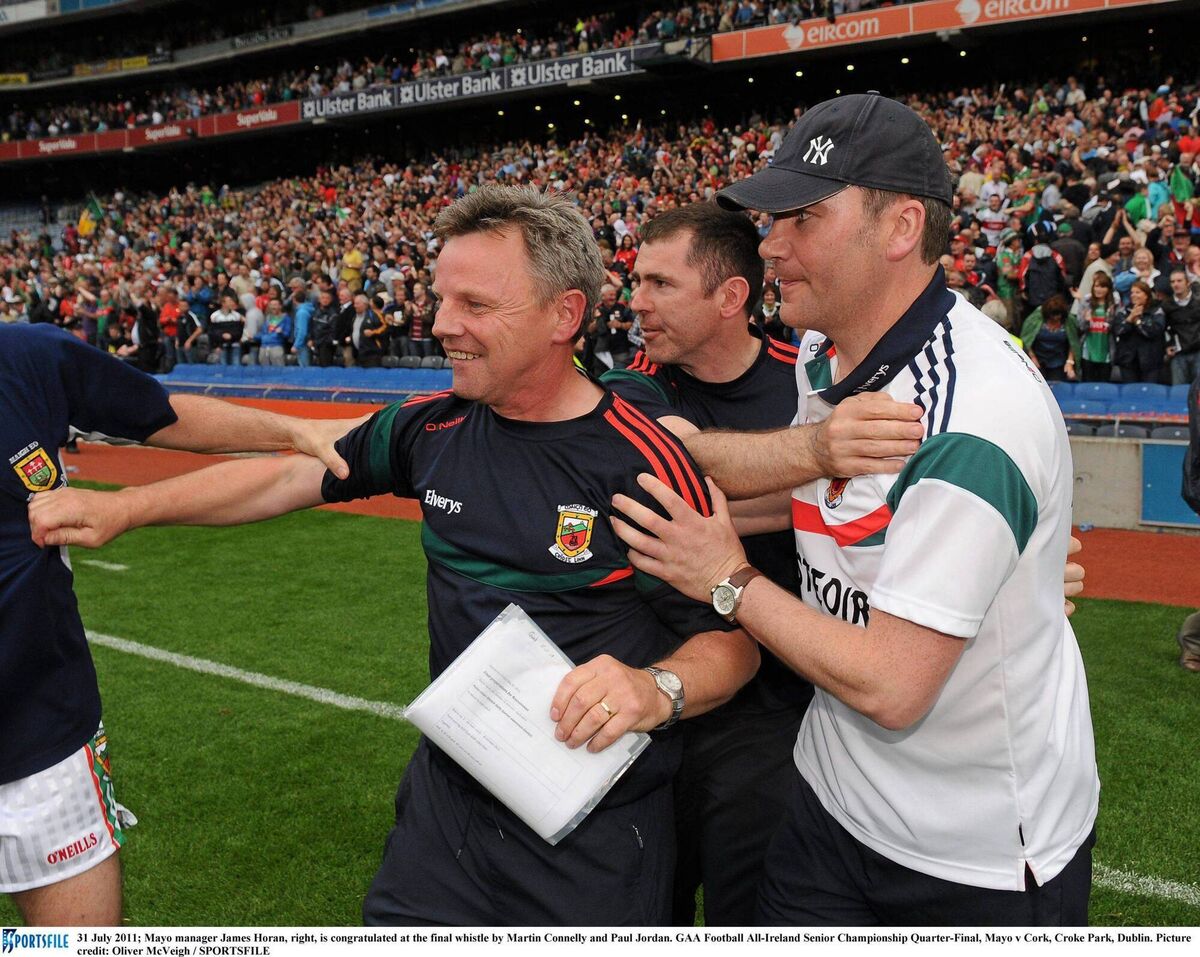
Fifteen minutes in they trailed 1-4 to 0-1. Everything was going according to the popular narrative.
Then McLoughlin went on that run to fire into the top corner of the net. After that everything changed.
That game. That rivalry. That Mayo team and their relationship with their own public.
After having gone five years without a championship win in Croke Park, they’d win that day and at least one other game there for 10 of the following 11 years.
“What lives in the memory from that day is running in the tunnel at half-time,” Moran would recount. “We were still a couple of points down but we received a standing ovation from the Mayo fans. Compared to the years that would follow, there were not that many there but that made it even more special.
"We took their energy, fed off it and recorded a famous victory. It was like there were 80,000 Mayo people in Croke Park that day. That ovation remains one of my favourite memories as a footballer. A corner had been turned.”
Cork would dish out some further lessons to Moran and Mayo when beating them in the 2012 league final; for one, it would be the last game in Croke Park that Moran would play in the half-forward line. But Moran was right. After 2011 nothing was the same.
Mayo have never been beaten by Cork in a knockout championship game since; in 2014 and 2017 Cork would defiantly rally from seven-point deficits to get back to within a point but each time Mayo ultimately advanced.
Those rallies showed Cork had no fear of Mayo, and the same still holds today. But as Moran for the first time brings Mayo to Croke Park, the opposite equally applies: Mayo have no hang-ups about playing Cork, especially in Croke Park. Not after Operation Ambush in 2011.
A collection of the latest sports news, reports and analysis from Cork.