Eamon O'Shea: Inside the hidden work of getting a hurling team ready for Sunday
Relax, you have not strayed into the business section by mistake, but I was thinking recently how Alfred Marshall might have theorised the production of high-quality hurling.
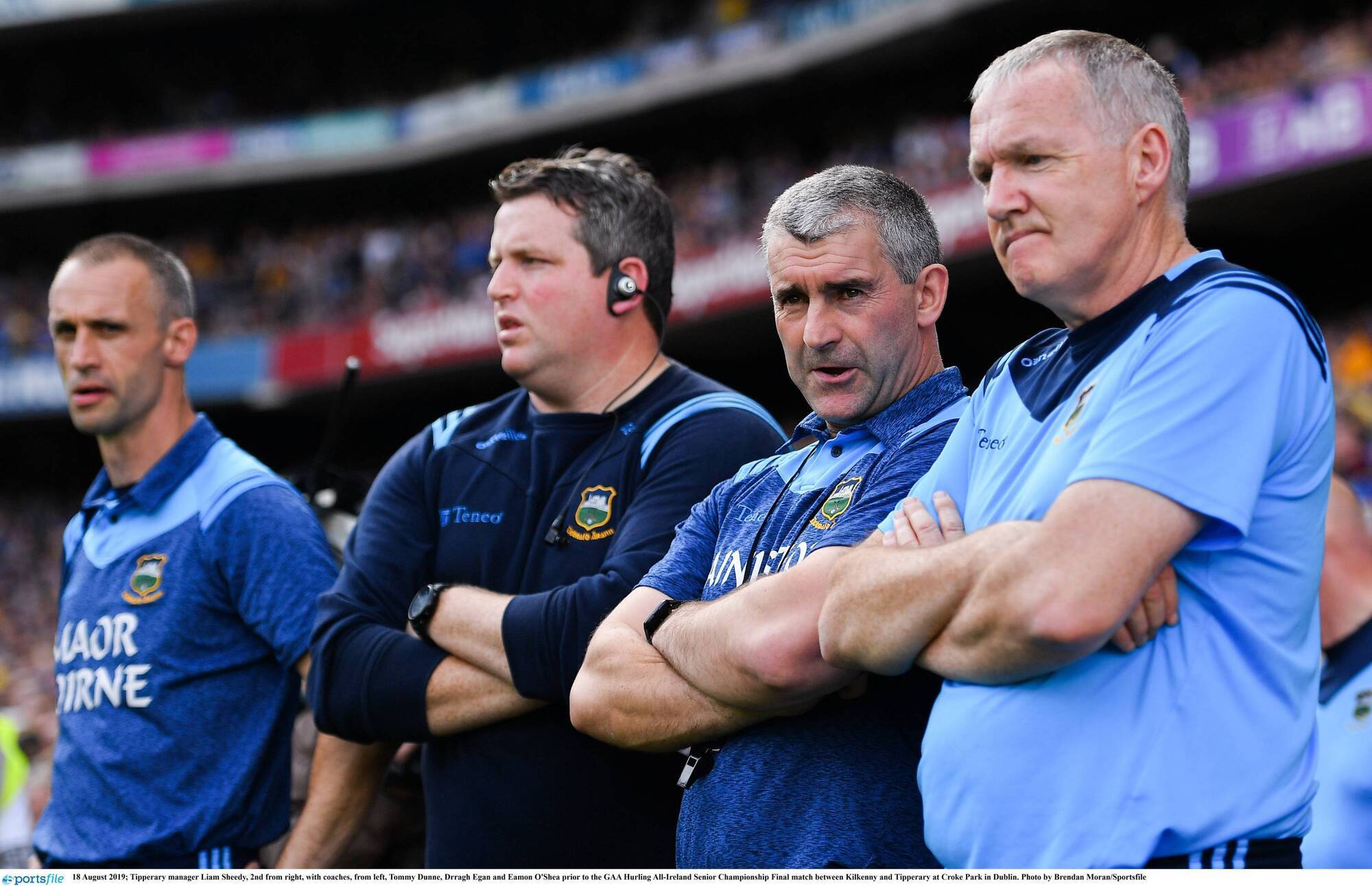
WISE MEN: Then-Tipperary manager Liam Sheedy with (from left), Tommy Dunne, Darragh Egan and Eamon O'Shea during the 2019 All-Ireland SHC final against Kilkenny Pic: Brendan Moran/Sportsfile
Wed, 29 Apr, 2026 - 16:45
Eamon O'Shea
ONE of Alfred Marshall’s many contributions to economic theory from about 1890 onwards was to recognise and explain the importance of differentiation and integration for industrial production, within what he called “the representative firm”.
Differentiation relates to division of labour and the role of specialised skills and knowledge, while integration covers the connections between the various parts of the production process.
Hurling does not take place within firms and factories; it takes place off Broadway during winter and spring in centres of excellence across the country, before hitting the shelves mid to late April every year.
Labour is the dominant factor of production in the preparation of inter-county teams, although technology is now having an increasing influence.
Most senior inter-county set-ups have a manager, two or three hurling coaches, selectors, strength and conditioning coaches, kit man, a bunch of data analysts, medical support, nutritionist, sports psychologist, physiotherapist, and masseur — at a minimum. And, of course, the players themselves, about 36 of them.
How do these various actors combine to produce what many of us fans refer to as the “game on Sunday”?
What happens on the factory floor of preparing an inter-county hurling team?
What is the reality of differentiation and integration inside elite set-ups and their effect on performance?
Let’s start with managers, most of whom have a day job that does not have anything to do with the production of hurling performance. Work pays the bills, irrespective of what stories you hear about payment to hurling managers, so very few can take liberties from 9-5pm during the day.
That said, during work hours, hurling messages and emails are dropping in silently on the phone and through email.
When I was a manager, I used my lunch break to catch up on the most important of these messages. Managers generally learn to squeeze time and cut out unnecessary and random disturbances to allow some thinking time for hurling during the working day — however short-lived.
A lot of the day-to-day administration work of the hurling manager is done after work on the phone, usually on the drive to training. The immediate task is to check in with the doctor and the physiotherapist for any potential withdrawals from training due to injury or sickness.
There will nearly always be withdrawals, particularly if there has been a game at the weekend. The state of the training pitch is also checked, especially nowadays with increasing volatility in weather patterns.
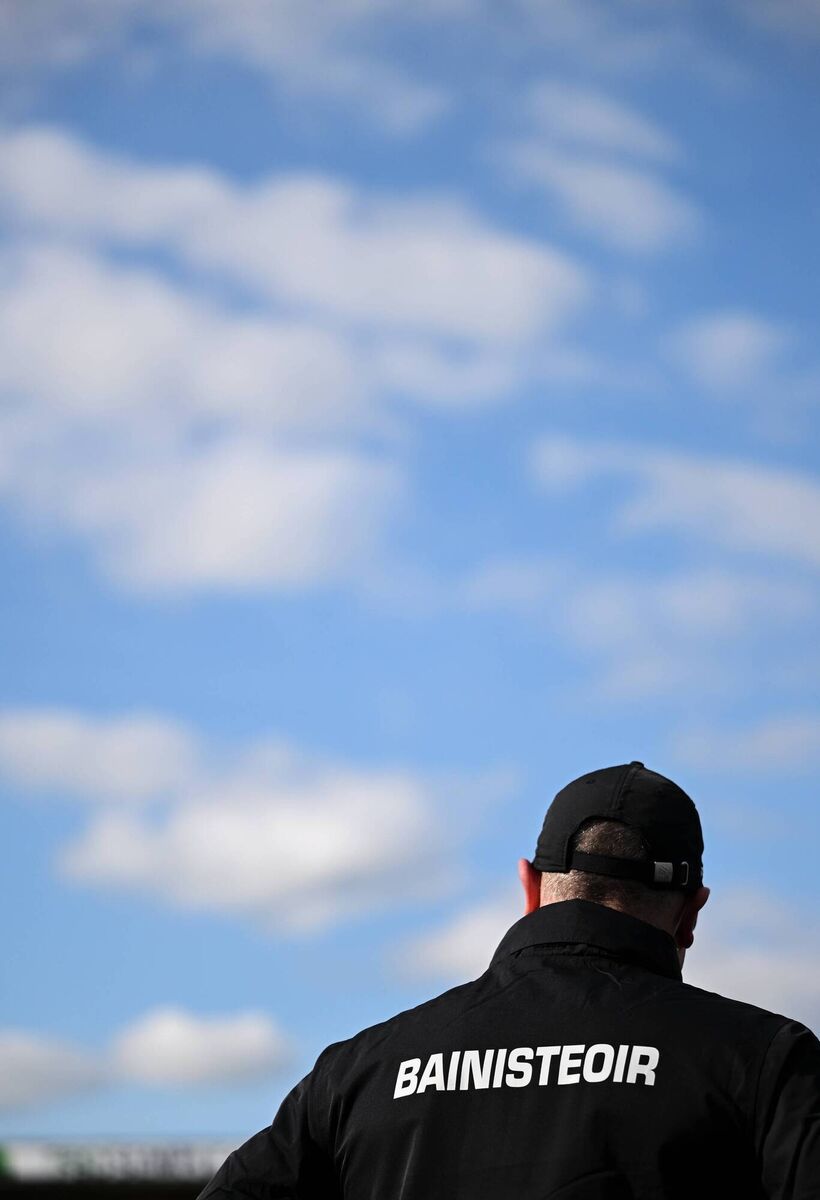
SIDELINE VIEW: Tipp manager Liam Cahill watches the closing moments of their Munster SHC clash with Cork at FBD Semple Stadium in Thurles. Pic: Brendan Moran/Sportsfile
Everything accelerates upon reaching the training ground — so much to do and so little time available. Inside the sanctuary of the management dressing room, tea and biscuits help to settle everyone for the evening’s session, providing a veneer of calmness before an explosion of productive energy is released.
The head coach previews the upcoming session on the laptop to ensure everyone knows their respective roles — the latter would have been already discussed online the previous night anyway, but tweaking continues right up to the session start.
There are normally three separate sessions happening on field at the one time: Goalkeepers, full panel of fit outfield players, and rehab pitch group — while another session takes place in the gym for the non-pitch rehab group.
Tuesday training normally incorporates a review of the weekend’s game and preliminary preview of next week’s opponents, especially during the league.
Coaches and stats guys have 36 hours to prepare this data and distil into digestible content for the management team and players. Thursday is used primarily to prepare for the next game and focus on own-team performance, video clips for players, and a small number of one to one meetings with players.
Time is short, so the focus in the management room is relentlessly on performance. Conversations tend to cover structure, systems, technique, and personnel. These discussions can be civilised, cantankerous, prolonged, or brutally short.
I still recall a truncated discussion on conversion rates which, in old money, used to be known as the ability to put the ball over the bar, when I was Tipperary manager.
The discussion ended abruptly when a serial offender’s name was mentioned, and someone pointedly said in my direction: “Well you are the one who keeps picking him.”
Touché and time to act (Marshall did not say much in his principles of economics book about the importance of searing candour in the production of good and services).
In the players’ dressing room, they’ve arrived and are togging out.
The kit man is the high king of the players dressing room, assigning seating positions, distributing training gear, operating a lost and found service, and generally keeping things moving.
The management team tend to stay out of the players dressing room. It is a sanctuary and safe place for players.
The nutritionist measures player hydration levels as they arrive to training. These numbers are reported to management before every session.
The nutritionist also provides ongoing information on diet, supplements, and cooking tips for the players — providing top-up collective sessions during the season on the role of nutrition in performance. Match-day protocol on hydration and food consumption is also overseen by the nutritionist.
In the physiotherapy room the wounded line up for treatment, in various degrees of bother. The physio gives a final run-down on progress on those who can and cannot train. Meanwhile, the team masseur is working away with the “socials” — the lads who need to talk as much as they need a rub.
The masseur is the unsung hero of the operation, able to bring news of who might need a bit more loving or a boost of some sort. Referrals to the sports psychologist are often taken from a list supplied by the masseur.
The sports psychologist provides important information on the current mood in the camp, derived from the on-line daily health check-ins completed by the players. The psychologist is also responsible for motivational and self-help sessions at various camps during the year, playing an important role in health and wellbeing of the players — including on match day.
Activation under the guidance of the strength and conditioning coaches is an important pre-cursor to training — providing an opportunity for players to be fully present, firmly in the now and ready for the night’s session. Similarly, pre-training free-style pucking on the grass is an opportunity to judge mood.
Allowing lads to form an initial relationship with the ball is the standard warm-up drill — striking, catching, and spatial awareness. It’s only the warm-up, but the ball is central; how you strike it, where it goes, and how you mind it.
An opportunity to be technical. And by God did the Tipp lads, during my time there, like to show how technical they were. It was sometimes hard to get past the warm-up!
The players go back to the strength and conditioning coaches for final sign-off, and only then is the session ready to go full tilt. And now, if everything is good, the players will drive the session — demanding individual and collective performance. If they do, everything works smoothly, no matter how many mistakes are made on the pitch.
The stats people provide live, and post-training, data reads from the session anyway — so if energy levels and mood are low, the manager can change things on the hoof, or the coach may sense something and move first.
But passive is not acceptable and everyone has a responsibility to perform to the very best of their ability. Player-led outfits do not come for free.
The physio room is packed again at end of the session with aches, pains, and bruises, but usually nothing serious.
The doctor is stitching a hand wound; the physio is explaining a scan that has come back to one of the injured players; the nutritionist is distributing recovery drinks; mobile food parcels for the rest of the week are piled high on the table. The masseur is listening to confessions and telling stories in-between; the jokers are joking and the quiet ones are still quiet.
TUESDAY is normally a working night, so most people are happy and the buzz is good. The chat is firing around the tables at dinner and most nights the decibel levels and laughter tell you all you need to know about the mood in the camp.
But, for the manager especially, food is always eaten quickly, or not at all, because someone always needs to talk with the boss. That is especially true on team announcement nights when players who have not yet learned the rules of engagement or the ability to hide their disappointment need explanations.
Management meet for a quick debrief before heading for home. The goalkeeping coach is unhappy, but nothing unusual about that. The stats lads are still throwing numbers in the direction of the hurling coaches.
The drone footage from the session is also available, showing spaces, places, and missed opportunities. Agreement is reached to meet on Teams on Wednesday to review and preview Thursday’s session.
Management and staff leave the building around 10pm, heading home in the dark with thoughts swirling about form, functions, and solutions. They try to unwind by listening to their favourite music, or, more likely, hop on the phone to catch up with family and friends.
Every minute used and re-used. A quick cup of tea. Off to bed then to replay the night’s session again before nodding off. In a few hours, it’s time to do it all over again.
Alfred Marshall may have been a major foundational figure in neoclassical economics, but he would have been at the pin of his collar to make sense of the making of the “game on Sunday”.